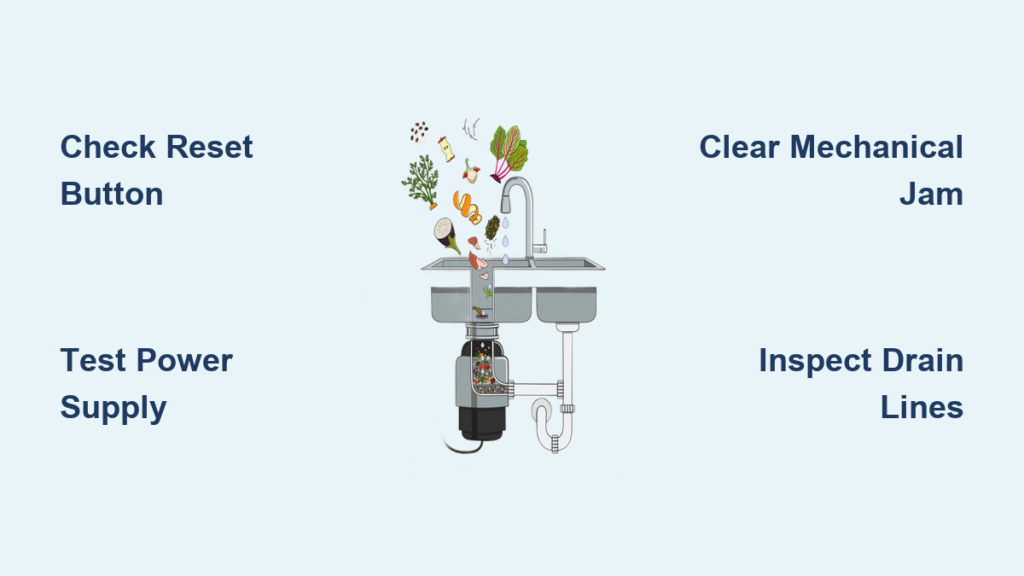
You’ve just finished dinner cleanup when you hit the switch on your kitchen waste disposal—and nothing happens. No hum, no grinding, just silence while food scraps pile up in your sink. When your kitchen waste disposal not working, it disrupts your entire kitchen workflow and creates immediate frustration. Most homeowners face disposal problems at least once during the unit’s lifespan, but the good news is that 80% of issues can be resolved without calling a professional. This guide walks you through systematic troubleshooting steps to diagnose and fix the exact problem causing your disposal to fail.
Understanding why your disposal stopped working starts with recognizing how these systems operate. Your garbage disposal is an electrically powered grinding station installed beneath your sink that breaks food waste into particles small enough to flow safely through plumbing. When it fails, the problem typically falls into one of four categories: electrical issues preventing activation, mechanical jams blocking the grinding mechanism, drainage obstructions causing backups, or component wear reducing efficiency. By following these diagnostic steps in order, you’ll identify the specific failure mode and implement the appropriate solution—saving you both time and money on unnecessary service calls.
Diagnose Why Your Disposal Won’t Turn On

The most immediate frustration occurs when pressing the switch produces complete silence from your disposal unit. When your kitchen waste disposal not working manifests as zero response, electrical system problems are almost always the culprit rather than mechanical failure.
Check the Reset Button First
Before grabbing any tools, locate the reset button on your disposal unit—this red or black button typically protrudes from the bottom or side of the housing. This thermal overload protector automatically disengages power when the motor overheats from binding or extended operation. Press the button firmly with your thumb until you feel a distinct click confirming it has reset and sits flush with the housing. Wait 5-10 minutes to allow the motor to cool completely before testing again.
If the reset button immediately pops out again when you attempt to restart the unit, you’re dealing with either a mechanical jam preventing free rotation or an internal electrical fault. The reset button serves as your first diagnostic indicator—its willingness to stay depressed tells you whether the motor can safely attempt to start without binding. Never repeatedly press the reset button while the underlying problem persists, as this can cause permanent motor damage.
Test Electrical Power and Connections
When the reset button fails to restore function, verify electricity actually reaches your disposal. Check your home’s electrical panel for any tripped breakers, resetting them if necessary. Locate the outlet beneath your sink (most disposals plug into a dedicated receptacle) and test it using a lamp or phone charger. If the outlet shows no power, you may have a tripped GFCI outlet elsewhere that needs resetting.
Examine the power cord for visible damage, cracked insulation, or burnt smells indicating electrical problems. For hardwired units (without a plug), turn off the circuit breaker before removing the cover plate to inspect wire connections for corrosion or loose terminals. Any signs of burning, melting, or corrosion indicate electrical damage requiring professional attention—do not attempt further DIY repairs in these cases.
Identify Motor Hum Without Rotation
If your disposal produces a humming sound when activated but the grinding mechanism doesn’t move, the motor is receiving power but cannot rotate the flywheel. This condition almost always indicates a mechanical jam—something is physically preventing the grinding components from turning freely. Common culprits include silverware, bottle caps, glass fragments, or fruit pits lodged between the rotating flywheel and stationary grinding ring.
The humming sound represents the motor attempting but failing to overcome this resistance. Continuing to run the unit in this condition damages the motor windings as stalled operation draws excessive current. When you hear this hum, immediately turn off the disposal and prepare to clear the jam manually—this is a 15-minute DIY fix that prevents costly motor replacement.
Fix Common Grinding and Noise Problems
A disposal that runs but makes alarming sounds or fails to properly grind waste presents a different challenge. These symptoms indicate mechanical problems within the grinding chamber or worn components requiring attention.
Remove Foreign Objects from Chamber
Foreign objects rank among the most common causes of kitchen waste disposal not working properly. Before attempting any removal, always disconnect power by unplugging the unit or turning off its circuit breaker. Insert a wooden broom handle or specialized disposal wrench into the grinding chamber through the sink opening. Apply firm, steady pressure against any obstruction while rotating the flywheel back and forth—most jams require clockwise rotation (when viewed from above) to loosen trapped material.
The flywheel should rotate freely through a complete revolution once cleared. After clearing the jam, remove visible debris and reassemble any components before restoring power. For better visual access, remove the splash guard by unscrewing it from the sink flange. Shine a flashlight into the chamber to identify remaining objects, removing them with pliers—not your fingers, even with power disconnected.
Stop Strange Noises During Operation
Grinding, rattling, or clicking sounds during normal operation suggest specific problems requiring attention:
- Single metallic click: Usually indicates a small foreign object passing through the mechanism (may resolve itself)
- Continuous grinding or rattling: Suggests larger objects lodged in the chamber or loose hardware striking the housing
- High-pitched squealing: Often points to bearing failure or insufficient lubrication at the motor shaft
Metallic sounds might indicate loose mounting hardware, a damaged flywheel, or components within the motor assembly striking the housing. These sounds typically worsen over time and eventually lead to complete failure, making early diagnosis valuable.
Resolve Water Backup and Drainage Issues

When water backs up into your sink during or after using the disposal, the problem often lies in the drain system rather than the unit itself. Understanding this distinction saves time and effort.
Clear Clogged Drain Lines
The disposal connects to a drain system including the sink strainer, P-trap, and branch drain line. Over time, these accumulate grease, food particles, and soap residue that restrict water flow. Disconnect the P-trap and drain lines, inspecting for accumulated debris. Clean out blockages using a bottle brush or plumbing snake, paying special attention to the discharge tube connection where food waste commonly accumulates.
For double-bowl sink configurations with a dishwasher connection, ensure the disposer knockout plug was properly removed during installation if your dishwasher drains through the disposal. Flush drain lines with hot water and baking soda to dissolve grease accumulation before reassembly—this simple step prevents 60% of recurring backup issues.
When to Repair vs Replace Your Unit

Economic considerations often determine whether repairing your current unit makes sense or whether replacement provides better value.
Evaluate Repair Costs Against Replacement
Minor repairs such as reset button replacement, switch replacement, or capacitor replacement typically cost $50-150 including parts and labor. These repairs restore function when the problem is isolated to a single component rather than systemic failure. Motor replacement or grinding mechanism overhaul often approaches or exceeds the cost of a new unit, particularly for older disposals where parts may be difficult to source.
As a general guideline, replacement becomes economical when repair costs exceed 50% of a new unit’s price. A $150 repair on a unit where a comparable new model costs $250 makes little sense when the repaired unit may fail again soon due to age-related wear on other components.
Recognize When Professional Service Is Necessary
Certain symptoms indicate problems requiring professional attention:
- Burning smells suggesting motor windings experiencing electrical problems
- Visible smoke or electrical arcing indicating serious faults
- Recurring overload trips despite proper usage
- Water leaking from the motor housing itself
Professional technicians possess specialized diagnostic equipment and access to OEM parts unavailable to most homeowners. When uncertainty exists about any procedure, professional service provides the safest resolution.
Prevent Future Disposal Problems
Regular maintenance and proper usage dramatically extend disposal lifespan and prevent most common failure modes.
Follow Proper Usage Guidelines
Always run cold water during disposal operation and for 15-30 seconds after grinding completes. Cold water solidifies grease and fat, allowing the grinding mechanism to break these materials into small particles that flush through the drain rather than accumulating in pipes. Hot water melts grease, causing it to coat pipe walls and create stubborn blockages.
Avoid grinding fibrous materials like celery stalks, corn husks, and onion skins that wrap around the flywheel shaft. Never dispose of grease, oil, or fat. Cut large food items into smaller pieces before processing and feed waste gradually rather than loading the chamber completely.
Establish Monthly Maintenance Habits
Monthly cleaning maintains disposal efficiency:
- Grind ice cubes to sharpen impeller edges while scouring the grinding chamber walls
- Follow with citrus peels to freshen the unit and leave pleasant odors
- Inspect monthly for changes in operating sounds or new leaks
- Test the reset button operation periodically to ensure it functions freely
These simple inspections identify developing problems before complete failure occurs, allowing for planned repairs rather than emergency replacements.
A kitchen waste disposal not working doesn’t have to mean an expensive service call or immediate replacement. Most problems fall within DIY repair capability with basic tools and systematic troubleshooting. By understanding the electrical and mechanical systems, following proper diagnostic procedures, and addressing problems early, you can restore your disposal to full function and extend its operational life significantly. When repairs prove impractical, the information in this guide helps you make informed replacement decisions, ensuring your kitchen returns to full functionality with minimum expense and hassle. Remember that consistent maintenance prevents 70% of disposal failures—making your unit a reliable kitchen partner for years to come.