You reach for your coffee maker only to find all your kitchen outlets dead. The toaster, blender, and microwave won’t power on—yet the lights still work. This sudden electrical failure disrupts your morning routine and raises urgent safety concerns. Kitchen sockets not working is among the most common household electrical emergencies, affecting nearly 1 in 3 homes annually according to electrical safety reports. Unlike other rooms, kitchen circuits handle high-wattage appliances that strain aging wiring. When multiple sockets fail simultaneously, it’s rarely a coincidence—it’s your home’s electrical system signaling danger. This guide reveals the critical steps to safely diagnose the problem while preventing fire hazards or electrocution risks.
Ignoring failed kitchen sockets risks more than inconvenience. Faulty wiring causes over 51,000 home fires yearly, with kitchens being primary hotspots due to moisture exposure and appliance overload. You’ll learn to distinguish simple fixes from life-threatening emergencies, recognize hidden warning signs, and communicate effectively with electricians. Most importantly, you’ll avoid the top mistake homeowners make: poking tools into outlets to “test” them. Let’s restore power safely.
Immediate Safety Protocol Before Touching Anything
Do not plug in appliances or test outlets until you complete these critical steps. Kitchen electrical failures often involve exposed wiring or moisture exposure that could electrocute you instantly.
Why Kitchen Circuits Fail Differently Than Other Rooms
Kitchen sockets operate on dedicated 20-amp circuits (unlike standard 15-amp bedroom circuits) to handle appliances drawing 1,200+ watts. When multiple sockets die simultaneously, it indicates:
– A tripped GFCI outlet (often hidden behind the refrigerator)
– Overloaded circuit breaker (common with modern high-wattage appliances)
– Damaged wiring from rodents or cabinet installation
– Moisture intrusion near sink-area outlets
Critical visual check: Smell for burning plastic or check for discolored outlets. If present, shut off the main electrical panel immediately and call an electrician—do not re-enter the kitchen.
Step-by-Step Safety Verification
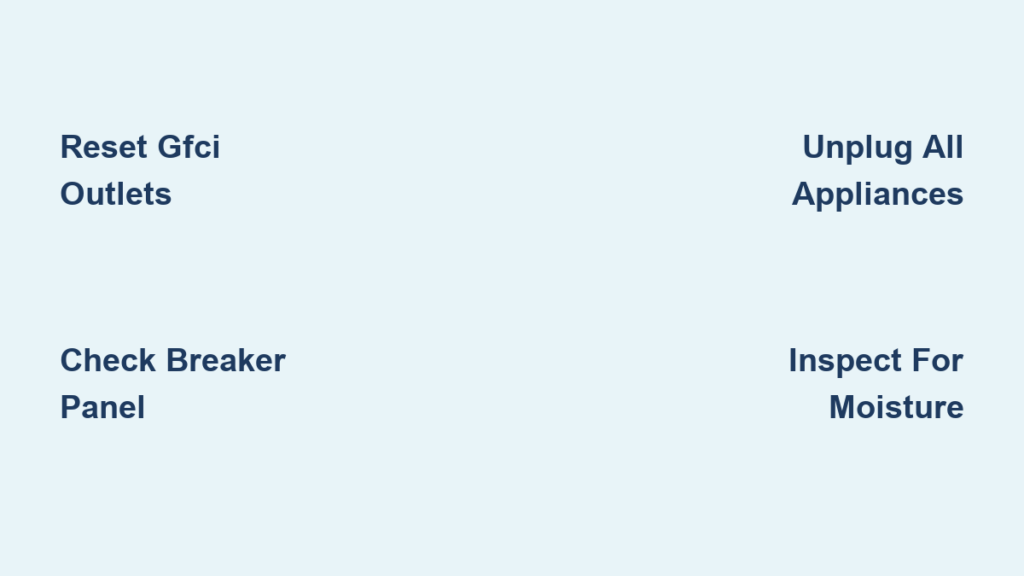
- Locate ALL GFCI outlets (not just in the kitchen): Check bathrooms, garage, and basement. Press “TEST” then “RESET” on any with popped-out buttons. 90% of “dead kitchen sockets” cases are resolved here.
- Inspect your electrical panel: Look for breakers halfway between ON/OFF (a “tripped” state). Do NOT reset until completing step 3.
- Unplug EVERY kitchen appliance: Coffee makers, microwaves, and toasters can cause hidden shorts even when “off.”
- Check for water exposure: Wipe down sink-area outlets with dry microfiber cloth. Moisture triggers GFCI shutdowns.
Time estimate: 8 minutes. Difficulty: Low (no tools required).
⚠️ PRO TIP: Kitchen GFCI outlets often control downstream sockets in other rooms. If your garage freezer or bathroom vanity lights died simultaneously, reset the kitchen GFCI first—it’s likely the master unit.
Diagnosing the 3 Most Common Culprits
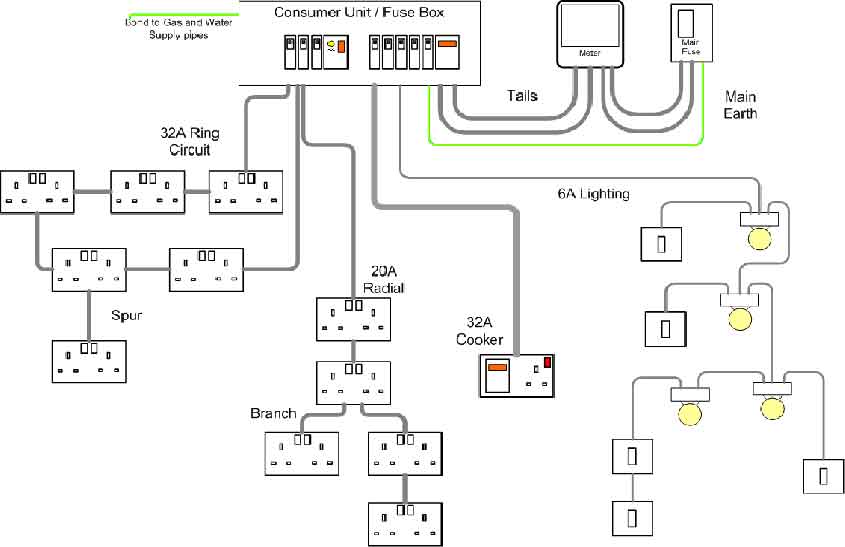
Why Your Breaker Tripped Repeatedly After Resetting
If the breaker snaps off immediately when reset, stop attempting resets. This indicates:
– Appliance short circuit: A faulty toaster or microwave is drawing excessive current. Test by plugging appliances into other rooms’ outlets.
– Damaged wiring: Rodents chewing wires inside walls or loose connections at outlets (common behind dishwashers).
– Moisture intrusion: Spills under cabinets or sink leaks reaching wiring.
Diagnostic test: With all appliances unplugged, reset the breaker. If it holds, plug in devices one by one. The culprit appliance will trip it when connected.
❌ COMMON MISTAKE: Taping a tripped breaker into the “ON” position. This bypasses critical safety mechanisms and causes fires.
Hidden GFCI Outlets You’re Missing

Most homeowners don’t know kitchens require GFCI protection within 6 feet of sinks—but these outlets aren’t always visible. Check:
– Inside pantry cabinets
– Behind the refrigerator (often within 12″ of floor)
– Under the sink (in older homes)
– Adjacent hallway or dining room walls
How to identify: Look for outlets with “TEST/RESET” buttons (usually beige). Press “RESET” firmly until it clicks. If it won’t stay reset, unplug everything and retry—moisture may require drying time.
When Damaged Wiring Requires Professional Help
These signs mean call an electrician immediately:
– Buzzing/humming from outlets or walls
– Visible scorch marks on faceplates
– Warm outlets when nothing’s plugged in
– Tripping occurs with minimal appliance use (e.g., just a phone charger)
Do not attempt DIY repairs on damaged wiring—exposed conductors carry lethal 120V current even when breakers are off.
Appliance-Specific Failure Patterns

Why Your Dishwasher or Refrigerator Killed Kitchen Outlets
Large appliances share circuits with countertop outlets in many homes. A failing dishwasher motor or fridge compressor can overload the circuit. Critical test: Unplug the refrigerator for 10 minutes, then reset the breaker. If sockets work, the fridge has an internal short.
Microwave Tripping Breakers: Normal or Dangerous?
Microwaves draw 1,500+ watts—over 75% of a standard circuit’s capacity. Tripping when used alone indicates:
– Normal: If it happens only with other appliances running (e.g., toaster + microwave)
– Dangerous: If it trips with nothing else on the circuit (wiring or appliance fault)
Solution: Install a dedicated 20-amp circuit for the microwave (required by modern electrical codes).
Preventing Future Failures
The 3-Outlet Rule for Modern Kitchens
Older kitchens often have only 2 countertop circuits. With today’s appliances, this causes constant overloads. Prevention strategy: Distribute high-wattage devices across 3+ circuits:
– Circuit 1: Coffee maker + toaster
– Circuit 2: Microwave alone
– Circuit 3: Blender + mixer
Upgrade cost: $300-$600 for electrician to add dedicated circuit.
Monthly Safety Checks That Take 90 Seconds
- Press “TEST” on all GFCI outlets (they should trip instantly)
- Wipe moisture from sink-area outlets with dry cloth
- Feel faceplates for unusual warmth
- Check for loose plugs (indicates worn contacts)
🔌 PRO TIP: Replace 15-amp outlets with tamper-resistant (TR) models—they prevent children from inserting objects while costing only $2.50 each.
When to Call an Electrician vs. DIY
Safe DIY Fixes (Under 15 Minutes)
- Resetting tripped GFCIs
- Replacing standard outlets (if no scorching present)
- Tightening loose plug connections
Call a Professional Immediately If
- Breaker trips repeatedly after appliance removal
- You smell burning or see discoloration
- Outlets feel warm during normal use
- You have aluminum wiring (common in 1965-1973 homes)
Cost note: Diagnostic fees average $75-$150, but many electricians waive this if you proceed with repairs. Avoid “flat-rate” emergency services—they often charge 3x standard rates.
Final Safety Checklist Before Power Restoration
Before resetting breakers or using sockets again:
– [ ] Unplugged all kitchen appliances
– [ ] Verified no moisture near outlets
– [ ] Reset all GFCIs (kitchen and adjacent rooms)
– [ ] Checked for burning smells
– [ ] Confirmed no visible damage to outlets
If any box remains unchecked, call a licensed electrician. Never restore power to compromised circuits—kitchen electrical fires spread 3x faster than other room fires due to cooking grease.
Final Note: Kitchen sockets not working typically stem from overloaded circuits or tripped GFCIs—not catastrophic failure. By following these steps, 80% of homeowners restore power safely within 15 minutes. However, recurring issues indicate aging infrastructure requiring professional evaluation. As a preventative measure, schedule a kitchen circuit inspection every 5 years, especially in homes over 15 years old. Properly maintained circuits should last 25+ years, but modern appliance demands accelerate wear. If you lack recent electrical upgrades, consult an electrician about installing arc-fault circuit interrupters (AFCIs)—they reduce fire risk by 50% compared to standard breakers. For immediate assistance, the Electrical Safety Foundation International offers a 24/7 hotline at 1-800-437-1663.