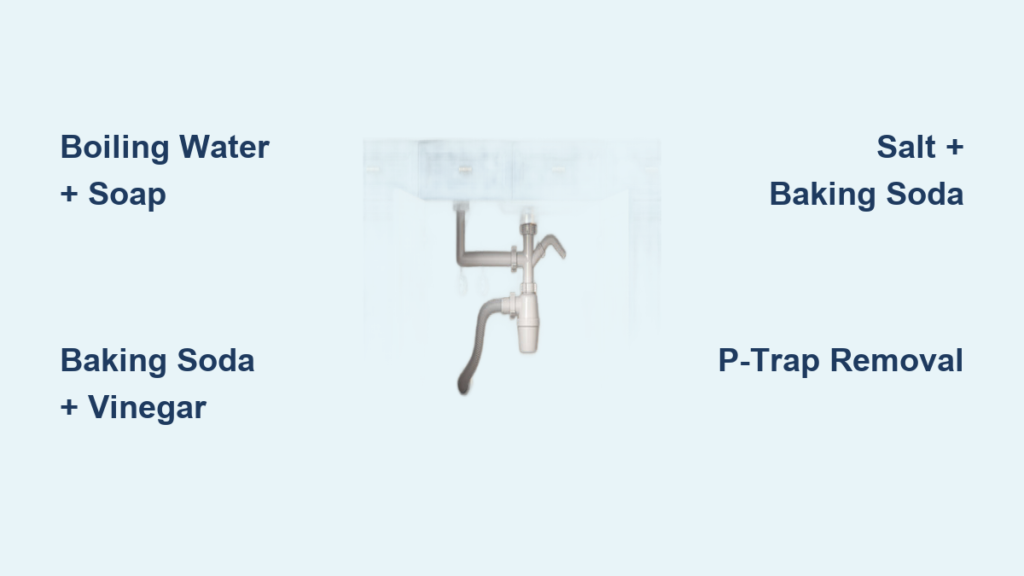
Standing water in your kitchen sink after washing dishes isn’t just inconvenient—it’s a clear sign your kitchen pipe clogged how to fix situation has become urgent. That slow-draining sink you’ve been ignoring for days can quickly escalate into a full backup that disrupts meal prep, dishwashing, and your entire kitchen routine. Most homeowners don’t realize that nearly 90% of kitchen sink clogs occur within the first few feet of pipe beneath the sink, making them perfect candidates for DIY repair. The grease from last night’s dinner, combined with food particles and soap scum, has created a stubborn blockage that’s stopping water in its tracks. This comprehensive guide delivers exactly what you need: step-by-step solutions that actually work, organized by clog severity so you can fix your kitchen pipe clogged how to fix problem in minutes rather than hours.
Boiling Water with Dish Soap: Immediate Grease Clog Solution
When your kitchen pipe clogged how to fix issue involves greasy residue from cooking oils, boiling water combined with dish soap delivers instant results without chemicals. This technique works by melting solidified grease that’s stuck to your pipe walls while the soap breaks down oily buildup through emulsification. You’ll know this method will work if your sink drains slowly after frying or cooking with fats but clears temporarily when running hot water.
Bring two liters of water to a full rolling boil, then stir in five drops of liquid dish soap—the degreasing agent that enhances the hot water’s effectiveness. Carefully pour half the mixture down the drain, wait 30 seconds for the heat to penetrate the blockage, then add the remainder. Let the solution sit for three minutes to dissolve the grease before testing drainage with cold water. For stubborn grease clogs, repeat this process twice more with five-minute cooling intervals between attempts.
Critical safety note: Never use boiling water on PVC or plastic pipes as the extreme heat can warp or crack these materials. If your plumbing is less than 20 years old, assume it’s plastic unless you’ve confirmed otherwise. Metal pipes handle this treatment safely, but always wear heat-resistant gloves when handling boiling water to prevent burns.
Baking Soda and Vinegar Reaction: Organic Clog Dissolver
This dynamic duo creates a powerful fizzing action that breaks down organic buildup when your kitchen pipe clogged how to fix problem involves food particles and soap scum. The chemical reaction between sodium bicarbonate and acetic acid produces carbon dioxide bubbles that physically dislodge debris while dissolving grease. You’ll see immediate bubbling at the drain opening when the solution makes contact with the clog—this visual confirmation means the treatment is working.
Pour ⅓ cup of baking soda straight down the drain, followed immediately by ⅓ cup of white vinegar. The moment these ingredients combine, cover the drain with a wet cloth or stopper to force the reaction downward into the pipes. Let the mixture work for 30 minutes (or up to an hour for severe blockages), then flush with hot water for two minutes. For clogs that resist standard treatment, double the amounts to ½ cup baking soda and 1 cup vinegar for increased cleaning power.
Pro tip: After applying the mixture, place a heavy object on top of your drain cover—this maintains pressure that drives the fizzing action deeper into the clog rather than allowing it to escape back up through the sink.
Salt and Baking Soda Odor-Eliminating Treatment
When your kitchen pipe clogged how to fix situation comes with foul odors, this dual-action treatment clears blockages while neutralizing smells from decomposing food. Salt’s abrasive properties scrub residue from pipe walls while baking soda absorbs unpleasant odors—perfect for clogs caused by trapped food waste that’s begun to rot.
Combine ½ cup baking soda with ½ cup table salt and pour the mixture directly into the drain. Let it sit overnight for maximum penetration into stubborn clogs—this extended contact time allows the mixture to break down organic matter while absorbing odors. In the morning, flush with hot water for three minutes to remove all loosened debris. Monthly application prevents future clogs and keeps your sink smelling fresh.
Visual cue: If you see dark, sludge-like material in your sink strainer, this treatment will be particularly effective as it targets decomposing organic matter.
Hydrogen Peroxide Sanitizing Drain Cleaner
Professional plumbers often reach for hydrogen peroxide when your kitchen pipe clogged how to fix problem involves bacteria buildup causing persistent odors. This powerful oxidizer breaks down organic matter while disinfecting the entire drain system—a double benefit you won’t get from standard chemical cleaners.
Mix one tablespoon of baking soda with one cup of 3% hydrogen peroxide until dissolved. Pour the solution down your clogged drain and watch for vigorous bubbling—the fizzing action confirms it’s actively breaking down the blockage. Allow 20 minutes for the reaction to complete before flushing with hot water. Unlike commercial drain cleaners, this solution won’t damage any pipe material and leaves your drain sanitized.
Critical warning: Never mix hydrogen peroxide directly with vinegar—this creates peracetic acid that can irritate skin and eyes. Always use these ingredients separately with thorough flushing between applications.
Cup Plunger Technique for Sink-Specific Clogs
When natural methods fail to fix your kitchen pipe clogged how to fix issue, proper plunger technique creates the hydraulic force needed to dislodge stubborn blockages. Most homeowners use the wrong plunger type—flange plungers designed for toilets won’t seal properly on flat sink surfaces.
Select a cup plunger with a flat rubber cup, fill your sink with enough water to cover the cup completely, and remove any stopper. Position the plunger directly over the drain and press down firmly to create an airtight seal. Pump vigorously for 30 seconds with quick, forceful strokes—this alternating pressure change often breaks apart clogs. For double sinks, plug the second drain with a wet cloth before plunging to maximize pressure on the clogged side.
Troubleshooting tip: If plunging creates gurgling sounds but no drainage improvement, the clog is likely deeper in the system—move to P-trap cleaning or drain snake methods next.
Wire Hanger Drain Extraction Method
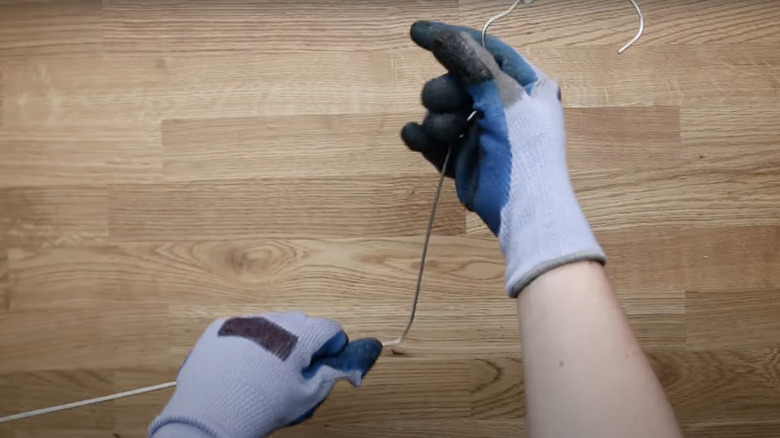
When your kitchen pipe clogged how to fix problem involves physical obstructions like food chunks or small objects, a modified wire hanger reaches blockages beyond what plunging can handle. Straighten a metal coat hanger completely, leaving a small hook at one end, then wrap the tip with duct tape to prevent pipe scratches.
Insert the taped hook into the drain and gently push until you feel resistance from the clog. Rotate the hanger while applying slight pressure to catch debris, then slowly pull upward to extract the obstruction. Repeat this process multiple times, flushing with hot water between attempts to help break apart stubborn material. For deeper clogs, a $10 manual drain snake offers better reach and control.
Warning: Avoid aggressive scraping in older homes with galvanized pipes—these corrode internally and can develop weak spots that metal tools might puncture.
P-Trap Removal: Targeted Clog Elimination

The U-shaped P-trap beneath your sink collects 70% of all kitchen clogs, making its removal the most effective solution for persistent blockages. Place a bucket underneath the trap, then loosen both slip nuts with an adjustable wrench—turn counterclockwise to release. Carefully remove the trap and empty its contents into the bucket, where you’ll likely find the primary clog material.
Clean the P-trap thoroughly with warm, soapy water while inspecting both connecting pipes for additional blockages. Before reassembly, pour boiling water down both openings to flush residual debris. Hand-tighten the slip nuts—overtightening can crack the fittings and cause leaks. Run hot water for several minutes after reinstallation to verify complete clearance.
Time estimate: This method takes 30-45 minutes but resolves most stubborn clogs that resist other techniques.
Professional Help Warning Signs
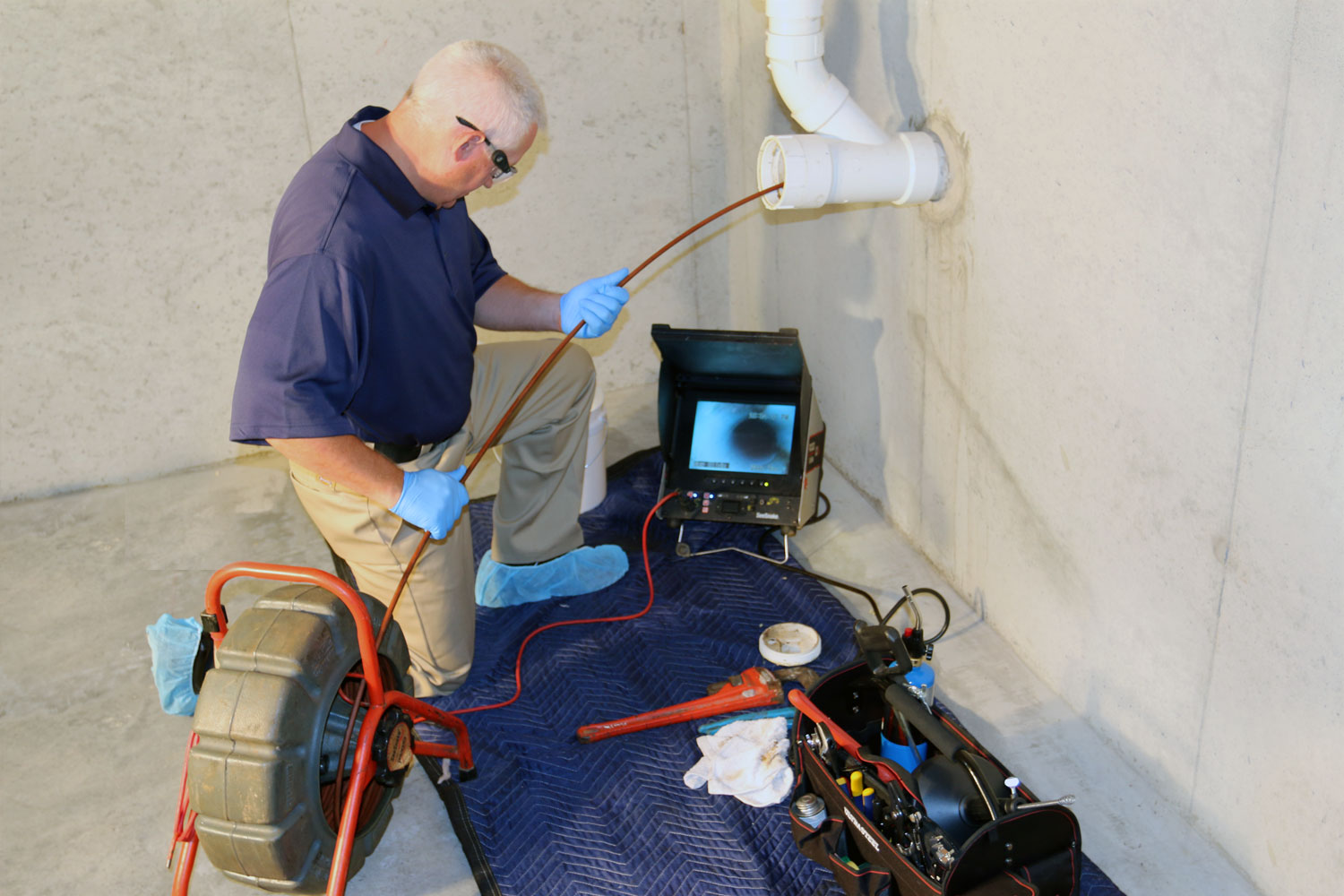
Certain symptoms indicate your kitchen pipe clogged how to fix problem requires professional intervention. Call a plumber immediately if water backs up into other drains when using your sink—this signals a main line blockage. Persistent gurgling sounds from multiple drains suggest serious venting issues. If clogs return within days of clearing, you likely have tree root intrusion or pipe damage needing specialized equipment.
Professional plumbers use motorized augers that reach 100+ feet into drain lines and hydro-jetting systems that blast away buildup with 4,000 PSI water pressure—tools that effectively resolve problems beyond DIY capabilities.
Monthly Drain Maintenance Routine
Prevent future kitchen pipe clogged how to fix emergencies with this simple monthly routine: Pour ½ cup baking soda followed by 1 cup vinegar down your drain, cover for 30 minutes, then flush with hot water. Run cold water while operating your garbage disposal with ice cubes to clean grinding components. Install fine-mesh strainers that catch food particles before they enter pipes.
Critical prevention habit: Never pour grease down the sink—even small amounts accumulate over time. Instead, collect cooking fats in a metal can and dispose of them in the trash once solidified.
Choosing the Right Method Based on Clog Type
| Clog Characteristics | Best Method | Expected Success Rate |
|---|---|---|
| Grease buildup with slow drainage | Boiling water + dish soap | 85% for minor clogs |
| Food particles with foul odors | Salt and baking soda overnight | 90% with proper contact time |
| Deep physical obstruction | P-trap removal + cleaning | 95% for sink-specific clogs |
| Recurring blockages | Professional hydro-jetting | 100% for main line issues |
When your kitchen pipe clogged how to fix situation arises, start with the simplest appropriate method based on your clog’s characteristics. Most residential sink blockages yield to these DIY techniques, saving you $150+ in emergency plumber fees. Implement the monthly maintenance routine to prevent 90% of future clogs—your kitchen plumbing will thank you. For persistent issues that resist these methods, contact a licensed plumber before the problem escalates into a costly main line backup.