Nothing ruins your kitchen routine faster than reaching for hot water to wash dishes or sanitize surfaces and getting only a cold stream. When your kitchen faucet hot water stops working but cold water flows normally, you’re dealing with a specific plumbing issue that can usually be resolved without calling a professional. This comprehensive guide walks you through every possible cause and solution for your kitchen faucet hot water problem, saving you time, money, and frustration.
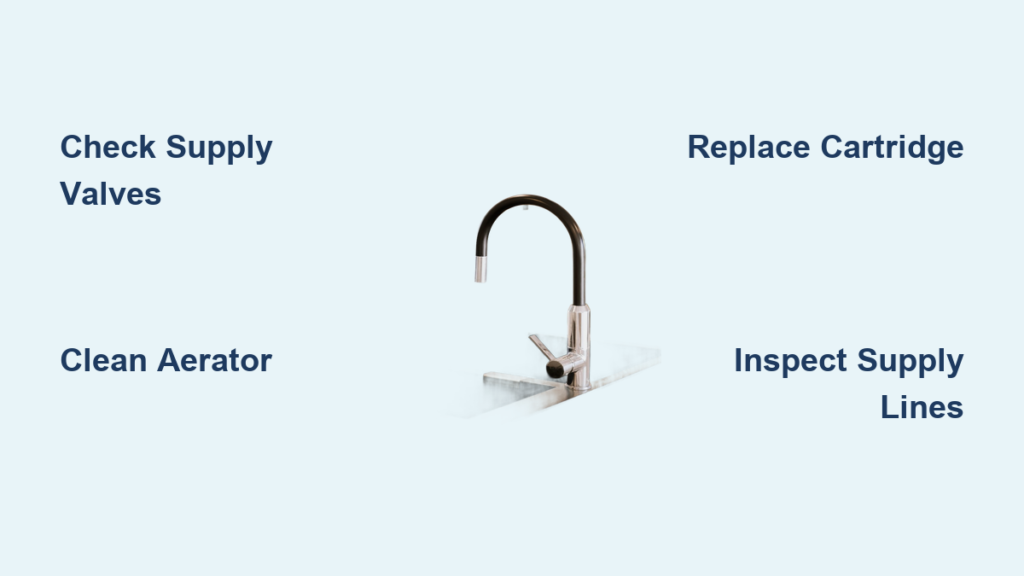
Most kitchen faucet hot water failures occur due to localized issues rather than problems with your entire plumbing system. Your faucet’s internal components control how hot and cold water mix, and when hot water stops flowing, the culprit is typically found in one of several key areas: the aerator, cartridge, supply lines, or diverter mechanism. The good news is that over 80% of these issues can be diagnosed and fixed with basic tools and minimal plumbing knowledge.
Before you start dismantling your faucet, confirm that your water heater is actually producing hot water. Test hot water flow at other fixtures in your home. If your bathroom sink or shower delivers proper hot water, you’ve isolated the problem to your kitchen faucet specifically. This critical first step prevents unnecessary work on your water heater when the issue is much more localized.
Quick Diagnostic Steps That Take Less Than Five Minutes
Start with these simple checks that often reveal the problem immediately without any tools.
First, fully open both the hot and cold handles on your kitchen faucet. Sometimes partially closed handles restrict water flow enough to make hot water appear non-existent. Turn both handles all the way to their maximum positions and observe the water flow carefully. If hot water suddenly appears when fully opened, you’ve discovered a simple handle positioning issue rather than a mechanical failure.
Next, check hot water functionality at other fixtures throughout your home. Run the bathroom sink, shower, and any other faucets connected to your hot water system. If hot water works correctly elsewhere, you’ve eliminated your water heater and main plumbing as the source of the problem. The issue is definitely confined to your kitchen faucet or its immediate connections. If no hot water works anywhere in your home, your water heater requires attention instead.
Inspect the supply valves under your sink. These small valves control water flow from your main plumbing lines to the faucet. Over time, these valves can corrode internally, become partially clogged with mineral deposits, or accidentally get turned. Turn both hot and cold supply valves fully counterclockwise to ensure they’re completely open, then test your faucet again. Many “hot water not working” issues are solved simply by ensuring these valves are fully open.
Clear a Clogged Aerator Causing Restricted Hot Water Flow

Mineral deposits and sediment frequently clog faucet aerators, especially in areas with hard water. A clogged aerator can restrict hot water flow to a mere trickle while allowing cold water to flow more freely, creating the illusion that hot water has stopped working entirely.
To inspect your aerator, locate it at the very tip of your faucet spout. Most aerators screw on and can be removed by hand or with adjustable pliers wrapped in a cloth to prevent scratching the finish. Once removed, examine the small mesh screens inside. You’ll likely see white or yellowish mineral buildup blocking the openings, particularly on the hot water side where minerals precipitate more readily.
Disassemble the aerator carefully, noting the order of components as you remove them. Soak all parts in white vinegar for 30 minutes to dissolve mineral deposits—vinegar’s acidity breaks down calcium carbonate and other common minerals. After soaking, scrub each piece with an old toothbrush to remove stubborn buildup, paying special attention to the fine mesh screens. Rinse all components thoroughly with clean water and reassemble in the same order they came apart. Reattach the aerator to the faucet and test hot water flow.
Pro tip: If cleaning doesn’t restore proper flow, your aerator may be too damaged or internally clogged to salvage. Replacement aerators cost between five and twenty dollars and install in seconds. Bring your old aerator to a hardware store to ensure you get the correct replacement with matching threading and flow specifications.
Test and Replace the Faulty Cartridge Stopping Hot Water Flow
Single-handle kitchen faucets rely on an internal cartridge to control both water flow and temperature mixing. When this cartridge fails, hot water often stops working while cold water continues normally—a classic symptom of cartridge problems.
Signs of a failing cartridge include difficulty adjusting temperature smoothly, water leaking from the base of the handle when in use, or a handle that feels loose, wobbly, or unusually stiff. If your hot water stopped working alongside any of these symptoms, the cartridge almost certainly needs replacement.
Replacing a cartridge requires shutting off water supply, removing the handle, and extracting the old cartridge. Follow this process: shut off both hot and cold supply valves under the sink, open the faucet to release pressure, remove the decorative cap on the handle (usually pops off with a flathead screwdriver), remove the handle screw, pull off the handle, unscrew the retaining clip or nut, and carefully pull out the old cartridge.
Take the old cartridge to a hardware or plumbing store to find an exact match—faucet cartridges are highly model-specific. Cartridges typically cost between fifteen and fifty dollars depending on your faucet brand and model. Install the new cartridge following manufacturer instructions precisely, reassemble the handle components in reverse order, restore water supply slowly, and test both hot and cold functions thoroughly.
Important note: Two-handle kitchen faucets use separate hot and cold valve stems instead of a single cartridge. If only hot water fails on a two-handle faucet, the issue is likely isolated to the hot-side valve stem—remove the hot handle and inspect or replace the valve stem assembly.
Inspect Supply Lines and Shut-Off Valves Blocking Hot Water

Supply lines can develop internal restrictions, kinks, or leaks that specifically affect hot water flow. A small clog in the hot supply line or a failing shut-off valve can completely cut off hot water while leaving cold water functioning normally.
Examine the flexible supply lines running from your shut-off valves to the faucet connections. Look for kinks, bulges, corrosion at connection points, or moisture indicating slow leaks. Supply lines damaged by age, mineral buildup, or physical stress often need replacement—don’t ignore even minor leaks as they can cause significant water damage over time.
Shut-off valves themselves frequently fail internally. These valves can corrode or become clogged with sediment, preventing water flow even when fully open. To test if a shut-off valve is the problem, turn off the valve completely, disconnect the supply line from the faucet (place a towel underneath to catch drips), position a bucket beneath, and turn the valve back on. If water flows freely from the supply line but not through the faucet, the valve is working and the problem lies elsewhere. If no water flows from the disconnected supply line, the valve is clogged or failed and needs replacement.
Safety warning: When replacing supply lines or shut-off valves, always use plumber’s tape on threaded connections and tighten connections firmly but not overtightened—excessive force can crack fittings. Turn off main water supply before replacing shut-off valves to prevent flooding.
Check for Water Heater Issues Affecting Kitchen Faucet

When no hot water works anywhere in your home, your water heater requires immediate attention. Before troubleshooting your kitchen faucet further, confirm your water heater is functioning properly.
Check your water heater’s temperature setting—many units have a dial that can be accidentally bumped to a lower setting. For electric water heaters, check that the circuit breaker hasn’t tripped and press the reset button if present. Gas water heaters may have a pilot light that went out—follow manufacturer instructions to relight it safely.
If your water heater is producing lukewarm or inconsistent hot water throughout your home, sediment buildup in the tank may be reducing efficiency. Drain 3-4 gallons from the tank’s bottom drain valve into a bucket to flush accumulated sediment. This simple annual maintenance task often improves hot water performance significantly.
Expert insight: Water heaters approaching ten years old may be nearing end of life. If your unit shows signs of rust at the base or around fittings, requires frequent repairs, or makes unusual noises, replacement may be more cost-effective than continued maintenance. Consider upgrading to a tankless model for more reliable hot water delivery.
Examine Diverter and Pull-Down Faucet Mechanisms
Pull-down and pull-out kitchen faucets include a diverter valve that redirects water from the main spout to the spray head. When this diverter fails or sticks in the spray position, it can prevent water from flowing through the main spout entirely, making it seem like hot water has stopped working.
Locate the diverter mechanism, which is typically near the base of the faucet body where it meets the sink. Many diverters can be accessed by removing the handle and faucet body. Remove any debris you find and ensure the diverter moves freely through its full range of motion. Mineral deposits frequently cause the diverter to stick, blocking flow from the main spout.
Pull the spray head out completely and cycle between spray and stream modes several times to work the diverter mechanism. This often dislodges debris causing the blockage. If cleaning doesn’t help, the diverter may need replacement—these parts typically cost between $10-$25 and install in minutes.
When to Call a Professional Plumber for Hot Water Issues
Some hot water issues require professional expertise and specialized tools. Knowing when to call a plumber saves time, prevents costly mistakes, and ensures the job gets done right the first time.
Call a professional plumber if you’ve completed all troubleshooting steps without success, the problem involves main plumbing lines behind walls, you need to solder or modify copper pipes, you lack the necessary tools or experience, or the faucet requires complete removal for deeper inspection. Plumbers typically charge between $50-$200 for faucet diagnosis and repair, with cartridge replacement on the higher end of that range for complex installations.
Critical warning: Hidden leaks inside walls or under cabinets warrant immediate professional attention. Water damage from undetected leaks leads to mold growth, structural problems, and repair costs that far exceed the initial plumbing service fee. If you notice water stains, musty odors, or unusually high water bills, call a plumber immediately.
Prevent Future Hot Water Problems with Simple Maintenance
Regular maintenance prevents most kitchen faucet hot water issues before they start. A few minutes of preventive care extends faucet lifespan and maintains consistent hot water flow.
Clean aerators monthly by removing and soaking in vinegar for 30 minutes. Inspect supply lines and connections quarterly for signs of corrosion, moisture, or wear—replace lines every 5 years as a precaution. Exercise shut-off valves periodically by turning them fully on and off to prevent them from seizing in place. Flush your water heater annually to remove sediment that affects hot water quality throughout your home.
Address small problems immediately before they become major failures. A dripping faucet, minor temperature fluctuations, or slight handle stiffness often signal developing issues that worsen over time. Taking 10 minutes to address early warning signs can save you hours of troubleshooting and hundreds of dollars in potential water damage later.
Kitchen faucet hot water problems usually stem from a handful of identifiable causes that most homeowners can resolve with basic tools and this guide. By methodically working through these diagnostic steps, you’ll restore your hot water flow efficiently and avoid unnecessary plumbing service calls. When DIY solutions fail or the job requires specialized plumbing expertise, a qualified professional will restore your hot water functionality with minimal disruption to your daily routine.