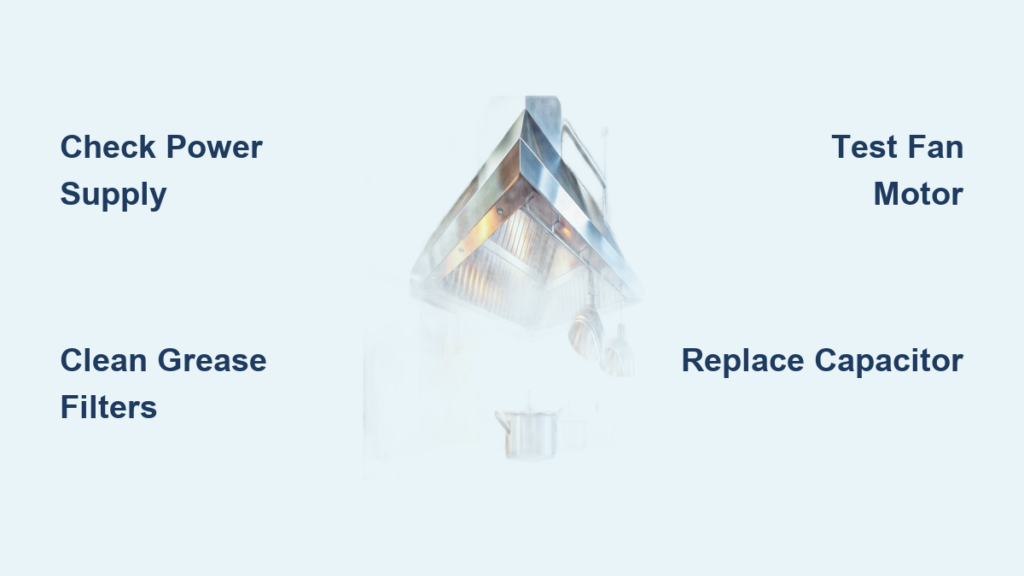
Grease-laden air hangs heavy in your kitchen after frying bacon, but your exhaust fan remains silent when you flip the switch. That distinctive hum you rely on to clear smoke from searing steaks is gone, leaving you with lingering odors and potential fire hazards. When your kitchen exhaust fan stops working, it’s not just an inconvenience—it compromises your kitchen’s air quality and safety. The good news is most failures stem from straightforward issues you can diagnose and repair yourself with basic tools. This guide delivers the exact steps to identify why your kitchen exhaust fan isn’t working and get your ventilation system functioning properly again.
Diagnose Power Supply Issues Before Disassembling
Your kitchen exhaust fan not working often traces back to simple power interruptions rather than complex mechanical failures. Start your troubleshooting here to avoid unnecessary disassembly.
Confirm Electrical Flow to Your Range Hood Unit
Test the wall switch controlling your exhaust fan by toggling it several times while listening for any internal clicking sounds. Many homeowners mistakenly assume switch failure when the problem actually lies with the circuit breaker. Check your electrical panel for tripped breakers—look for handles positioned between “ON” and “OFF” rather than fully in either position. Reset any suspect breakers by switching them completely off before turning back on.
For hardwired units without accessible plugs, use a non-contact voltage tester near the range hood’s electrical connections after removing the grease filter. Always shut off power at the breaker first—this prevents accidental electrocution when testing live wires. If no voltage registers when the switch is on, the problem exists in your home’s electrical system rather than the fan itself.
Verify Switch Functionality with Multimeter Testing
When visual inspection doesn’t reveal the issue, test switches with a multimeter set to continuity mode. Remove the switch cover plate and disconnect the wires (taking photos first for correct reconnection). Touch the multimeter probes to the switch terminals while toggling the switch—you should hear a beep when the circuit closes. No continuity indicates a faulty switch requiring replacement. Most standard wall switches cost under $15 and take minutes to swap out with basic screwdrivers.
Clear Grease Blockages Crippling Fan Performance

Accumulated grease represents the second most common reason your kitchen exhaust fan stops working properly. This sticky residue gradually restricts airflow and strains the motor until complete failure occurs.
Remove and Deep Clean Grease Filters Immediately
Slide out your range hood’s grease filters and examine them under bright light. If you can’t see through the mesh or notice hardened grease layers, cleaning is overdue. Soak metal filters in a degreaser solution (like Simple Green) mixed with hot water for 30 minutes, then scrub with a non-abrasive brush. For stubborn buildup, boil filters in a large pot of water with dish soap for 10 minutes before scrubbing. Aluminum mesh filters typically withstand dishwasher cleaning on the top rack, but check your manufacturer’s instructions first.
Access and Clean Internal Fan Blades Thoroughly
With filters removed, inspect the fan blades visible through the filter opening. Shine a flashlight to check for thick grease accumulation preventing free rotation. Most range hoods allow blade access by removing a center screw or retaining clip. Take blade assembly outdoors and spray with a citrus-based degreaser, letting it sit 15 minutes before scrubbing with an old toothbrush. Rinse thoroughly with low-pressure water—never use high-pressure hoses that could force moisture into motor components. Allow all parts to dry completely before reassembly, as residual moisture causes immediate electrical issues.
Test and Replace Failed Fan Motors Efficiently
When power flows correctly but your kitchen exhaust fan remains silent, motor failure becomes the prime suspect. Modern range hood motors typically last 7-10 years before requiring replacement.
Identify Motor Failure Through Auditory Clues
Attempt to activate your exhaust fan while placing your hand near the filter opening. A humming sound without blade movement indicates a seized motor—electrical current reaches the unit but mechanical failure prevents operation. This humming accompanied by a burning smell means immediate shutdown is necessary to prevent fire hazards. Never ignore burning odors—they signal serious electrical problems requiring professional intervention.
Replace Motors with Model-Specific Components
Locate your range hood’s model number (usually on a sticker inside the unit near the light compartment) before ordering replacement parts. Universal motors rarely work correctly in specific range hood models due to size, voltage, and mounting variations. Most manufacturers sell direct-replacement motors for $60-$150. Installation typically involves disconnecting three wires (marking their positions first), removing the fan blade, and reversing the process with the new motor. Allow 30-45 minutes for this DIY project if you’re comfortable with basic electrical connections.
Repair Faulty Control Systems Quickly

Electronic control panels and touch interfaces introduce additional failure points beyond simple switches in modern range hoods.
Fix Unresponsive Touch Controls with Simple Resets
Many digital control issues resolve with a complete system reset. Turn off power at the breaker for 10 minutes to clear any electrical glitches in the control board. If problems persist, clean the control surface with isopropyl alcohol on a soft cloth—grease buildup on touch sensors often causes unresponsiveness. For persistent issues, replacement control panels typically cost $40-$100 and snap into place after removing the old unit’s mounting screws.
Replace Critical Capacitors in Direct-Drive Motors

Single-phase motors in many range hoods rely on capacitors to provide the initial torque needed for startup. A failed capacitor prevents motor rotation even with proper power supply.
Safely Test and Install New Capacitors
Identify your capacitor’s specifications (microfarad rating and voltage) printed on its side before purchasing replacements. Use needle-nose pliers to carefully disconnect wires while noting their positions. Discharge the old capacitor by touching both terminals with an insulated screwdriver—this prevents dangerous electrical shocks. Install the new capacitor with identical specifications, ensuring secure wire connections. This $10-$20 component takes minutes to replace but restores function to many “kitchen exhaust fan not working” scenarios.
Prevent Future Failures with Strategic Maintenance
Regular upkeep prevents most common exhaust fan failures and extends system lifespan significantly.
Implement Monthly Filter Cleaning Routine
Establish a calendar reminder to clean grease filters monthly. Soak removable filters in hot, soapy water while scrubbing with a dedicated brush—never use steel wool that damages protective coatings. For baffle-style filters common in commercial-grade hoods, disassemble and clean individual baffles thoroughly. Clean filters maintain optimal airflow and prevent grease migration into internal components.
Schedule Biannual Deep Cleaning Sessions
Every six months, perform comprehensive maintenance by:
– Removing and cleaning fan blades as described earlier
– Wiping interior housing surfaces with degreaser
– Checking ductwork connections for secure seals
– Verifying all electrical connections remain tight
This prevents the gradual buildup that eventually causes your kitchen exhaust fan not working situations.
A malfunctioning kitchen exhaust fan creates immediate problems with air quality and long-term fire risks from grease accumulation. By following this systematic approach—verifying power supply, clearing grease obstructions, testing motors and capacitors, and maintaining controls—you’ll solve most “kitchen exhaust fan not working” scenarios without professional help. Start with simple electrical checks before progressing to mechanical inspections, and always prioritize safety by disconnecting power before handling components. Implementing regular cleaning prevents 80% of common failures, keeping your kitchen ventilation system operating efficiently for years. When in doubt about electrical components or if burning smells occur, consult a licensed electrician—your safety outweighs any potential repair savings. With these troubleshooting steps, you’ll restore clear air to your kitchen faster than waiting for a service technician.