Is your kitchen chimney completely silent when you turn it on? Does it run but fail to pull away cooking smoke and odors? A malfunctioning kitchen chimney creates immediate problems in your cooking space – lingering grease smells, visible smoke during frying, and oily residue accumulating on your cabinets and walls. When your kitchen chimney stops working properly, it’s not just an inconvenience but a potential health and safety issue in your home. This guide provides practical troubleshooting steps you can take today to diagnose why your kitchen chimney isn’t functioning correctly and determine whether you can fix it yourself or need professional assistance.
Immediate Checks Before Troubleshooting Your Chimney
Before diving into complex repairs, verify these basic issues that commonly cause kitchen chimneys to stop working entirely.
Power Supply Verification Steps
Check if your kitchen chimney has lost power through these simple steps:
– Confirm the unit is properly plugged in at the electrical outlet
– Test the outlet with another appliance to ensure it’s functioning
– Locate your home’s circuit breaker panel and check if the kitchen circuit has tripped
– Reset any tripped breakers and see if the chimney responds
If your chimney uses hardwired electrical connections rather than a plug, this indicates a more serious electrical issue requiring professional attention. Never attempt to work with hardwired electrical components unless you’re qualified to do so.
Control Panel and Switch Testing
Kitchen chimneys often fail due to simple control panel issues rather than major mechanical problems:
– Press all control buttons firmly to see if any respond with lights or sounds
– Try operating the chimney using both manual controls and any remote control functionality
– Check for visible damage to control panels, such as water stains or burnt areas
– Listen for clicking sounds when pressing buttons, which indicates some electrical function
Pro Tip: Many modern kitchen chimneys have child lock features that can accidentally disable controls. Consult your user manual for instructions on disabling this feature if applicable to your model.
Motor and Fan Assembly Troubleshooting

When basic power checks don’t resolve your kitchen chimney not working issue, the problem likely involves the motor or fan assembly – the heart of your ventilation system.
Identifying Motor Failure Symptoms
A failed motor typically shows these telltale signs:
– Complete silence when turning on the unit (no humming sound)
– Burning smell coming from the chimney housing
– Visible smoke or scorch marks around the motor housing
– Tripping electrical breakers when attempting to operate
Motor failures usually require professional repair or replacement, as these components are complex electrical systems. Attempting DIY motor repairs without proper training often creates additional safety hazards.
Fan Blade Obstruction Checks
Before assuming motor failure, verify that the fan blades can rotate freely:
– Turn off power to the chimney at the circuit breaker
– Remove the grease filter to access the fan assembly
– Gently try to rotate the fan blades by hand
– Look for obstructions like hardened grease, food particles, or small kitchen tools
If fan blades don’t rotate freely, carefully remove any obstructions using appropriate tools. Never force rotation as this could damage the motor shaft.
Electrical Component Diagnostic Procedures
Many kitchen chimney failures stem from electrical components that fail over time due to heat exposure and regular use.
Capacitor Testing Methodology
The capacitor helps the motor start and run efficiently. When it fails, your chimney may:
– Struggle to start or run at reduced speed
– Make humming noises without fan movement
– Work intermittently depending on temperature
Testing a capacitor requires a multimeter and electrical safety knowledge. If you’re not experienced with electrical components, this is a job for a qualified technician. Replacing a faulty capacitor is relatively inexpensive compared to motor replacement.
Wiring Connection Inspection Points
Loose or corroded wiring connections commonly cause intermittent operation:
– Check all accessible wire connections for tightness
– Look for signs of corrosion, especially near grease filters
– Inspect for melted insulation which indicates overheating
– Verify connections at the switch, motor, and power entry points
Warning: Always disconnect power at the circuit breaker before inspecting any wiring. Exposed electrical components in kitchen environments pose significant shock and fire risks.
Filter and Ductwork Performance Issues

Clogged filters and blocked ductwork often mimic complete chimney failure by severely reducing airflow.
Grease Filter Maintenance Protocol
Over-saturated grease filters dramatically reduce suction power:
– Remove filters according to your model’s instructions
– Soak in hot water with degreaser for 30-60 minutes
– Use non-abrasive brushes to remove stubborn buildup
– Rinse thoroughly and allow complete drying before reinstalling
Many homeowners don’t realize that even when the chimney appears to be running, severely clogged filters can make it seem like the unit isn’t working because airflow becomes nearly nonexistent.
Ductwork Blockage Detection
For chimneys that vent outside, check for these ductwork issues:
– Inspect the exterior vent cap for bird nests or debris
– Feel for airflow at the exterior vent while the chimney operates
– Listen for unusual whistling sounds indicating partial blockages
– Check flexible duct sections for kinks or compression
Ductwork problems often develop gradually, making users think the chimney itself is failing when the issue is actually elsewhere in the ventilation system.
When to Call a Professional Repair Service
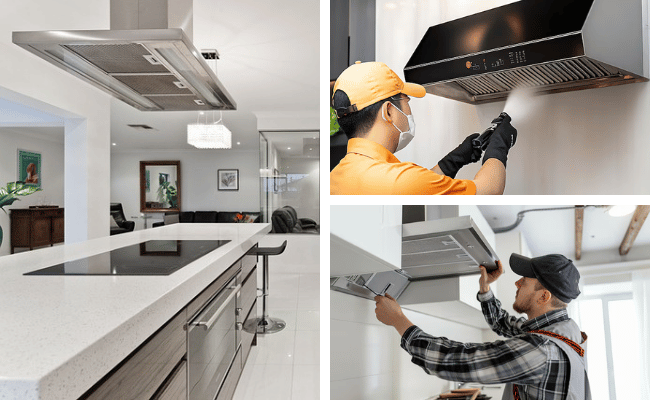
Not all kitchen chimney problems can be safely fixed through DIY methods. Knowing when to seek professional help prevents further damage and safety hazards.
Safety Concerns Requiring Immediate Professional Attention
Contact a qualified technician immediately if you notice:
– Burning smells accompanied by visible smoke from the unit
– Electrical arcing sounds or visible sparks
– Water leakage into electrical components
– Tripping main circuit breakers repeatedly
These conditions indicate serious electrical faults that could lead to fire hazards if not addressed properly by trained professionals.
Cost-Benefit Analysis for Repairs
Consider these factors when deciding between repair and replacement:
– Age of your current chimney (most last 8-12 years with proper maintenance)
– Cost of parts versus new unit price (typically 40-60% of replacement cost)
– Energy efficiency improvements in newer models
– Availability of replacement parts for older models
For chimneys older than 10 years, replacement often makes more financial sense than major repairs, especially when considering improved energy efficiency and features in newer models.
Preventive Maintenance to Avoid Future Failures
Implementing regular maintenance prevents most common kitchen chimney failures and extends your unit’s lifespan significantly.
Monthly Maintenance Routine
Create this simple monthly habit:
– Clean grease filters thoroughly (more frequently if you cook daily)
– Wipe down interior surfaces to prevent grease buildup
– Check for unusual noises during operation
– Verify proper airflow at both intake and exhaust points
Consistent filter cleaning alone resolves many issues that homeowners mistakenly believe indicate serious chimney failure.
Annual Professional Servicing Benefits
Schedule professional maintenance annually to:
– Lubricate moving parts that require specialized treatment
– Test electrical components for early signs of failure
– Inspect ductwork for hidden blockages or damage
– Calibrate fans and motors for optimal performance
Professional servicing catches developing problems before they cause complete failure, saving you from unexpected breakdowns during important cooking times.
Final Diagnostic Checklist for Non-Working Kitchen Chimneys
When your kitchen chimney stops working, follow this systematic approach to identify the cause:
- Verify power supply and circuit breaker status
- Test all control functions including remotes
- Check for obvious obstructions in the fan assembly
- Inspect and clean grease filters thoroughly
- Listen for unusual sounds indicating partial functionality
- Examine exterior vent for blockages
- Look for visible signs of electrical issues
Most kitchen chimney problems fall into one of these categories, with power supply issues and clogged filters accounting for over 60% of “not working” complaints. By methodically checking each possibility, you’ll either solve the problem yourself or gather specific information to help professionals diagnose the issue more efficiently.
Remember that kitchen chimneys operate in a challenging environment with constant exposure to heat, grease, and moisture. Regular maintenance prevents most failures, but when problems do occur, systematic troubleshooting helps determine whether you’re facing a simple fix or a more serious issue requiring professional expertise. Addressing chimney problems promptly ensures your kitchen remains a safe, comfortable space for cooking and family gatherings.