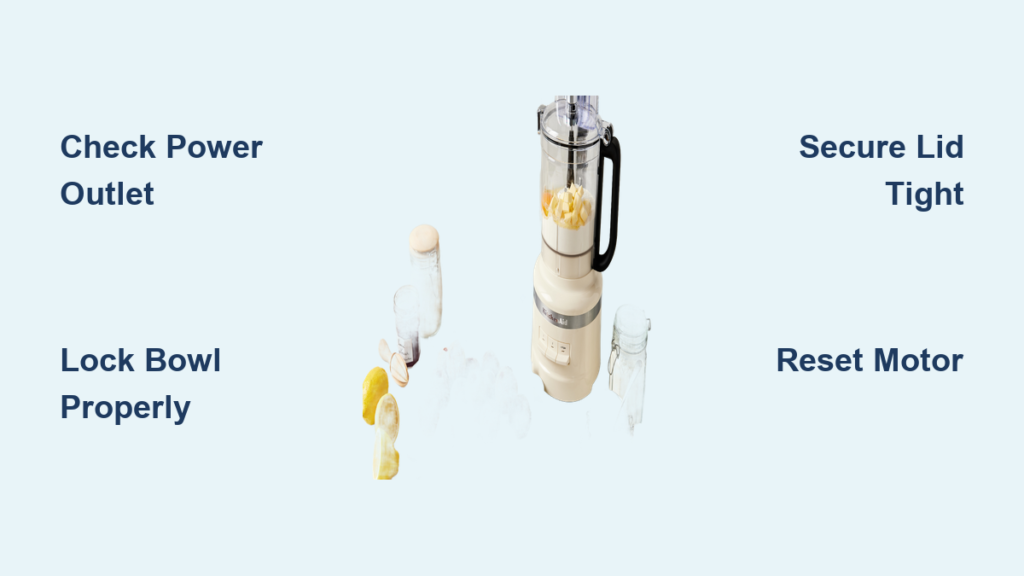
Your KitchenAid food processor sits idle while dinner prep piles up, and that “not working” problem feels like a kitchen emergency. Before you call for service or consider replacement, understand this: 9 out of 10 “kitchen aid food processor not working” scenarios stem from assembly oversights or simple electrical issues that take less than seven minutes to fix. The safety interlock system—which prevents operation when components aren’t properly secured—is the culprit in most cases, not a dead motor. This guide delivers precise troubleshooting steps to diagnose and resolve your unresponsive appliance immediately.
You’ll discover exactly which components to check first, how to reset hidden electronics, and when professional help is actually needed. By the end, you’ll have your food processor running again or know precisely why it requires service—saving you time, money, and unnecessary frustration during meal preparation.
Confirm Electrical Power Flow First
When your KitchenAid food processor not working issue appears electrical, skip straight to verifying actual power delivery—this solves half of all “dead unit” cases immediately.
Plug a working device like a phone charger or small lamp into the same outlet to confirm power availability. If that device doesn’t function, you’ve identified an outlet problem rather than a food processor failure. Kitchen outlets often connect to GFCI circuits that trip during minor electrical fluctuations—check nearby bathroom or garage outlets for a reset button that needs pressing.
Examine your food processor’s power cord along its entire length, focusing on stress points where the cord enters the base unit and connects to the plug. Fraying, kinks, or exposed wires indicate damage requiring replacement. For models with detachable cords, unplug both ends and firmly reconnect to eliminate loose connection issues. A partially seated cord creates intermittent power that mimics complete failure.
If your unit has indicator lights but won’t start, the problem isn’t power delivery—it’s the safety interlock system preventing operation despite electricity reaching the base. Proceed directly to bowl and lid verification steps instead of wasting time on electrical components.
Diagnose Bowl Locking Failure Instantly

That “kitchen aid food processor not working” symptom often means the bowl isn’t properly locked—a fix that takes 15 seconds but gets overlooked constantly.
Remove the bowl completely from the base and inspect both connection surfaces with your fingers. Food debris, dried sauces, or oily residue on the locking mechanism prevents full engagement. Wipe both surfaces thoroughly with a damp cloth, then dry completely before reassembly—moisture creates slippage that blocks proper locking.
When reattaching the bowl, align it directly over the base pins and twist clockwise with firm, steady pressure until you hear and feel a definitive double-click. Many users stop after the first click, but some models require that second engagement point for the safety interlock to activate. If you’re uncertain, try lifting the bowl straight up after locking—it should resist upward movement until you press the release button.
Why Your Bowl Locking Fails Repeatedly
Certain ingredients create sticky residues that accelerate locking mechanism failure. After processing cheese, nut butters, or citrus-based dressings, always clean the bowl’s bottom ridge and base unit grooves before storage. Buildup from these foods creates a “false lock” sensation where the bowl appears secured but doesn’t fully engage the safety switch.
Verify Lid Security with Tactile Testing

Your KitchenAid food processor not working because the lid isn’t properly secured—this safety feature prevents blade contact during operation but frustrates users who don’t recognize the subtle engagement requirements.
Remove the lid and inspect the perimeter gasket for cracks, warping, or food debris. A compromised gasket prevents the lid from creating the seal the safety sensor requires. Clean the gasket channel with an old toothbrush to remove embedded particles, then check for proper flexibility—stiff or brittle gaskets need replacement.
When reinstalling the lid, position it straight over the bowl and twist clockwise with deliberate pressure. Don’t rely solely on the click sound—after locking, grip the lid firmly and attempt to rotate it counterclockwise. If it moves more than 1/8 inch, it’s not fully secured. Some models require aligning a small triangle marker on the lid with a corresponding symbol on the bowl for proper engagement.
Inspect Blade Installation Correctly
An improperly seated blade assembly triggers safety shutoffs that make your kitchen aid food processor not working appear broken when it’s simply protecting itself from damage.
Remove the lid and feed tube to access the blade. Lift the blade straight up off the central drive shaft and examine the shaft for food particles or residue that prevent proper seating. Clean the shaft and blade hub with a damp cloth, then verify the drive shaft rotates freely by hand—stiff rotation indicates debris in the mechanism.
When reinstalling the blade, confirm it drops straight down onto the shaft without tilting. The blade should sit completely flat with no wobble. Some blades have alignment tabs that must fit into corresponding slots—rotate the blade slightly until you feel it drop into position. After installation, manually spin the blade a full rotation to check for contact with the bowl walls or feed tube components.
Critical Blade Installation Mistake to Avoid
Never force the blade down if it doesn’t seat easily—this bends alignment tabs and damages the drive mechanism. If resistance occurs, remove the blade and verify the shaft is clean and undamaged. Forcing installation creates permanent damage requiring professional repair.
Perform Complete Motor Reset

Electronic glitches cause temporary “kitchen aid food processor not working” symptoms that a proper reset clears instantly—no disassembly required.
Unplug the unit completely from the wall outlet (don’t just turn off the power switch). Wait exactly 30 seconds—this allows the thermal protection circuit to fully reset and clears electronic memory faults. During this time, quickly re-verify all assembly points: bowl locked, lid secured, blade properly seated.
After 30 seconds, reconnect power and attempt operation with no food in the bowl. If the reset was successful, your processor should start normally. If it still doesn’t work, the issue isn’t temporary—it’s either a persistent assembly problem or internal component failure.
Decode What Your Food Processor Is Telling You
Specific symptoms reveal exactly why your kitchen aid food processor not working, directing you to the right solution without guesswork.
Complete silence with no lights means power isn’t reaching the motor—focus exclusively on electrical verification and safety interlocks. Motor starts then immediately stops indicates either intermittent locking or physical obstruction—recheck bowl and lid security while inspecting for blade jamming. Unit runs but blade doesn’t rotate points to drive system failure—the blade isn’t properly engaged with the drive shaft or the internal coupling has broken.
Grinding or clicking noises signal foreign objects in the mechanism—stop immediately and inspect the blade area. Continuing operation with these sounds risks permanent motor damage. Smoke or burning smell requires immediate discontinuation of use—unplug the unit and contact KitchenAid support, as this indicates serious electrical failure.
Prevent Future “Not Working” Scenarios
Avoid recurring kitchen aid food processor not working issues with these three maintenance practices professionals recommend.
Always inspect the bowl locking mechanism and lid gasket before each use—food residue accumulates rapidly in these areas and prevents proper sealing. Clean these components with a soft brush after processing sticky ingredients like cheese or nut butters, not just at the end of your cooking session.
Store your food processor with the bowl inverted on the base unit—this prevents dust accumulation in the locking mechanism and maintains gasket shape. Never stack items on top of stored components, as this deforms the bowl and lid, creating future assembly problems.
After cleaning, ensure all components dry completely before storage—trapped moisture promotes mold growth in gasket channels that prevents proper sealing. A quick wipe with a dry microfiber cloth after washing prevents 80% of future “not working” scenarios caused by moisture-related assembly issues.
When Professional Service Is Actually Required
If your kitchen aid food processor not working persists after verifying power, resetting the motor, and triple-checking all assembly points, internal component failure is likely.
Internal motor issues—not thermal protection faults—require professional diagnosis. If the unit overheats within 10 seconds of operation or emits a persistent burning smell, discontinue use immediately. These symptoms indicate burned windings or failing bearings that cannot be safely repaired at home.
Electronic control failures manifest as inconsistent behavior—working perfectly one day, completely dead the next. If your processor passes all assembly checks but operates unpredictably, contact KitchenAid support with your model number and a detailed description of the symptoms. They’ll determine whether your unit qualifies for warranty service or recommend authorized repair centers.
Before seeking service, document every troubleshooting step you’ve completed. Service representatives prioritize cases with detailed diagnostic information, often resolving issues over the phone or providing precise repair instructions that save you unnecessary service fees. Your thorough documentation proves you’ve exhausted all user-serviceable solutions, moving your case to the front of the service queue.
By methodically working through these steps, you’ll resolve most “kitchen aid food processor not working” scenarios in under seven minutes—getting back to meal preparation without service calls or replacement costs. When professional help is needed, you’ll approach the situation informed and prepared, ensuring efficient resolution of genuine internal failures.