Wiring a kitchen properly is more complex than any other room in your home. Modern kitchens demand dedicated power for refrigeration, cooking, dishwashing, and dozens of small appliances that compete for electricity simultaneously. If you’re planning a kitchen remodel or updating outdated wiring, understanding the specific circuit requirements, protection standards, and installation methods ensures your kitchen meets code while providing safe, reliable power for decades of use. This comprehensive guide walks you through every aspect of kitchen electrical installation, from planning your circuit layout to making final connections at the panel.
You’ll learn exactly how many circuits you need, what wire gauges to use, where to place outlets, and how to satisfy both National Electrical Code requirements and local building regulations. Whether you’re a homeowner tackling a modest upgrade or planning a full kitchen remodel, this guide provides the critical information you need to wire your kitchen correctly the first time.
Plan Your Kitchen Electrical Layout Before Running Wires
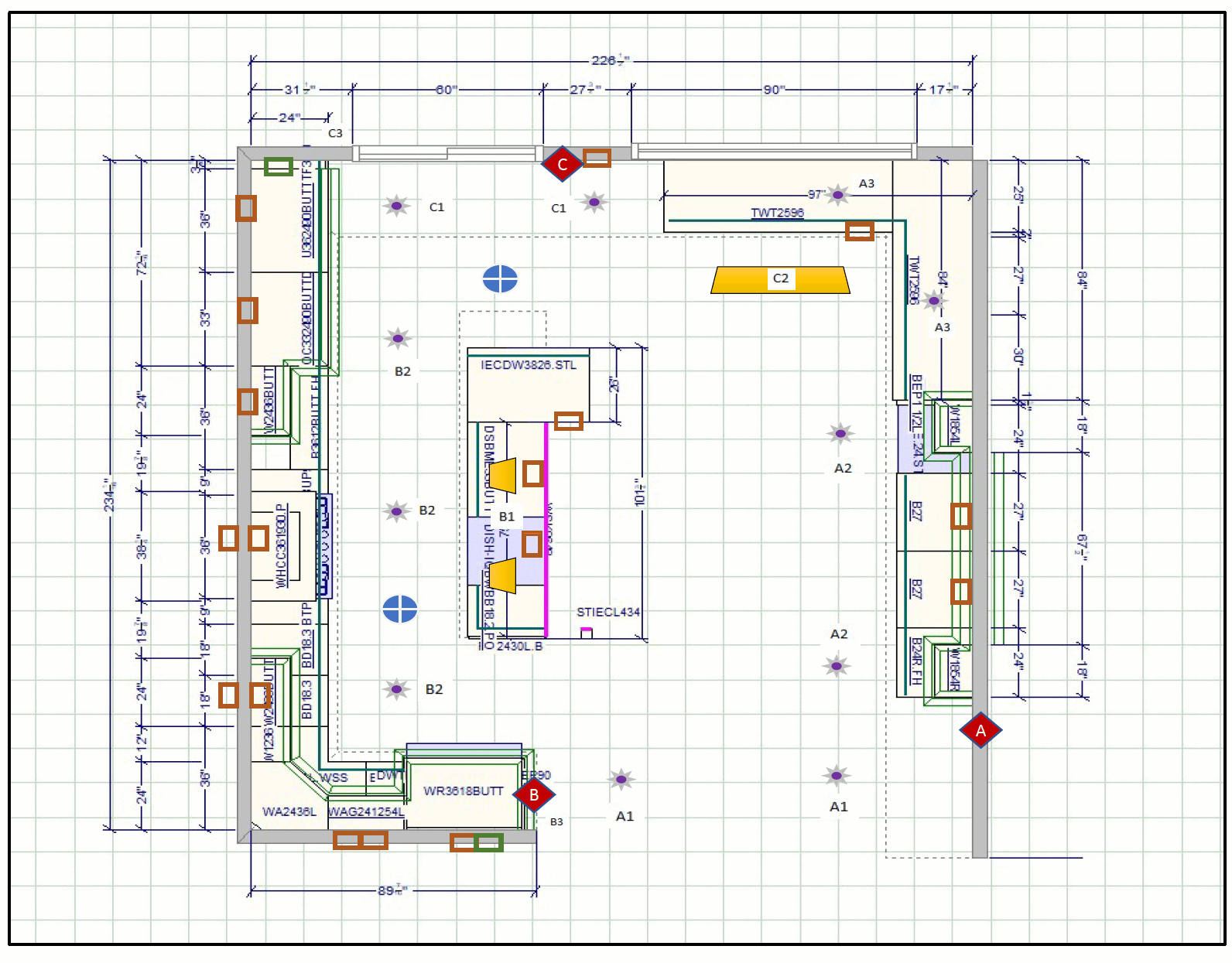
Before purchasing a single outlet or roll of wire, create a detailed electrical plan that accounts for every appliance, fixture, and outlet your kitchen will require. This planning phase prevents costly mid-project changes and ensures your finished installation provides adequate power where you need it.
Start by mapping your kitchen’s primary work zones. Countertop areas require the densest concentration of outlets, with receptacles positioned no more than 2 feet apart along countertops to comply with code and provide convenient access for small appliances. Major appliances like the refrigerator, range, dishwasher, and microwave need dedicated circuits with specific amperage requirements that vary by appliance type. Lighting circuits should be separate from outlet circuits so a tripped breaker doesn’t leave you in the dark while trying to troubleshoot the problem.
Countertop Outlet Placement Strategies
Position outlets along countertops with the user’s workflow in mind. Place outlets above countertops for easy access to small appliances, avoiding locations directly behind sinks where water exposure creates shock hazards. For islands and peninsulas, install outlets on the front edge or in the countertop surface with pop-up covers to maintain clean aesthetics while providing convenient access.
Pro Tip: Install at least one USB charging station in your kitchen layout—preferably near the main prep area—since smartphones and tablets have become essential kitchen tools for recipes and timers. Position this at counter height for easy access without bending.
Major Appliance Location Planning
Consider your appliance locations carefully when planning circuit routes. The refrigerator needs an outlet near its final position, typically at the back of the unit where it can be pulled out for cleaning without disconnecting power. Range outlets must accommodate the appliance being pushed against the wall, which limits placement options. Dishwashers and garbage disposals benefit from cable runs with enough slack to pull the appliance out for servicing without disconnecting electrical connections—a small consideration that appliance repair technicians will appreciate deeply.
Required Circuits for Kitchen Wiring
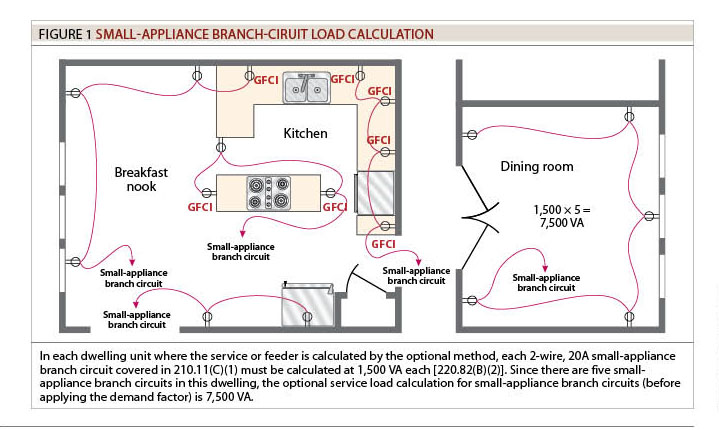
Kitchens utilize more electricity than any other room, and code requirements reflect this demand. A kitchen with electrical cooking appliances may require seven or eight dedicated circuits, significantly more than the single circuit sufficient for a bedroom or living room.
Refrigerator Circuit Installation
The refrigerator requires a dedicated 20-amp circuit operating at 120/125-volts, fed with 12/2 non-metallic sheathed wire with a ground. This dedicated circuit prevents the refrigerator from losing power when other devices on shared circuits trip breakers, which could cause food spoilage without you immediately noticing the problem.
GFCI protection is generally not required for refrigerator circuits unless the outlet is located within 6 feet of a sink or in a garage or basement. However, AFCI protection is typically required since the circuit serves a plug-in appliance. Installing this dedicated circuit during any major remodel provides flexibility even if your current refrigerator doesn’t require it, preventing future problems if you upgrade to a larger unit.
Critical Mistake to Avoid: Never plug your refrigerator into the same circuit as your microwave or other high-draw appliances. The combined load can easily trip the breaker, leaving your food at risk without your immediate knowledge.
Range Circuit Requirements
Electric ranges demand substantial power and require a dedicated 240/250-volt, 50-amp circuit fed with 6/3 NM cable or #6 THHN wire in conduit. Gas ranges need only a 120/125-volt receptacle for controls and the vent hood, making electrical installation simpler for gas cooking setups.
When positioning the outlet for an electric range, remember that ranges push back against the wall, so proper outlet placement is critical for a clean installation. While 50-amp circuits accommodate most residential ranges, some units require 60-amp circuits while smaller units may function adequately on 40 or 30-amp circuits. New construction typically includes 50-amp circuits to accommodate the vast majority of cooking ranges.
For kitchens with separate cooktop and wall oven units, the National Electrical Code generally allows both units to share a circuit if their combined load doesn’t exceed safe capacity. However, most electricians run separate 30 or 40-amp circuits for each unit to ensure reliable operation and simplify future upgrades or replacements.
Install GFCI and AFCI Protection Correctly
Ground Fault Circuit Interrupter and Arc Fault Circuit Interrupter protection represent critical safety requirements in modern kitchen electrical systems. Understanding what each type protects against and where it’s required ensures your installation meets code and protects your family.
Understanding GFCI Requirements
GFCI protection monitors electrical current flowing through a circuit and quickly shuts off power when it detects a ground fault—electricity taking an unintended path through a person or conductive material. This protection is essential in kitchens where water sources near electrical outlets create shock hazards.
GFCI outlets have LINE terminals for incoming power and LOAD terminals to feed downstream outlets while maintaining protection. When wiring multiple outlets on a single circuit, making the first receptacle a GFCI device and connecting subsequent receptacles to its LOAD terminals protects the entire circuit with a single device. This approach is more economical than installing GFCI protection at every outlet location.
GFCI protection is required for 15-amp and 20-amp 120-volt receptacles in kitchen areas, though specific requirements vary by jurisdiction and application. Refrigerator circuits generally don’t require GFCI protection unless the outlet is within 6 feet of a sink, but always verify local requirements before assuming exemption.
Understanding AFCI Requirements
AFCI protection detects sparking (arcing) that occurs when electricity jumps between faulty wire connections and shuts down current flow before a fire can develop. The 2014 National Electrical Code introduced AFCI requirements, with 2017 extensions expanding requirements to additional circuits.
In kitchens, the best practice is ensuring all 15-amp and 20-amp circuits have AFCI protection. This is most commonly accomplished through circuit breakers with built-in AFCI protection rather than special AFCI outlets, which can be more expensive and complex to install. AFCI protection differs from GFCI protection and doesn’t satisfy GFCI requirements—many kitchen circuits require both types, achieved through combination GFCI/AFCI breakers or AFCI breakers used with GFCI outlets.
Requirements for AFCI protection vary significantly between jurisdictions. Some areas require AFCI protection for any circuit served by plug-in receptacles or wall switches, while others extend requirements to all 15 and 20-amp circuits including hardwired appliances. Consulting local authorities before beginning work is the only way to ensure compliance with your specific requirements.
Wire Small Appliance Circuits Correctly
Proper configuration of small appliance circuits ensures code compliance and reliable power delivery for the numerous devices that plug into kitchen countertops. Understanding parallel circuit principles and multi-wire branch circuit requirements prevents common installation errors.
Parallel Circuit Configuration
Proper kitchen wiring uses parallel circuits where each receptacle receives power directly from the breaker through independent connections. In a parallel configuration, if one receptacle fails, others continue working because each maintains its own path to the power source. This differs from series circuits where a single failure affects all downstream devices.
When wiring receptacles in parallel configuration, connect the black and white wires from incoming cable to pigtails, which then connect to one screw on each side of the receptacle. This method ensures each receptacle has its own direct connection while maintaining continuous power path for downstream devices. Some electricians prefer pigtailing because a failed connection at one device doesn’t deaden the entire circuit downstream.
The term “daisy chaining” refers to running cable from one receptacle to the next in sequence, which is acceptable provided the connections maintain parallel wiring principles. The key is ensuring each receptacle has its own independent path to the power source rather than relying on upstream devices for circuit continuity.
Small Appliance Circuit Layout
The National Electrical Code requires two separate 20-amp circuits for countertop receptacles, but this doesn’t mean each receptacle needs its own breaker. With four receptacles in a typical kitchen, two connect to one dedicated 20-amp circuit and the other two connect to a second dedicated 20-amp circuit.
Each circuit should have GFCI protection, achieved either by making the first receptacle a GFCI device with downstream receptacles connected to LOAD terminals, or by installing GFCI breakers at the panel. Both approaches satisfy code requirements, with the panel-breaker approach providing protection for the entire circuit including any hardwired devices.
A multi-wire branch circuit involves two hot wires sharing a common neutral and is sometimes used for kitchen circuits. However, MWBCs require special handling because you can’t depend on receptacle devices for circuit continuity. If running two separate cables from the panel, this doesn’t constitute an MWBC—each circuit needs its own breaker, and splicing hot wires from different breakers to the same device causes dangerous shorts.
Connect Major Kitchen Appliances
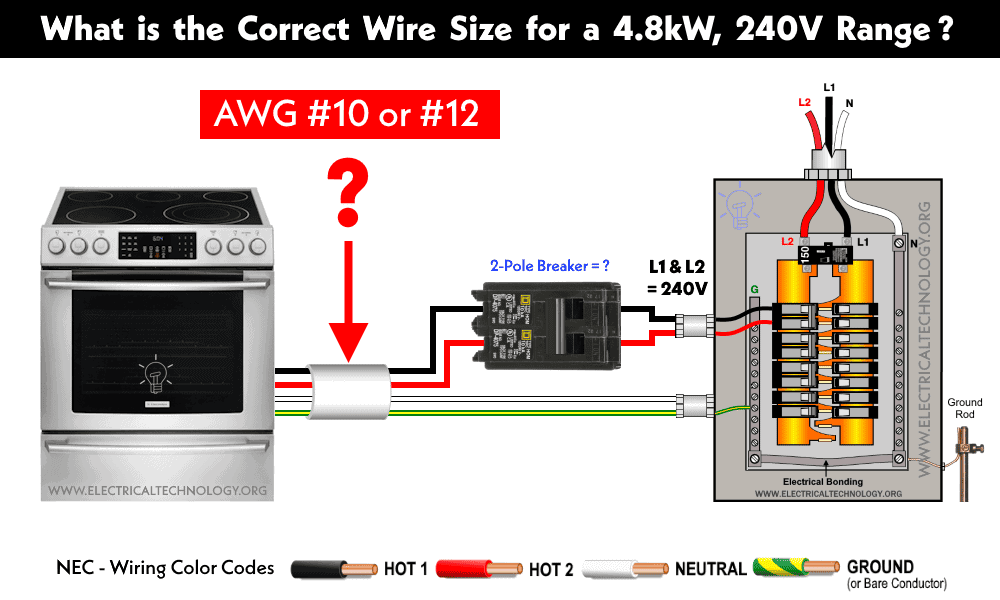
Each major kitchen appliance has specific electrical requirements that must be satisfied for safe, code-compliant operation. Understanding these requirements prevents dangerous installations and ensures appliances function as designed.
Refrigerator Connection Guidelines
Connect the refrigerator to its dedicated 20-amp circuit using 12/2 NM wire with ground. The outlet should be positioned at the back of the refrigerator’s planned location, high enough to avoid obstruction by drawers or trim, yet accessible for unplugging if necessary. Some homeowners position the outlet lower, behind a kickplate, but this access point must still comply with clearance requirements.
Verify the outlet type matches your refrigerator’s plug configuration. Most modern refrigerators use standard 20-amp, 120-volt plugs, but some commercial-style or European-imported units may require different configurations. AFCI protection is typically required for the refrigerator circuit, though GFCI is usually unnecessary unless the outlet is near water sources.
Range and Cooktop Wiring
Electric ranges require 240/250-volt, 50-amp circuits fed with 6/3 NM cable or appropriate conduit wiring. The outlet should be positioned behind the range, typically 6 to 8 inches from the floor, with enough clearance for the range’s power cord while allowing the appliance to sit flush against the wall.
Consider whether to hardwire the range or use a plug-in connection. Hardwiring removes a potential failure point and may exempt the circuit from GFCI requirements in some jurisdictions. If using a plug-in connection, ensure the receptacle type matches the plug and that all components are rated for circuit amperage. For separate cooktop and wall oven installations, each typically requires its own 30 or 40-amp circuit, though code may allow sharing a circuit if total load remains within safe capacity.
Run Cables Through Walls
Proper cable installation protects conductors from damage and ensures code compliance. Understanding routing requirements, support standards, and protection measures prevents fire hazards and inspection failures.
Cable Routing Fundamentals
Pull cables through wall cavities, ceilings, and floors using fish tape or cable pullers. Avoid sharp bends or kinks that can damage conductors and create fire hazards—cable should maintain a radius of at least 5 times the cable diameter at any bend. Keep cables at least 1.25 inches from the edge of framing members to protect them from nails and screws during and after installation.
Label each cable at both ends before running it through walls. This simple practice saves significant time during connection phases and proves invaluable during inspections and future troubleshooting. Include the circuit number and destination on each label to prevent confusion when connecting multiple circuits.
Secure cables within 12 inches of each electrical box and at regular intervals along the run according to code requirements. Use appropriate staples or cable supports designed for the cable type—staples driven too tightly can damage cable sheathing and create fire hazards, while loose cables can sag and become damaged over time.
Box Installation Standards
Mount electrical boxes at all planned locations before running cable. Use boxes rated for kitchen use, ensuring they’re securely fastened to structural elements or approved backing materials. Wall boxes house outlets and switches, ceiling boxes accommodate light fixtures, and under-cabinet boxes provide connections for LED strip lights and puck lights.
Ensure boxes are deep enough for the devices and cables being used. Standard boxes work for most outlet and switch installations, but dimmers and smart switches often require deeper boxes to accommodate their internal components. The front edge of the box should be flush with finished wall surface to ensure proper device placement and code compliance.
Handle 240V Range Circuits Safely
High-voltage circuits for ranges and cooktops require special attention to wire sizing, breaker selection, and connection methods. These circuits deliver substantial power and demand respect during installation.
Wire and Breaker Selection
For 50-amp range circuits, use 6/3 copper cable or 6 AWG copper wires in conduit. For 40-amp circuits, 8/3 copper cable or 8 AWG copper wires are appropriate. Match breaker size precisely to circuit requirements—15-amp breakers for 15-amp circuits, 20-amp breakers for 20-amp circuits, and 50-amp breakers for range circuits.
The terminology matters significantly: cable refers to pre-assembled NM-B or similar wiring with multiple conductors and a ground, while wire refers to individual conductors run in conduit. These aren’t interchangeable, and using the correct product for your installation method is critical for code compliance and safety.
When running wire in conduit, use individual THHN wires rated for the application. Outdoor or exposed installations require wet-rated wire and appropriate conduit type. Schedule 80 PVC provides physical protection for exposed exterior runs, while Schedule 40 PVC generally isn’t suitable for exposed applications requiring physical protection.
Hardwired vs. Plug-In Connections
Consider whether to hardwire major appliances or use plug-in connections. Hardwiring removes receptacle failure as a potential problem point and may exempt circuits from GFCI requirements in some jurisdictions. The permanent connection method is generally preferred for ranges and cooktops where the appliance position is fixed.
If using plug-in connections, ensure receptacle type matches the appliance plug exactly. Mismatched connections create fire hazards and may void appliance warranties. For 240-volt connections, ensure the receptacle is rated for the circuit amperage and that the plug configuration prevents accidental connection to circuits of different voltage.
Final Testing and Safety Checks
After completing all wiring connections, thorough testing verifies proper installation before considering the project finished. Systematic testing catches problems before they become safety hazards or code violations.
Connection Verification
Double-check all connections at outlets, switches, fixtures, and the panel before turning power on. Verify that black (hot) wires connect to brass terminals, white (neutral) wires connect to silver terminals, and green or bare (ground) wires connect to green terminals. Ensure all terminal screws are tight with no copper visible under the screw head.
At the panel, confirm breaker sizes match circuit requirements and wire gauges. A 20-amp circuit must use 12-gauge wire and a 20-amp breaker—using 14-gauge wire with a 20-amp breaker creates a fire hazard. Verify that all connections are tight and that breakers are properly seated in their slots.
Functional Testing
Turn on power at the main panel and test each outlet with a voltage tester to verify correct operation. Test GFCI outlets using the test button to confirm proper ground fault protection, then reset to restore power. Verify that AFCI breakers trip when tested with appropriate AFCI testers.
Test all lights and switches to ensure proper operation. Verify that switches control the intended fixtures and that multi-way switches function correctly. Test hardwired appliances to confirm they receive proper power and operate as expected.
Label all breakers clearly in the panel to identify each circuit’s purpose and location. This labeling proves invaluable during troubleshooting and future upgrades. Taking photos during installation provides documentation for inspections and future reference when modifications are needed.
Summary of Kitchen Circuit Requirements
A complete kitchen wiring installation requires multiple dedicated circuits to handle the substantial electrical demands of modern cooking and food preparation. The refrigerator needs a 20-amp circuit with AFCI protection. Electric ranges require 50-amp, 240-volt circuits, while gas ranges need only 120-volt receptacles. Dishwashers and garbage disposals each need dedicated 15 or 20-amp circuits with appropriate protection. Microwave ovens require dedicated 20-amp circuits. Countertop small appliances need at least two 20-amp circuits with both GFCI and AFCI protection. Lighting requires a dedicated 15 or 20-amp circuit with AFCI protection.
This comprehensive circuit layout ensures each major appliance has adequate power, countertop outlets can handle simultaneous small appliance use, and lighting remains functional independent of other circuits. The total of seven or eight circuits for kitchens with electrical cooking appliances reflects the significant electrical demands of modern kitchen activities and ensures safe, code-compliant operation for years to come.
Wiring a kitchen is a complex project that requires careful attention to code requirements, circuit planning, and safe installation practices. While some aspects like outlet replacement can be DIY projects, running new circuits and making panel connections should be handled by qualified electricians. Always obtain necessary permits before beginning work and schedule inspections to verify code compliance. Proper kitchen electrical installation provides safe, reliable power for one of the most-used rooms in your home.