That frustrating moment when your chef’s knife mangles tomatoes instead of slicing them cleanly? It’s the universal sign your blades need attention. You invested in quality Cuisinart knives—they deserve proper care through your Cuisinart knife sharpener. Whether you own the manual two-slot model or the electric three-stage system, this guide reveals exactly how to achieve professional-grade edges without damaging your blades. Forget guesswork: you’ll learn precise pass counts, slot selection logic, and the critical mistake 80% of home cooks make that actually ruins knife edges. Let’s transform your dull blades into precision cutting tools.
Stop sharpening too often—most home knives only need professional-level sharpening every 6-12 months. What you really need is weekly honing (using a steel rod to realign the edge). This guide targets true sharpening when your blade fails basic performance tests. By the end, you’ll confidently handle any Cuisinart sharpener model while extending your knives’ lifespan through strategic maintenance.
Assess Your Blade Condition Before Sharpening
Quick Sharpness Tests You Can Do Now
Grab a sheet of printer paper and hold it vertically. A truly sharp knife slices downward through the paper with one smooth motion—no snags, tears, or sawing required. If the blade catches or requires excessive force, it’s time for sharpening. For kitchen-specific validation, try the tomato test: place a ripe tomato on your board and gently press the blade downward. Sharp knives penetrate the skin effortlessly using only the knife’s weight. Dull blades crush the fruit or demand heavy pressure.
Critical visual cue: Examine the edge under bright light. A dull blade shows a rounded or jagged profile instead of a mirror-like straight line. If you see visible chips (common with serrated blades), skip sharpening and seek professional repair.
Sharpening Frequency Guide Based on Usage
Home cooks (2-3 meals/week): Sharpen every 9-12 months
Daily cooking households: Sharpen every 4-6 months
Professional chefs: Sharpen every 2-3 months or immediately after performance drops
Pro tip: Honing weekly with a steel rod maintains edge alignment between sharpenings. This takes 15 seconds per knife and prevents premature metal removal during sharpening. If your knife slides off a honing steel instead of gripping it, that’s your signal for sharpening.
Manual Cuisinart Sharpener Setup for Precision Results

Position Your Sharpener for Maximum Control
Place your manual sharpener on a stable, non-slip surface like a granite countertop or wooden cutting board. If it slides during use, sandwich it between two damp kitchen towels—never use while unstable. Ensure bright task lighting so you can see the blade slot alignment clearly. Position yourself with your dominant hand pulling the knife toward your body (right-handed users: sharpener on right side of board).
Identify Your Slots and Their Critical Functions
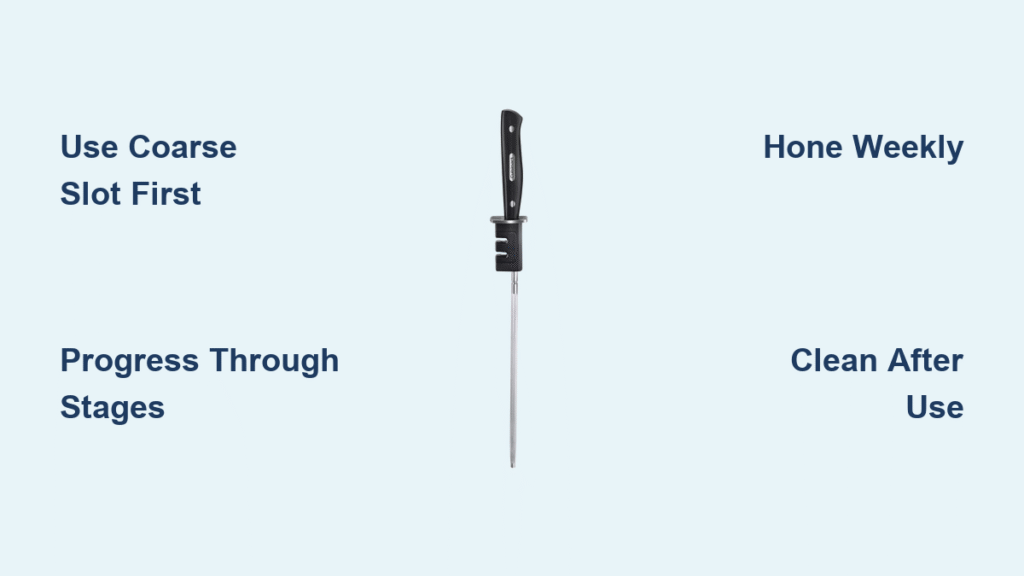
Manual Cuisinart sharpeners typically feature two essential slots:
– Coarse (carbide slot): Deep red or black guides for severely dull or damaged blades
– Fine (ceramic slot): Light gray or white guides for edge refinement and polishing
Warning: Never start with the fine slot on a very dull blade—it won’t remove enough metal and creates inconsistent edges. The coarse slot removes microscopic steel particles to form a new edge; the fine slot then polishes it to razor sharpness.
Manual Sharpening Process: Step-by-Step Technique
Coarse Slot Technique for Damaged Blades
Insert the knife heel (where blade meets handle) fully into the coarse slot at the sharpener’s preset angle. Apply firm, even pressure—imagine gently squeezing a stress ball. Pull the blade through in one continuous heel-to-tip motion while slightly raising the handle to follow the blade’s curve. Complete passes based on dullness:
- 3 passes: Mild dullness (paper test fails but blade still cuts soft foods)
- 5 passes: Moderate dullness (struggles with tomatoes)
- 6 passes MAX: Severely damaged blades (never exceed this—excessive metal removal shortens knife life)
Visual cue: You’ll hear a consistent grinding sound. If it becomes scratchy or uneven, reposition the blade.
Fine Slot Refinement for Professional Results
After coarse sharpening, move to the fine slot. Use significantly lighter pressure—about 30% of coarse slot force. Complete just 1-2 passes using the same heel-to-tip motion. The grinding sound will soften noticeably as the edge polishes. Critical mistake to avoid: Skipping this step creates a jagged edge that dulls faster. Test sharpness immediately after fine sharpening—no need for additional coarse passes.
Electric Cuisinart Sharpener Usage: Avoid Motor Burnout

Power Setup for Safe Operation
Position your electric sharpener on a dry, stable surface near an outlet with 6 inches of clearance on all sides. Unplug before inserting the brush to clean metal debris from slots—this prevents blade scratches during sharpening. Plug in only when ready to use, and never leave unattended while powered. Safety first: Check that the unit sits completely flat—any tilt causes uneven sharpening.
Stage Selection System for Progressive Sharpening
Electric models require strict stage progression:
– Stage 1 (Red): Coarse sharpening for blades failing paper test
– Stage 2 (Blue): Medium refinement for regular maintenance
– Stage 3 (Yellow): Fine polishing for mirror finish
Never skip stages: Starting at Stage 3 on a dull blade creates microscopic fractures that accelerate dulling. Always progress from Stage 1 → 2 → 3.
Automated Sharpening Steps for Perfect Edges
Turn on the sharpener and insert the blade heel into Stage 1. Apply minimal downward pressure—just enough to keep contact. Draw the knife through slowly (3-5 seconds per pass) following the guide’s curve. Complete exactly 2 passes per stage before moving to the next. Pro technique: After Stage 1, wipe the blade with a microfiber cloth before Stage 2 to remove metal particles. Total time per knife: 90 seconds maximum.
Post-Sharpening Essentials: Don’t Ruin Your Work
Immediate Cleaning Protocol
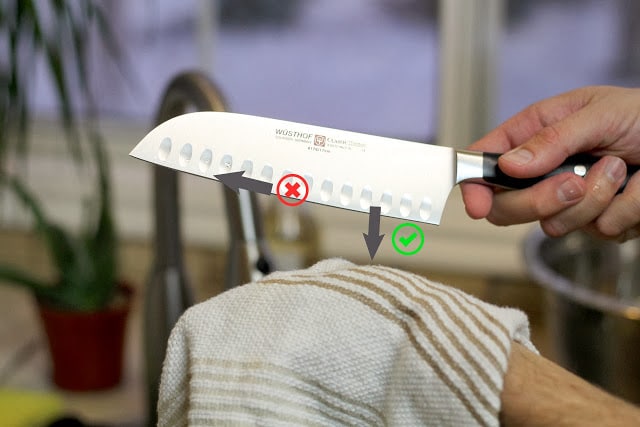
Wash the knife immediately in warm, soapy water with a soft sponge—never use abrasive pads. Rinse thoroughly under running water to flush metal filings from the edge. Dry instantly with a lint-free towel (paper towels can leave fibers). Critical warning: Dishwashers destroy freshly sharpened edges through thermal shock and detergent corrosion. Hand-wash only, even for “dishwasher-safe” knives.
Final Sharpness Check at Three Critical Points
Test sharpness at:
– Tip: Slice delicate herbs (should glide without bruising)
– Mid-blade: Cut paper vertically (clean separation, no tearing)
– Heel: Chop onions (effortless through root end)
If any section fails, return only to the fine slot for 1 additional pass—never restart with coarse slot.
Avoid Common Sharpening Mistakes That Destroy Knives
Over-Sharpening Prevention Tactics
Limit coarse slot passes to 6 maximum per sharpening session. If you’re sharpening monthly, you’re removing 10x more metal than necessary—Cuisinart blades typically last 15+ years with proper care. Time-saving shortcut: After coarse sharpening, test with paper before proceeding to fine slot. If it cuts cleanly, skip fine slot and go straight to honing.
Uneven Edge Correction Without Professional Help
If one side of the blade cuts better than the other:
1. Check consistent pressure during passes (use your non-dominant hand to stabilize the sharpener)
2. Ensure full blade contact from heel to tip in each pass
3. Rotate your stance to maintain natural arm motion
Warning: If unevenness persists after 3 attempts, stop—severe damage requires professional service.
Specialty Blade Considerations for Non-Kitchen Knives
Non-Kitchen Applications Done Right
Cuisinart sharpeners effectively handle:
– Pocket knives (use manual sharpener’s coarse slot first)
– Fillet knives (electric Stage 1 only for thin blades)
– Small utility blades (manual sharpener with reduced pressure)
Key limitation: Never sharpen serrated blades, ceramic knives, or scissors in Cuisinart sharpeners—they require specialized tools.
Storage for Maximum Edge Retention
After sharpening, store knives properly:
– Magnetic wall strips (best for edge protection)
– In-block slots with blade guards
– Edge-up knife rolls for travel
Never store loose in drawers: Even brief contact with other utensils dulls edges faster than regular use.
Safety Guidelines: Protect Yourself and Your Tools
Personal Protection Non-Negotiables
Always sharpen away from your body with fingers behind the blade edge. Use a cut-resistant glove on your stabilizing hand. Critical rule: Never sharpen over the sink—slipping knives cause severe injuries. Place a damp towel under cutting boards to prevent movement during manual sharpening.
Equipment Safety for Longevity
Unplug electric sharpeners immediately after use. Clean slots monthly with the included brush to prevent metal buildup. Store sharpeners in dry cabinets—humidity causes internal corrosion. Inspection checklist before each use: Check for loose parts, frayed cords, or visible damage to grinding wheels.
Troubleshooting Issues: Fix Problems in Minutes
Motor Strain Solutions for Electric Models
If the motor slows or overheats:
– Let unit cool 15 minutes between knives
– Reduce passes to 1 per stage for thin blades
– Clean slots with brush before next use
Prevention: Never sharpen more than 3 knives consecutively—electric motors need cooling intervals.
Performance Problems and Instant Fixes
Dull after sharpening: Likely skipped coarse slot or insufficient passes. Return to coarse slot for 2-3 additional passes.
Rough edge: Metal debris in fine slot—clean thoroughly before reuse.
Inconsistent sharpness: Check blade alignment in slot—heel must enter first at full depth.
Long-term Maintenance Plan for Decades of Use
Daily and Weekly Care Routine
- Daily: Hone blades before cooking (10 seconds per knife)
- Weekly: Inspect for nicks using magnifying glass
- Monthly: Paper test to track dulling patterns
- Every 4 months: Full sharpening for daily-use knives
Pro tip: Track sharpening dates in your phone—Cuisinart blades need service less often than you think.
Warranty Support When You Need Help
Register your sharpener online within 30 days of purchase. Keep original receipt for warranty claims (typically 3 years). For support issues:
– Call Cuisinart: 1-800-726-0190 (Mon-Fri 8am-8pm EST)
– Access video tutorials: cuisinart.com/support/knife-care
Key takeaway: Proper Cuisinart knife sharpener usage isn’t about frequency—it’s precision. Use the coarse slot only when essential, always progress through stages, and prioritize honing between sharpenings. Your knives will deliver paper-thin slices for years while avoiding the #1 mistake: removing metal unnecessarily. Now grab that tomato and slice with confidence.