Your kitchen counter disappears under a growing pile of water bottles as family members grab their favorites before heading out the door. Baby bottles clutter every available surface near the sink, making meal prep a constant battle for workspace. Learning how to store bottles in kitchen spaces effectively solves this daily frustration by transforming random clutter into strategic organization. This guide delivers practical, space-saving solutions that work whether you’re managing a household of reusable water bottles or setting up an efficient baby bottle station for late-night feedings.
The secret to successful bottle organization lies in understanding your specific needs rather than buying expensive storage systems. A family of five with multiple water bottle styles requires different solutions than a household preparing for a new baby’s arrival. Before rearranging cabinets or purchasing organizers, take stock of what you have, how you use it, and what frustrates you most about your current setup. This assessment forms the foundation for every strategy that follows and ensures your how to store bottles in kitchen solutions actually work with your daily routines.
Declutter Your Bottle Collection First
Effective bottle storage begins with honest decluttering. Most households discover they own far more bottles than they actually use, with duplicates of styles family members consistently pass over and damaged vessels taking up precious cabinet space. Remove everything from your bottle collection and evaluate each item with a simple question: has anyone used this in the past month? Bottles that fail this test should be donated, recycled, or discarded depending on their condition.
Encourage each household member to pare down their personal water bottles to one or two favorites. This consolidation dramatically reduces storage demands while ensuring everyone has access to their preferred vessel. Store the relegated bottles on a top shelf or in a less accessible location—they remain available if preferences change, but they stop consuming prime real estate in your daily storage zones. For baby bottles, recognize that needs change rapidly during infancy. Keep the next size of nipples and larger volume bottles readily available while retiring smaller sizes that your growing baby has outgrown.
This decluttering process reveals your true storage requirements and makes subsequent organization efforts significantly more manageable. A streamlined collection works with any storage solution, while a cluttered one will overwhelm even the most sophisticated organizer. When figuring how to store bottles in kitchen spaces, remember that less is more—each additional bottle requires dedicated space that could be better used.
Set Up a Dedicated Bottle Station

Creating a dedicated bottle station transforms the wash-sterilize-feed-repeat cycle into a streamlined workflow that saves time and reduces countertop clutter. This approach proves especially valuable for baby bottle routines, where efficiency during 2 AM feedings matters more than aesthetics, but the principles apply equally to household water bottle management.
Choose the Perfect Location for Your Bottle Station
Select a location that remains convenient throughout your daily routines. An unused countertop away from main kitchen traffic works well, though any accessible space will serve the purpose. Some families find their kitchen dinette area necessary when bottle volume demands it—twins, for instance, may require the dining table for a feeding station rather than a place for adults to eat. Even a small table in a corner can function effectively as a bottle home base. The critical factor is convenience: if the station isn’t easily accessible during busy moments, its purpose is defeated.
Essential Equipment for an Efficient Bottle Station
Stock your bottle station with essential equipment that keeps clean items ready when needed. For baby bottles, this includes a bottle drying rack positioned on a towel to catch run-off water (with the towel changed frequently to prevent mildew), an overflow bin for extra parts and pacifiers, a bottle sterilizer, and a bottle warmer. Keep the sterilizer tongs handy for handling items after steamy sterilization cycles. For dirty items, designate a small collection container next to your sink where bottles, pacifiers, and related supplies can accumulate. This visible collection system also provides a quick visual gauge for when a washing batch is needed before running critically low on clean bottles.
Optimize Cabinet Space Above Your Bottle Station
The cabinet above your bottle station should house all extras and items for upcoming transitions. Clear space for the next size of bottle nipples, larger volume bottles, extra pacifier choices, and any other supplies you’ll need as your baby grows. This proactive organization prepares you for developmental transitions that seem to happen overnight. For water bottle stations, dedicate this cabinet space to cleaning supplies, bottle brushes, and replacement parts like seals and caps that inevitably need replacing.
Store Water Bottles with Wine Rack Repurposing
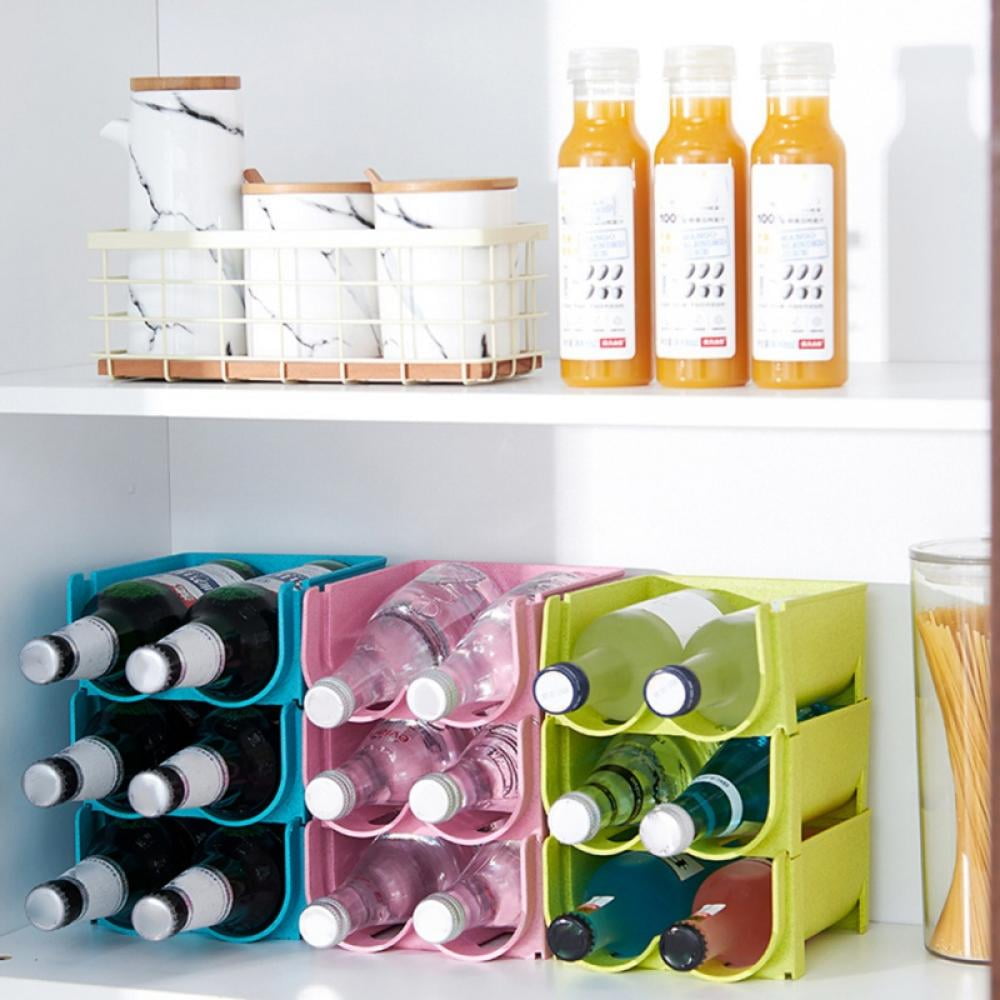
Wine racks provide surprisingly effective water bottle storage because most reusable water bottles share similar diameters with wine bottles. This repurposing solution efficiently uses space while adding visual appeal to your kitchen—replacing unsightly stacks of bottles with an attractive holder that showcases your collection rather than hiding it.
Before purchasing or positioning a wine rack, measure both the rack and your available space carefully. Not all wine racks accommodate varying bottle sizes, and an attractive rack that won’t fit your tallest or widest bottles becomes another storage frustration rather than a solution. Arrange bottles with taller ones at the back and smaller ones at the front for a neat, organized appearance that provides easy access to all vessels simultaneously. This approach works particularly well in open kitchen spaces where aesthetics matter—when you know how to store bottles in kitchen areas with style, your organization becomes part of your decor.
Use Vertical Space with Door and Wall Organizers
Over-the-door organizers maximize otherwise wasted vertical space and provide compartments of various sizes to accommodate different water bottle styles. These versatile solutions work equally well on pantry doors, closet doors, or mounted directly on walls, efficiently decluttering cabinets while keeping bottles accessible.
Door shoe organizers prove unexpectedly ideal for water bottle storage—their pockets hold bottles securely while maintaining visibility and easy access. Hang one on a wall or over a closet or pantry door to store multiple water bottles neatly organized and ready for grab-and-go moments. Each pocket can accommodate one or two bottles depending on size, and the layered organization lets household members claim personal pockets for their preferred vessels.
Wall-mounted organizers offer similar benefits with a more permanent installation. Simple hooks spaced appropriately apart create hanging storage for households using only one or two water bottles regularly. Install hooks near entry doors for grabbing bottles on the way out, transforming a traffic pattern into a convenient storage moment. For heavier bottles, use heavy-duty Command hooks or similar mounting solutions that support the weight without damaging wall surfaces—a crucial consideration when you’re figuring how to store bottles in kitchen spaces that get heavy daily use.
Organize Cabinets and Drawers Effectively
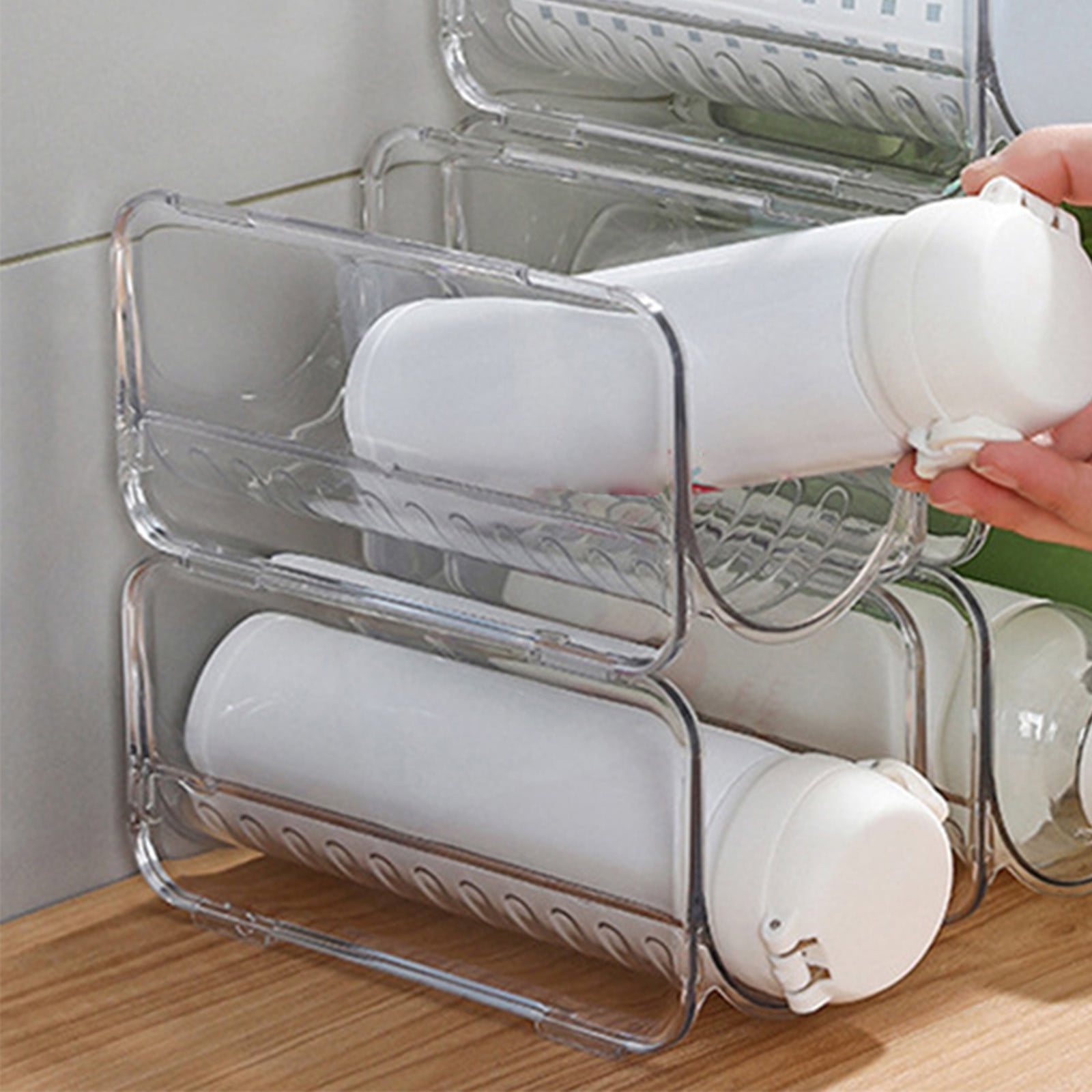
Kitchen cabinets and drawers offer substantial storage potential when approached strategically. The key lies in selecting solutions that match your specific bottle sizes and cabinet dimensions rather than assuming standard organizers will work for your needs.
Magazine holders positioned on their sides accommodate standard-size water bottles effectively, with each holder supporting approximately three bottles for convenient storage that pulls out like a file folder. Cabinet door clear containers work excellently for standard-size bottles while keeping kitchens looking clutter-free when bottles are hidden behind closed doors. These transparent solutions let you see your inventory at a glance without opening every cabinet.
Kitchen drawers can accommodate water bottles when properly divided. Bamboo drawer dividers create adjustable sections accommodating both chunky and slim bottles, transforming a spare drawer into dedicated bottle storage. This approach keeps bottles contained and organized while freeing cabinet space for other kitchen essentials.
Under-sink organizers excel at keeping bottles out of sight while maintaining accessibility. Place bottles neatly organized on the top shelf of under-sink cabinets, freeing counter and drawer space for other items. This often-overlooked zone provides surprising storage capacity for bottles that don’t require refrigeration—perfect when you’re trying to figure how to store bottles in kitchen cabinets without wasting prime real estate.
Dry and Maintain Bottles Properly
Proper drying extends bottle lifespans and prevents the mildew and odors that make bottles unpleasant to use. Water bottle drying racks provide convenient daily drying solutions for households using and washing bottles regularly. Position drying racks on towels to catch moisture, changing towels frequently to prevent mildew growth from damp conditions.
For baby bottles specifically, establish a consistent washing and sterilization routine. Wash dirty bottles immediately after use to prevent formula residue from drying and becoming difficult to remove. Place washed bottles in the sterilizer according to manufacturer instructions, then transfer sterilized items to a drying rack for air drying before storage or use. This workflow ensures bottles are always ready for the next feeding without concerns about bacterial contamination.
Consider your drying station part of your overall bottle organization system. A drying rack that lives in one location but gets moved constantly creates friction that leads to bottles being put away damp. Designate permanent space for drying that doesn’t interfere with daily kitchen activities but remains convenient for the bottle washing workflow—this is essential when learning how to store bottles in kitchen spaces that function efficiently.
Store Formula and Prepared Bottles Safely
For households using formula, proper storage of prepared bottles requires specific attention to safety and convenience. Pre-loading bottles with mixed formula and storing them in the refrigerator provides nighttime convenience—when a hungry baby wakes at 3 AM, you want bottles ready, not mixing formula in a sleep-deprived haze. Always remember to refrigerate pre-mixed formula and use within 24 hours of preparation. Using pieces of washi tape or a dry-erase marker to timestamp when formula was prepared helps ensure you use the oldest bottles first and maintain food safety standards.
Alternatively, mixing a pitcher of formula and pouring desired amounts on demand works well for other feeding situations. This approach reduces the number of bottles needing refrigeration while providing flexibility in bottle selection. Both methods have distinct advantages, which explains why many families use a combination approach depending on circumstances—pre-filled bottles for nighttime convenience and pitcher mixing for daytime flexibility.
Maximize Underutilized Kitchen Spaces
Smart bottle storage often involves recognizing and utilizing spaces that typically go unused. Acrylic bins inside refrigerators keep bottles contained while preventing them from rolling around during storage. This approach maintains organized refrigerator interiors while keeping cold water readily accessible for households preferring chilled beverages.
Cube storage systems work well when kitchen space is limited. Small cube units placed in hallways or other convenient areas keep bottles out of the way while remaining easily accessible. Each family member can have a designated cube for personal bottles, creating ownership and accountability that reduces clutter in shared kitchen zones.
Slim rolling carts accommodate collections of excess water bottles while requiring minimal floor space. Roll carts into hallways, pantries, or any area that makes sense for your household’s traffic patterns. This mobile solution provides flexibility that fixed storage lacks—you can relocate the cart as needs change without reinstalling anything.
For households using only one or two water bottles regularly, heavy-duty hooks mounted on convenient wall spaces provide simple storage without any installation complexity. This minimal approach works perfectly for simple needs without requiring investment in elaborate organizational systems.
Maintain Your Storage System Long-Term
Regardless of which storage solutions you implement, several principles ensure long-term success. First, involve all household members in the organization process. Once everyone knows their designated spot for bottles, clutter disappears naturally because items have defined homes rather than becoming temporarily homeless objects.
Choose solutions that match your actual usage patterns rather than aspirational organization that doesn’t fit daily life. A beautiful but impractical system will be abandoned; a functional but plain system will be used. Select storage options that can adapt as needs change, whether that’s expanding collections as children grow or transitioning through different stages like introducing new beverage types.
Remember that bottle organization systems should be easy to reassess and modify when needs change. The baby bottle station approach, for instance, can be set up quickly and taken down just as easily when that stage passes. This flexibility prevents the frustration that comes from permanent installations in changing situations.
When you master how to store bottles in kitchen spaces effectively, you’ll discover that functional organization supporting daily routines matters far more than perfect order. Implement the strategies that address your specific pain points, accept that some flexibility is necessary, and enjoy the improved functionality that thoughtful bottle storage brings to your kitchen. The most successful systems evolve with your household’s changing needs while maintaining the simple principle: bottles should be easy to find, easy to clean, and easy to put away.