Scuff marks on kitchen cabinets transform your pristine cooking space into an eyesore overnight. Whether it’s a shoe heel against base cabinets or a countertop appliance sliding across wood surfaces, these unsightly marks seem to appear at the worst possible moment. The good news? Most scuff damage isn’t permanent, and you likely have everything you need in your cleaning supplies to fix it. Kitchen cabinet scuffs typically affect only the surface layer, leaving the protective finish intact beneath. Understanding how to remove scuff marks from kitchen cabinets properly prevents costly refinishing jobs and keeps your kitchen looking professionally maintained. This guide delivers proven techniques that work on painted, stained, and laminate cabinets—no special skills required.
Immediate Actions When You Spot Cabinet Scuffs
Assessing Scuff Severity Before Treatment
Examine the mark closely under good lighting to determine if it’s a surface stain or actual finish damage. Run your fingernail gently across the scuff—if you feel no indentation, the mark is likely superficial. Most everyday scuffs from shoes, appliances, or cookware leave residue on the surface rather than removing finish. For stubborn marks that resist initial cleaning, check if they’re grease-based (common near cooking areas) or rubber transfer (from shoes or appliance feet). Kitchen cabinet materials react differently to cleaning solutions, so identifying your cabinet type prevents accidental damage during scuff removal.
Gathering Essential Supplies Within Reach
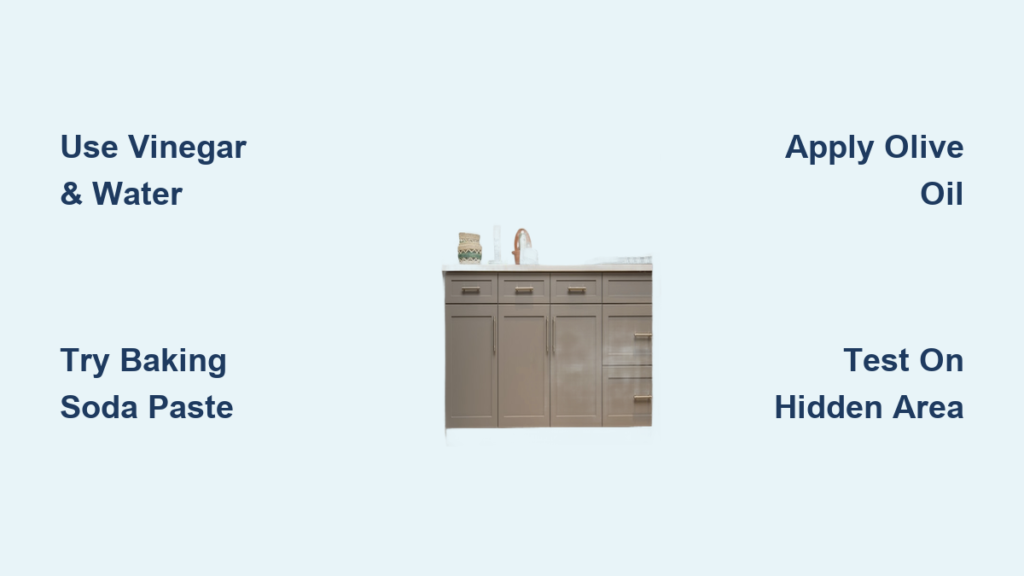
Skip expensive specialty products by using household items already in your pantry. For most scuff removal tasks, you’ll need microfiber cloths (never paper towels that can scratch), distilled white vinegar, baking soda, olive oil, and a soft-bristled toothbrush. Keep a dedicated cleaning caddy with these basics near your kitchen for quick response to new scuffs. For painted cabinets, have a small container of matching paint on hand for touch-ups in case deeper scratches appear during cleaning. Always test any solution on an inconspicuous area like the inside of a cabinet door before full application.
Effective Scuff Removal Techniques by Cabinet Material
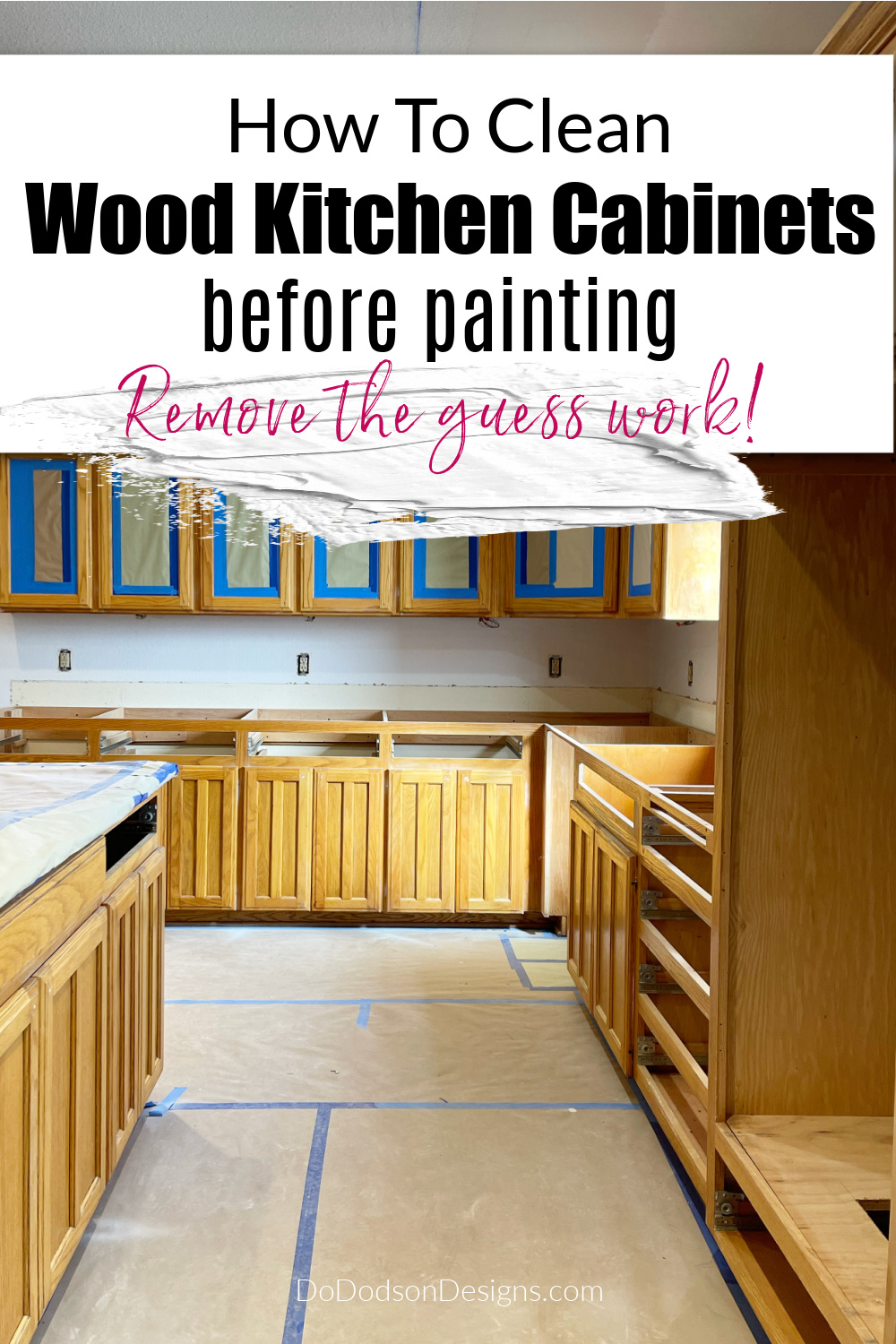
Cleaning Painted Wood Cabinet Scuffs Safely
Painted kitchen cabinets show scuffs more prominently but respond well to gentle cleaning methods. Start with the mildest solution: mix equal parts water and vinegar in a spray bottle. Mist lightly on a microfiber cloth (never directly on cabinets to prevent moisture damage) and rub the scuff in circular motions with moderate pressure. For persistent marks, create a paste with baking soda and water—apply with your toothbrush using light pressure along the wood grain. Critical mistake to avoid: Never use abrasive cleaners like Comet or steel wool on painted surfaces, as they permanently dull the finish. If scuffs remain after two attempts, apply a tiny amount of olive oil to the area, wait five minutes, then wipe clean—this lifts stubborn residue without harming paint.
Restoring Laminate and Thermofoil Cabinet Surfaces
Laminate and thermofoil cabinets require different approaches since their non-porous surfaces can’t absorb cleaning solutions. Begin by wiping with a damp cloth to remove surface dirt. For rubber scuffs from appliance movement, use a magic eraser—but first test in an inconspicuous area as some erasers contain melamine that can dull finishes. Better yet, try rubbing alcohol on a cotton ball: the alcohol breaks down rubber transfer without damaging laminate. If marks persist, mix one part dish soap with three parts warm water and use your soft toothbrush to gently agitate the scuff. Immediately dry with a clean cloth to prevent water spots. Pro tip: Keep a dedicated microfiber cloth just for laminate cabinets, as residue from other cleaning tasks can create new marks.
Tackling Stubborn and Set-In Scuff Marks
Removing Grease-Based Scuffs Near Cooking Areas
Cooking splatters combined with physical scuffs create particularly challenging marks near stovetops. First, apply a small amount of dish soap directly to the scuff and let it sit for two minutes to break down grease. Use your toothbrush with light pressure to work the soap into the mark, then wipe with a vinegar-water solution to remove soap residue. For baked-on grease scuffs, mix equal parts baking soda and hydrogen peroxide into a thick paste. Apply with a cloth using circular motions for no more than 30 seconds, then immediately wipe clean with a damp cloth. Never let hydrogen peroxide sit on cabinet surfaces as it can bleach finishes.
Addressing Deep Scuffs That Penetrate the Finish

When scuffs actually remove finish rather than just marking it, restoration requires additional steps. After cleaning the area thoroughly, examine if the bare wood shows through. For minor finish loss on stained cabinets, apply a matching furniture marker following the wood grain. On painted cabinets, use your touch-up paint with an artist’s brush for precision. Always apply products in thin layers rather than one heavy coat. Once dry, protect the repaired area with a clear furniture wax applied with a soft cloth. Warning: Skip sanding deep scuffs yourself—improper sanding creates visible patches that draw more attention than the original scuff.
Preventing Future Cabinet Scuff Damage
Strategic Cabinet Protection Measures
Install felt pads under all countertop appliances that move during use, replacing them every six months as they wear down. Apply clear vinyl edge guards to cabinet corners most prone to shoe scuffs, especially on lower cabinets. For high-traffic kitchens, consider adding a protective clear coat to your most vulnerable cabinet surfaces using a water-based polyurethane—this creates a sacrificial layer that takes scuffs instead of your finish. Keep a dedicated “scuff emergency kit” in your kitchen with vinegar, baking soda, microfiber cloths, and touch-up supplies for immediate response to new marks.
Establishing Daily Habits That Minimize Scuff Risk
Train household members to open cabinet doors fully before reaching inside to prevent elbow marks on door edges. Wipe cabinet surfaces weekly with a vinegar-water solution to remove buildup that attracts new scuffs. When moving appliances, lift rather than slide them across cabinet surfaces. Most importantly, address scuffs immediately—they become exponentially harder to remove after 48 hours as residues bond with cabinet finishes. Set a reminder to inspect your cabinets monthly for developing problem areas before minor scuffs become major eyesores.
When to Call a Professional Instead of DIY
Recognizing Beyond-Your-Skill Repairs
If scuffs cover more than 30% of a cabinet door’s surface or show actual wood damage beneath, professional refinishing becomes more cost-effective than repeated DIY attempts. Signs you need professional help include: multiple layers of previous touch-up paint creating uneven texture, scuffs that reappear after proper cleaning, or discoloration spreading beyond the original mark. Professionals have access to color-matching systems and spray equipment that creates seamless repairs impossible to achieve with DIY methods.
Cost-Benefit Analysis of Repair vs. Replacement
For isolated scuff problems, professional touch-up typically costs $75-$150 per door—significantly less than full cabinet replacement. However, if your cabinets show widespread finish failure beyond just scuffs, consider whether refinishing the entire kitchen makes financial sense. Most cabinet refinishing companies offer free consultations where they assess whether your scuffs can be resolved with spot treatment or require more extensive work. Smart move: Get multiple quotes and ask specifically about their scuff repair process—reputable companies will explain exactly how they’ll match your existing finish.
Regular maintenance and prompt scuff removal keeps your kitchen looking its best without major investment. By implementing these targeted techniques based on your specific cabinet materials, you’ll eliminate unsightly marks while protecting your investment. The key is acting quickly with the right method for your cabinet type—waiting allows residues to bond permanently with surfaces. Keep your emergency scuff kit stocked and perform monthly cabinet inspections to catch problems early. With these strategies, your kitchen will maintain that just-installed appearance for years, regardless of daily wear and tear. Remember that most scuffs are fixable with household items when addressed properly—there’s no need to live with those annoying marks or jump straight to expensive solutions.