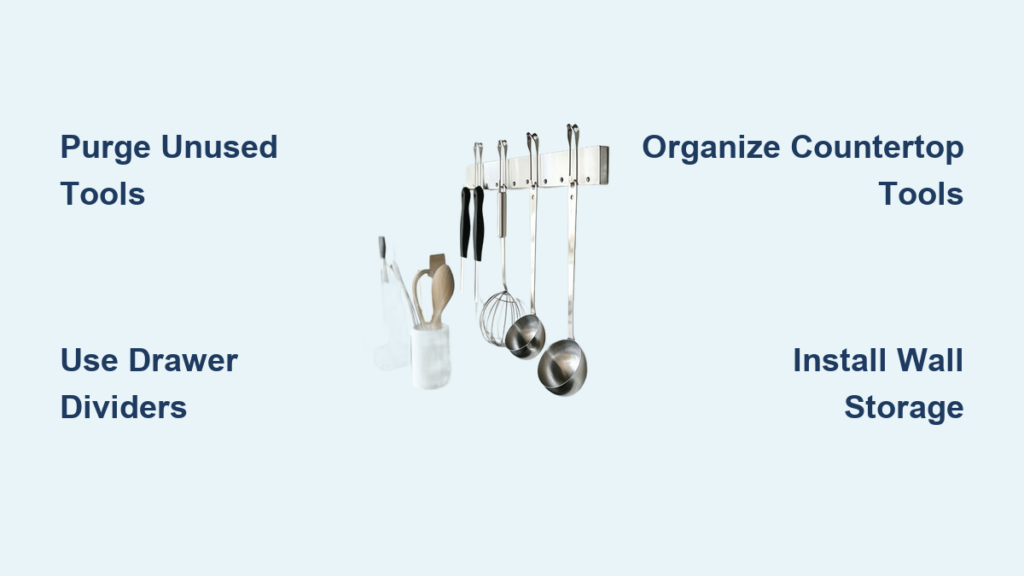
Your spatula vanishes into an overstuffed drawer just as dinner burns. You rummage through three different containers searching for the whisk while your batter separates. Kitchen tool clutter creates daily frustration that turns cooking from joy to chore. The solution isn’t more cabinet space—it’s implementing smart systems that make every tool visible, accessible, and easy to return to its proper place. This guide reveals proven strategies for organizing kitchen tools and equipment that transform chaotic drawers into efficient workspaces. You’ll discover how to purge unnecessary items, maximize every inch of storage, and create a system that stays organized with minimal effort—saving you time, reducing stress, and making cooking genuinely enjoyable again.
Purge Your Utensil Collection Before Organizing
Before buying storage solutions, empty every utensil drawer and countertop container onto a large table. This comprehensive assessment reveals the true scope of your collection and exposes duplicates you didn’t realize you owned. Most home cooks discover they own multiple versions of basic tools while lacking other useful items—a clear sign your collection needs editing.
Critical purge questions to ask about each item:
– Have I used this in the last three months?
– Does it serve a unique purpose my other tools can’t handle?
– Is it damaged beyond repair or functionality?
– Would I repurchase it today if I didn’t already own it?
Discard burned wooden spoons, splintered spatulas, and worn-out whisks immediately—don’t let sentimentality keep broken tools in your kitchen. Remove single-purpose gadgets you rarely use (avocado slicers, egg separators) unless they genuinely earn their space. Keep only tools you love and use regularly. This 20-40 minute purge process typically reduces collections by 30-50%, creating space for what truly matters. Remember: fewer high-quality tools organized well beat a drawer full of cluttered, rarely used items.
Transform Drawer Chaos With Smart Dividers
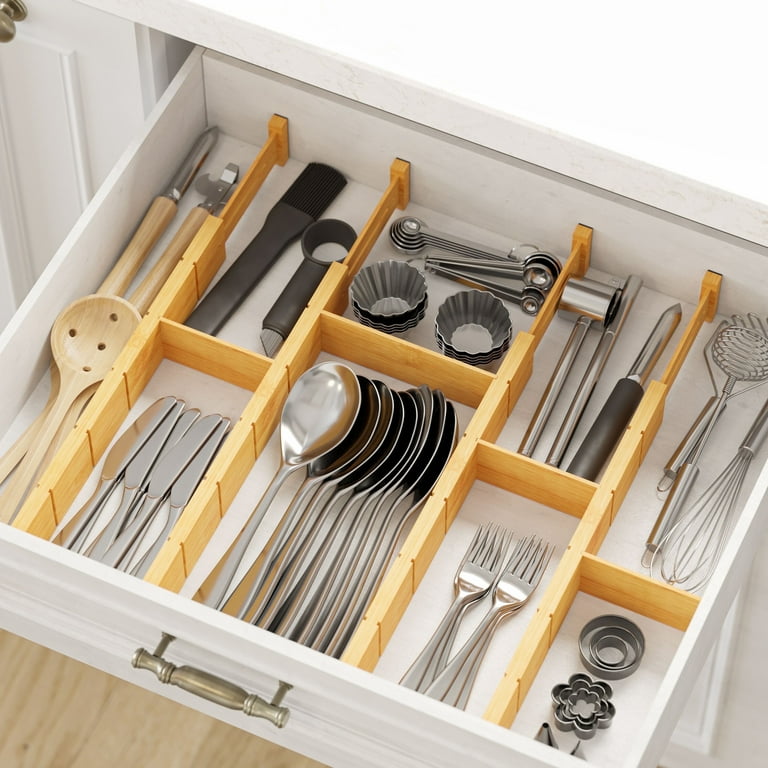
Drawer organization delivers the most space-efficient storage for kitchen tools when implemented correctly. Standard drawer dividers work for most utensils, but measure your drawer dimensions first—dividers come in various heights and configurations. Bamboo organizers offer attractive, moisture-resistant options ($20-$30), while adjustable plastic dividers provide flexible solutions ($10-$40).
Pro techniques for drawer organization:
– Store long utensils diagonally to maximize drawer depth
– Group tools by category (spatulas together, whisks together)
– Arrange by size—largest at back, smallest toward front
– Assign different drawers to different functions (baking vs. cooking utensils)
For extensive collections, create a tiered system: one drawer for daily essentials, another for specialty tools used weekly, and a third for seasonal items. This prevents daily clutter while keeping everything accessible when needed. Wire baskets inside drawers work well for small items like measuring spoons, keeping them visible and contained without permanent installation.
Countertop Utensil Storage That Actually Works
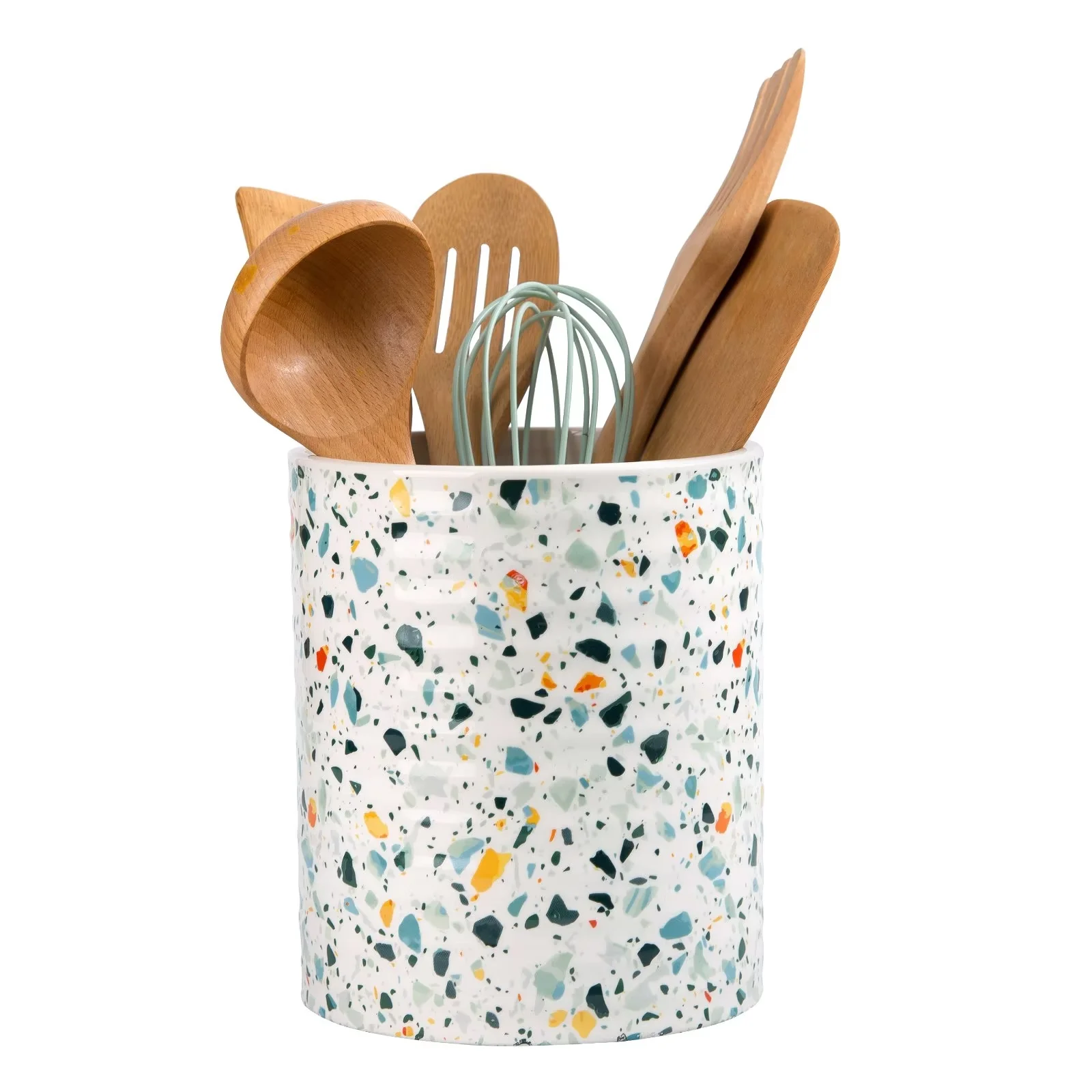
Countertop storage keeps frequently used tools within immediate reach during cooking. The secret to effective countertop organization: choose a container large enough to hold your entire daily-use collection without crowding. Standard utensil crocks often fall short—consider oversized vintage stoneware pickle crocks or large ceramic jars found at antique stores.
When arranging tools in countertop containers:
– Place longest items at the back, shortest toward front
– Group similar tools together (all spatulas in one section)
– Position most frequently used items at the front edge
– Leave 1-2 inches of space at the top to prevent tipping
For rental kitchens or those wanting flexibility, utensil caddies with handles let you move your entire collection from counter to table to sink as needed. Look for models with drainage holes to prevent moisture buildup when storing near the sink. A well-organized countertop container should hold 6-8 essential tools—any more indicates you need to edit your collection further.
Wall-Mounted Storage Solutions for Small Kitchens
Wall-mounted organization unlocks valuable vertical space while keeping tools visible and accessible. Magnetic knife strips ($15 for 15-inch) work brilliantly for steel utensils beyond just knives—ladles, whisks, and spoons all stick securely. Install these strips near your primary cooking zone for instant access during meal prep.
Pegboard systems offer maximum flexibility for odd-shaped utensils. Mount panels to wall studs or use heavy-duty anchors, then customize hook placement for your specific collection. This solution works especially well for fish spatulas, basting brushes, and other specialty tools that don’t fit neatly in drawers.
Rental-friendly wall options:
– Command hooks on cabinet doors for lightweight tools
– Suction cup rail systems on tile backsplashes
– Curtain rods under upper cabinets with S-hooks
– Magnetic strips mounted with removable adhesive
For kitchens with minimal counter space, wall storage becomes essential. Install a single magnetic strip near your stove to hold 5-6 essential tools—this simple solution eliminates drawer rummaging during cooking while maintaining a clean countertop.
Budget-Friendly Organization Hacks You Can Implement Today

You don’t need expensive organizers to create a functional kitchen—many effective solutions cost less than $10. Mason jars laid horizontally in drawers hold small utensils while adding visual interest. The clear glass lets you see contents immediately, and wide mouths make retrieval easy. Group 3-4 jars together for different tool categories.
Old cereal boxes become instant drawer organizers with minimal effort. Cut to appropriate heights, arrange in your drawer, and fill with measuring spoons or small gadgets. This DIY solution costs nothing and can involve kids in the organization process—teaching valuable skills while tackling clutter.
Wire baskets from discount stores work as affordable drawer inserts. The open design keeps items visible while containing them within defined spaces. Use multiple baskets of different sizes to create zones within a single drawer—smaller items in front baskets, larger tools in back.
Maintain Your Organized Kitchen Long-Term
The most beautiful organization system fails without maintenance. Implement these simple habits:
– Return items to their designated spot immediately after washing
– Perform a 5-minute “tool audit” every season to remove unused items
– Adopt a “one in, one out” policy for new purchases
– Store new tools in their designated spot before unpacking
Before buying any new kitchen tool, ask: “Does this replace something I already own that I dislike?” If yes, remove the old item before bringing in the new one. This prevents the gradual accumulation that leads back to clutter. Professional organizers emphasize keeping only your favorite tools—the ones you constantly reach for—because having fewer, better-quality utensils organized well creates more cooking joy than a drawer full of cluttered items you don’t love.
Enjoy the Benefits of an Organized Kitchen
A well-organized kitchen delivers benefits far beyond tidiness. You’ll save 5-10 minutes daily that used to be spent searching for tools. Meal preparation becomes less stressful when everything has a designated place. Cleanup accelerates because items return directly to storage rather than accumulating on counters.
The organization process itself reveals your true cooking habits—you may discover forgotten tools, excessive duplicates, or gaps where quality replacements would improve your experience. Many home cooks report cooking more creatively after organizing because their kitchen becomes a space they enjoy spending time in.
When you master how to organize kitchen tools and equipment effectively, cooking transforms from a chore into a pleasure. Your kitchen becomes a functional workspace where creativity flows freely, recipes get followed consistently, and meal preparation feels less like work and more like the joyful experience it should be. Start with one drawer today—your future self will thank you the next time you need a spatula in a hurry.