Your morning coffee ritual gets derailed because you can’t find the coffee maker under a pile of rarely used gadgets. Dinner prep turns into a scavenger hunt as you dig through cabinets searching for your immersion blender. If your kitchen appliances have taken over your workspace instead of making cooking easier, you’re not alone—most home cooks struggle with appliance clutter that wastes time and frustrates daily cooking routines. Learning how to organize kitchen appliances transforms this chaos into a streamlined system where everything has a logical home based on how often you actually use it.
The secret to effective kitchen appliance organization isn’t expensive storage solutions or perfect Pinterest-worthy setups—it’s creating a system that matches your real cooking habits. Most people make the critical mistake of organizing appliances based on how they wish they cooked rather than how they actually cook, leading to systems that collapse within weeks. By starting with a frequency-based approach that prioritizes accessibility for your most-used items, you’ll create an organization system that actually works in real life.
Before purchasing any storage containers or rearranging cabinets, you need complete clarity about what appliances you own and how often you use them. This honest assessment forms the foundation of a sustainable organization system that evolves with your changing cooking habits rather than fighting against them.
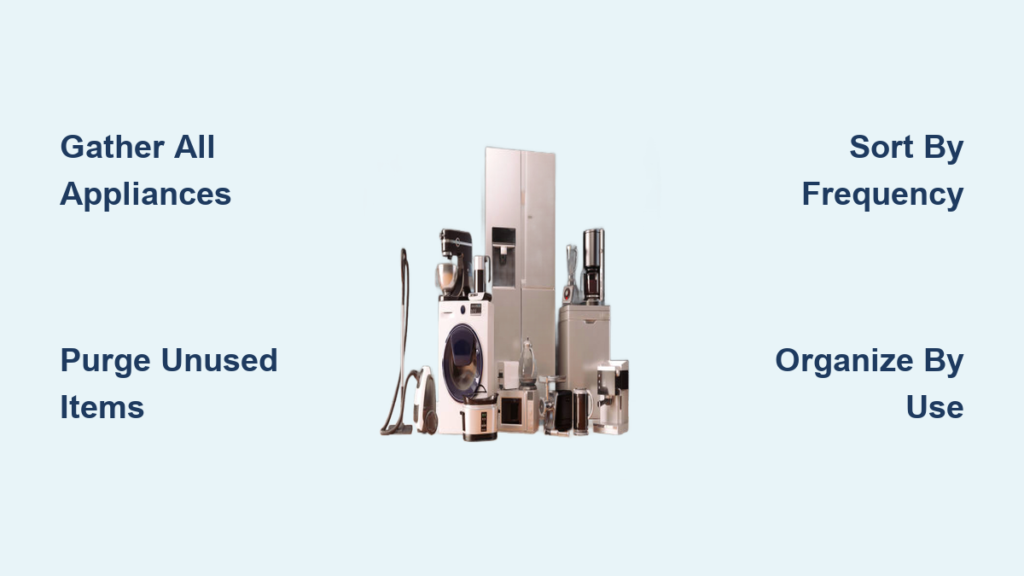
Gather Every Appliance Before Making Decisions
The first step in learning how to organize kitchen appliances properly involves pulling every single gadget from hiding spots throughout your home—not just the kitchen. Many appliances migrate to unexpected locations when kitchen storage runs out, so check guest rooms, basements, and even closets where that forgotten waffle maker might be gathering dust.
Start by clearing your kitchen table or a large counter space where you can see everything at once. Then systematically check every cabinet, drawer, and storage area, bringing each appliance to your central location. Don’t skip the back corners where broken appliances often get banished but never properly dealt with. This comprehensive view reveals exactly what you own and helps identify duplicates or items you forgot existed.
Seeing all your appliances grouped together provides crucial perspective for making informed decisions. You might discover three different blenders or a coffee maker you haven’t used since your last houseguest visited. This visual inventory prevents the common mistake of organizing around appliances you didn’t remember owning, only to find yourself redoing your system weeks later.
Purge Appliances You No Longer Need
After gathering everything, ruthlessly evaluate each appliance by asking three critical questions: Is it in working order? When did I last use it? Does it serve multiple purposes? Broken appliances that haven’t been repaired in six months rarely magically get fixed—they simply waste valuable storage space that could be used for functional items.
Be brutally honest about usage frequency—anything used less than once a year deserves serious consideration for removal. That specialty appliance for making homemade pasta might seem valuable in theory, but if you haven’t used it since your wedding, it’s time to let it go. Multi-functional appliances like Instant Pots (which serve as pressure cookers, rice cookers, and slow cookers) justify their space far more than single-purpose gadgets used occasionally.
When decluttering, create three piles: keep, donate/sell, and recycle. Working appliances that no longer suit your cooking style can find new life with friends, neighbors, or through online marketplaces. Broken items that can’t be repaired should be properly recycled through electronics recycling programs rather than languishing in your cabinets.
Sort Appliances by Actual Usage Frequency
Categorize your remaining appliances into four specific usage groups that determine their ideal storage location. Daily use appliances like coffee makers and toasters deserve prime counter space since their frequent use justifies the real estate. Weekly use items like pressure cookers and blenders should live in front-facing cabinet spots that require minimal effort to access.
Monthly use appliances such as food processors and slow cookers can be stored behind more frequently used items but still within easy reach. Seasonal or rare-use appliances like stand mixers (for occasional bakers) and electric grills should be relegated to less accessible storage locations like high shelves or separate closets.
This frequency-based system works because it matches storage convenience to actual usage patterns. Everyone in your household can understand why the coffee maker lives on the counter while the waffle iron gets stored away—it’s based on real usage, not arbitrary organization rules.
Keep Daily-Use Appliances Within Arm’s Reach
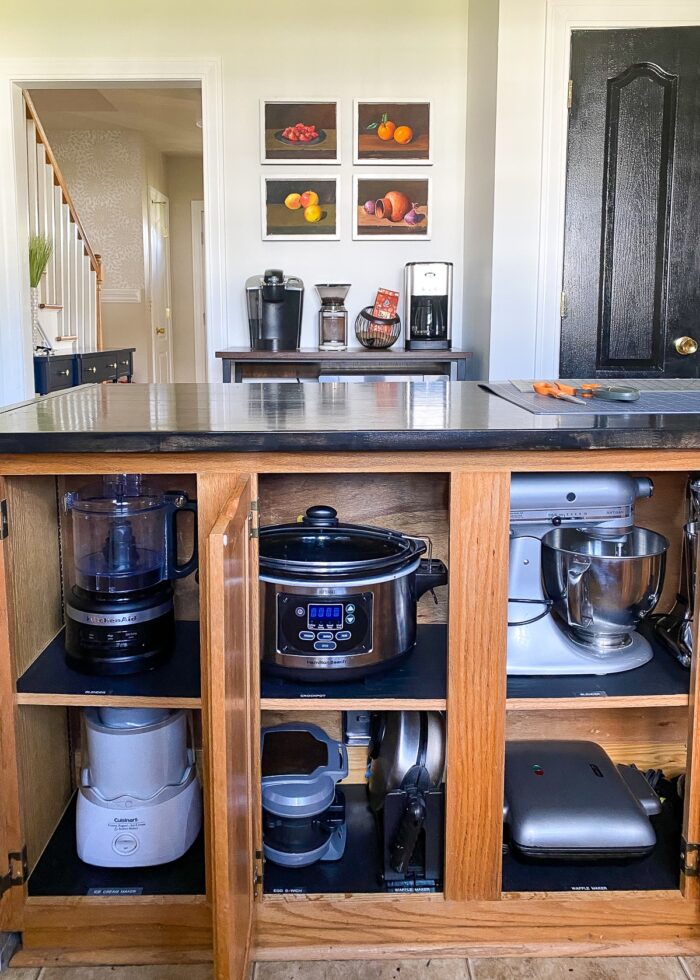
Your most frequently used appliances deserve the most accessible spots—no exceptions. If you use your coffee maker every morning, it should live on the counter near an outlet, not tucked away in a cabinet you have to open daily. Group related daily appliances together in functional zones: create a breakfast station with your toaster, coffee maker, and blender near your pantry or cereal storage.
When designating counter space, measure your appliances first to ensure they fit comfortably without crowding workspace. Leave at least 6 inches of clear counter space on either side of cooking appliances for safety and functionality. Store appliance cords neatly wrapped around the units themselves or use cord organizers to prevent unsightly tangles.
Organize Weekly-Use Appliances for Quick Access
Appliances used two to three times weekly deserve front-and-center cabinet placement at eye level near where you’d use them. A pressure cooker used regularly for meal prep should live in a cabinet near your stove, not buried behind rarely used items. Smoothie blenders used multiple times weekly similarly need prominent placement where you can grab them without rearranging other appliances.
For weekly-use items, consider installing pull-out shelves or cabinet organizers that bring everything forward when opened. This eliminates the need to dig through cabinets and ensures your frequently used appliances remain accessible even as you accumulate more kitchen tools over time.
Store Seasonal Appliances in Designated Overflow Areas
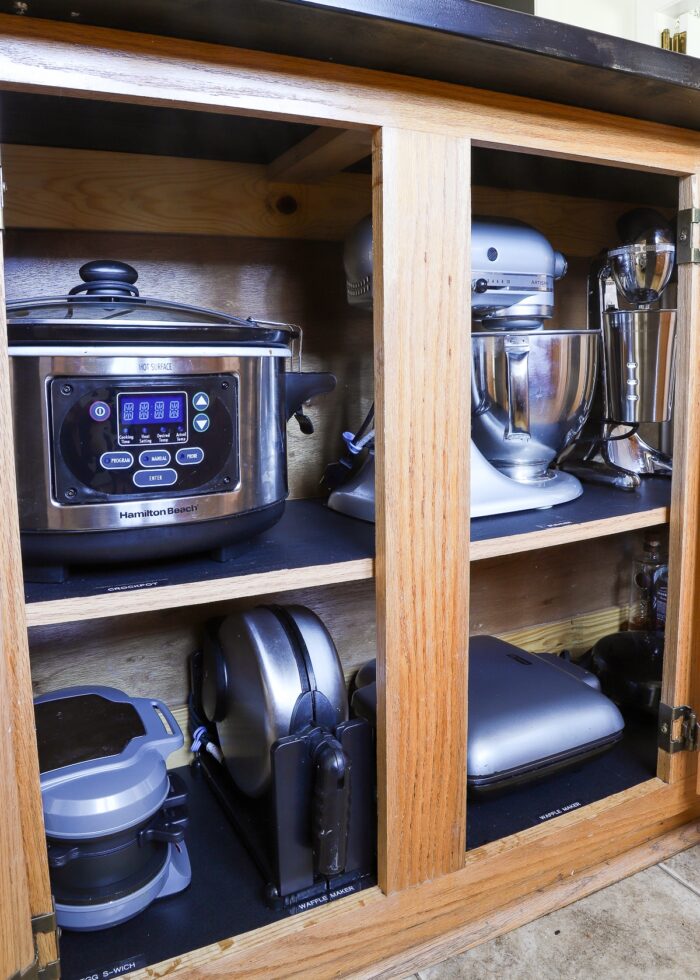
Rarely used appliances like stand mixers, bread machines, and specialty cookers need strategic storage that balances accessibility with space efficiency. Since stand mixers are too heavy for high shelves but too bulky for prime counter space, install a pop-up mixer stand in a lower cabinet that brings the appliance up to counter height when needed.
For holiday-specific appliances like turkey fryers or waffle makers, designate a specific “seasonal appliance” cabinet or closet with clear labeling. Store these items with their accessories and instruction manuals in dedicated bins so everything needed for that twice-yearly tradition is ready when the occasion arises.
Maximize Cabinet Space with Smart Storage Solutions
Transform awkward cabinet spaces into efficient appliance storage with strategic organizers. Install shelf risers in base cabinets to create vertical storage zones for smaller appliances like food processors and immersion blenders. Use lazy Susans in corner cabinets for round appliances like air fryers and rice cookers to maximize access to these traditionally difficult spaces.
Group appliances by function rather than size—keep all baking tools together in one cabinet, coffee equipment in another. This task-based organization means you can grab everything needed for a specific cooking activity in one trip to the cabinet rather than searching multiple locations.
Maintain Your System with Simple Daily Habits
The most beautiful organization system fails without consistent maintenance. Make it a habit to return appliances to their designated spots immediately after use—don’t leave the coffee maker on the counter if it belongs in the cabinet. Wrap cords neatly around appliances before storing to prevent tangles and damage.
Schedule quarterly appliance audits where you reassess your collection and usage patterns. As your cooking habits evolve, your organization system should adapt—maybe you’ve become a smoothie enthusiast and need to promote your blender to counter space while demoting the rarely used juicer.
Learning how to organize kitchen appliances effectively means creating a system that works with your real life rather than an unrealistic ideal. The best kitchen organization isn’t the one that looks perfect in photos—it’s the one that makes cooking more enjoyable because you can find what you need when you need it. By implementing this frequency-based approach, you’ll transform appliance chaos into a streamlined system that supports your actual cooking habits rather than fighting against them. Start with one cabinet today, and within a week, you’ll wonder how you ever cooked in that cluttered kitchen.