Nothing ruins a kitchen’s functionality faster than bar stools that don’t fit properly. You’ve probably experienced this: guests perched uncomfortably on stools that leave their feet dangling or forced to hunch over the counter because the seating is too low. Getting bar stool measurements right transforms your kitchen from frustrating to functional. This guide delivers precise measurement techniques that ensure your bar stools provide comfortable seating while complementing your kitchen’s aesthetic. By following these specific steps, you’ll avoid costly returns and create a space where everyone can sit comfortably during meals, homework sessions, or casual conversations.
Measure Your Counter or Bar Height Accurately
Your counter or bar height measurement determines every other dimension you’ll need for proper stool selection. Skip this step or measure inaccurately, and you’ll end up with seating that feels awkward regardless of how stylish the stools appear. This single measurement creates the foundation for all your subsequent decisions.
To get an exact counter height, use a rigid metal tape measure rather than a flexible cloth one. Measure vertically from the floor to the top surface at multiple points along your counter’s length—countertops often have subtle variations, especially in older homes. Record the precise inch measurement rather than rounding to the nearest number. Most kitchen counters fall into two distinct categories: counter-height surfaces measure between 34 and 39 inches from floor to surface, while true bar-height installations range from 40 to 43 inches. If you’re designing a new kitchen or installing a custom island, determine your intended counter height before selecting stools, considering how the space will be used—casual morning coffee requires different ergonomics than formal dining.
How Counter Height Affects Your Stool Selection
The difference between counter height and bar height isn’t merely semantic—it directly impacts which stools will work in your space. Counter-height stools typically feature seat heights between 24 and 29 inches, while bar-height stools range from 28 to 33 inches. Mistaking one for the other creates immediate discomfort. If you measure your counter at 36 inches but purchase bar-height stools designed for 42-inch counters, your guests will sit too low, forcing them to hunch forward to reach the surface. Conversely, counter-height stools at a true bar will leave feet dangling uncomfortably. Always verify your actual measurement rather than assuming based on kitchen age or style.
Calculate Your Exact Stool Height Requirement

Knowing your counter height is only half the equation—you need to determine the precise stool height that creates comfortable seating. The goal is achieving a position where thighs rest parallel to the seat, feet sit flat on the floor or footrest, and arms reach the counter without shoulder elevation. This ergonomic relationship prevents strain during extended sitting sessions.
Subtract 10 to 12 inches from your counter height measurement to find your ideal stool seat height. For a standard 36-inch counter, this calculation points to stools with 24- to 26-inch seat heights. At a 42-inch bar, aim for stools with 30- to 32-inch seat heights. This 10-12 inch differential creates the proper clearance between seat and counter surface for comfortable posture. However, this rule serves as a starting point—consider the primary users’ heights. Taller individuals often prefer stools at the upper end of the recommended range, while shorter users may find mid-range heights more comfortable.
Adjusting for Multiple Users
Households with significant height differences among users face unique challenges. If your family includes both six-foot adults and five-foot guests, fixed-height stools create compromise seating that satisfies no one. In these situations, consider adjustable-height bar stools with pneumatic lift mechanisms that allow customization between sitting sessions. Test the adjustment mechanism thoroughly—some models develop wobble at higher settings or lose tension over time, causing the seat to slowly descend during use. Measure your counter height first, then verify that your chosen adjustable stools cover the optimal height range for your space without compromising stability.
Determine Proper Seat Dimensions for Comfort
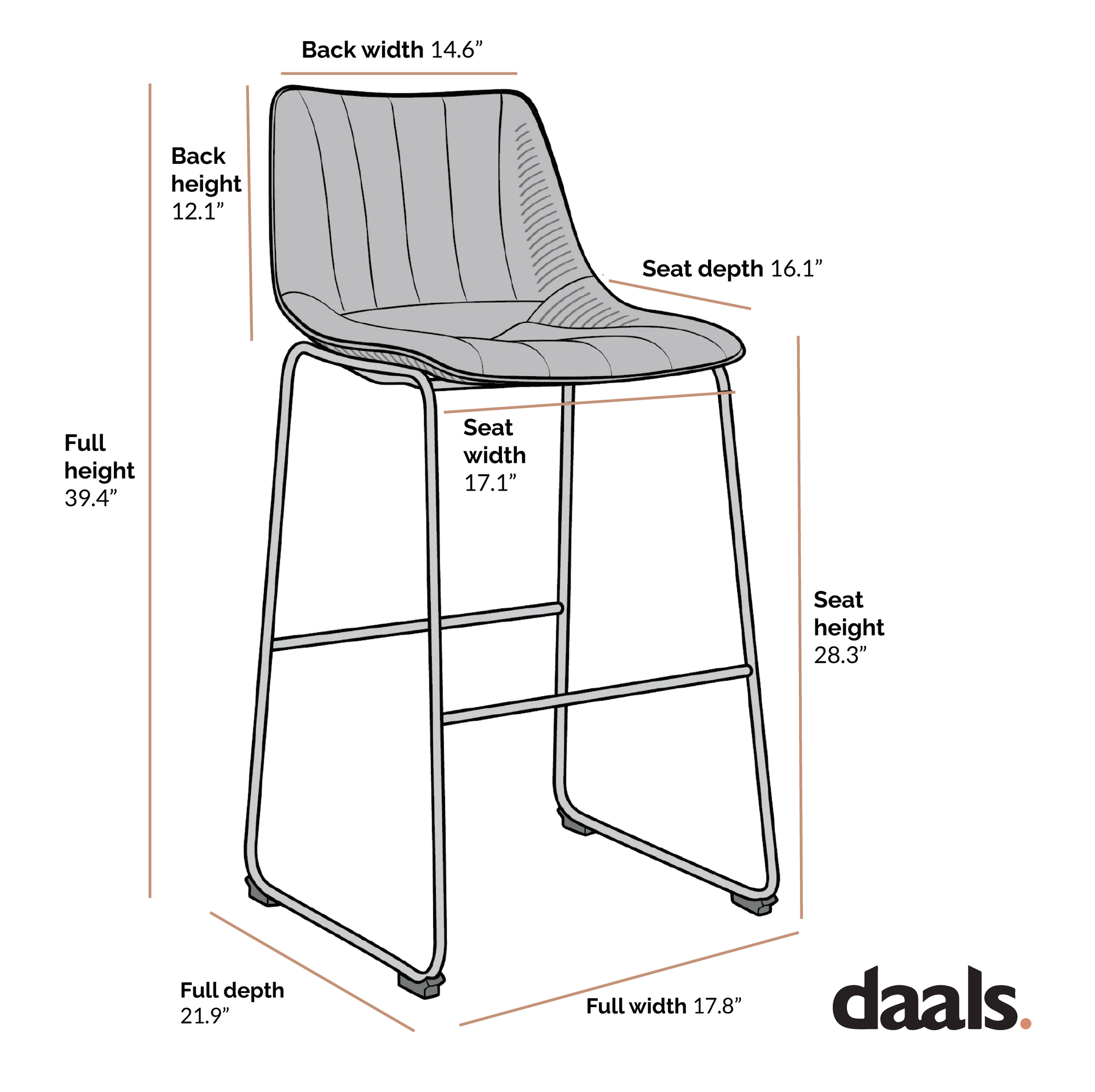
Seat width and depth significantly impact both comfort and visual proportion, yet many homeowners focus solely on height. A seat that’s too narrow feels unstable and cramped, while excessive width creates visual imbalance and reduces the number of stools that fit comfortably around your counter.
Standard bar stool seats range from 16 to 20 inches wide, with 18 inches representing the most versatile option for adult seating. Measure your counter’s total length and divide by 24 to 30 inches—the recommended space per person—to determine how many stools will fit without crowding. For example, a 96-inch counter accommodates three to four stools comfortably. Seat depth requires equal attention: 14 to 18 inches provides adequate support without forcing users to slouch. Backless stools typically work best with slightly shallower seats (14-16 inches), while models with backs benefit from deeper seats (16-18 inches) that support proper posture.
Spacing Stools for Maximum Comfort and Safety
Proper spacing between stools affects both comfort and kitchen traffic flow. Too little space creates an uncomfortable, cramped feeling and increases the risk of collisions when people move around seated guests. Measure from center to center of each stool position, allowing 26 to 30 inches per person for comfortable dining. If your kitchen island accommodates seating on both sides, maintain at least 36 inches between stool rows to allow people to pass through comfortably. For swivel stools, add 6 to 8 inches to your spacing calculations to accommodate the full rotation arc without hitting adjacent stools or walls. Also measure from the counter edge to any adjacent walls, cabinets, or appliances—people naturally shift position while seated, and restricted movement creates constant discomfort.
Verify Legroom and Footrest Requirements
Adequate legroom and properly positioned footrests transform bar stools from mere seating into comfortable, supportive furniture. Without these elements, even correctly height-matched stools become uncomfortable during extended use. Measure from the floor to the underside of your counter to confirm sufficient vertical clearance for both stool bases and users’ legs.
Footrests should position 8 to 12 inches below the seat surface, allowing feet to rest flat without knee elevation. The footrest ring should extend 8 to 10 inches from the stool’s central column to provide usable support. Counter-height stools typically require base diameters of 14 to 16 inches for stability, while bar-height models need 16 to 20 inches to prevent tipping. When measuring for kitchen bar stools, sit in a dining chair at your counter height and note your natural leg position—this practical test reveals whether your planned stools will provide adequate support for your specific body proportions.
Avoiding Common Measurement Mistakes
Many homeowners make preventable errors when measuring for kitchen bar stools that lead to uncomfortable seating arrangements. Relying on visual estimates rather than precise measurements tops the list—just one inch difference in stool height creates noticeable discomfort. Always measure your counter height multiple times with a metal tape measure for accuracy. Another frequent oversight involves ignoring counter overhangs—measure the depth of any lip where the counter meets base cabinets, as this affects where stools can properly position. Stools placed too far under an overhang create a cramped feeling, while positioning them too far forward compromises stability.
Don’t forget to measure beyond the counter itself. Check clearance to overhead light fixtures, wall features, and traffic paths. Take photos of your space from multiple angles and note any potential obstructions. For existing kitchens, sit at your counter in a standard dining chair to simulate stool seating—you’ll quickly identify issues that measurements alone might miss. Document all your measurements before shopping to transform what could be a frustrating trial-and-error process into a confident selection that delivers comfortable, functional seating for everyone who gathers at your kitchen counter.
Final Verification Before Purchase
Before finalizing your bar stool selection, cross-reference all your measurements against the manufacturer’s specifications. Verify that the stool’s seat height falls within your calculated range, accounting for any cushion thickness. Confirm that the base diameter provides adequate stability for your counter height—larger bases prevent tipping on taller installations. Check that armrest heights (if applicable) position correctly relative to your counter surface, allowing elbows to rest comfortably without shoulder elevation.
Measure your kitchen’s traffic patterns with string or painter’s tape to visualize stool placement before delivery. This simple step prevents discovering too late that your beautiful new stools block cabinet access or create narrow pathways. Most importantly, trust your measurements over visual appeal—stylish stools that don’t fit properly become permanent eyesores rather than functional seating. With precise measurements in hand, you’ll select bar stools that provide comfortable, supportive seating while enhancing your kitchen’s overall design and functionality.