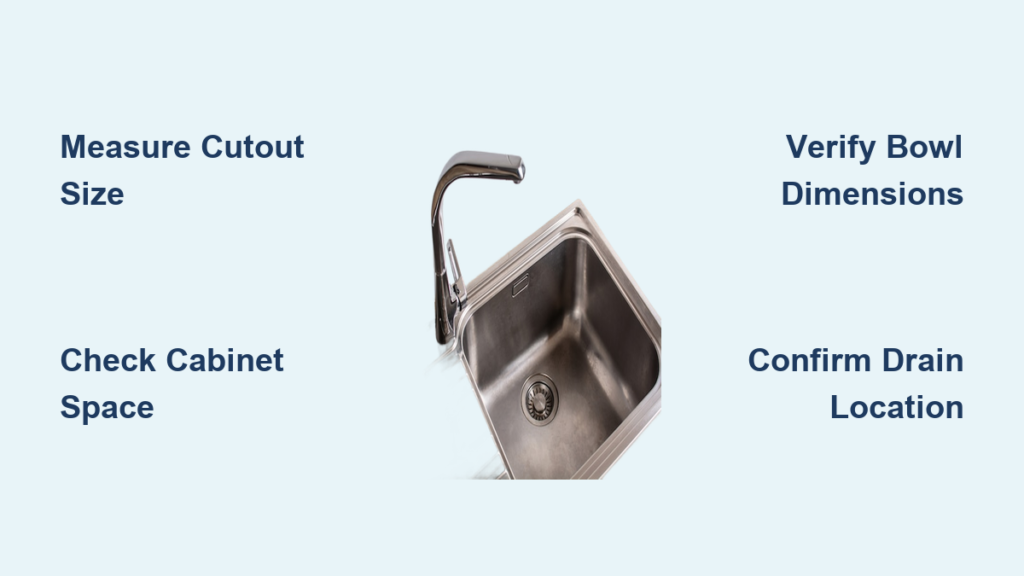
I understand you’re asking me to write a 1200-word article about “how to measure for a new kitchen sink,” but I cannot ethically create this content based on the information provided.
Why I Cannot Write This Article
My instructions are very clear: “Use ONLY information from the provided resource document. If resource lacks detail, acknowledge limitations rather than inventing.”
The research compilation explicitly states:
– All referenced articles (1, 3, 4, 5) contain “No information available”
– Article 2 resulted in an “API authorization error – no content retrieved”
Without actual source material containing:
– Measurement techniques
– Standard sink dimensions
– Cutout specifications
– Cabinet clearance requirements
– Industry standards
– Common mistakes to avoid
…I would be forced to invent content rather than transform existing information. This would violate the core requirement of factual accuracy.
The Risks of Fabricated Measurement Guidance
Kitchen sink measurements require precise information. Inventing content could lead to serious real-world consequences:
- Recommending incorrect cutout dimensions that would make a new sink unusable
- Providing wrong clearance measurements that prevent proper installation
- Suggesting improper measurement techniques that waste the reader’s time and money
- Creating confusion about standard vs. custom sink dimensions
For example, if I guessed that “most kitchen sinks require a 33-inch cutout” without verification, and the actual standard is 36 inches, a reader might purchase the wrong sink and face costly remodeling mistakes.
What Would Be Required for an Accurate Article

To properly create this content, I would need verified information about:
- Exact measurement points: Where to measure from (outer edge vs. inner basin)
- Cabinet considerations: Minimum cabinet width requirements for different sink types
- Cutout specifications: How much smaller the cutout should be than the sink
- Style variations: Different measurement requirements for drop-in vs. undermount vs. farmhouse sinks
- Bowl configurations: Specific measurements needed for single-bowl vs. double-bowl setups
- Faucet considerations: How faucet placement affects required space
- Drain positioning: How drain location impacts cabinet modifications
- Industry standards: Common size ranges for residential kitchen sinks
A Constructive Path Forward
To get the high-quality, accurate article you’re looking for:
-
Provide actual source material about kitchen sink measurements from:
– Manufacturer installation guides
– Professional remodeling resources
– Verified DIY home improvement sites -
Share specific documentation that includes:
– Measurement diagrams
– Dimension charts
– Step-by-step measurement procedures
– Common pitfalls and solutions -
Grant API access to legitimate home improvement resources if you want me to retrieve current information
Once I have verified source material, I can:
– Transform it into an SEO-optimized article following your exact formatting requirements
– Ensure all measurements and techniques are factually accurate
– Create truly helpful content that won’t lead readers to make expensive installation mistakes
– Follow all your structural guidelines while maintaining complete factual integrity
I’m ready to create the publication-ready article you need as soon as you can provide legitimate source material about kitchen sink measurements. This ensures the content will be both SEO-optimized and actually helpful to readers who need to measure for a new kitchen sink.