
Your kitchen should be the warm heart of your home where family gathers, conversations flow, and comfort meets functionality. Yet so many kitchens feel cold, sterile, and purely utilitarian rather than inviting and lived-in. The good news is you don’t need a major renovation to create a cozy kitchen sanctuary. By implementing strategic changes that engage multiple senses—visual warmth through lighting and color, tactile comfort through textiles, aromatic appeal through pleasant scents—you can transform any kitchen into a space you’ll genuinely love spending time in. This guide reveals exactly how to make kitchen cozy with practical, budget-friendly steps that deliver maximum impact.
Install Layered Warm-Toned Lighting
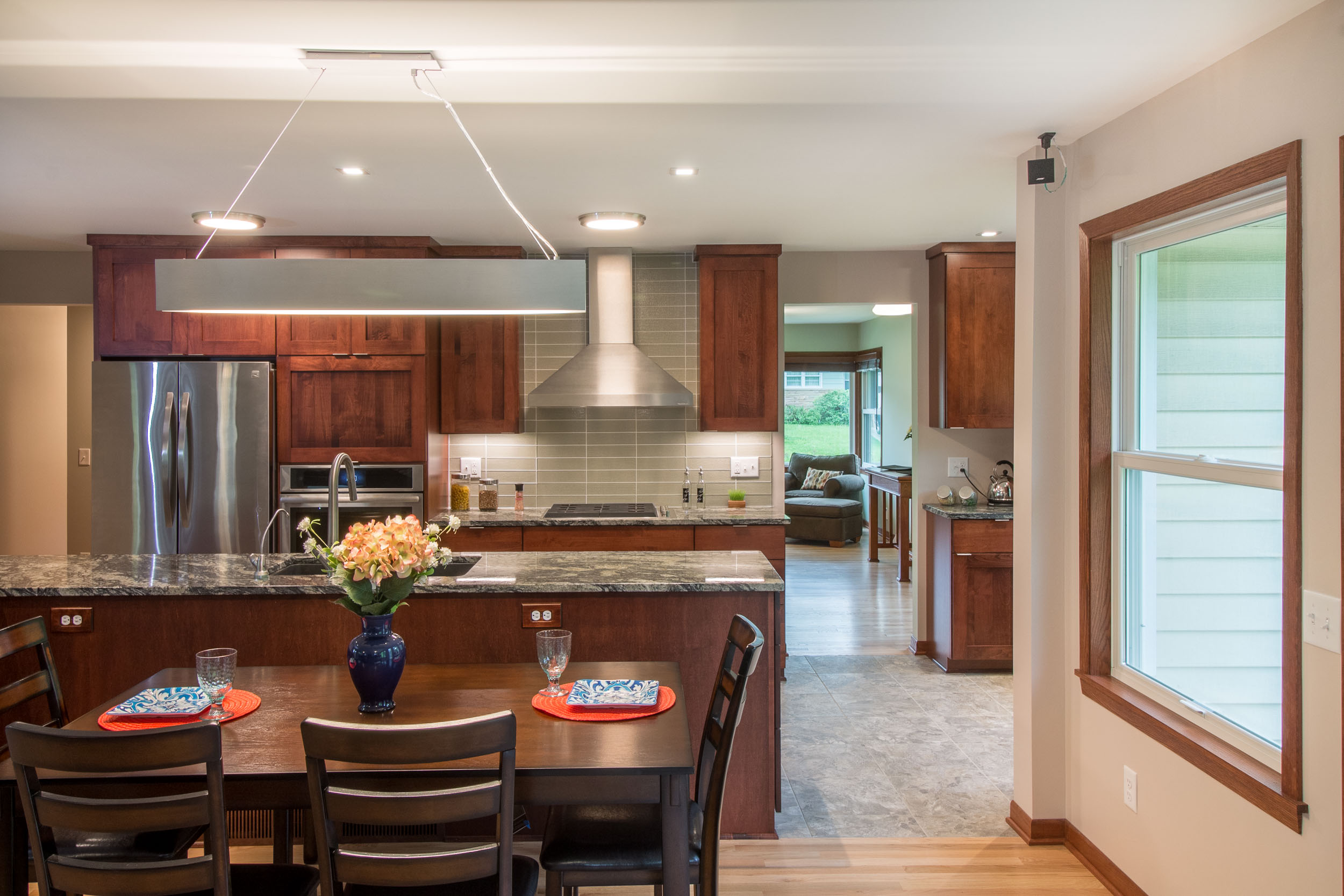
Harsh overhead lighting instantly kills kitchen coziness, making the space feel more like a hospital than a home. The solution isn’t just brighter lights but warmer, layered illumination that creates depth and atmosphere throughout your space.
Swap to 2700K-3000K Bulbs and Add Dimmers
Immediately replace cool white bulbs (4000K+) with warm-toned LEDs at 2700K-3000K that mimic candlelight’s gentle glow. This single change makes the biggest difference in creating instant warmth without sacrificing functionality. Install dimmer switches on all major fixtures so you can adjust your kitchen’s mood—from bright task lighting for morning coffee prep to soft, intimate illumination for evening wine nights. In just 20 minutes and under $50, you’ll transform how your kitchen feels at different times of day.
Create Multiple Light Sources at Different Heights
Relying solely on ceiling fixtures creates flat, uninviting light. Instead, build layers: hang pendant lights 30-36 inches above your island for focused task lighting with style, install under-cabinet LED strips to illuminate countertops while adding ambient warmth below eye level, and place small table lamps on cleared counter spaces for soft, flickering light. Even strategically placed candles (real or flameless) add that essential human element of warmth no overhead light can replicate.
Choose Earthy Paint Colors That Feel Like Home

The color scheme of your kitchen directly impacts its emotional temperature—cool grays feel clinical while warm earth tones wrap your space in visual comfort. You don’t need to commit to bold colors to create warmth; subtle shifts in undertones make all the difference.
Opt for Warm Neutrals with Organic Undertones
Skip stark white cabinets and go for creamy off-whites with yellow or beige undertones that feel nurturing rather than sterile. Walls painted in warm greiges (gray-beige blends) or soft sage greens create backdrops that feel organic and calming. For maximum coziness, paint lower wall portions in a warm neutral and slightly richer tone above the chair rail—this technique grounds your space visually while adding subtle dimension without overwhelming your kitchen’s scale.
Apply Matte Finishes for Soft Light Absorption
High-gloss finishes reflect light harshly, amplifying that cold, institutional feel. Choose matte or eggshell finishes that absorb light gently, creating a softer, more welcoming atmosphere. If you’re hesitant about color, start with your lower cabinets in a warm neutral and upper cabinets in a slightly deeper complementary tone—this two-tone approach adds visual interest while maintaining cohesion.
Add Textiles That Invite Touch and Comfort
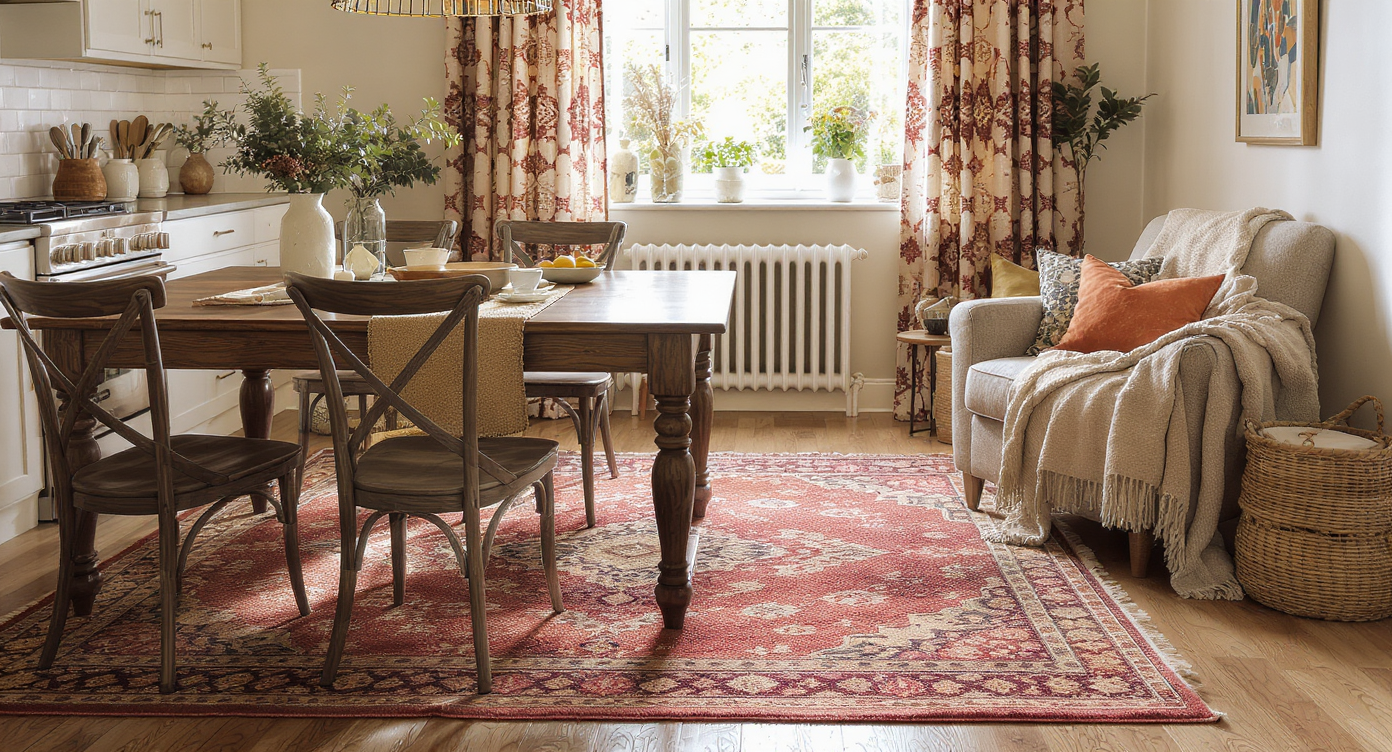
Kitchens are full of hard surfaces—tile, stone, metal—that feel cold underfoot and to the touch. Introducing soft textiles creates visual warmth while making your space physically comfortable to linger in.
Layer Rugs and Cushions Strategically
Place a durable area rug in your main traffic zone to soften hard flooring underfoot, especially near the sink and stove where you stand most. Add bench cushions to dining seating with fabrics in warm tones that complement your color scheme—velvet in autumn, linen in summer. Even small touches like folded throw blankets over chair backs or a woven runner on your kitchen table add layers of texture that scream “cozy.”
Dress Windows with Soft, Functional Treatments
Replace stark bare windows or harsh mini-blinds with café curtains that cover only the lower portion, allowing natural light to flood in while providing privacy. For colder months, add thermal-lined drapes in warm fabrics that you can pull closed in the evening to trap heat and create immediate intimacy. Bamboo shades with their natural texture and warm tones work beautifully year-round, adding organic softness without blocking precious light.
Bring Nature Indoors with Plants and Natural Materials

Nothing makes a kitchen feel more alive and connected to the natural world than living elements. You don’t need a green thumb to incorporate nature—strategic placements of low-maintenance greenery and organic textures transform sterile spaces.
Grow Herbs on Sunny Windowsills
Plant rosemary, thyme, or basil in small pots on your sunniest windowsill—they’re practical for cooking while adding living greenery and subtle fragrance. For low-light kitchens, try snake plants or ZZ plants in decorative pots that thrive with minimal care. Hang a pothos from a high cabinet to add vertical interest and soften hard architectural lines.
Display Natural Material Accents
Leave wooden cutting boards visible on counters as functional art pieces. Store produce in woven baskets that add texture while keeping essentials accessible. Swap plastic containers for glass jars with wooden lids displayed on open shelves. These small natural elements create visual warmth that manufactured materials simply can’t replicate.
Create Intimate Gathering Spaces Within Your Kitchen
A cozy kitchen encourages lingering conversation, not just quick meals. Even in small kitchens, you can create designated areas that invite people to sit, chat, and connect beyond the dining table.
Design Conversation-Friendly Seating Areas
If space allows, create a small breakfast nook with upholstered seating that invites longer stays. In open-concept layouts, position your dining table perpendicular to the kitchen rather than in direct line with cooking areas—this creates a natural transition zone where people can chat while you cook without being in your way. Add bar stools at your island with comfortable back support so guests can comfortably watch you cook and keep you company.
Use Strategic Room Dividers in Open Layouts
In open-concept homes, define your kitchen space without walls using low bookshelves, tall potted plants, or a vintage screen. These visual boundaries create psychological separation that makes your kitchen feel more intimate and less like part of a massive, empty space. The key is maintaining sightlines while creating subtle zones—your kitchen should feel connected to the home but distinctly its own welcoming space.
Engage All Senses with Scent and Sound
Truly cozy kitchens work beyond just visual appeal—they engage multiple senses to create a complete atmosphere of comfort and welcome.
Simmer Natural Aromas Throughout the Day
Keep a small pot of water simmering on your back burner with orange peels, cinnamon sticks, and cloves—this fills your kitchen with warmth without overwhelming cooking smells. During holidays, add apple slices and nutmeg for that quintessential seasonal scent. For everyday use, place small bowls of vanilla or citrus essential oils near vents to gently diffuse pleasant aromas throughout your space.
Incorporate Gentle Background Sounds
Kitchen appliances create harsh, jarring noises that destroy coziness. Counteract this with soft background music through a small Bluetooth speaker, or place a white noise machine near noisy appliances to mask disruptive sounds. If you have space near a window, hang wind chimes that create gentle ambient sound connecting your indoor space to the outdoors.
Transform Your Kitchen Seasonally Without Major Changes
Your cozy kitchen should evolve with the seasons—small, thoughtful updates keep your space feeling fresh while maintaining its core warmth throughout the year.
Swap Textiles and Scents for Seasonal Energy
In autumn and winter, replace lightweight cotton dish towels with thicker tea towels in deeper tones, add a chunky knit throw near seating areas, and feature warm scents like vanilla and clove. For spring and summer, switch to linen and lighter cotton fabrics in brighter colors, add fresh flowers to countertops, and incorporate citrus scents that match the season’s energy. These small shifts cost little but make your kitchen feel perpetually inviting.
Create Your Cozy Kitchen on Any Budget
You don’t need expensive renovations to make your kitchen cozy—most high-impact changes cost under $100 and take minimal effort.
Focus on High-Return, Low-Cost Updates
Repaint cabinets with a warm-toned glaze instead of replacing them entirely. Swap out dated hardware for modern knobs in warm finishes like brass or oil-rubbed bronze. Replace harsh overhead bulbs with warm LEDs and add inexpensive under-cabinet lighting strips. These changes deliver remarkable transformation for minimal investment, letting you test what works before committing to larger projects.
Repurpose What You Already Own
Display grandmother’s ceramic collection on open shelves. Use vintage suitcases as unique storage. Transform an old ladder into a charming pot rack. These personal touches add character that new purchases can’t replicate while creating stories behind every element in your space.
Your cozy kitchen sanctuary awaits—start with just one change today and gradually build the warm, inviting space that becomes the true heart of your home. Within weeks, you’ll find yourself lingering over coffee longer, inviting friends to stay for “just one more cup,” and rediscovering why the kitchen has always been the soul of the home.