
There’s nothing quite like biting into golden-brown homemade french fries with that perfect crunch-to-fluff ratio. Thanks to your Cuisinart food processor, achieving restaurant-quality fries at home is no longer a weekend project—it’s a weeknight reality. Skip the tedious hand-cutting and uneven results; the slicing disc transforms potatoes into uniform sticks in seconds, guaranteeing even cooking and maximum crispiness. This how to make french fries with Cuisinart food processor method eliminates guesswork while delivering consistently golden results.
You’ll master professional techniques like the essential double-fry method and starch-removal secrets, all optimized for your Cuisinart. Whether you’re craving deep-fried indulgence or a lighter oven-baked version, this guide covers every detail—from potato selection to freezer storage. No more soggy batches or wasted ingredients. Get ready to serve fries that outshine any fast-food version, with just 15 minutes of active prep time.
Choose Perfect Potatoes for Crispy Fries
Russet or Idaho potatoes are non-negotiable for achieving that iconic crispy exterior and fluffy interior. Their high starch and low moisture content create the ideal texture when fried, while waxy varieties like red potatoes retain too much water and turn mushy. Always select firm, blemish-free potatoes without green spots or sprouts—these indicate age and compromise texture.
Size matters: medium potatoes fit best in the Cuisinart feed tube, minimizing waste and ensuring uniform cuts. Plan for one large potato per person, as trimming and soaking reduce the final yield. Never skip this step—using the wrong potato variety is the #1 reason home fries fail to crisp properly, no matter how precise your Cuisinart technique.
Essential Cuisinart Setup and Tools

Your Cuisinart food processor requires the slicing disc (not the standard shredding blade) for authentic fry shapes. This disc’s ¼-inch setting creates perfectly even sticks that cook uniformly. If your slicing disc is misplaced, the shredding disc works as a backup—but you’ll need to manually bundle and cut the shreds into fry lengths, adding extra prep time.
Gather these essentials before starting:
– Cuisinart food processor with slicing disc installed
– Vegetable peeler for smooth skin removal
– Two large mixing bowls (one for soaking, one for drying)
– Clean kitchen towels (paper towels work in a pinch)
– Heavy pot or deep fryer for oil frying (or baking sheet for oven method)
Skipping proper setup leads to inconsistent cuts or processor jams. Ensure all components are dry and securely locked—wet parts cause potatoes to slip, creating uneven pieces that fry poorly.
Prep Potatoes Like a Pro
Square-Off Edges for Zero Waste
Peel potatoes completely, then cut them into 3–4 inch chunks that stand vertically in the feed tube. Crucially, trim rounded edges to create flat surfaces—this prevents wobbling and ensures the slicing disc cuts straight sticks instead of tapered shards. Skipping this creates misshapen fries that burn or stay raw.
Perfect Slicing Disc Technique
Insert potato chunks cut-side down into the feed tube. Apply gentle, steady pressure with the pusher—never force it. The machine should hum smoothly; hesitation means chunks are too large. After slicing, stack 3–4 sheets and cut them lengthwise into classic fry shapes. Pro tip: Work quickly after peeling to prevent oxidation, but never skip the soak step—this is where crispiness begins.
Remove Starch for Maximum Crispiness
Immediately transfer cut fries to cold water in a large bowl. Soak for 30–240 minutes—the longer the soak, the crispier the result. Change the water if it turns cloudy, as this removes starch that causes sticking and gummy texture. Under-soaking guarantees limp fries, while over-soaking (beyond 4 hours) makes potatoes waterlogged and prone to splattering.
This step isn’t optional. Surface starch acts like glue during frying, trapping moisture and preventing browning. Proper soaking creates a dry exterior that crisps instantly in hot oil—skip it, and even a Cuisinart’s precision won’t save your batch.
Thorough Drying Prevents Oil Splatter
After draining, spread fries in a single layer on clean kitchen towels. Pat aggressively until zero moisture remains—run your fingers over them to check for damp spots. This prevents dangerous oil explosions and ensures crispiness. Moisture turns to steam in hot oil, creating soggy patches instead of a golden crust.
Critical warning: Never skip towel-drying for air-drying. Even “dry-looking” fries harbor hidden moisture that causes violent splattering. Test readiness by frying one fry—if it sizzles immediately, you’re ready. If it bubbles violently, dry more.
Deep Fry Method for Restaurant Quality

First Fry: Blanch for Perfect Texture
Heat oil to 325°F (160°C) in a heavy pot (use a thermometer!). Fry in small batches for 3–4 minutes until tender but pale—fries should bend slightly without breaking. Overcrowding drops oil temperature, causing oil absorption and sogginess. Remove with a slotted spoon and drain on paper towels.
Rest blanched fries for 5–10 minutes. This pause lets internal moisture migrate outward, creating the fluffy core you crave. Skipping rest time traps steam, resulting in dense, undercooked centers despite a crispy exterior.
Second Fry: Achieve Golden Crisp
Crank oil to 375°F (190°C). Return fries in small batches for 2–3 minutes until deep golden. Watch closely—they brown rapidly at this temperature. The sizzle will quiet just before perfection; pull them out immediately after it stops.
Pro timing tip: Fries darken 20% after removal from oil. Aim for light gold in the pot—they’ll deepen to perfect crispiness by serving time.
Oven-Baked Healthier Alternative
Prep Sheet for Even Crisping
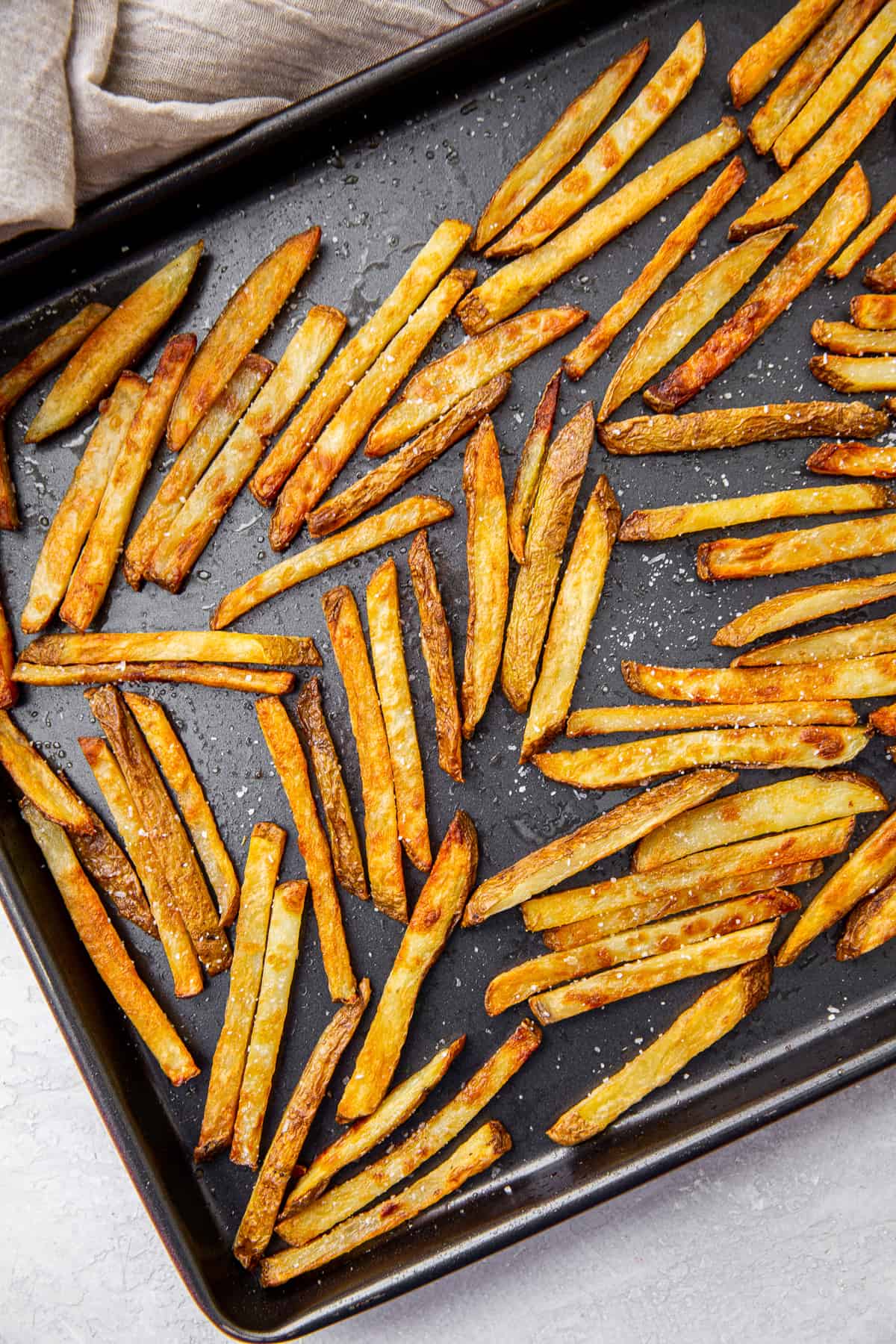
Preheat oven to 425°F (220°C). Toss dried fries with 1–2 tbsp oil per pound until lightly coated. Spread in a single layer on a parchment-lined baking sheet—never let fries touch. Crowding steams instead of crisps them.
Flip for All-Over Crispiness
Bake 20 minutes, then flip every fry individually with tongs. This exposes all sides to direct heat. Bake another 10–15 minutes until golden and crisp at the edges. For extra crunch, preheat the baking sheet in the oven before adding fries—it jumpstarts crisping.
Season and Serve Immediately
Transfer hot fries to a paper towel-lined bowl. Salt immediately while oil is still liquid—this ensures even adhesion. Beyond classic salt, try garlic powder, smoked paprika, or fresh rosemary tossed in during the last 30 seconds of frying.
Critical rule: Fries peak at 5 minutes post-cooking. Serve immediately with ketchup, aioli, or gravy. Delaying even 10 minutes turns crisp edges limp as steam reabsorbs into the potato.
Make-Ahead Freezer Method
Arrange uncooked, dried fries in a single layer on a baking sheet. Freeze 2 hours until solid, then transfer to labeled freezer bags. Cook directly from frozen—no thawing—using your preferred method. This preserves texture better than pre-frying.
Storage tip: Remove air from bags to prevent freezer burn. Fries stay fresh for 3 months. When cooking frozen, add 30 seconds to fry times to compensate for the temperature drop.
Troubleshooting Common Issues
Soggy fries? You likely skipped starch soaking, didn’t dry thoroughly, or overcrowded the oil. Always change soaking water and pat fries bone-dry.
Uneven cooking? Your Cuisinart feed tube technique failed—potato chunks weren’t squared off, creating mismatched sizes. Recheck your pre-cutting method.
Burnt edges? Oil temperature was too high during the second fry. Use a thermometer—375°F is the crispiness sweet spot.
Advanced Flavor Variations
Infuse oils with garlic or rosemary before frying for subtle complexity. For truffle fries, toss hot batches with ½ tsp truffle oil and grated parmesan. Duck fat creates ultra-rich fries, while peanut oil adds nutty depth.
Pro move: Add fresh rosemary sprigs to the oil during the second fry—they crisp into flavorful garnishes. Never add dry seasonings before cooking; they burn instantly in hot oil.
Mastering how to make french fries with Cuisinart food processor transforms a simple snack into a customizable masterpiece. The machine’s precision cutting eliminates inconsistent hand-chopping, while the double-soak and dry method guarantees crunch every time. Freeze batches for instant cravings, or experiment with duck fat and truffle oil for gourmet upgrades. Your kitchen now outperforms any drive-thru—with fries so perfect, you’ll never settle for frozen bags again. Grab your Cuisinart and start frying tonight.