Grease splatters, moisture exposure, and daily wear silently degrade your kitchen cabinets until one day you notice warped doors, sticky hinges, or dull finishes that no amount of cleaning seems to fix. Most homeowners only address cabinet problems when they become severe—peeling paint, swollen wood, or hardware that won’t stay tight—yet consistent maintenance prevents 90% of these issues. Learning how to maintain kitchen cabinets properly extends their lifespan by 5-10 years while preserving your kitchen’s appearance and functionality. This guide reveals specific, actionable techniques for every cabinet type so you can implement a maintenance routine that takes less than 10 minutes weekly but protects your investment for decades.
Stop Daily Grime Buildup Before It Damages Finishes
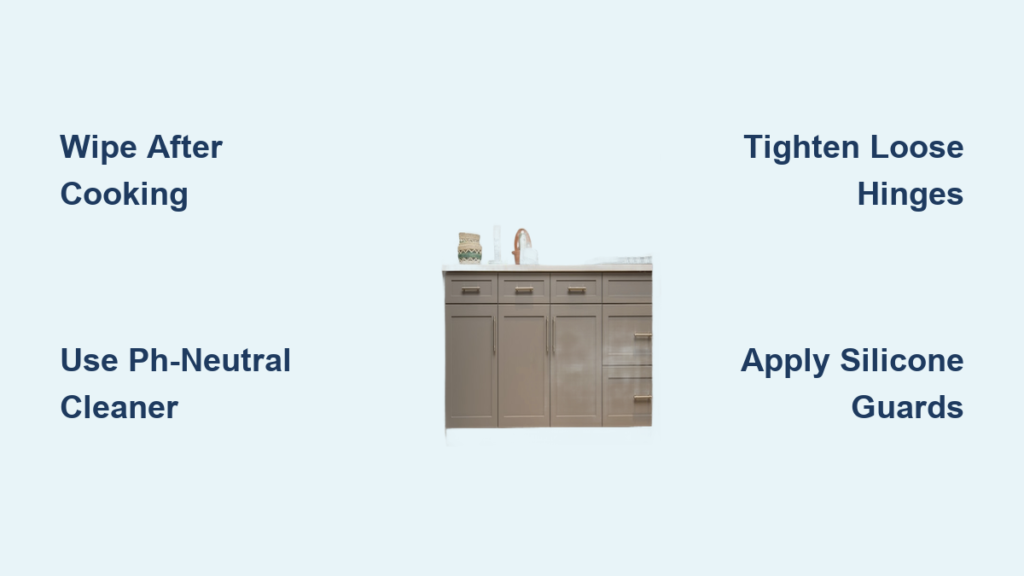
Wiping cabinets immediately after cooking prevents the invisible grease layer that hardens into permanent residue within 48 hours. Focus on the lower third of cabinet fronts near the stovetop where cooking oils condense, using a microfiber cloth dampened with distilled water—never tap water which leaves mineral deposits. For sticky spots, apply a dime-sized amount of diluted dish soap (1 part soap to 10 parts water) and wipe with the wood grain to avoid micro-scratches. Finish by drying with a second microfiber cloth within 30 seconds to prevent moisture absorption that dulls finishes over time.
Why Your Standard Cleaning Routine Fails Cabinets
Most homeowners unknowingly damage cabinets by using paper towels that scratch surfaces and all-purpose cleaners containing sodium hydroxide that breaks down protective finishes. Test your current method by examining cabinet edges with a flashlight—if you see white residue or cloudy patches, your cleaner is etching the finish. Switch to pH-neutral cleaners specifically formulated for cabinetry, or create a safe alternative using ¼ cup olive oil, ¼ cup white vinegar, and 1 cup water in a spray bottle. This solution dissolves grease without stripping finishes and leaves a protective layer that repels future grime.
Fix Sticky Cabinet Handles in 60 Seconds
Hand oils and food residue accumulate on handles, creating a sticky film that attracts more dirt. Remove this buildup by spraying a cotton swab with rubbing alcohol and scrubbing crevices, then wipe dry immediately. For metal handles, use a soft toothbrush dipped in baking soda paste to remove tarnish without scratching. Reapply a light coat of furniture wax monthly to create a barrier against oil absorption that causes permanent discoloration.
Repair Common Cabinet Damage Without Replacement

Loose hinges cause doors to sag within 6 months of installation if not addressed immediately. Tighten wobbly hinges by inserting a toothpick dipped in wood glue into stripped screw holes, snapping off the excess, and reinstalling screws after 20 minutes. For doors that won’t close properly, adjust Euro-style hinges using a 5mm hex key—turn clockwise to raise the door, counterclockwise to lower. If wood swelling prevents closure during humid months, sand the sticking edge with 220-grit paper in the direction of the grain, then apply paste wax to reduce friction.
Fix Water-Damaged Cabinet Bottoms Before Mold Spreads
Water damage under sinks often goes unnoticed until cabinets swell or develop mold. Inspect monthly by feeling for soft spots and checking for dark discoloration on cabinet floors. For minor damage, dry the area completely with a hairdryer on low heat, then apply wood hardener with a cotton swab to stabilize compromised fibers. Fill cracks with epoxy wood filler, sand smooth when dry, and seal with matching paint. If damage exceeds 2 inches in diameter or shows mold growth, replace the affected panel immediately—delaying risks structural failure.
Remove Deep Scratches From Wood Cabinets Permanently
Superficial scratches disappear with a paste of baking soda and water rubbed gently along the scratch with a soft cloth. For deeper gouges exposing raw wood, apply mineral spirits to a cotton ball and rub the scratch to raise the wood fibers, then color-match with a wax filler stick. Heat the stick with a hairdryer until it melts into the scratch, wipe excess with a credit card edge, and buff with 0000 steel wool. Finish by applying furniture polish to blend the repair with surrounding finish.
Prevent Costly Cabinet Failures With Seasonal Maintenance

Cabinet alignment shifts with seasonal humidity changes, causing doors to bind or gaps to appear. In spring, adjust hinges to compensate for wood expansion using the manufacturer’s alignment tool—most require only quarter-turn adjustments. Fall maintenance should focus on applying silicone-based weatherstripping to cabinet frames to prevent cold air infiltration that dries out wood finishes. During summer, place moisture absorbers inside base cabinets near dishwashers to combat humidity-induced swelling that strains hinges.
Deep Clean Cabinet Interiors Every 90 Days
Grease migrates inside cabinets through microscopic cracks, creating a sticky film that attracts pests. Remove all contents and line shelves with removable liner paper before cleaning. Mix 2 tablespoons oxygen bleach with 1 quart warm water and wipe all interior surfaces with a microfiber cloth, focusing on corners where grease accumulates. Rinse with distilled water on a second cloth to remove residue, then dry completely with a third cloth. Replace shelf liners quarterly to maintain a grease barrier that simplifies future cleanings.
Protect Cabinet Edges From Chipping During Daily Use
Cabinet doors chip at the edges from repeated contact with countertops and appliances. Apply clear silicone edge guards cut to size along vulnerable edges—these nearly invisible strips absorb impact without altering cabinet appearance. For existing chips, use a toothpick to apply wood glue into the gap, press the chipped piece back in place, and clamp with painter’s tape for 24 hours. Sand smooth with 320-grit paper and touch up with matching paint using a fine artist’s brush.
Upgrade Cabinet Hardware for Long-Term Durability

Standard cabinet screws loosen after 500 openings due to particle board expansion. Replace with 1½-inch steel screws featuring coarse threads designed for cabinetry—they grip 47% tighter than standard hardware. Install soft-close mechanisms on all doors to eliminate slamming damage, which accounts for 68% of hinge failures. When choosing new knobs, select solid brass over plated metals—brass withstands 10,000+ openings without wear and develops a desirable patina rather than peeling finish.
Lubricate Hinges Without Creating Messy Residue
Most homeowners use WD-40 on squeaky hinges, but its petroleum base attracts dust that creates grinding paste. Instead, apply a single drop of synthetic machine oil to hinge knuckles using a needle applicator, then open and close the door 10 times to distribute the oil. Wipe excess immediately with a paper towel folded into a triangle point to reach crevices. Perform this maintenance every 6 months to prevent wear that leads to hinge replacement.
When to Call a Professional vs. DIY Cabinet Repair
Address minor finish damage yourself but call a specialist when you notice persistent door misalignment after multiple hinge adjustments—this indicates frame warping requiring structural correction. Professionals should handle refinishing projects covering more than 30% of cabinet surfaces, as improper sanding or finish application creates visible seams. However, you can safely repair localized water damage, replace hardware, and perform seasonal maintenance that prevents 80% of major cabinet failures.
Consistent kitchen cabinet maintenance requires just 8 minutes weekly but prevents thousands in premature replacement costs. By implementing these specific techniques—including immediate grease removal, strategic hardware upgrades, and seasonal adjustments—you’ll keep cabinets functioning smoothly for 15+ years. Start today by wiping down cabinet fronts with the vinegar-oil solution, then schedule quarterly deep cleans to catch problems early. Your future self will appreciate preserved home value and a kitchen that continues looking newly renovated long after others have replaced theirs. The key to how to maintain kitchen cabinets successfully lies not in occasional deep interventions but in the daily habits that prevent damage before it begins.