Dangling appliance cords turn even the most beautifully designed kitchen into a chaotic eyesore while creating genuine safety hazards. Whether you’re battling with your coffee maker’s persistent cord sprawl or trying to tame your stand mixer’s lengthy power cable, visible wiring disrupts clean counter lines and makes daily cleaning more difficult. This guide delivers practical, immediately implementable solutions for hiding appliance cords in kitchen spaces—ranging from $5 quick fixes to sophisticated built-in systems that make cords completely disappear. You’ll discover exactly how to organize those messy wires while maintaining easy access to your essential kitchen tools.
Kitchen cord clutter does more than just look unsightly—it creates real safety concerns that many homeowners overlook. Exposed cords accumulate dust and grease, become tripping hazards in high-traffic areas, and suffer constant wear from accidental tugs and foot traffic. The good news is that with the right approach, you can transform your kitchen from a tangled mess to a streamlined space where cords vanish from sight without compromising functionality. What follows are field-tested methods that professional organizers and home renovators use to achieve that magazine-worthy kitchen look.
Install Adhesive Cord Clips for Instant Wire Management
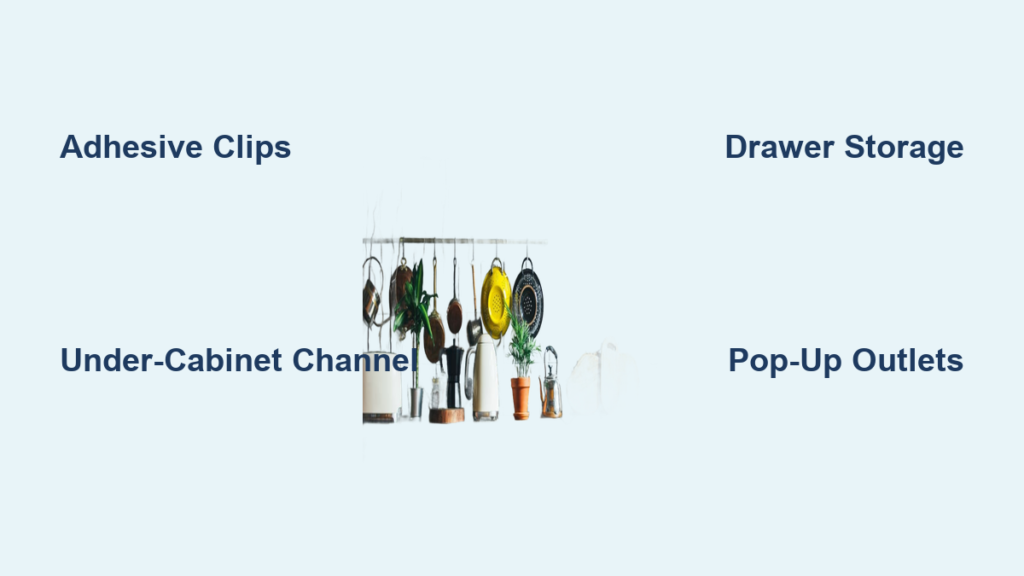
Skip the generic “tools you’ll need” approach—grab these specific items right now: 3M Command Cord Clips (model #17074-BLK), a microfiber cloth, and rubbing alcohol. These clips solve the most common kitchen cord problem: wires trailing across countertops. Wipe the counter edge with alcohol to remove grease, press the clip firmly for 30 seconds, then snap your appliance cord into place. Position multiple clips along the back edge of your counter to route cords downward behind appliances.
For appliances against walls, attach clips to the appliance housing itself to direct cords toward the wall instead of across your workspace. The black model #17074-BLK blends with most appliance finishes while providing a secure hold. When properly installed, these clips withstand daily kitchen activity without loosening. Pro tip: Install them at a slight downward angle so cords naturally follow the path you want—no more constant readjustment when you move your coffee maker for cleaning.
Create a Hidden Cord Channel Under Upper Cabinets

Why let cords dangle when you can tuck them completely out of sight? Install a 4-foot under-cabinet cord management channel (like CableOrganizer’s Under-Cabinet Power Channel) directly beneath your upper cabinets. This solution works for kitchens with standard 18-inch upper cabinets spaced 18 inches above counters. Measure from your outlet location to where appliances sit, purchase a channel 6 inches longer than that measurement, and mount it with the included adhesive strips.
Route cords from your coffee maker, toaster, or blender up into the channel, then run them along the cabinet bottom to your outlet. Most channels feature removable lids for future access—simply snap them shut after threading cords through. For kitchens with multiple appliances, choose a channel with multiple compartments to keep cords separated. This method completely eliminates visible wiring while keeping appliances fully functional. Bonus: The channel doubles as dust protection, making cabinet cleaning faster since nothing obstructs your path.
Implement Drawer-Based Cord Storage for Daily-Use Appliances
Stop wrestling with tangled cords every time you use your coffee maker. Modify a lower cabinet drawer with this exact process: Remove the drawer, locate the back panel, and drill a 1-inch hole 2 inches from the bottom edge. Line the drawer interior with adhesive-backed cord channels (Uxcell 10-Pack), then reinstall the drawer. Plug your appliance into an outlet behind the cabinet, thread the cord through the new hole, and store the appliance inside the drawer with the cord neatly secured in channels.
This solution works perfectly for coffee makers, blenders, and toasters you use daily but prefer not to display. When you need your appliance, simply pull out the drawer, grab it, and go—no cord management required during use. For heavier appliances like stand mixers, add a small shelf inside the drawer to elevate the appliance while keeping cords organized below. The entire modification takes less than 15 minutes and costs under $15, yet delivers the clean, uncluttered look of a professionally organized kitchen.
Apply In-Line Cord Covers to Conceal Existing Wiring

Don’t unplug and rethread—snap covers over cords that are already in place. In-line cord covers (like Wiremold CordMate) feature a split design that opens to accept existing cords without disconnecting them. Measure your longest appliance cord, purchase covers in 3-foot sections, and cut them to size with household scissors. Snap the covers around cords starting from the appliance end, working toward the plug.
These covers mount securely with adhesive strips that won’t damage surfaces when removed later. For kitchens with multiple appliances, use different colored covers to identify which cord belongs to which appliance—white for coffee maker, black for toaster, etc. The covers create a clean, uniform appearance while protecting cords from damage. They’re particularly effective along baseboards where cords often run, transforming what was once an eyesore into a streamlined design element that complements your kitchen’s aesthetic.
Use Decorative Baskets as Cord-Concealing Appliance Stations
Turn visible appliances into intentional design features rather than clutter. Place a 12-inch woven seagrass basket (like the ones from The Container Store) on your counter where you typically use your stand mixer or blender. Position the appliance inside the basket, then wrap excess cord neatly around the appliance base before tucking it into the basket’s interior. The basket’s height hides the cord completely while providing a dedicated “station” for the appliance.
This method works best with appliances that generate minimal heat during use. Choose baskets that coordinate with your kitchen’s color scheme—lighter baskets for farmhouse styles, darker ones for modern kitchens. The natural fibers add texture to your space while solving the cord problem. For appliances that need frequent access like coffee makers, keep the basket near your outlet so you only need a short cord run. When cleaning, simply lift the appliance out of the basket—the cord stays neatly contained inside.
Install Pop-Up Outlets for Island Power Without Visible Cords
Eliminate the cord jungle on your kitchen island permanently with a pop-up outlet (like the Legrand Radiant Collection). These units install directly into countertops, rising only when needed and disappearing below the surface when not in use. For a standard 1.5-inch thick granite countertop, you’ll need a 4-inch diameter hole saw, a jigsaw, and the outlet unit itself.
Cut the hole in your island’s surface, mount the unit according to manufacturer instructions, and connect it to your electrical system (hire an electrician if you’re not comfortable with wiring). When you need power for your blender or mixer, press the top and it rises 3 inches, revealing standard outlets and often USB ports. After use, press it down to hide everything. This solution costs $150-$300 but delivers the clean, uncluttered island look that’s impossible to achieve with traditional cord management. No more cords stretching across your beautiful island to reach wall outlets.
Apply These Critical Safety Checks to Your Cord Management
Before implementing any solution, verify these three safety points: First, never compress cords tightly—leave breathing room in clips and channels to prevent overheating. Second, maintain at least 12 inches of clearance between cords and heat sources like stovetops or ovens. Third, inspect cords monthly for damage at bend points where they enter clips or channels.
Many homeowners unknowingly create fire hazards by routing cords too close to heat sources or bundling them too tightly. When installing under-cabinet channels, measure carefully to ensure cords don’t drape near your cooktop. For adhesive clips, position them to create gentle curves rather than sharp bends in cords. Replace any cord showing signs of wear immediately—don’t try to repair damaged appliance cords yourself. Safety should always outweigh aesthetics in kitchen cord management.
Implement Rent-Friendly Cord Solutions That Leave No Trace
If you’re renting, use these specific products that won’t violate your lease: Scotch Removable Mounting Squares (model #41500MH), Cordies Cord Covers (rental-friendly fabric sleeves), and Belkin PivotPlug outlets that rotate to fit tight spaces. Mount squares to cabinet undersides to create temporary cord channels, slip Cordies over visible wiring to create a uniform appearance, and use PivotPlugs to maximize outlet access in tight spaces.
These solutions remove cleanly without damaging surfaces when you move out. Test mounting squares in an inconspicuous area first to ensure they release properly on your specific surface. For renters with strict no-modification policies, focus on portable solutions like countertop cord boxes that contain multiple plugs in one attractive container. The key is creating immediate improvement without permanent changes—these solutions deliver visible results while respecting your rental agreement.
Your kitchen deserves to look as functional as it feels. By implementing just one or two of these targeted cord management solutions, you’ll immediately reduce visual clutter while improving safety and making cleaning easier. Start with the adhesive cord clips for instant improvement, then gradually incorporate more sophisticated solutions as your budget and circumstances allow. Remember that effective cord management isn’t about perfection—it’s about creating a kitchen that works beautifully for your daily life without constant battles against tangled wires. Within a weekend, you can transform your space from chaotic to coordinated, one hidden cord at a time.