That moment of distraction—setting a hot pan directly on your kitchen counter without a trivet—can leave you staring at an unsightly burn mark that seems impossible to remove. If you’re searching for how to fix burnt kitchen countertop, you’re not alone. Laminate countertops, the most common type in homes (often branded as Formica or Sunmica), are particularly vulnerable to heat damage due to their thin plastic surface layer. The good news? Most burns can be addressed with targeted DIY methods ranging from simple cleaning for surface damage to epoxy repairs for deeper burns. This guide walks you through every option based on your specific damage and countertop material.
Assess Your Countertop Damage First
Before grabbing cleaning supplies or epoxy, you need to accurately evaluate both your countertop material and the severity of your burn. Using the wrong method on the wrong material can worsen the damage and create additional problems.
Identify Your Countertop Material
Laminate countertops dominate kitchens due to affordability but have critical heat limitations. They consist of layers of paper bonded with resin and topped with a decorative plastic surface—typically less than 1mm thick. This thin layer offers virtually no heat protection, making burns common. You likely have laminate if your countertop has visible seams, comes in large sheets with repeating patterns, and feels like hard plastic.
Solid surface materials like Corian differ significantly—they’re homogeneous throughout their thickness, allowing for more repair options. However, they still have heat limitations and can sustain damage from extremely hot cookware. Knowing your material prevents wasted effort on incompatible repair methods.
Evaluate Burn Severity
Your burn falls into one of three categories requiring different approaches. Surface burns appear as discoloration or light browning where heat affected only the top layer without creating depression. These respond well to cleaning and gentle abrasion. Moderate burns show visible marks or slight depressions where heat partially degraded the laminate material but didn’t create a through-hole. These often require epoxy filling.
Severe burns have penetrated completely through the laminate, creating actual holes that expose the wood substrate beneath, or cover large areas exceeding several inches in diameter. To assess your burn, gently run your fingernail across the damaged area—you’ll feel whether it’s smooth (surface burn), slightly depressed (moderate burn), or has an actual hole where your nail catches.
Decide Between Repair and Replace
Several factors determine whether repair makes sense. Consider location—burns in high-traffic food prep zones are more noticeable than those in less prominent spots. Evaluate your timeline and budget; epoxy fixes cost under $30 and take a day, while replacement runs into hundreds or thousands. If the burn has created a hole larger than a few inches, multiple repair attempts have failed, or surrounding laminate shows bubbling or delamination, replacement is usually the smarter long-term investment.
Clean Surface-Level Burns with Household Items
For light discoloration where the damage hasn’t penetrated deeply, the least invasive approach often works best. This method physically removes discolored material through gentle abrasion while preserving surrounding surface integrity.
Gather Your Cleaning Supplies
Assemble everything before starting: mild detergent, microfiber cloths, baking soda or abrasive cleaner like Ajax, toothbrush or soft-bristled brush, fine steel wool (0000 grade), and water for rinsing. Having supplies ready prevents interruptions during the scrubbing process.
The baking soda paste serves as a gentle abrasive that lifts burn discoloration without scratching laminate. If your burn is stubborn, you might substitute a slightly more aggressive cleaner, but always test any product in an inconspicuous area first to avoid damaging your countertop.
Scrub the Burn Mark Effectively
Begin by cleaning the entire area with detergent to remove grease and debris. Mix baking soda with water to create a thick paste (similar to toothpaste), apply it directly to the burn mark, then scrub vigorously using circular motions with your toothbrush or steel wool. Apply steady pressure and work the paste into the damaged area.
You’ll notice the paste darkening as it lifts burned material—periodically wipe with a damp cloth to remove spent paste and assess progress. Continue scrubbing for several minutes, reapplying fresh paste as needed, until the burn mark fades significantly or stops improving. Most surface burns respond well to this treatment with 10-15 minutes of focused effort.
Seal and Protect the Repaired Area
Once satisfied with results, clean the area thoroughly with water and a fresh cloth to remove all residue. Allow it to dry completely, then apply a thin layer of laminate sealant or furniture polish. This protective coating prevents future moisture penetration and makes the surface more resistant to minor scratches and stains. Many homeowners find this simple cleaning approach alone restores their countertop sufficiently.
Epoxy Repair for Deep Burns and Holes
When scrubbing can’t remove a burn mark that has created a depression or penetrated deeply, epoxy filling provides the best DIY solution. This method builds up the damaged area to create a smooth, level surface that blends with the surrounding countertop.
Choose the Right Epoxy Product

Select countertop-specific epoxy repair kits available at hardware stores. These come in two formulations: colored epoxies you mix to match your countertop, or clear epoxy that works on any color. Colored options provide better aesthetics but require careful mixing for accurate matching—you may need to experiment with blending shades.
Some kits include applicator tips designed for precise application to laminate surfaces. If yours lacks these, a small putty knife or plastic spatula works well for applying epoxy to larger areas.
Apply Epoxy Correctly
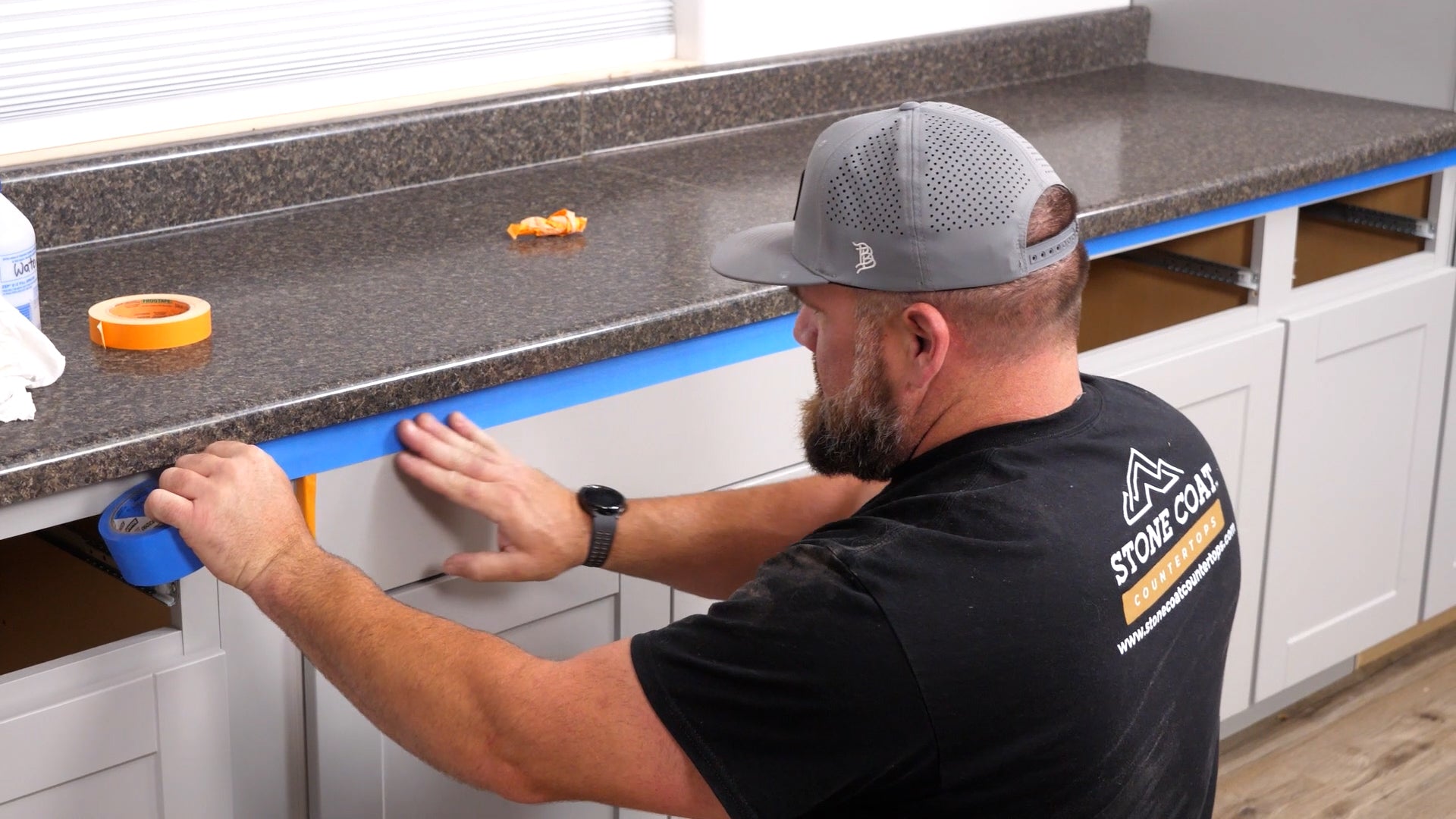
Ensure the damaged area is completely clean and dry before starting—any moisture compromises the repair. Mix epoxy components thoroughly according to instructions. If color-matching, take your time to achieve uniform consistency.
Apply mixed epoxy directly into the burn mark, slightly overfilling since material shrinks as it dries. Use your putty knife to work epoxy into all crevices, ensuring complete coverage. Remove air bubbles by gently pressing on the surface or blowing lightly before it sets.
Finish and Protect the Epoxy Repair
Allow epoxy to cure fully before touching—typically at least 24 hours. Check product instructions for specific timing, as premature sanding ruins the repair. Once firm to the touch with no tackiness, sand the area with fine-grit sandpaper (220-grit or higher) to create a surface completely level with the surrounding countertop.
After sanding, apply laminate sealant to the repaired area to protect it and create a moisture barrier. This final step is essential—the repaired area lacks the protective layer of undamaged laminate and needs additional protection against moisture and wear.
Cutting and Patching for Severe Damage

For burns too severe for epoxy but not extensive enough to warrant complete replacement, cutting and patching offers an intermediate solution that removes damaged material and fills the void.
Remove the Damaged Section Properly
Using a sharp utility knife or rotary tool, carefully cut out the burnt area. Work slowly to create clean edges around the damaged section, removing all visibly degraded material while minimizing the opening size. Clean the area thoroughly to remove dust and debris, then allow it to dry completely.
Fill and Smooth the Patched Area
Apply your chosen filler—color-matched caulk, sealant, or a small piece of matching laminate—into the cut-out area. If using caulk or sealant, slightly overfill since material compresses as you smooth it. If using a laminate patch, secure it firmly with construction adhesive to sit flush with the surrounding surface.
Use your putty knife to smooth the filler, working quickly before it begins to set. Remove excess material to create a surface as level as possible with the surrounding countertop.
When Replacement Becomes Necessary
Despite various DIY methods, certain situations make replacement the practical choice. If the burn has created an actual hole through the laminate to the substrate beneath, covers a large area exceeding several inches, or shows visible warping, bubbling, or melting around the burn site, DIY repair attempts will likely fail.
If multiple cleaning attempts haven’t improved the burn’s appearance, the damage has penetrated too deeply for surface treatments. Similarly, if the surrounding area feels soft, spongy, or shows signs of delamination, the damage extends well beyond the visible burn.
Prevent Future Heat Damage Immediately
The most effective approach to burnt countertops is prevention. Always use trivets, hot pads, and heat-resistant mats—place them within arm’s reach of your stove so they’re readily available. Develop the habit of assuming any cookware that has been on the stove or in the oven is hot, even if it doesn’t appear to be.
Before removing cookware from heat, decide where it will go—never automatically place hot items on the nearest countertop surface. Consider installing permanent heat-safe surfaces in high-traffic areas, like a built-in glass cutting board near your stove that provides both food prep space and a reliable resting place for hot cookware.
Burnt kitchen countertops are frustrating, but they’re not the end of your countertop’s useful life. By accurately assessing the damage, choosing the appropriate repair method, and implementing prevention strategies, you can restore your countertop’s appearance and protect it from future heat damage. Start with the simplest approach matching your damage level, and don’t hesitate to move up to more intensive methods or replacement if needed. For minor surface burns, begin with baking soda scrubbing; for moderate burns with depressions, use epoxy repair; and for severe burns with holes or large damaged areas, replacement typically offers the best long-term solution.