That moment when your favorite pot slips from your hands and crashes onto the counter edge—suddenly you’re staring at an unsightly chip that ruins your kitchen’s appearance. Chipped kitchen countertops affect millions of homeowners each year, whether from dropped cookware, accidental knife slips, or moving heavy appliances. The good news? Most chips smaller than one inch can be repaired successfully with DIY methods, saving you hundreds or even thousands compared to full replacement. This guide walks you through proven repair techniques for every major countertop material, providing detailed instructions so you can achieve professional-looking results without the professional price tag.
Before reaching for repair materials, understanding your countertop type and the extent of damage determines which approach will work best. Laminate countertops typically suffer surface layer chips exposing dark particleboard underneath, while quartz and granite can chip at vulnerable edges. Identifying your specific situation is the essential first step toward a successful repair that restores both function and beauty to your kitchen workspace.
How to Determine If Your Countertop Chip Is Repairable
Not all countertop chips require the same approach, and some may need professional attention. Start by examining the chip carefully to determine its size, depth, and whether the broken piece remains available. Chips smaller than one inch in diameter generally respond well to home repairs across all countertop materials, while larger damage may require professional intervention.
Check whether water or debris has penetrated the exposed area, as this affects both the repair approach and urgency. Laminate countertops with exposed cores are particularly vulnerable to moisture damage causing delamination over time. For stone surfaces like quartz and granite, chips that penetrate deep into the material need different techniques than surface-level damage. If the broken piece is intact, reattachment methods often produce the most seamless results regardless of material type.
Consider the chip’s location too—edges and corners are more vulnerable to future impacts and may benefit from more robust repair approaches. Take photos from multiple angles; these help you track progress during repair and serve as references if you consult professionals later.
Required Tools for Fixing Different Countertop Materials

Having all necessary materials ready ensures smooth workflow and prevents interruptions that could compromise results. Different countertop materials require specific supplies, so matching your materials to your countertop type is crucial.
Quartz Countertop Repair Kit Essentials
Quartz repairs require specialized filler kits with color-matched resin compounds. Purchase from hardware stores or online retailers, keeping in mind exact color matching can be challenging—testing samples before starting is advisable. Beyond the filler kit, gather isopropyl alcohol for cleaning, a soft microfiber cloth, fine-grit sandpaper (400-600 grit for preparation, 600-1000 for finishing), a plastic putty knife for precise application, and clean water for dust removal during sanding. Masking tape protects surrounding areas during the repair process.
Laminate Countertop Repair Supplies
Laminate repairs offer multiple approaches requiring specific materials. For superglue reattachment, you’ll need cyanoacrylate with precision applicator, fine-grit sandpaper, and color-matching seam sealer. The paint-based method utilizes Testors Hobby and Enamel Model Paint for excellent adhesion and durability. You’ll also need very thin-tipped paint brushes, Q-tips, toothpicks, a razor blade, and isopropyl alcohol. For wood glue repairs, standard wood glue fills missing fibers while a small hammer helps reseat pieces properly.
Step-by-Step Quartz Countertop Chip Repair Guide
Quartz countertops combine exceptional durability with aesthetic appeal through their engineered stone composition. Despite this strength, chips can occur—particularly along edges where impacts are likely. Follow this proven process:
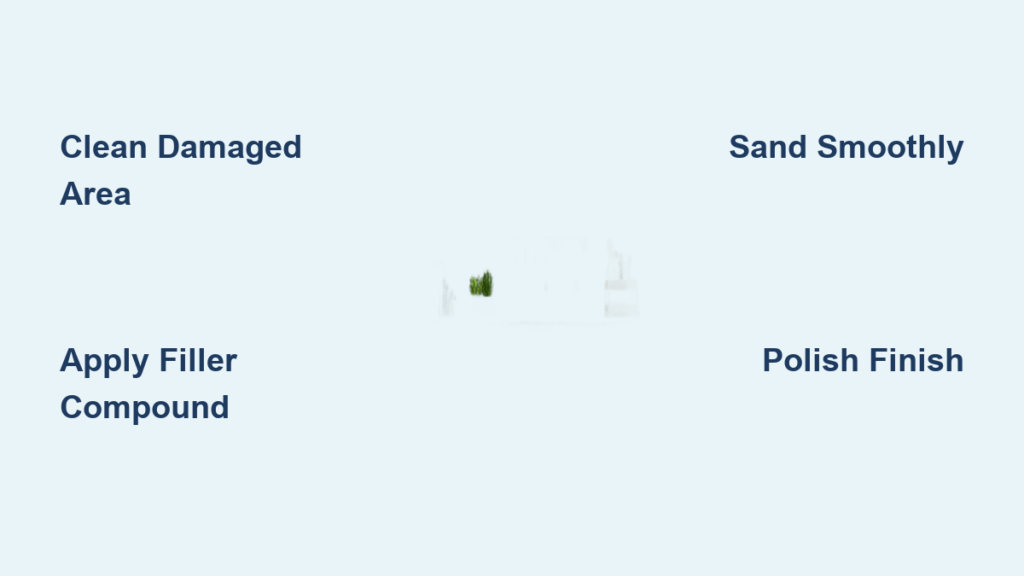
Clean and Prepare the Damaged Area
Begin by cleaning the chipped section thoroughly with isopropyl alcohol and a microfiber cloth. Remove all dirt, grease, and debris to ensure proper adhesion. Allow the area to dry completely—moisture interferes with filler bonding and curing.
Apply and Level the Filler Compound
Mix your quartz filler kit according to manufacturer instructions (typically resin with hardener). Work quickly as compounds begin setting once mixed. Use the plastic putty knife to apply filler into the chip, slightly overfilling to account for shrinkage. Smooth the surface to match the surrounding countertop level, wiping away excess with a damp cloth.
Complete Curing and Finishing Process
Let the filler cure undisturbed for 24 hours—avoid using the countertop during this period. Once cured, sand the area progressing from 600 to 1000 grit sandpaper for optimal smoothness. Wipe away dust between passes to monitor progress. For a polished finish, apply quartz polishing compound or use a buffing pad attached to a drill at low speed to restore shine and blend the repair seamlessly.
3 Proven Methods for Fixing Laminate Countertop Chips

Laminate countertops consist of a thin plastic layer bonded to particleboard or MDF. When chips occur, they expose the darker core material, creating highly visible blemishes. Try these effective repair methods:
Superglue Reattachment for Intact Chips
When the chipped piece remains available, reattaching it provides the most seamless repair. Lightly sand the back of the chip to create a flush fit and roughen the surface for better adhesion. Apply superglue to the back using a precision applicator, position the chip carefully, and press firmly. Apply color-matching seam sealer along edges to seal exposed backing material and prevent moisture infiltration.
Wood Glue Repair for Imperfect Fits
Wood glue works well when the chip doesn’t fit perfectly or material is missing. Study how the chip fits in the damaged location—some pieces require sliding while others need pressing straight down. Apply wood glue to both surfaces, gently hammer the piece downward and inward to reseat properly, then wipe away excess glue before it dries.
Paint-Based Repair for Missing Pieces
When traditional methods fail, enamel paint creates durable, color-matched repairs. Clean the area with isopropyl alcohol, then match Testors Hobby and Enamel Model Paint to your countertop shade. Apply with thin-tipped brushes in thin layers (typically four coats), allowing each to dry completely. Use Q-tips and toothpicks to remove excess paint between coats. Once dry, carefully remove stray paint with a razor blade to restore clean seam lines—this method has proven effective for over four years in busy kitchens.
7 Signs Your Countertop Chip Needs Professional Repair
While DIY methods work for most minor chips, watch for these red flags indicating professional help is needed:
- Chip exceeds one inch in diameter
- Deep penetration into the substrate layer
- Structural integrity compromised (countertop feels unstable)
- Multiple chips clustered in one area
- Color matching impossible with consumer kits
- Visible damage to underlying support structures
- Previous DIY attempts failed to produce satisfactory results
Professional technicians access custom-matched resin compounds and specialized tools that produce results indistinguishable from the original surface, particularly valuable for chips in highly visible areas.
How to Replace a Damaged Countertop Section Without Full Replacement
When repair isn’t feasible, replacing a small section offers a cost-effective alternative to full replacement. Contact your original supplier or visit local hardware stores to inquire about remnant pieces from your countertop material—retailers often have leftover pieces from installations.
For laminate countertops, a professional can cut a straight section from a less visible area and install it to match the original. This approach works best when damage occurs near an edge or in a location where a seam can be hidden. While more involved than simple repair, it provides a completely fresh surface when damage is extensive.
Daily Habits That Prevent Countertop Chips and Cracks
Protect your investment with these simple preventative measures:
- Always use cutting boards for food preparation to prevent knife impacts
- Place protective pads or trivets under heavy cookware, especially items with hard edges
- Avoid dropping heavy objects onto countertop edges and corners
- Clean regularly with appropriate products—avoid abrasive cleaners on laminate
- Address new damage immediately before chips expand from thermal cycling and moisture
DIY Countertop Repair Costs vs. Professional Services: Real Numbers
Understanding cost implications helps inform your decision:
- DIY quartz repair: $20-50 for filler kit plus $10-15 for supplies = under $75 total
- Professional quartz repair: $150-300 depending on chip size and location
- DIY laminate repair: under $30 using superglue or paint methods
Laminate repair proves particularly cost-effective for budget-conscious homeowners willing to invest time in careful application.
Quick Reference: Best Repair Method for Your Countertop Material
Quartz countertops respond best to specialized filler kits through cleaning, surface preparation, filler application, curing, sanding, and polishing. DIY works for chips under one inch.
Laminate countertops offer multiple solutions: superglue or wood glue for reattachment when pieces are available, or paint-based methods using Testors enamel model paint for missing pieces.
Regardless of material, patience and careful application determine success. Rushing through steps compromises results, while proper preparation, application, and curing produce repairs that restore both function and appearance to your kitchen surfaces. With the right approach, your chipped countertop can look as good as new without breaking the bank.