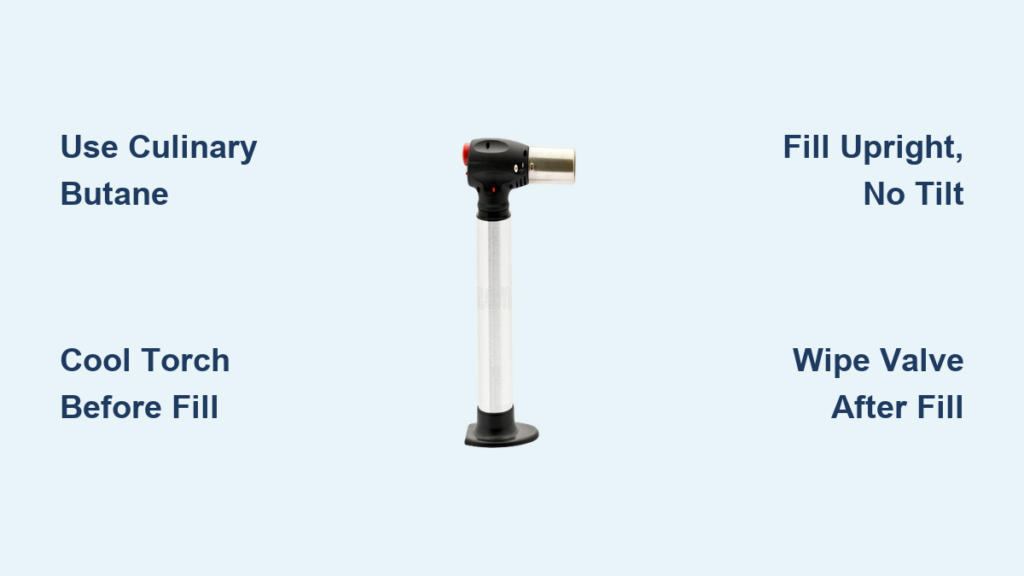
Nothing ruins a perfectly crafted crème brûlée like a kitchen torch that sputters out mid-caramelization. If you’ve ever struggled with an inconsistent flame or wondered why your torch won’t stay lit during crucial cooking moments, improper fueling is likely the culprit. Learning how to fill a kitchen torch correctly transforms this frustrating experience into a quick, reliable process that takes less than five minutes. Most home cooks don’t realize that a poorly filled torch not only affects performance but can create safety hazards through fuel leaks or inconsistent pressure.
This essential kitchen tool deserves proper care—after all, a well-maintained torch can last for years of professional-quality cooking results. Whether you’re a beginner just learning culinary torch techniques or an experienced cook who’s encountered refilling problems, understanding the precise fueling method makes all the difference. In this guide, you’ll discover the exact steps to achieve a perfect fill every time, avoid common mistakes that damage your equipment, and maintain optimal performance for all your searing, caramelizing, and browning needs.
Select the Correct Butane Fuel Type for Culinary Use

Your kitchen torch’s performance begins with fuel selection—using the wrong type can damage internal components or create dangerous situations. Standard butane is the only appropriate fuel for kitchen torches, but not all butane is created equal. Look for refined butane with 99%+ purity specifically labeled for culinary use, as these undergo additional filtration to remove impurities that clog delicate torch mechanisms.
Never substitute with lighter fluid, propane, or generic fuels not designed for kitchen torches—these burn hotter and can leave harmful residues on food. When shopping for fuel, check for canisters with a narrow nozzle tip that fits securely into your torch’s fill valve. Premium culinary butane brands often feature child-resistant mechanisms and precise flow control that prevent overfilling. Store unused canisters upright in a cool, dry place away from direct sunlight, as extreme temperatures degrade fuel quality over time.
Create a Safe Workspace Before Refueling
Proper preparation prevents 90% of refueling accidents—take these critical steps before handling fuel. Choose a well-ventilated area away from open flames, sparks, or heat sources; a kitchen counter near an open window works perfectly. Ensure your workspace is clean, dry, and completely clear of clutter to prevent accidental spills. Butane vapors are heavier than air and can accumulate in low spots, creating invisible fire hazards.
Verify your torch has cooled completely for at least 15 minutes after previous use—never attempt to refuel a warm torch. Check that the fuel valve is fully closed (turned clockwise until it stops) and remove any attachments to access the fill valve easily. Keep a fire extinguisher nearby as a precaution, though proper refueling technique makes emergencies extremely unlikely. This preparation phase takes just 60 seconds but prevents dangerous situations that could ruin your cooking experience.
What Temperature Should Your Torch Be Before Refilling?
Your torch must be at room temperature before refueling—typically 65-75°F (18-24°C). A warm torch creates internal pressure that prevents proper fuel transfer and causes dangerous fuel spray when connecting the canister. If you’ve just used your torch, wait at least 15 minutes for it to cool completely. In cooler environments, you might need to warm chilled torches slightly with your hands, but never use external heat sources.
Execute the Perfect Fill with Professional Technique
The actual refueling process requires precision but becomes second nature with practice. Hold the butane canister upright with the nozzle pointing downward—never tilt the canister during filling. Position the tip directly over the torch’s fill valve and press down firmly until you hear a hissing sound indicating fuel transfer has begun. Maintain steady pressure for 15-30 seconds while watching for frost formation on the torch body, which confirms active fuel transfer.
Stop filling when the hissing sound significantly diminishes or changes pitch—this indicates the tank has reached capacity. Release pressure slowly and remove the canister without tilting. Crucially, wipe any residual fuel from the fill valve with a clean, dry cloth before attempting to use the torch. A perfectly executed fill creates enough pressure for consistent flame performance without risking leaks or over-pressurization.
How to Know When Your Torch Is Fully Fueled
Watch for three clear indicators that your torch has reached full capacity: the distinct hissing sound will slow dramatically, frost will begin forming around the fill valve area, and you’ll feel increased resistance when pressing the canister. Experienced users often fill until they see a small bead of frost appear, then stop immediately. Overfilling causes fuel leakage and inconsistent performance, so err on the side of slightly underfilling if you’re uncertain.
Prevent Costly Refueling Mistakes That Damage Your Torch

Most torch failures stem from preventable errors during refueling—avoid these critical mistakes. Never fill a warm torch, as internal pressure prevents proper fuel transfer and creates dangerous spray-back when connecting the canister. Stop filling at the first sign of frost formation rather than waiting for heavy frosting, which indicates overfilling. Using low-quality butane introduces impurities that gradually clog the nozzle and degrade performance over multiple refills.
Critical warning: Never attempt to refill your torch while it’s mounted in a stand or holder—always hold both the torch and canister securely during the process. If you accidentally overfill, immediately move to a well-ventilated area away from ignition sources and allow the excess pressure to dissipate naturally—do not attempt to use the torch until it stabilizes.
Verify Proper Function After Refueling
Testing your torch immediately after filling confirms successful refueling and prevents mid-recipe failures. Press the ignition mechanism and observe for a steady, blue-tipped flame that maintains consistent shape without sputtering. A properly filled torch produces immediate ignition with a crisp “click” sound and maintains flame stability even when tilted at various angles.
Allow the torch to run for 30-60 seconds to stabilize fuel flow and clear any air pockets from the system. During this test burn, check for consistent flame height and color—yellow or flickering flames indicate air in the system or a partially clogged nozzle. If the flame sputters or goes out, repeat the refueling process after allowing the torch to cool completely. This verification step takes less than a minute but saves significant frustration during actual cooking.
Establish a Maintenance Routine for Reliable Performance
Regular maintenance extends your torch’s lifespan and ensures consistent performance between refills. After each use, wipe the nozzle tip with a dry cloth to remove any food particles or residue that could cause clogs. Every 10-15 uses, inspect the fill valve o-ring for cracks or flattening—replace it at the first sign of wear using manufacturer-supplied parts.
Clean the nozzle periodically by gently inserting a thin wire or needle to clear any obstructions, being careful not to damage the precision aperture. Store your torch with the fuel valve closed in a cool, dry location away from direct sunlight. For extended storage periods, partially use the remaining fuel rather than leaving a full tank unused for months, which can degrade internal seals.
Resolve Common Post-Refueling Problems Quickly
When issues persist despite proper refueling technique, these targeted solutions often resolve the problem. For torches that won’t hold fuel, remove the fill valve cap and inspect the o-ring seal—replace it if cracked, flattened, or showing signs of wear. Weak or inconsistent flames typically indicate a clogged nozzle; disassemble according to manufacturer instructions and clean thoroughly with isopropyl alcohol.
If your torch produces excessive fuel odor after refueling, check for leaks around the fill valve by applying a small amount of soapy water—bubbles will form at leak points. Never ignore fuel odors, as they indicate potential safety hazards. For persistent ignition problems, check battery contacts in electronic ignition models and replace weak batteries that struggle to create a spark.
Follow Critical Safety Protocols During Refueling
Safety must be your top priority when handling pressurized fuel—these non-negotiable practices protect you and your kitchen. Always refuel in a well-ventilated area with windows open or range hood fans running to prevent butane vapor accumulation. Keep your face and body clear of the fill valve during the process, and never point the torch toward yourself or others.
Store fuel canisters upright in a cool, dry location away from heat sources, and never leave them in direct sunlight or near stoves. If fuel contacts your skin, wash immediately with soap and water—prolonged exposure can cause chemical burns. Most importantly, never attempt to refill your torch near open flames, hot surfaces, or while cooking—wait until your cooking area has completely cooled.
A properly filled kitchen torch unlocks culinary techniques that transform ordinary dishes into restaurant-quality creations. By selecting premium fuel, following precise refilling techniques, and maintaining your equipment regularly, you’ll enjoy reliable performance for years of professional results. Take five minutes now to practice these steps—you’ll never again face the frustration of a sputtering flame when perfecting that golden caramelized sugar crust. Your next culinary masterpiece awaits, ready to be elevated by the precise heat only a well-maintained torch can provide.