A U-shaped kitchen layout delivers unbeatable workflow efficiency by wrapping countertops and cabinetry around three walls, creating a functional horseshoe configuration that puts everything within easy reach. This design excels for home cooks who value organization and seamless movement between food prep, cooking, and cleanup stations. When you learn how to design a U-shaped kitchen properly, you’ll create a space that maximizes storage while minimizing unnecessary steps during meal preparation—transforming cooking from a chore into a pleasure. Whether renovating a compact apartment kitchen or designing a spacious culinary haven, mastering U-shaped kitchen design ensures you optimize every square inch for genuine daily functionality.
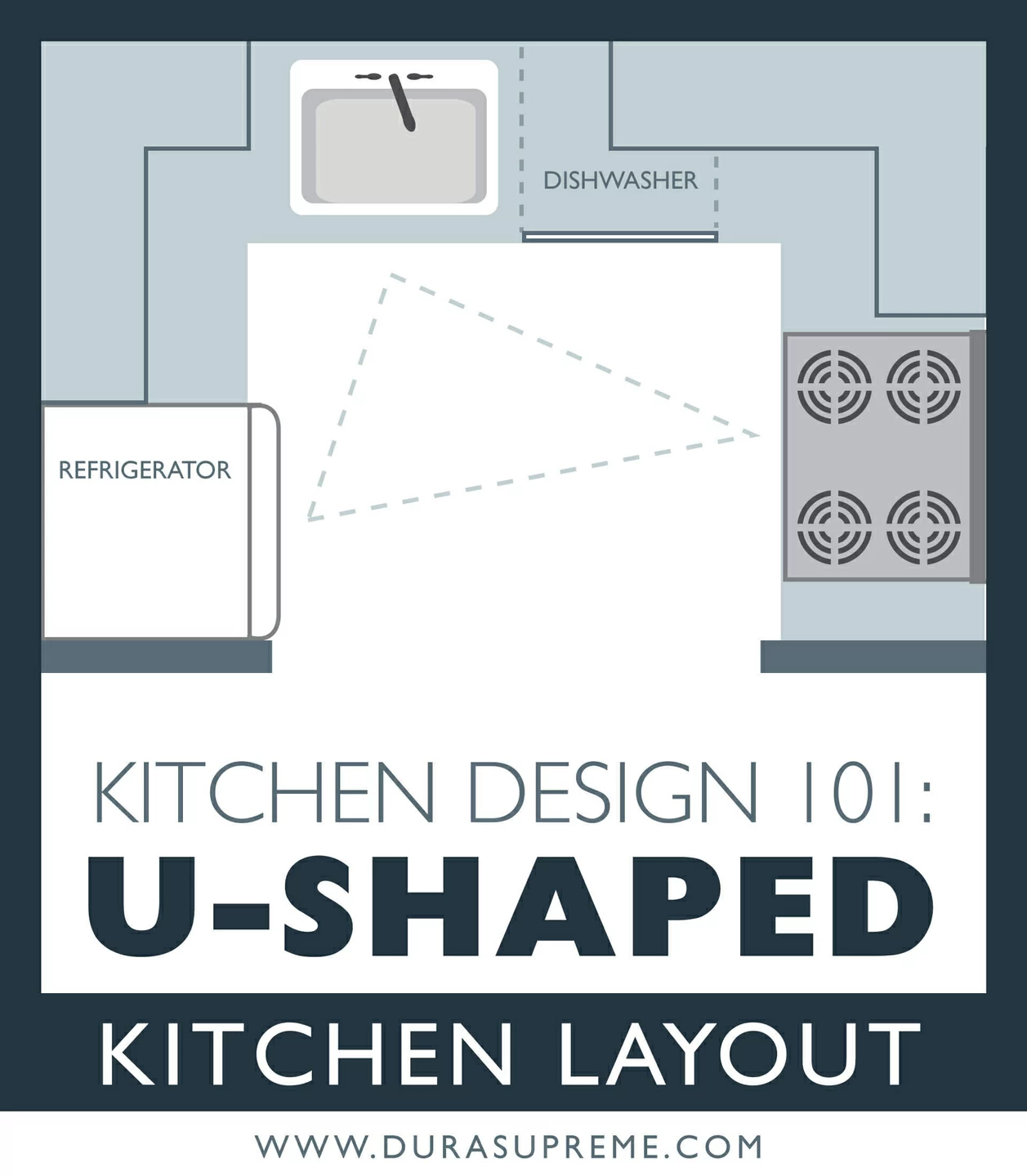
The magic of a well-executed U-shaped kitchen lies in its natural work triangle formation between the refrigerator, sink, and stove—positioned along different walls to create an efficient cooking circuit. This configuration provides exceptional counter space and storage capacity that outperforms single-wall or L-shaped layouts, making it ideal for serious home chefs who need room for multiple dishes and specialty appliances. However, poor planning can turn this efficient layout into a cramped maze with traffic bottlenecks. This guide shows you exactly how to design a U-shaped kitchen that balances practical workflow with aesthetic appeal, avoiding common pitfalls that undermine this otherwise stellar configuration.
Position Your Appliances for Seamless Workflow
:max_bytes(150000):strip_icc()/U-Shape-56a2ae3f3df78cf77278be74.jpg)
Strategically placing your refrigerator, sink, and stove creates the foundation for an efficient U-shaped kitchen. Position the refrigerator and sink at opposite corners of the U to establish natural endpoints for your food preparation zone, allowing the connecting countertop to serve as your primary workspace. Install your stove along the central run between these points to complete the work triangle, ensuring no leg exceeds 9 feet for optimal movement efficiency. Never place your dishwasher directly next to the stove—the heat can damage the appliance and create an uncomfortable workflow pattern.
Optimize Your Work Triangle Dimensions
Measure your kitchen carefully before finalizing appliance placement to ensure comfortable movement between stations. The total perimeter of your work triangle should fall between 13-26 feet for ideal functionality—compact enough to minimize steps but spacious enough to prevent feeling cramped. In smaller U-shaped kitchens (under 150 square feet), position all three elements closer together to create a tight 13-16 foot triangle that maximizes efficiency in limited space. For larger kitchens, expand your triangle to 20-26 feet but maintain clear pathways between stations to avoid excessive walking during cooking.
Create Dedicated Work Zones
Designate specific areas along your U-shaped layout for distinct culinary activities to enhance organization and workflow. Assign one wall exclusively to food storage with your refrigerator, pantry cabinets, and dry goods storage. Position your sink, dishwasher, and cleanup essentials along another wall to create a dedicated cleaning zone. Reserve the third wall for cooking appliances, including your stove, oven, and microwave, with adjacent counter space for plating and finishing dishes. This zoning strategy prevents task overlap and keeps your kitchen functioning smoothly during busy meal preparation times.
Maximize Storage Without Creating Clutter

The three-walled configuration of a U-shaped kitchen provides exceptional storage potential, but poor organization can quickly turn this advantage into visual chaos. Implement smart storage solutions that keep your kitchen functional without feeling overwhelming.
Transform Awkward Corner Spaces
Corner cabinets represent the most challenging storage areas in U-shaped kitchens but also offer the greatest untapped potential. Install lazy Susans in lower corner cabinets to easily access pots and pans, and use pull-out shelves in upper corners for dishes and glassware. For deep corner spaces, consider “magic corner” units that swing out to reveal the entire cabinet interior—eliminating the dreaded “black hole” effect where items disappear never to be found again. Always measure your corner cabinet dimensions before purchasing specialized storage hardware to ensure proper fit.
Balance Cabinet Types Strategically
Create visual breathing room in your U-shaped kitchen by mixing closed cabinetry with open shelving or glass-front cabinets. Install solid upper cabinets on two walls but replace the third wall’s uppers with open shelving to break up the visual weight of three continuous cabinet runs. Alternatively, use glass-front cabinets on one wall to add visual depth and reflect light while maintaining storage functionality. In compact U-shaped kitchens, consider eliminating upper cabinets entirely on one wall to create an airy feeling that counteracts the enclosed nature of the layout.
Lighting Strategies for Shadow-Free Workspaces
The cabinetry wrapping around three walls creates excellent workflow but introduces significant shadow challenges that require thoughtful lighting solutions. Proper illumination transforms your U-shaped kitchen from merely functional to truly exceptional.
Layer Your Lighting Approach
Combine three distinct lighting types to eliminate shadows and create versatile illumination: ambient, task, and accent lighting. Install recessed ceiling lights on dimmer switches for overall ambient illumination that can adjust from bright cooking light to soft evening ambiance. Add LED under-cabinet lighting along all three walls to eliminate shadows cast by upper cabinets onto work surfaces below—this is non-negotiable for safe food preparation. Finally, incorporate statement pendant lights over peninsulas or dining areas to add visual interest while providing focused task lighting where you need it most.
Highlight Your Backsplash Effectively
Position lighting to showcase your backsplash rather than create glare on reflective surfaces. Angle under-cabinet lighting slightly toward the wall to illuminate the entire backsplash area, making tile patterns or textured materials stand out. For glass or metallic backsplashes that might create glare, install lighting further back under the cabinet front edge. In U-shaped kitchens with multiple backsplash materials, vary your lighting approach on different walls to highlight each material’s unique qualities.
Design for Multiple Users Without Traffic Jams
A common mistake in U-shaped kitchen design is creating a layout that works for one cook but becomes impossible with multiple people. Avoid bottlenecks by planning for simultaneous use from the beginning.
Maintain Critical Clearance Dimensions
Ensure at least 42 inches of clearance between facing cabinets in your U-shaped kitchen—this is the absolute minimum for comfortable single-user workflow. For kitchens where multiple people cook simultaneously, increase this to 54-60 inches of clearance between opposing countertops. Never position your refrigerator door to swing directly into your primary walkway—this creates an immediate traffic hazard when someone needs to access food while another person is working nearby.
Create Multiple Entry and Exit Points
Design your U-shaped kitchen with at least two clear pathways into the workspace to prevent people from becoming trapped inside the horseshoe configuration. Position the open end of your U away from high-traffic household pathways to minimize through-traffic disrupting kitchen activities. In open-concept floor plans, use furniture placement in adjacent living areas to subtly guide natural traffic flow around, rather than through, your kitchen workspace.
Size-Specific Design Solutions
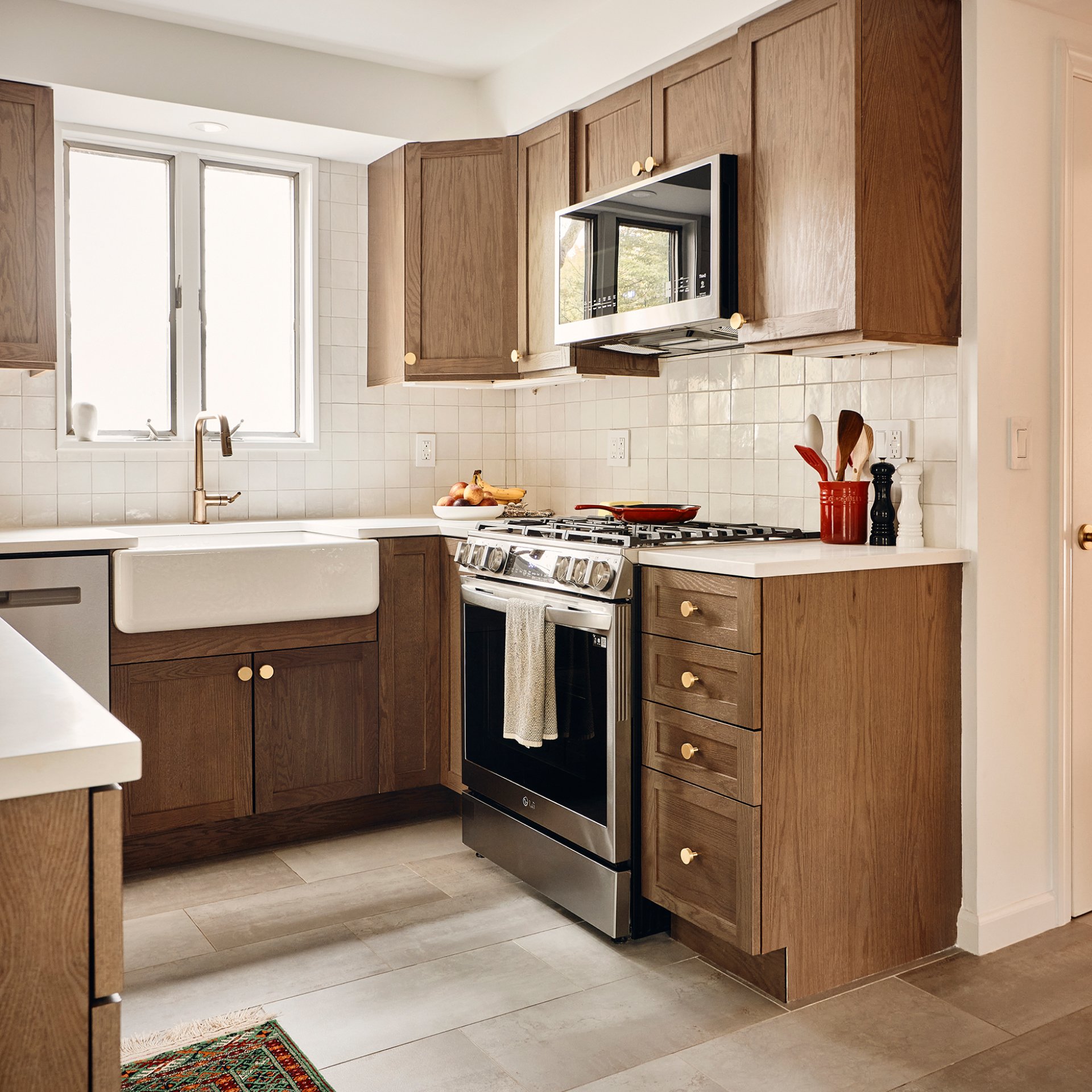
The principles of how to design a U-shaped kitchen vary significantly based on your available square footage. Tailor your approach to your specific space constraints for optimal results.
Small Kitchen Strategies (Under 100 sq ft)
In compact U-shaped kitchens, prioritize narrow-depth cabinets (12-15 inches deep instead of standard 24 inches) to gain crucial floor space without sacrificing storage. Choose built-in appliances that integrate with cabinetry to maintain visual continuity and save floor space. Implement vertical storage solutions like wall-mounted racks for frequently used items to free up cabinet space for less-used items. Use light-colored cabinets and reflective surfaces to create the illusion of additional space—avoid dark colors that can make small U-shaped kitchens feel like a closet.
Medium Kitchen Opportunities (100-200 sq ft)
Medium-sized U-shaped kitchens offer the perfect balance for adding functional enhancements without compromising workflow. Consider a partial peninsula extension with seating on one end for casual dining that doesn’t block traffic flow. Introduce two-tone cabinetry—light uppers with darker lowers—to add visual interest without overwhelming the space. This size range comfortably accommodates a small kitchen island (36-48 inches wide) positioned at the open end of the U for additional prep space and storage.
Large Kitchen Possibilities (Over 200 sq ft)
In spacious U-shaped kitchens, you can implement double work triangles for serious culinary enthusiasts—one primary triangle for daily cooking and a secondary triangle with a second sink and cooktop for entertaining. Create distinct zones within your U-shaped layout using different countertop materials, cabinet finishes, or lighting schemes to define cooking, baking, and cleaning areas. Consider a full-height pantry wall along one section of the U to maximize storage without visual clutter, and incorporate a large central island (6-8 feet long) for additional workspace and seating.
Avoid These Costly U-Shaped Kitchen Mistakes
Even experienced designers fall prey to common U-shaped kitchen pitfalls that undermine functionality. Recognize and avoid these critical errors when planning your layout.
Inadequate Corner Cabinet Planning
Failing to address corner cabinet accessibility wastes 15-20% of your total storage space. Budget for quality corner hardware solutions upfront rather than trying to retrofit them later when you realize how unusable deep corners become. Measure your cabinet depths precisely before ordering specialized storage units—many homeowners discover too late that their chosen lazy Susan doesn’t fit their specific cabinet dimensions.
Poor Traffic Flow Integration
Positioning your U-shaped kitchen’s open end directly in the path of household traffic creates constant interruptions during cooking. Analyze your home’s natural movement patterns before finalizing your kitchen layout—observe how people naturally move through your space for a week to identify optimal kitchen placement. Never place your primary refrigerator access point directly opposite a high-traffic doorway—this creates unavoidable collisions between people retrieving food and those passing through.
Ignoring Visual Weight Balance
Three continuous walls of cabinetry can create a top-heavy appearance that makes your kitchen feel oppressive. Counterbalance this by using lighter colors on upper cabinets, incorporating open shelving on one wall, or adding substantial lower elements like a thick countertop overhang or visible base molding. In kitchens with windows, position them strategically along the U to break up solid cabinet walls with natural light sources.
A well-designed U-shaped kitchen delivers exceptional functionality through its efficient workflow, generous storage, and defined work zones that make meal preparation genuinely enjoyable. By implementing these targeted strategies for appliance placement, storage optimization, lighting, and traffic flow, you’ll create a space that serves your household’s needs for years to come. Whether you’re working with a compact urban kitchen or a spacious open-concept layout, mastering how to design a U-shaped kitchen properly ensures you maximize both form and function in your culinary workspace. Remember that the most successful U-shaped kitchens balance practical considerations with personal style—creating a space that’s not only efficient but also a true reflection of how you live and cook.