That narrow gap between your kitchen cabinets and the floor—the toe-kick area—collects dust, crumbs, and moisture while creating an unfinished look that detracts from your kitchen’s appearance. Learning how to cover bottom of kitchen cabinets properly transforms this problem space into a polished feature that protects your investment and elevates your entire kitchen. Whether you’re renovating or refreshing your space, the right covering solution hides unsightly gaps, simplifies cleaning, and adds professional finishing touches that home buyers notice.
This guide walks you through every viable method for covering cabinet bottoms, from affordable DIY solutions like contact paper to premium materials like stainless steel kick plates. You’ll discover which materials work best in different kitchen environments, learn installation techniques that ensure lasting results, and gain insider tips that professional contractors use. By the end, you’ll have all the knowledge needed to choose and install the perfect covering for your specific situation.
Why Cover Kitchen Cabinet Bottoms
The toe-kick area serves a practical purpose by providing clearance for your feet while working at counters and allowing for slight floor variations during installation. However, this recessed space quickly becomes a magnet for dirt, pet hair, and lost utensils. Without proper covering, this area becomes difficult to clean, creating an invisible hygiene problem that affects your entire kitchen.
Beyond cleanliness, an uncovered toe-kick creates visual fragmentation in your kitchen design. Even beautiful cabinets lose impact when they terminate abruptly at an unfinished gap. A cohesive covering solution creates visual continuity between cabinets and flooring, making the space appear more intentional and professionally designed. This finishing touch significantly impacts how potential buyers perceive your kitchen’s quality.
Moisture protection represents another critical reason to cover cabinet bottoms. Unprotected toe-kick areas allow moisture to seep underneath cabinets, potentially damaging cabinet structure, promoting mold growth, and compromising flooring edges. Proper covering creates a moisture barrier that extends the life of your cabinetry.
Vinyl and Plastic Kick Plates

Vinyl and plastic toe-kick covers dominate the market for their combination of low cost, moisture resistance, and ease of installation. These pre-manufactured panels come in standard heights (typically 4, 6, and 8 inches) with various finishes including realistic wood grain and stone textures that fool many observers.
Choosing quality vinyl kick plates requires attention to thickness—look for panels at least 1/8 inch thick that feel substantial without being overly rigid. Premium options feature UV-resistant coatings that prevent yellowing in kitchens with significant natural light.
Installation typically involves:
– Measuring each toe-kick opening individually
– Cutting panels to size using a utility knife
– Securing with adhesive strips, clips, or friction fit
The primary advantage of vinyl covers lies in their replaceability. When panels become scratched or outdated, swapping them takes minutes and costs significantly less than refinishing other options—ideal for high-traffic kitchens or rental properties.
Wood and Laminate Panels
Wood and laminate toe-kick panels offer unmatched customization potential. Unlike pre-finished vinyl options, wood panels accept any paint or stain color, allowing you to create an exact match or deliberate contrast.
Solid wood panels deliver premium aesthetics with hardwoods like oak, maple, and cherry resisting dents better than softwoods. Laminate panels provide wood-like aesthetics at lower cost with superior moisture resistance—many manufacturers offer finishes that precisely match their cabinet door finishes.
Installation requires more preparation:
– Cutting to exact dimensions with fine-toothed blades
– Applying edge banding to prevent moisture penetration
– Using construction adhesive, finishing nails, or clip systems
Custom color matching requires proper surface preparation—light sanding with 220-grit paper followed by appropriate primer ensures proper adhesion and prevents peeling over time.
Metal and Stainless Steel Covers
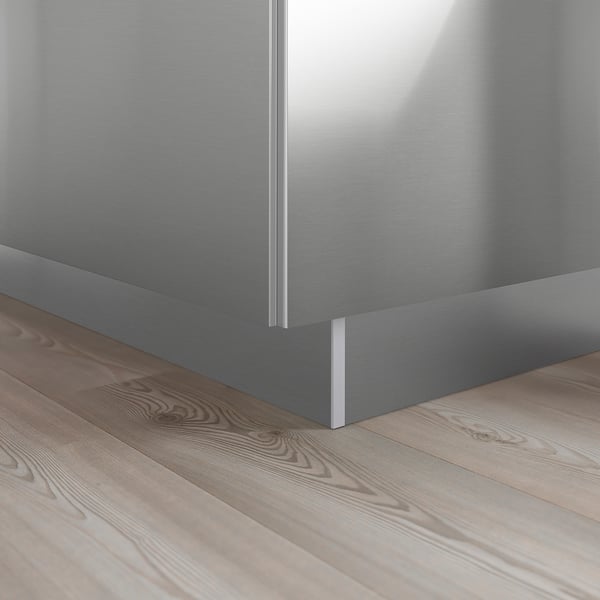
Metal toe-kick covers make bold design statements while providing unmatched durability. Stainless steel options coordinate seamlessly with appliances, creating visual continuity important in modern kitchen designs.
Metal covers excel in moisture-prone environments where other materials might deteriorate. The non-porous surface wipes clean instantly and resists staining from food spills or cleaning products.
Stainless steel covers range from:
– Thin, flexible panels that adhere with industrial-strength adhesive
– Rigid panels with integrated mounting systems
Brushed stainless steel finishes hide fingerprints better than polished options, making them practical for busy kitchens. Professional installation ensures optimal results, though confident DIYers can achieve excellent results with proper tools.
Paint and Contact Paper Solutions
Paint and contact paper represent the most affordable solutions for covering cabinet bottoms—ideal for renters, budget-conscious renovators, or quick updates before selling.
Modern contact papers feature:
– Improved adhesives that bond securely without bubbling
– Thicker materials that resist tearing and fading
– Expanded design options including realistic wood grains
Successful application requires:
– Thorough surface cleaning and drying
– Starting from one corner and working outward
– Using a plastic squeegee to prevent air bubbles
Paint specifically formulated for laminate surfaces provides another budget-friendly option. Two thin coats applied with a foam roller create a smooth, professional finish superior to one thick coat.
Installation Tools You’ll Need
Gathering the right tools before starting ensures efficient progress and professional results:
- Measurement tools: Quality tape measure, straight edge, square
- Cutting tools: Utility knives, circular saw with fine-toothed blade, jigsaw
- Fastening tools: Caulking gun, screwdrivers, clamps
- Finishing tools: Sandpaper, putty, touch-up markers, caulk
Step-by-Step Installation Guide
Follow these universal installation principles:
-
Prepare the area: Clean thoroughly, remove existing covering, address any structural issues
-
Measure precisely: Measure each toe-kick opening individually—countertops and floors aren’t perfectly level
-
Test fit before committing: Place panels in position to check for gaps or misalignment
-
Apply adhesive correctly: Follow manufacturer recommendations—construction adhesive typically requires bead patterns along edges
-
Secure firmly: Apply even pressure across the entire surface and maintain as specified
-
Clean up immediately: Remove any adhesive squeeze-out before it dries
Pro Tips for Perfect Results
Professional contractors use these techniques to elevate finished results:
-
Compare color samples under both natural and artificial lighting—colors shift dramatically between lighting conditions
-
Position seams at cabinet openings rather than in the middle of cabinet runs—door and drawer gaps naturally mask seams
-
Finish edges professionally: Raw edges benefit from edge banding tape applied with a household iron
-
Create seamless transitions using paintable silicone caulk for flexible, waterproof joints
Cost Comparison by Material
Understanding costs helps balance aesthetics, durability, and affordability:
-
Vinyl and plastic: $2-$8 per linear foot—most economical with minimal installation complexity
-
Wood panels: $4-$25 per linear foot depending on species and grade—requires more installation skill
-
Laminate panels: $5-$12 per linear foot—moderate tool investment needed
-
Metal covers: $15-$50+ per linear foot—often justifies professional installation
Maintenance and Longevity
Proper maintenance extends covering life:
-
Vinyl/plastic: Clean with mild soap and water; avoid abrasives
-
Wood/laminate: Wipe spills immediately; clean with wood-safe products
-
Metal: Periodic wiping with stainless steel cleaner; inspect mounting hardware
-
Contact paper/paint: Gentle cleaning with soft cloths; touch up as needed
Protect and Beautify Your Kitchen
Covering your kitchen cabinet bottoms transforms a neglected problem area into a finished feature that enhances both functionality and aesthetics. Renters find success with contact paper options, design-conscious homeowners achieve stunning results with custom wood panels, and modern kitchen enthusiasts appreciate the durability of metal covers.
The toe-kick area may be one of the smallest surfaces in your kitchen, but its finished appearance makes a disproportionately large impact on how your entire space feels and functions. With the right materials and proper installation techniques, you’ll enjoy easier cleaning, improved moisture protection, and enhanced visual appeal that elevates your kitchen for years to come.