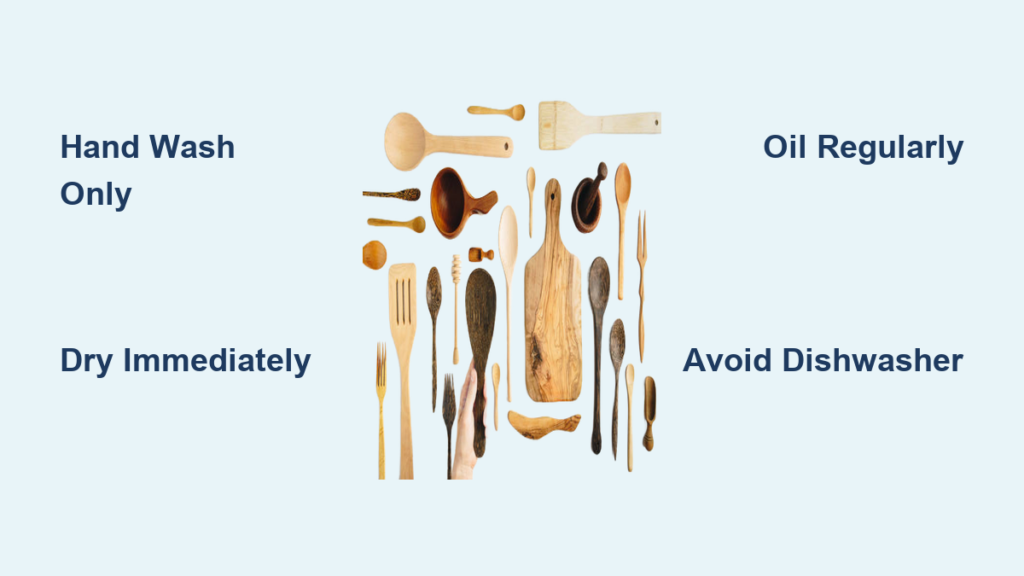
Wooden spoons, spatulas, and cutting boards bring natural beauty and functionality to your kitchen, but they demand special cleaning practices to maintain their quality. Unlike plastic or metal tools, wood’s porous nature requires specific care to prevent water damage, bacterial growth, and premature wear. Learning how to clean wooden kitchen utensils properly ensures these kitchen staples remain safe, attractive, and functional for years. When you understand the right cleaning techniques, you’ll avoid common mistakes that ruin wooden utensils and discover professional methods that preserve their natural charm.
Immediate Hand Washing After Each Use
Your wooden utensils need prompt attention after cooking to prevent stubborn residue buildup and moisture damage. Delaying cleaning allows food particles to harden and liquids to penetrate the wood fibers, creating conditions for warping and cracking.
Use lukewarm water instead of hot water for washing wooden utensils. Hot water strips away the wood’s natural oils and causes fibers to expand rapidly, while cold water won’t effectively remove greasy residues. The ideal temperature feels comfortable to your skin—neither too warm nor too cool. This gentle approach preserves the wood’s integrity while still removing food particles effectively.
Apply a small amount of mild dish soap to a soft sponge or cloth, avoiding antibacterial formulas that contain harsh chemicals. Work the soap into all surfaces, paying special attention to crevices where food can hide. For utensils with intricate carvings or textured surfaces, use a soft-bristled brush to dislodge trapped particles without scratching. Never use steel wool or abrasive pads that create microscopic scratches where bacteria can thrive.
Critical Drying Practices to Prevent Warping
How you dry wooden utensils determines whether they’ll last for years or develop cracks within months. Residual moisture causes wood fibers to swell and contract unevenly, leading to warping and eventual structural failure.
Towel-dry immediately after washing using a clean, absorbent kitchen towel. Wipe all surfaces thoroughly, including the handle-to-head junction where water often collects unnoticed. For utensils with hanging holes, ensure no moisture remains trapped inside these small cavities. Pay particular attention to the handle end, which people often neglect during drying.
Air-dry in a well-ventilated area away from direct heat sources. Never place wet wooden utensils near your stove, dishwasher vent, or in direct sunlight, as rapid drying creates stress cracks. Position utensils upright in a dish rack or prop them against a clean surface to maximize airflow around all sides. For cutting boards, alternate which side faces down during drying to promote even moisture evaporation and prevent warping.
Eliminating Stubborn Stains Without Damage
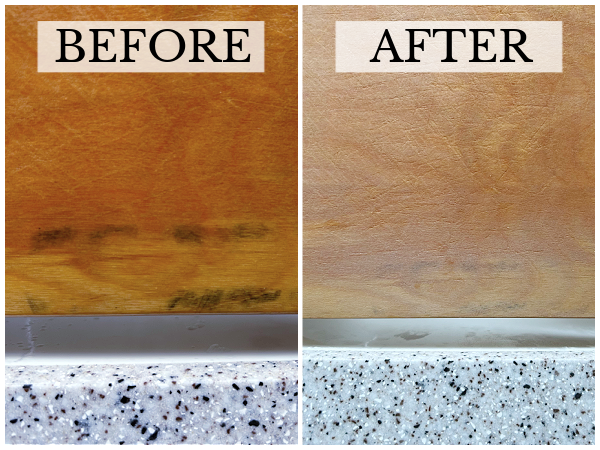
Persistent discoloration from foods like turmeric, beets, or berries can mar your wooden utensils’ appearance. Addressing stains promptly prevents them from setting permanently while protecting the wood’s surface.
Baking soda paste effectively lifts surface stains without damaging wood fibers. Mix equal parts baking soda and water to form a thick paste, then apply it to stained areas with a soft cloth. Gently rub in the direction of the grain, allowing the mild abrasiveness to lift discoloration. The alkaline nature of baking soda also neutralizes acidic food residues that cause staining. After treatment, rinse thoroughly with lukewarm water and dry immediately.
For tougher stains, combine lemon juice and coarse salt. Sprinkle salt over the affected area, then use a cut lemon half to scrub the surface. The citric acid breaks down stubborn pigments while the salt provides gentle abrasion. This method works particularly well on cutting boards but requires thorough rinsing afterward to remove any acidic residue that could damage the wood over time.
Natural Sanitizing Methods for Food Safety
Wooden utensils require regular sanitization, especially after contact with raw meat or eggs, but harsh chemicals can damage wood and leave unsafe residues.
White vinegar provides effective, food-safe sanitization that kills common bacteria without harming wood. Mix equal parts white vinegar and water in a spray bottle, then mist the utensil surface thoroughly. Let the solution sit for one minute to allow the acetic acid to work, then rinse with clean water. Vinegar’s mild acidity neutralizes odors while killing bacteria, making it ideal for post-meat preparation cleaning.
For enhanced sanitization without chemicals, use the vinegar-hydrogen peroxide method favored by professional kitchens. First apply white vinegar, then follow with 3% hydrogen peroxide. This two-step process creates peracetic acid, a powerful sanitizer that breaks down into harmless compounds. Apply the vinegar first, wait 30 seconds, then apply hydrogen peroxide. Rinse thoroughly after one minute and dry completely.
Essential Conditioning with Food-Safe Oils

Regular oiling replaces moisture lost during cleaning and creates a protective barrier against future water damage. Without proper conditioning, wooden utensils become dry, brittle, and prone to cracking.
Food-grade mineral oil is the safest choice for conditioning kitchen utensils. Unlike vegetable oils that can turn rancid, mineral oil remains stable indefinitely. Apply a generous amount to a clean cloth, then rub it into the wood following the grain direction. Allow the oil to penetrate for several hours or overnight before wiping away excess. The wood should feel slightly moist but not oily to the touch after application.
For enhanced protection, create a beeswax-mineral oil mixture. Combine equal parts melted beeswax and mineral oil, then let cool slightly before application. This combination forms a water-repellent barrier while nourishing the wood. Apply a thin layer with a soft cloth, let it absorb for 15 minutes, then buff gently with a clean cloth to remove excess.
Critical Mistakes That Ruin Wooden Utensils
Certain common cleaning practices cause irreversible damage to wooden kitchen tools. Avoiding these mistakes extends your utensils’ lifespan significantly.
Never put wooden utensils in the dishwasher. The combination of prolonged hot water exposure, harsh detergents, and intense drying heat causes rapid expansion and contraction that leads to cracks and warping. Even brief dishwasher cycles weaken wood fibers over time. High water pressure also forces soap into microscopic cracks where it’s difficult to rinse out completely.
Avoid soaking wooden utensils in water, even for short periods. This common mistake allows water to penetrate deep into the wood fibers, causing swelling that leads to cracks when the utensil dries. If food residue is stubborn, let the utensil sit with a damp cloth for a few minutes rather than submerging it in water.
Optimal Storage Conditions for Longevity
Where and how you store wooden utensils affects their moisture content and structural integrity between uses.
Store utensils in a location with consistent humidity levels between 40-60%. Extreme humidity fluctuations cause wood to repeatedly expand and contract, creating stress cracks. If your kitchen becomes very dry during winter months, consider using a small humidifier to maintain stable conditions.
Allow adequate airflow around stored items rather than cramming them into drawers. Storing wooden utensils tightly together traps moisture against the wood surfaces, promoting mold growth and warping. If drawer storage is necessary, place silica gel packets nearby to absorb excess moisture and check periodically for any signs of dampness.
Repairing Common Wood Utensil Problems
Even with proper care, wooden utensils occasionally develop issues that require intervention before they worsen.
Address rough surfaces immediately before they develop into splinters. Lightly sand affected areas using fine-grit sandpaper (220-grit or higher), always following the wood grain direction. Wipe away all dust with a slightly damp cloth, then apply mineral oil generously. Allow the oil to penetrate overnight before using the utensil again.
For mold spots, act quickly to prevent spread. Scrub the affected area with a vinegar-water solution (1:4 ratio), then rinse thoroughly. For persistent mold, use a diluted bleach solution (1 tablespoon per quart of water) for no more than five minutes, followed by thorough rinsing and complete drying. If mold has penetrated deeply, replacement may be necessary for food safety.
Long-Term Maintenance Strategies
Integrating simple care habits into your kitchen routine preserves wooden utensils’ beauty and functionality for decades rather than years.
Establish a weekly inspection routine to catch problems early. Examine each utensil for rough spots, discoloration, or signs of cracking. Address minor issues immediately before they become major problems requiring extensive repair. This five-minute weekly habit prevents the need for replacement and keeps your tools in optimal condition.
Rotate your wooden utensils regularly to distribute wear evenly. Using the same spoon for every cooking task creates concentrated wear patterns that shorten its lifespan. Having multiple similar utensils in rotation allows each piece time to rest and recover between uses, significantly extending their collective longevity.
By following these specific cleaning and care techniques, your wooden kitchen utensils will maintain their natural beauty and functionality for many years. Proper maintenance takes only moments after each use but prevents costly replacements and keeps your kitchen tools safe and effective. The time you invest in caring for these timeless kitchen essentials ensures they remain ready for every culinary task while enhancing your kitchen’s aesthetic appeal.