Restaurant kitchen walls face relentless abuse from grease, heat, food splatter, and moisture on a daily basis. Unlike residential kitchens, commercial food preparation environments accumulate grime at alarming rates, creating serious risks for food safety compliance, fire hazards, and health inspection outcomes. Learning how to clean restaurant kitchen walls properly is not just about maintaining appearances—it’s a fundamental requirement for operating a safe, compliant, and professional food service establishment.
Grease-laden walls create dangerous fire conditions, as baked-on grease can ignite and spread flames rapidly through ductwork and across surfaces. Beyond fire risks, dirty walls harbor bacteria, mold, and contaminants that compromise food quality and potentially endanger customer health. Health departments strictly mandate that commercial kitchen surfaces remain clean and sanitary at all times, making wall maintenance a critical component of your operational obligations.
This comprehensive guide covers everything you need to know about cleaning restaurant kitchen walls, from daily maintenance protocols to deep cleaning procedures, safety requirements, and professional techniques that will keep your kitchen walls in compliance and looking professional.
Why Grease-Covered Kitchen Walls Threaten Your Restaurant’s Safety and Compliance
Restaurant kitchen walls represent one of the most overlooked yet critical food safety zones in your establishment. Grease accumulation on walls creates a ticking time bomb that can trigger catastrophic kitchen fires when it reaches ignition temperature. The National Fire Protection Association reports that cooking equipment causes 61% of restaurant fires, with grease buildup on walls and hoods significantly increasing fire intensity and spread.
Health departments routinely cite dirty kitchen walls during inspections, with violations ranging from “accumulated grease on walls and ceilings” to “unsanitary conditions conducive to pest harborage.” These violations can result in fines, mandatory closures, or even license suspension. Your kitchen walls must be smooth, cleanable, and free of visible grease accumulation to pass inspection—a standard that requires systematic cleaning protocols rather than occasional spot cleaning.
How Unchecked Grease Buildup Creates Fire Hazards in Commercial Kitchens
Grease deposits on kitchen walls transform ordinary cooking spaces into potential fire traps. As grease accumulates, it forms layers that insulate underlying surfaces, allowing temperatures to rise higher than normal during cooking operations. Once grease reaches its auto-ignition point (typically between 400-450°F for cooking oils), it can spontaneously combust without a visible flame source.
The vertical nature of wall grease creates a chimney effect during fires, drawing flames upward with alarming speed. Grease-coated walls adjacent to exhaust systems provide fuel that allows fires to travel through ductwork, potentially spreading throughout the building. Regular wall cleaning removes this dangerous fuel source before it reaches critical levels.
Health Department Violations You’ll Face with Dirty Kitchen Walls
Health inspectors systematically check kitchen walls during routine inspections, looking specifically for visible grease accumulation within cooking zones. The FDA Food Code requires that “non-food-contact surfaces of equipment…be cleaned as often as necessary to protect against contamination of food, food-contact surfaces, and food-packaging materials.”
Common violations include:
– Grease buildup exceeding 1/8 inch on walls within 3 feet of cooking equipment
– Mold growth on walls in high-moisture areas
– Cracked or deteriorated surfaces that cannot be properly cleaned
– Unsanitary conditions that could attract pests
These violations often appear as priority items on inspection reports, requiring immediate correction and follow-up inspections. Proactive wall cleaning prevents these costly disruptions to your business.
Essential Cleaning Supplies for Restaurant Wall Maintenance
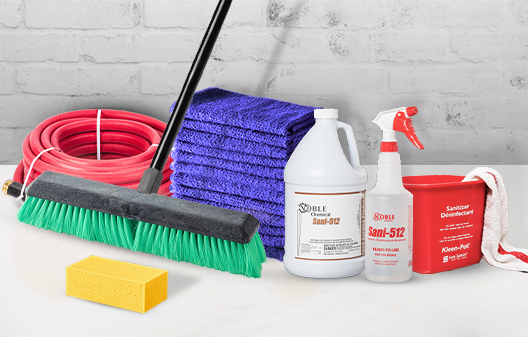
Before tackling dirty walls, assemble the right cleaning arsenal. Commercial kitchen wall cleaning requires a strategic selection of chemicals, tools, and protective equipment matched to your specific wall surfaces and soil levels. Having everything prepared before you start ensures efficient cleaning without frustrating interruptions.
Degreasers That Actually Work on Commercial Kitchen Walls
Degreasers form the backbone of your cleaning supplies, with formulations ranging from mild citrus-based solutions for light daily cleaning to heavy-duty alkaline degreasers for established grease buildup. All-purpose cleaners handle routine maintenance, while EPA-registered sanitizers approved for food contact surfaces provide the final disinfection step. Specialized products like grout cleaners for tile walls, stainless steel polish, and mold removers address specific challenges that arise in different kitchen environments.
The right degreaser depends on your wall surface and soil level:
– Light daily cleaning: Citrus-based or mild alkaline degreasers (pH 9-10)
– Weekly deep cleaning: Medium-strength alkaline degreasers (pH 10-11)
– Heavy carbonized grease: Industrial-strength alkaline degreasers (pH 11-12.5)
– Stainless steel surfaces: Non-caustic, acid-free cleaners
– Tile grout: Oxygen bleach or specialized grout cleaners
Always match degreaser strength to soil level—using overly aggressive chemicals on light-duty tasks wastes resources and may damage surfaces, while insufficiently strong products fail to clean heavily soiled areas.
Must-Have Tools for Reaching High and Hard-to-Access Areas
Microfiber cloths outperform traditional rags because they effectively capture debris without leaving lint, work with any cleaning solution, and withstand repeated commercial use. Keep several cloths available—one for applying cleaner, one for rinsing, and one for drying. Medium-stiffness scrubbing brushes tackle moderate soil on tile and concrete without damaging most finishes, while soft-bristled brushes protect delicate painted surfaces.
Long-handled brushes and extension poles enable safe reaching of high areas without ladders. A 4-foot extension pole with interchangeable heads (scrub brush, squeegee, microfiber pad) lets you clean ceiling corners and high walls safely. For grout lines, invest in a specialized grout brush with stiff nylon bristles that can penetrate deep into lines without scratching tile surfaces.
Don’t overlook personal protective equipment. Chemical-resistant gloves shield hands from irritation, safety goggles prevent splashes from reaching eyes, and aprons protect skin and clothing from soiled cleaning solutions. First aid supplies should be accessible for any accidental chemical contact.
Daily Cleaning Protocol for High-Traffic Wall Zones
Daily maintenance cleaning prevents heavy soil accumulation and makes deep cleaning sessions less intensive. Establish systematic protocols that address high-traffic areas consistently, rather than waiting until problems become severe.
15-Minute Morning Routine for Walls Behind Cooking Equipment
Start your day with this efficient wall cleaning routine that targets the most critical zones:
- Dry dust walls first using a dry microfiber cloth or vacuum with brush attachment to remove loose debris and cobwebs—this dry removal step prevents smearing during wet cleaning
- Apply cleaning solution from bottom to top to prevent streaking, using a mild degreaser diluted according to manufacturer instructions
- Allow 2-3 minutes of dwell time for the solution to penetrate light grease deposits
- Wipe with moderate pressure using a clean microfiber cloth, working in 2×2 foot sections
- Rinse thoroughly with clean water to remove all cleaning residue that could attract more dirt
- Dry immediately with a clean, dry microfiber cloth to prevent water spots and streaking
Focus special attention on the three-foot zone surrounding all cooking equipment—this area accumulates grease fastest and poses the greatest fire risk. Walls behind fryers, grills, and broilers require daily cleaning regardless of apparent soil level.
Quick Fixes for Grease Spots Before Health Inspections
When time is limited before an inspection, prioritize these high-impact areas:
– Exhaust hood filters and surrounding walls (grease accumulation here is an automatic violation)
– Splash zones around sinks and prep tables (visible food particles will trigger citations)
– Door handles and light switches (frequently touched surfaces must be sanitized)
– Corners and edges (inspectors specifically check these problem areas)
For stubborn spots, apply undiluted degreaser directly to the area, cover with plastic wrap to prevent drying, and allow 5-10 minutes of dwell time before scrubbing. This “steam effect” dramatically improves soil removal without excessive scrubbing.
Deep Cleaning Restaurant Walls: Weekly Procedures That Remove Baked-On Grease
Weekly deep cleaning addresses accumulated soil that daily maintenance cannot fully remove. Schedule these intensive sessions during low-activity periods—typically before opening hours or on closed days—to minimize operational disruption.
Step-by-Step Process for Removing Carbonized Grease Deposits
Carbonized grease—the hard, dark, baked-on variety—requires systematic removal:
- Remove all portable equipment and cover fixed electrical components with plastic sheeting
- Apply heavy-duty degreaser generously to affected areas, ensuring complete coverage
- Allow 10-15 minutes of dwell time for degreaser to penetrate and liquefy deposits (reapply if drying)
- Scrub in 3×3 foot sections using appropriate brushes—medium stiffness for tile, soft for painted surfaces
- Rinse each section completely with clean water before moving to the next area
- Repeat as necessary for stubborn areas, but avoid excessive scrubbing that damages surfaces
- Apply a final sanitizer after cleaning to address microbial contamination
For extreme cases, consider steam cleaning which uses high-temperature vapor to break down grease without chemicals. The dry steam penetrates deep into grease deposits while killing bacteria, requiring no rinsing as the moisture evaporates quickly.
Tile and Grout Restoration Techniques for Heavily Soiled Areas

Tile walls require specific attention to grout lines during deep cleaning:
- Apply specialized grout cleaner or oxygen bleach directly to lines using a small brush
- Allow extended dwell time (15-30 minutes) for cleaner to lift embedded soil
- Scrub grout lines with a stiff-bristled brush using circular motions
- For severe cases, use a steam cleaner with grout attachment for chemical-free cleaning
- Rinse thoroughly and apply grout sealer to protect against future soil absorption
Pro Tip: After cleaning grout, apply a paste of baking soda and water, let dry, then rinse. This natural method helps whiten grout without harsh chemicals.
Sanitizing Walls After Cleaning: Meeting Health Department Requirements
Cleaning removes visible soil, but sanitization addresses invisible microbial contamination that compromises food safety. Health codes typically require sanitization of surfaces adjacent to food preparation areas, even though walls aren’t classified as food contact surfaces.
EPA-Approved Sanitizers for Commercial Kitchen Walls
Use only EPA-registered sanitizers formulated for food service environments:
– Quaternary ammonium compounds: Effective, no-rinse sanitizers that work well on most surfaces
– Hydrogen peroxide-based solutions: Fast-acting with no strong odors, effective on organic soils
– Chlorine bleach: Must be properly diluted (50-200 ppm) and requires thorough rinsing
Apply sanitizers using methods appropriate for the product:
– Spray application: Ensures even coverage on most wall surfaces
– Wipe application: Provides controlled coverage for small areas
– Foam application: Clings to vertical surfaces longer, improving contact time
Maintain surface wetness for the required contact time specified on the product label—typically 30 seconds to several minutes. Verify sanitizer effectiveness through chemical test strips that confirm proper solution concentrations.
How to Verify Your Walls Are Properly Sanitized (Not Just Clean)
Sanitization effectiveness can be verified through:
– Chemical test strips that confirm proper sanitizer concentration
– ATP bioluminescence testing that measures organic material on surfaces
– Visual inspection for complete coverage without dry spots
Document all sanitization activities including dates, times, areas treated, products used, and verification results. This documentation demonstrates compliance during health inspections and helps identify problem areas needing additional attention.
Safety First: Protecting Staff During Intensive Wall Cleaning
Worker safety during wall cleaning protects your team and prevents accidents that could compromise food safety. Understanding proper chemical handling, physical hazard prevention, and food safety integration is essential.
Chemical Handling Protocols That Prevent Workplace Injuries
Read Safety Data Sheets for all cleaning products before use, and ensure all staff understand proper first aid procedures for chemical exposure. Store cleaning chemicals in original containers with intact labels, never transferring them to food or beverage containers. Keep chemicals separated from food, utensils, and food preparation equipment.
Never mix cleaning products unless specifically directed—certain combinations produce toxic gases or dangerous reactions. Ventilate areas adequately when using cleaning chemicals, particularly in enclosed spaces. Report any chemical exposure symptoms promptly and seek appropriate medical attention.
Ladder Safety Tips for Cleaning High Kitchen Walls
Wet surfaces create slip and fall risks—clean up spills immediately and post warning signs. Use slip-resistant footwear and maintain three points of contact when using ladders or step stools. Never stand on chairs or improvised elevated surfaces.
For high areas, use extension poles rather than ladders whenever possible. When ladders are necessary:
– Place on dry, level surfaces
– Maintain three points of contact
– Have a second person spot the climber
– Keep your belt buckle between the ladder rails
– Never overreach—reposition the ladder instead
Creating a Sustainable Cleaning Schedule for Your Specific Kitchen
Consistent cleaning schedules prevent soil accumulation from reaching unmanageable levels. Tailor frequency to your specific operation’s cooking methods, volume, and local health code requirements.
Customized Cleaning Frequency Based on Your Menu Type
Establish cleaning frequency based on your specific operation:
– Fry-heavy operations (fish & chips, chicken wings): Daily wall cleaning behind fryers, weekly deep cleaning of all walls
– Grill-focused kitchens (steakhouses, barbecue): Daily cleaning of splash zones, weekly deep cleaning of walls within 3 feet of grills
– Baking operations (pizzerias, bakeries): Daily cleaning of flour dust accumulation areas, bi-weekly deep cleaning
– Asian cuisine (wok cooking): Daily cleaning of high-splatter zones, weekly deep cleaning with specialized degreasers
Document activities and note any maintenance issues discovered during cleaning, such as damaged surfaces or pest activity. This documentation helps identify patterns and improve cleaning protocols over time.
Documenting Wall Cleaning Activities for Health Inspections
Maintain detailed records of all wall cleaning activities for food safety compliance:
– Dates and times of cleaning
– Areas cleaned
– Products used
– Staff performing cleaning
– Verification of sanitization
– Any issues discovered
Electronic logging systems provide advantages over paper logs including searchable records and automated scheduling reminders. Review cleaning logs regularly to identify consistently problematic areas and adjust protocols accordingly.
Common Mistakes That Damage Walls and Waste Cleaning Time
Even experienced cleaning crews make errors that damage surfaces or compromise sanitation. Recognizing these pitfalls helps you develop more effective protocols.
Why Using Household Cleaners Ruins Commercial Kitchen Walls
Using incorrect products for specific surfaces frequently causes damage:
– Abrasive cleaners scratch painted surfaces, creating areas that trap soil
– Acid-based cleaners etch natural stone and marble permanently
– Water-based cleaners fail on oil-based grease—alkaline degreasers are necessary
– Dish soap creates excessive suds that trap grease rather than removing it
Match product strength to soil level, and always test new products on inconspicuous areas before full application. Restaurant walls require commercial-grade cleaning products designed specifically for food service environments.
How Improper Rinsing Creates Slip Hazards and Sanitation Issues
Insufficient rinsing leaves cleaning residue that attracts dirt, creates slippery surfaces, and may compromise food safety. Rinse walls thoroughly with clean water, changing rinse water frequently. Multiple rinse cycles may be necessary for heavily soiled areas.
Verify rinse effectiveness by wiping with a clean white cloth—no residue should transfer. Pay particular attention to rinsing in textured surfaces, grout lines, and around fixtures where residue readily accumulates.
Professional-Grade Techniques for Stubborn Wall Stains
Experienced cleaning professionals employ advanced methods that improve results while reducing effort and chemical exposure.
Steam Cleaning Secrets for Chemical-Free Wall Restoration
Steam cleaning provides effective grease removal and sanitization without chemicals:
– Heat water to produce dry steam that penetrates grease deposits
– Hold nozzle 1-2 inches from surface without direct contact
– Move slowly across surface with overlapping passes
– No rinsing required—steam evaporates leaving surfaces clean and dry
Steam cleaning works exceptionally well on textured surfaces, grout lines, and baked-on grease that resists chemical cleaners. The process requires no chemicals, eliminating concerns about residue or runoff.
Preventive Coatings That Reduce Cleaning Frequency by 50%
Implement preventive maintenance strategies that reduce cleaning burden:
– Install high-efficiency exhaust systems that capture airborne grease
– Apply food-grade protective coatings that create barriers against grease penetration
– Schedule regular equipment maintenance to prevent excess splatter
– Train staff to address small spills immediately before they harden
These strategies reduce the frequency of intensive cleaning sessions while maintaining higher baseline cleanliness levels between deep cleanings.
Troubleshooting Persistent Wall Cleaning Problems
When normal cleaning proves ineffective, underlying causes require investigation and resolution.
Fixing Ventilation Issues Causing Rapid Grease Buildup
Persistent grease buildup despite regular cleaning often indicates ventilation deficiencies. Inspect exhaust systems for proper function including fan operation, duct integrity, and filter condition. Equipment positioned too close to walls or improperly ventilated may contribute to excessive soiling—reposition equipment or install protective shields to redirect splatter.
Eliminating Mold Growth on Kitchen Walls for Good
Mold and mildew indicate moisture problems requiring resolution. Identify and address moisture sources including poor ventilation, leaks, condensation, or cooking humidity. Clean surface mold with dedicated products, diluted bleach, or white vinegar. For mold penetrating porous surfaces, professional remediation or surface replacement may be necessary. Improve ventilation after cleaning to reduce moisture accumulation.
Final Notes
Clean restaurant kitchen walls reflect operational excellence and protect your establishment from fire hazards, health code violations, and food safety failures. The systematic approach outlined in this guide—combining appropriate supplies, proper techniques, consistent schedules, and dedicated staff training—establishes sustainable cleaning protocols that maintain compliance while presenting a professional image.
Adapt these principles to your specific operation, considering your menu, cooking methods, facility layout, and local regulatory requirements. Regular review and refinement of cleaning protocols ensures your program remains effective as your operation evolves. Clean, well-maintained walls contribute significantly to the overall success and professionalism of any food service establishment.