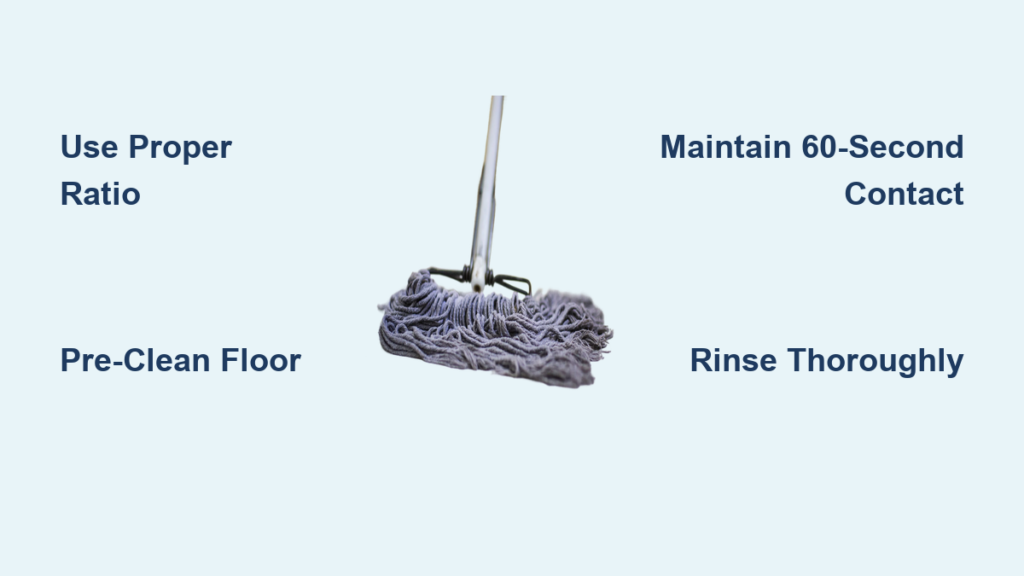
Your kitchen floor collects more than just crumbs and spills—it traps harmful bacteria like salmonella, E. coli, and viruses that soap and water alone might not eliminate. Simply mopping with regular cleaners removes visible dirt but leaves behind dangerous pathogens that can make your family sick. Knowing how to clean kitchen floor with bleach transforms routine cleaning into powerful disinfection that protects your household’s health, especially when someone’s been ill or during flu season. This guide reveals the exact steps to safely sanitize your kitchen floor while avoiding common mistakes that could damage your flooring or compromise effectiveness.
Why Your Kitchen Floor Needs Bleach Disinfection
Kitchen floors face constant contamination from dropped food, outdoor shoes, pet paws, and bare feet tracking in bacteria. Unlike countertops that you wipe down after each use, floors accumulate germs that survive for days under the right conditions. Regular mopping with soap removes visible dirt and about 99% of germs through physical action, but the remaining pathogens require chemical disinfection to eliminate completely.
Bleach becomes essential when someone in your household has had a stomach bug, flu, or other contagious illness. Pathogens spread across floors when sick individuals walk through the kitchen, creating invisible hazards for others. Even after symptoms disappear, people can continue shedding viruses for days. Disinfecting your kitchen floor breaks this transmission chain and protects vulnerable family members. Households with infants who play on the floor or immunocompromised individuals should incorporate bleach disinfection into their regular cleaning routine for added protection.
Avoid Dangerous Bleach Mistakes Before Starting

Never mix bleach with ammonia-containing cleaners (like many glass or bathroom cleaners) or acidic products (such as vinegar or toilet bowl cleaners)—this creates toxic chlorine gas that causes severe breathing problems. Even combining bleach with some dish soaps can produce irritating fumes. Always use bleach alone in a well-ventilated space with windows open and fans running to pull fumes outside. Wear rubber gloves to protect your skin, safety glasses to shield your eyes from splashes, and long sleeves to prevent accidental contact.
Check your bleach’s expiration date before starting—bleach loses potency after six months of opening and degrades faster in warm or sunny storage conditions. Never use scented, color-safe, or splashless bleaches for disinfection, as these contain additives that reduce effectiveness. Only regular unscented household bleach with 5-9% sodium hypochlorite concentration works properly for surface disinfection. If your bottle lists specific dilution instructions, follow those; otherwise, stick to the standard ratios outlined below.
Create the Correct Bleach-to-Water Ratio

Your bleach solution’s effectiveness depends entirely on proper dilution—too weak won’t kill germs, while too strong damages floors and creates unnecessary fumes. Use only cold or room temperature water, as hot water breaks down sodium hypochlorite before it can work. For a gallon-sized batch, mix 5 tablespoons (⅓ cup) of bleach per gallon of water. For smaller jobs, use 4 teaspoons of bleach per quart of water. Always pour bleach into water—not water into bleach—to prevent dangerous splashing.
Prepare your solution in a clean plastic bucket that’s never held other cleaners, as residue could trigger dangerous chemical reactions. Discard unused solution after 24 hours—diluted bleach loses potency rapidly as the active ingredients break down. Never store diluted bleach in drinking containers, especially in homes with children. The faint chlorine smell of properly diluted bleach is normal; overwhelming fumes indicate dangerous over-concentration requiring immediate ventilation and solution replacement.
Remove Grease and Debris Before Disinfecting
Skipping this pre-clean step renders your bleach treatment ineffective, as grease and organic matter create a barrier between the disinfectant and germs. Start by sweeping or vacuuming thoroughly—pay special attention to corners, under appliances, and along baseboards where contaminants accumulate. Next, mop with warm water and dish soap or a floor-specific cleaner to cut through cooking grease that traps bacteria against the surface.
Don’t wait for the floor to dry completely before applying bleach—proceed while the surface is still damp. A completely dry floor causes bleach solution to absorb unevenly and dry too quickly, compromising contact time. However, avoid puddling water; wring your mop thoroughly so the floor is moist but not saturated. This pre-cleaned, slightly damp surface ensures optimal bleach performance when you apply your disinfecting solution.
Apply Bleach Correctly and Maintain Contact Time
Pour your fresh bleach solution into a clean bucket and use a dedicated mop (not your regular cleaning mop) to apply it evenly across the entire kitchen floor. Work in sections to ensure complete coverage—every square inch must receive the solution. The surface should appear visibly wet, not just damp. This thorough saturation is non-negotiable for effective disinfection.
The critical 60-second contact time determines whether your disinfection actually works. During this full minute, the floor must remain visibly wet. If any areas start drying prematurely, immediately apply more solution. This wet contact time allows sodium hypochlorite to penetrate and destroy pathogens’ cell structures. Setting a timer prevents accidental under-treatment—most people significantly underestimate how long one minute feels when watching bleach dry.
Rinse Thoroughly and Complete Safely
Unlike bathroom floors, kitchen floors require rinsing after disinfection since food occasionally contacts this surface. Fill a clean bucket with plain water, dip and wring your mop thoroughly, then mop the entire floor again to remove all bleach residue. Change rinse water frequently—continuing with dirty water just redistributes diluted bleach. For spot treatments near food prep areas, wipe with a clean, damp microfiber cloth for precise removal.
Allow the floor to dry completely before resuming normal kitchen activity. Open windows or run ceiling fans to accelerate drying, but avoid walking on the damp surface with socks, which can cause slips. Once dry, remove gloves and wash hands thoroughly with soap and water—even brief skin contact with bleach can cause irritation over time. Properly dispose of any remaining solution by pouring it down the drain with running water; never save it for later use.
Match Bleach Use to Your Specific Floor Type
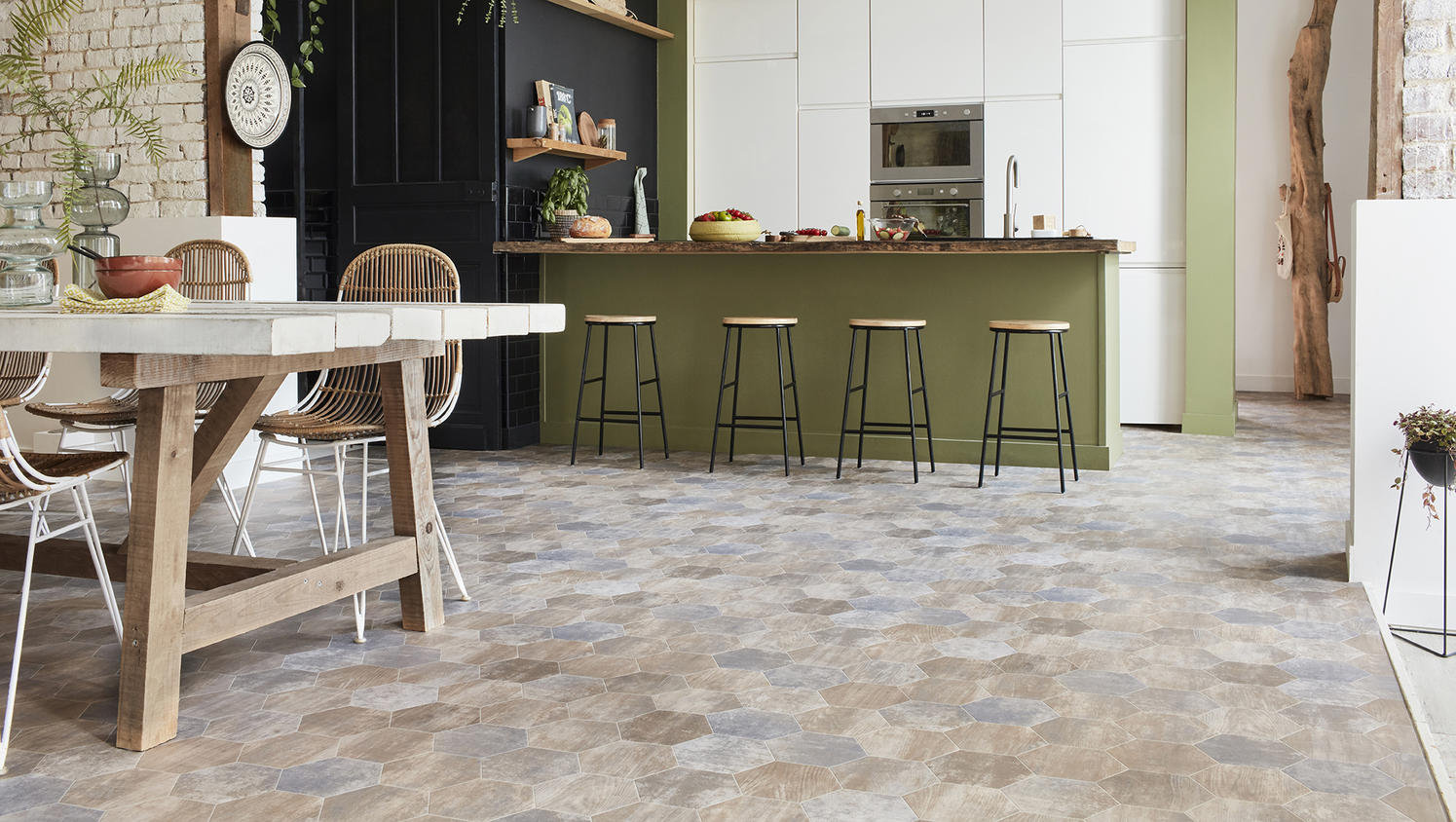
Ceramic and Porcelain Tile Floors
These non-porous surfaces handle properly diluted bleach exceptionally well. Apply solution as directed, maintaining full wet contact for one minute before thorough rinsing. Avoid prolonged pooling in grout lines, as repeated exposure may discolor lighter grouts over time. Seal grout annually to protect against discoloration while maintaining bleach compatibility.
Vinyl and Linoleum Flooring
Test bleach solution in an inconspicuous area first, as some vinyl formulations may discolor with repeated use. Never let solution pool along seams, where it can seep underneath and cause lifting. For regular maintenance, consider alternating bleach disinfection with gentler hydrogen peroxide solutions to preserve floor appearance.
Hardwood Floor Warning
Never apply bleach directly to hardwood floors. Even diluted solutions can strip finishes and cause permanent discoloration. For disinfection needs on hardwood kitchen floors, use EPA-approved hardwood-safe disinfectants instead. Spot-clean high-risk areas with a cloth dampened with properly diluted bleach, immediately wiping with clean water and drying thoroughly—but avoid routine bleach use.
Fix Common Bleach Cleaning Problems Immediately
Strong Chemical Odors During Application
This indicates either inadequate ventilation or excessive bleach concentration. Immediately increase airflow with open windows and fans, then step outside for fresh air. If odors persist with good ventilation, your solution is too strong—discard it and remix with proper ratios. A faint chlorine smell is normal; overwhelming fumes require correction.
White Residue or Streaking After Drying
Incomplete rinsing leaves behind salt crystals as the solution dries. Prepare a fresh bucket of plain water and mop the entire floor again, changing water as needed until no residue remains. For stubborn buildup, use a microfiber cloth dampened with water to gently buff affected areas. Always ensure complete rinsing after contact time.
Disinfection That Doesn’t Seem Effective
Three common culprits cause ineffective results: expired bleach (check the 6-month shelf life after opening), improper dilution (use measuring spoons, not guesswork), or insufficient contact time (set a timer!). Verify you’re using standard unscented household bleach, not specialty products. Reclean with freshly prepared solution while strictly maintaining the full 60-second wet contact period.
Schedule Strategic Bleach Disinfection for Maximum Protection
Disinfect your kitchen floor with bleach weekly if someone in your household has a weakened immune system, after any illness in the home, or following visits from sick guests. For routine household maintenance, monthly disinfection provides adequate protection against common pathogens. Increase frequency during cold and flu season or when handling raw meat frequently in your kitchen. Remember that regular cleaning with soap and water remains your first defense—reserve bleach disinfection for when you need maximum germ-killing power without damaging your specific floor type.