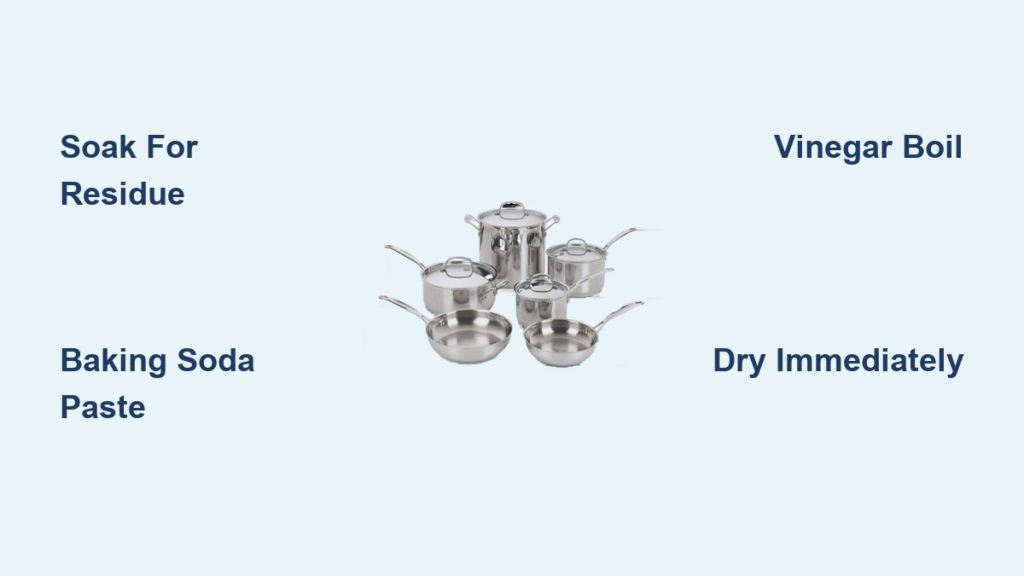
That once-brilliant mirror finish on your Cuisinart stainless steel pans has faded. Brown oil streaks climb the sides, white mineral spots cloud the cooking surface, or stubborn black carbon buildup from yesterday’s dinner disaster refuses to budge. Don’t reach for the trash can just yet—these premium pots and pans can be restored to their original factory shine with the right cleaning techniques. Knowing how to clean Cuisinart stainless steel pots and pans properly makes all the difference between cookware that lasts decades and pieces that end up discarded prematurely.
Professional chefs swear by these methods because they understand that stainless steel requires specific care. Unlike nonstick surfaces, your Cuisinart cookware actually improves with proper maintenance, developing a natural nonstick quality over time. This guide reveals exactly how to tackle every type of stain while preserving that coveted mirror finish, ensuring your investment continues performing like new for years to come.
Stop Daily Cleaning Mistakes Damaging Your Pans
Most stainless steel damage happens during routine washing when you unknowingly use techniques that gradually degrade your cookware’s finish. Fix these three common errors immediately to preserve your Cuisinart pans’ longevity.
Never Clean Hot Pans with Cold Water
Thermal shock from plunging a scorching hot pan into cold water warps the bonded base construction in Cuisinart Heritage or Multiclad series. Always let your pan cool completely for 15-20 minutes after cooking before adding water. This simple patience prevents permanent deformation that affects heat distribution and cooking performance.
Ditch the Dishwasher for Handwashing Only
Harsh dishwasher detergents strip away the microscopic luster in stainless steel, leaving behind a dull, chalky film over time. Instead, use warm water with a mild dish soap applied with a soft cloth or non-abrasive sponge. Rinse thoroughly until the surface feels squeaky-clean—any residual soap dries as unsightly white deposits that require extra cleaning steps.
Eliminate Water Spots with Immediate Drying
Hard water minerals create those frustrating white spots that make pans look permanently damaged. Wipe your Cuisinart cookware dry immediately after washing using a lint-free microfiber towel. For existing mineral deposits, rub the surface with white vinegar on a soft cloth, then rinse and dry again—this dissolves calcium buildup without harsh chemicals.
Remove Brown Oil Residue in 30 Minutes

That stubborn brown film climbing your pan’s sides isn’t dirt—it’s polymerized olive oil that chemically bonded to the steel during high-heat cooking. Traditional scrubbing only pushes the residue around, but these targeted methods break the molecular bonds.
Soak Before You Scrub for Easy Removal
Fill your pan with hot, soapy water to cover affected areas and let it soak for 1-3 hours. This critical step softens the outer layers of polymerized oil, making removal possible without damaging your pan’s finish. Skipping this soak forces you to scrub harder, creating micro-scratches that accumulate over time.
Baking Soda Paste Breaks Molecular Bonds
Create a thick paste using equal parts baking soda and water, then apply directly to brown residue. Let it sit for 30 minutes—the alkaline baking soda breaks down organic bonds at the molecular level. Gently scrub in circular motions with a non-abrasive pad following the steel’s grain pattern, then rinse clean. Pro tip: For vertical surfaces, apply the paste with a sponge and let it drip down the pan sides for maximum coverage.
Vinegar Boil for Severe Buildup
When home remedies fall short, fill the pan with a 1:3 ratio of white vinegar to water, covering all residue. Bring to a boil, then reduce heat to simmer for 10-15 minutes. The acetic acid breaks down polymerized bonds, allowing the residue to lift away with minimal scrubbing. Cool completely before handling—never plunge a hot pan into cold water after this treatment.
Eliminate White Chalky Film in Two Steps

That hazy white film clouding your Cuisinart pans comes from either hard water minerals or improperly rinsed detergent. Both respond to the same effective treatment sequence.
Activate the Baking Soda-Vinegar Reaction
Sprinkle 2 tablespoons baking soda across the affected surface, then add 1/4 cup white vinegar. The immediate fizzing action penetrates microscopic pores, lifting mineral deposits that regular cleaning misses. Let the reaction complete (about 2 minutes), then gently scrub with a soft sponge before rinsing thoroughly. This chemical reaction works better than commercial cleaners for mineral deposits.
Finish with Club Soda for Mirror Shine
Do your final rinse with club soda instead of tap water for a professional finish. The carbonic acid provides gentle cleaning action while the effervescence lifts remaining particles from microscopic imperfections. Dry immediately with a soft towel using straight-line motions (not circular) to avoid creating new scratches. This final step transforms cloudy surfaces back to their original mirror finish.
Remove Burnt Food Without Scratching
Black, charred residue from overheated foods requires patience and the right sequence—rushing the process damages your pan’s finish permanently.
Soak Overnight for Effortless Removal
Fill the pan with hot water and a squirt of dish soap, then let it soak 2-4 hours or overnight. This rehydrates carbonized material, making removal significantly easier. The longer you soak, the less scrubbing required—many cooks report burnt food lifting away with just a soft sponge after proper soaking.
Deglaze While Warm for Natural Release
Return the pan to medium heat with 1 inch of water and bring to a gentle simmer. As the water heats, scrape the bottom with a wooden spoon to lift loosened particles. The combination of heat and moisture naturally separates burnt food from the steel surface without abrasive action. Warning: Never use metal utensils during this process—they’ll scratch the surface you’re trying to restore.
Prevent Future Damage with Smart Cooking Habits
The best cleaning method is preventing problems from developing in the first place. These cooking techniques keep your Cuisinart stainless steel pots and pans pristine with minimal effort.
Master the Two-Minute Preheat
Always preheat your empty pan for 2-3 minutes on medium heat before adding oil. This creates a temporary nonstick surface through the Leidenfrost effect, where food releases naturally during cooking. Your pan is ready when a drop of water skitters across the surface like a mercury ball—this simple test prevents 90% of sticking problems.
Control Heat to Avoid Permanent Discoloration
Cuisinart stainless steel distributes heat so efficiently that high heat is rarely needed. Start on low and increase gradually—you’ll prevent food burning, surface discoloration, and potential damage to the aluminum core in bonded construction. Never leave an empty pan on high heat for more than 2 minutes, as this causes irreversible rainbow discoloration.
Time Your Salt Addition Perfectly
Add salt only after water reaches boiling point to prevent pitting corrosion. Adding salt to cold water creates concentrated brine pockets that etch microscopic holes into the stainless surface—these pits become permanent staining sites that trap food particles. This simple timing adjustment prevents permanent damage that no cleaning method can fix.
Use Only These Approved Cleaning Products

Your choice of cleaning products makes the difference between restored shine and permanent damage. Stick to this chef-approved list for safe, effective results.
Must-Have Cleaning Kit
- Bar Keepers Friend: The oxalic acid formula dissolves organic residues without scratching when used correctly
- Pure Baking Soda: Use only additive-free sodium bicarbonate for gentle abrasive action
- 5% White Vinegar: Distilled white vinegar works best for mineral deposit removal
- Dawn Dish Soap: The standard formula cuts grease effectively without harsh additives
Products That Destroy Stainless Steel
- Steel wool or metal scouring pads (create deep, permanent scratches)
- Chlorine bleach (causes pitting corrosion that traps stains)
- Oven cleaners like Easy-Off (too harsh for surface finish)
- Abrasive powdered cleaners with grit additives (micro-scratches accumulate)
Troubleshoot Specific Cleaning Emergencies
New Pan White Film After First Use
This protective manufacturing coating disappears with one proper cleaning cycle. Wash with hot soapy water, rinse thoroughly, then fill with equal parts water and white vinegar. Bring to a boil, simmer 5 minutes, then cool and dry. Your pan will achieve its signature mirror finish ready for cooking.
Stubborn Stains Refusing to Budge
When standard methods fail, create an overnight treatment: coat the affected area with baking soda paste, cover with damp paper towels, and let sit 8-12 hours. The extended dwell time allows deeper penetration—most stubborn stains release with gentle wiping after this treatment, avoiding aggressive scrubbing.
Key Takeaway: Properly maintaining your Cuisinart stainless steel pots and pans requires understanding the specific residue you’re fighting and matching the right technique. Daily handwashing with immediate drying prevents 80% of cleaning problems, while targeted treatments restore even the most neglected cookware. Remember that stainless steel improves with proper care—each successful cleaning session enhances its natural nonstick properties. Implement these methods consistently, and your Cuisinart pans will deliver professional results for decades, proving that knowing how to clean Cuisinart stainless steel pots and pans correctly transforms maintenance from chore to confidence.