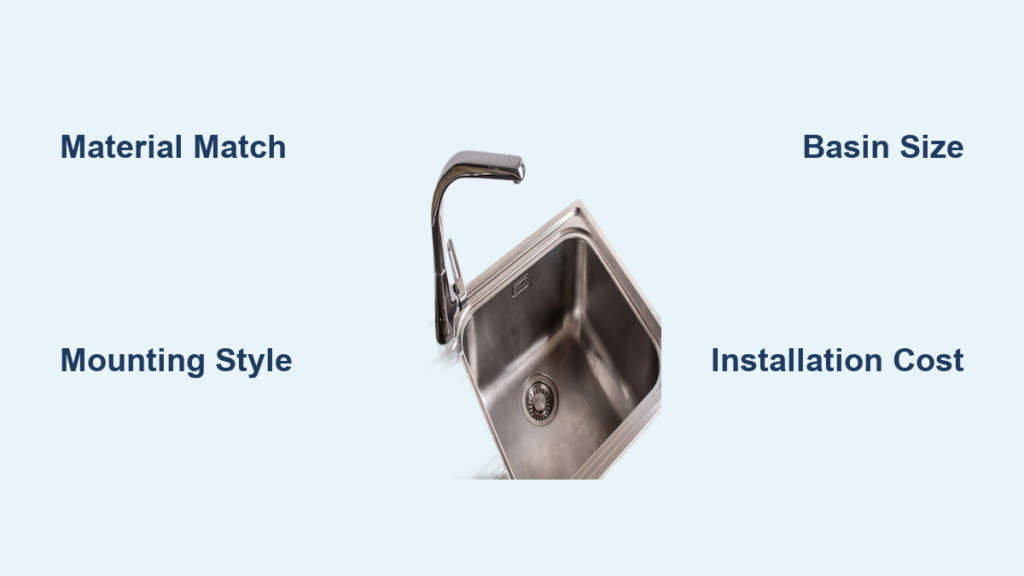
Your kitchen sink takes more abuse than any other fixture in your home—splashed with boiling water, scraped by knives, and battered by dropped pots. Yet most homeowners spend less time selecting this critical element than they do choosing a toaster. The right sink transforms meal prep from frustrating to fluid, while the wrong choice creates daily annoyances that compound over years. With 9 out of 10 kitchen remodels including sink replacement, understanding how to choose a kitchen sink ensures you’ll love your kitchen for decades. This guide cuts through the marketing hype to reveal exactly what matters when selecting the sink that matches your cooking habits, lifestyle, and design vision—saving you from costly mistakes and buyer’s remorse.
Match Sink Materials to Your Cooking Reality
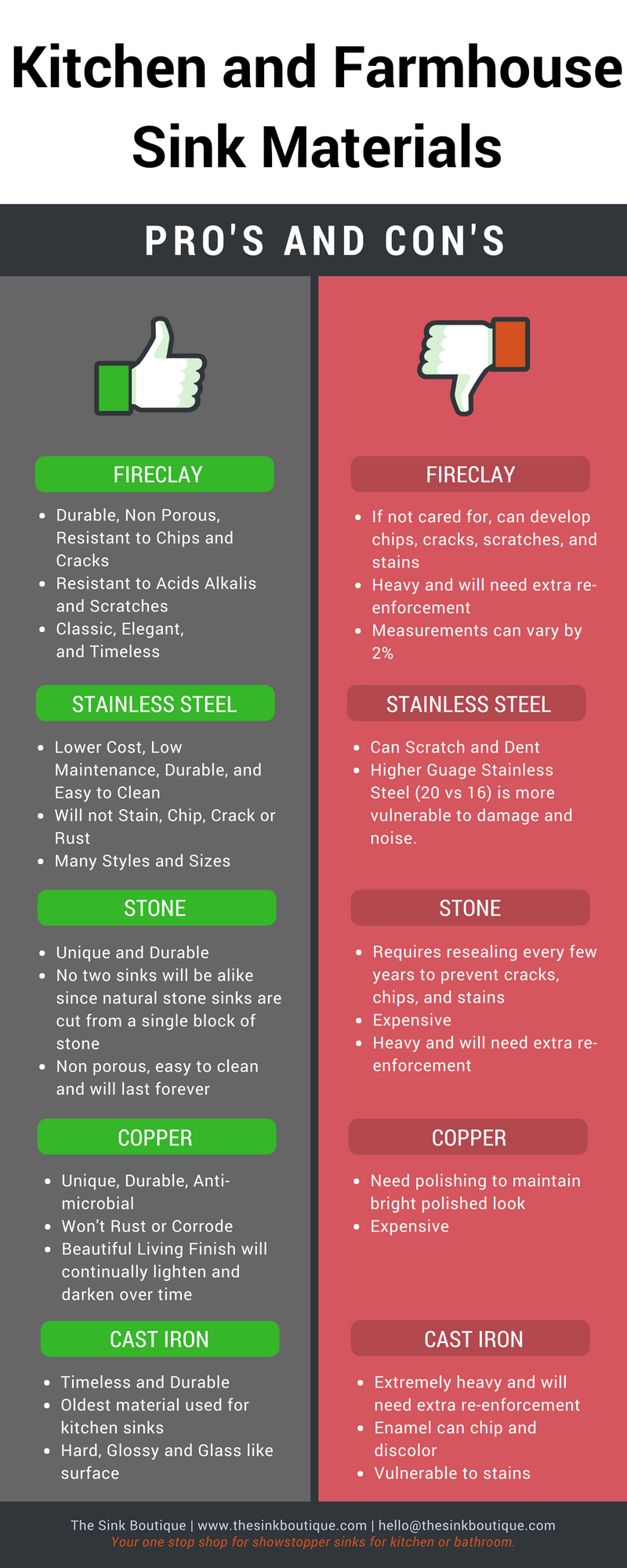
Your sink material determines everything from durability to daily maintenance—choose wisely based on how you actually use your kitchen.
Stainless Steel: The Workhorse Choice for Busy Kitchens
Why does stainless steel dominate 70% of kitchen sinks? Because it withstands the reality of daily cooking. Look for 16-18 gauge thickness (lower numbers mean thicker metal) with sound-dampening pads that reduce noise by 40%. Professional kitchens use 14-gauge, but 16-gauge offers the best residential balance of durability and value. Test sinks by tapping them—thicker steel produces a dull thud rather than a high-pitched ring. Avoid sinks thinner than 20-gauge; they’ll dent from regular cookware and sound like a tin can when water runs.
Granite Composite: The Hidden Gem for Low-Maintenance Living
If you hate water spots and want a sink that hides daily wear, granite composite delivers. Made from 80% crushed stone and 20% acrylic resin, these sinks resist scratches, stains, and heat up to 500°F. They’re perfect for households with hard water since mineral deposits don’t show on the matte finish. When shopping, press your thumbnail into the surface—quality composites won’t dent. Avoid abrasive cleaners that can scratch the surface over time. While costing 30-50% more than stainless steel, their durability often justifies the investment for heavy-use kitchens.
Cast Iron: The Premium Choice for Classic Kitchens
Enamel-coated cast iron sinks offer unmatched durability with their glossy finish that resists stains and scratches. Each sink weighs 80-120 pounds, requiring reinforced cabinet support. The enamel surface cleans easily but can chip if you drop heavy pots. Look for sinks with a lifetime warranty against chipping—this indicates thicker enamel application. These sinks work best in traditional kitchens where their substantial presence complements farmhouse or shaker cabinetry. Expect to pay 25-40% more than premium stainless steel options.
Select the Mounting Style That Fits Your Countertop
:max_bytes(150000):strip_icc()/undermount-vs-drop-in-kitchen-sink-1821203-f726447907dd46698cce0470da4c5e26.png)
Your countertop material dictates which mounting styles will work long-term—choose wrong and face water damage or costly repairs.
Undermount Sinks: The Seamless Solution for Stone Countertops
Undermount sinks create that coveted seamless transition from counter to basin, adding 2-3 inches of usable counter space. But they’re only suitable for solid surface countertops like granite, quartz, or soapstone. The installation requires professional sealing to prevent water infiltration behind the sink—a common failure point with DIY attempts. If you have laminate countertops, skip undermount; water will seep into the particle board edges, causing swelling and delamination within months.
Farmhouse Sinks: The Statement Piece That Requires Cabinet Modifications
That Instagram-perfect apron-front sink requires significant cabinet adjustments. Standard base cabinets are 34.5 inches tall, but farmhouse sinks need 36-inch tall cabinets to accommodate their depth. Measure twice before buying—most farmhouse sinks extend 10-12 inches above the cabinet base, so ensure your countertops have adequate overhang. These sinks shine in kitchens where you regularly wash large pots and baking sheets, but they’re overkill for small households with dishwashers.
Optimize Basin Configuration for Your Workflow

Your cooking habits should dictate basin layout—mismatch them and you’ll fight your sink daily.
Double-Bowl Sinks: The Multitasking Powerhouse
Why do 65% of homeowners choose double-bowl sinks? Because they enable true kitchen multitasking. The 60/40 configuration (larger left basin, smaller right) works best for right-handed cooks who need space for pots while keeping the smaller basin free for prep. Left-handed cooks should flip this ratio. Avoid equal 50/50 splits unless you frequently wash two large items simultaneously—they waste space for most households. If you have a dishwasher, make the right basin shallower (6-7 inches) for easy pre-rinsing without bending.
Single-Bowl Sinks: The Space-Saver for Compact Kitchens
In kitchens under 150 square feet, single-bowl sinks maximize every inch of counter space. Look for models with a rear drain placement that creates uninterrupted front workspace. These sinks excel when paired with a dishwasher since you rarely need simultaneous washing and rinsing. For apartment kitchens or galley layouts, choose a 22-24 inch wide sink with 9-inch depth—it fits standard 24-inch base cabinets while accommodating stock pots up to 12 inches tall.
Calculate the Perfect Sink Dimensions
Most sink returns happen because homeowners ignore cabinet constraints—measure before you buy.
Width Matters More Than You Think
Standard base cabinets are 36 inches wide, but sink cutouts typically max out at 33 inches to accommodate faucet hardware. Farmhouse sinks often require 36-42 inch cutouts, demanding custom cabinet modifications. Measure your cabinet interior width—don’t rely on nominal size. A “36-inch cabinet” might actually be 35.5 inches inside, making a 33-inch sink too large. Leave 1.5 inches clearance on each side for plumbing connections.
Depth: The Goldilocks Zone Between Splashes and Strain
Too shallow (under 7 inches) and water splashes everywhere; too deep (over 10 inches) and you’ll strain your back. The sweet spot is 8-9 inches for most adults. Test depth by filling a container to that height—does it feel comfortable to wash dishes at that level? Taller cooks (over 6 feet) often prefer 9-10 inch depths, while shorter users benefit from 7-8 inch basins. Remember: farmhouse sinks run deeper (10-12 inches), requiring cabinet and plumbing adjustments.
Decode Drain and Faucet Compatibility
Nothing ruins a new sink installation like discovering incompatible plumbing—check these details first.
Drain Placement: Front, Center, or Rear?
Rear drains (60% of sinks) maximize usable basin space but require cabinet modifications for garbage disposals. Center drains work with most disposals but waste counter space. Front drains create that seamless undermount look but limit disposal options. If you plan to install a disposal, choose a sink with rear or center drain placement and verify the disposal flange matches your unit’s diameter (typically 3.5 inches).
Faucet Hole Configuration: Don’t Get Stuck with Mismatched Hardware
Count the pre-drilled holes before buying your faucet. Single-handle faucets need one hole; widespread faucets require three (two for handles, one for spout). Many sinks include extra holes for soap dispensers—these can be capped if unused. Measure hole spacing: standard is 8 inches between centers, but European faucets often use 4-inch spacing. If your sink has fewer holes than your faucet requires, you’ll need a deck plate—a visual compromise that looks clunky on undermount sinks.
Set a Realistic Budget That Includes Hidden Costs
The sink itself is only 60% of your total investment—factor in these often-overlooked expenses.
Installation Costs Vary Wildly by Mounting Type
Drop-in sinks: $50-150 for DIY installation (sealant, clips, basic tools)
Undermount sinks: $300-600 professional installation (specialized clips, stone reinforcement)
Farmhouse sinks: $400-800 installation (cabinet modifications, structural support)
Most homeowners underestimate installation costs by 40%. A $500 farmhouse sink becomes a $1,300 project when including cabinet modifications and professional installation. Always get installation quotes before finalizing your sink selection.
Warranty: Your Insurance Against Future Headaches
Look for comprehensive lifetime warranties covering both material defects and finish integrity. Many budget sinks offer “lifetime” coverage that excludes common issues like scratches or discoloration. Premium brands like Blanco and Ruvati include in-home service for warranty claims—a huge advantage over manufacturers requiring you to ship the sink back. Read the fine print: some warranties void if you install the sink yourself.
Final Selection Checklist: Avoid Costly Mistakes
Before purchasing, verify these five critical factors that 80% of buyers overlook:
-
Cabinet weight capacity: Cast iron and fireclay sinks exceed 100 pounds—standard cabinets support only 70 pounds. Reinforce with plywood supports if needed.
-
Faucet clearance: Measure from sink rim to cabinet doors. If your faucet handle hits the cabinet when turned on, you’ll need a low-profile faucet.
-
Garbage disposal compatibility: Not all sinks accommodate disposals—verify drain opening size and sink bottom reinforcement.
-
Sound dampening: Tap the sink bowl—quality pads produce a muted thud, not a metallic ring. This affects daily enjoyment more than most realize.
-
Real-world reviews: Search “[brand] sink rust” or “[brand] sink chip” to uncover common failure points not mentioned in marketing materials.
Choosing how to select a kitchen sink isn’t about finding the most expensive option—it’s about matching the right features to your actual kitchen routines. The perfect sink disappears into your workflow, making meal prep effortless rather than frustrating. Measure twice, prioritize your top three usage needs, and don’t let showroom lighting fool you—bring home samples to test against your cabinet space and lighting conditions. Your future self will thank you every time you wash a pot without splashing water or struggle with a poorly designed basin.