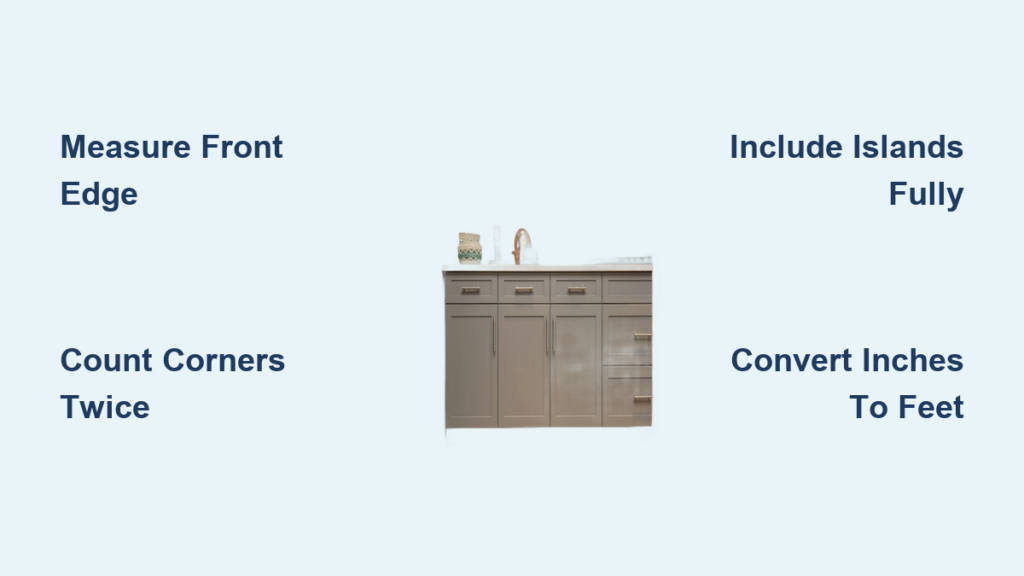
Your kitchen renovation budget lives or dies by one critical measurement: linear feet for cabinets. When contractors quote “$200 per linear foot” for your new kitchen, understanding exactly how to calculate linear feet for kitchen cabinets becomes your most powerful budgeting tool. This measurement determines whether your dream kitchen stays within reach or spirals into unexpected costs. Linear footage represents the total horizontal length of all cabinets along your walls, measured in feet rather than square footage—meaning pricing focuses on how far your cabinets stretch across your kitchen, not how tall they are or how much storage they provide.
Most homeowners don’t realize that a kitchen with 10-foot ceilings costs the same in cabinet linear footage as one with standard 8-foot ceilings. The pricing model cares only about the horizontal space your cabinets occupy. This distinction prevents costly misunderstandings when comparing quotes from different contractors or cabinet suppliers. Without accurate linear footage calculations, you risk ordering too few cabinets, misunderstanding quotes, or facing surprise change orders that derail your renovation timeline and budget.
This guide delivers the precise measurement methodology professionals use to calculate kitchen cabinet linear footage. You’ll learn how to measure upper and lower cabinets correctly, account for corner units and islands, avoid the measurement mistakes that inflate budgets, and translate your measurements into accurate cost estimates. Whether you’re planning a DIY installation or preparing to discuss your project with contractors, these steps ensure you enter negotiations with confidence and clarity.
Measure Upper Cabinets Along Front Edge
Start with upper cabinets because their measurements establish your kitchen’s overall footprint before addressing lower sections. Upper cabinets run along walls above countertops, and their linear footage contributes equally to your total cost alongside lower cabinets. Professional installers always measure along the front edge where cabinet doors will be visible—never along the back wall or at countertop level.
Extend your steel tape measure from one end of the wall to the other, following the exact path your upper cabinets will occupy. Record measurements in inches for accuracy, converting to feet only after completing all measurements to prevent rounding errors. For a wall with a 120-inch run of upper cabinets, that equals exactly 10 linear feet (120 ÷ 12 = 10). When encountering windows or doors, measure around these obstacles rather than through them—your tape should follow the cabinet configuration that will surround the window, not cut across the glass.
Standard upper cabinets typically range from 12 to 24 inches deep and 30 to 42 inches tall, but these dimensions don’t affect linear footage calculations. The critical measurement is always the horizontal run. If you’re considering ceiling-height upper cabinets, discuss this with your supplier as some manufacturers charge premium rates for taller units despite identical linear footage.
Account for Obstructions in Upper Cabinet Runs
Windows, doors, and ceiling beams create measurement challenges that require careful attention. When your upper cabinet run intersects a window, measure continuously along the cabinet line that will wrap around the window frame. A common mistake is measuring only the wall space between windows, which underestimates your actual cabinet requirements. The correct approach measures the full cabinet run including sections that will frame the window.
For doorways, measure the complete cabinet run across the entire wall, including the space the door will occupy when open. Your cabinets must fit within this footprint regardless of adjacent obstacles. If your kitchen has an open doorway to another room, measure through this opening as though cabinets would continue uninterrupted—this represents the true linear footage your design requires.
Convert Inches to Feet Properly
Always record measurements in inches first before converting to feet. Measuring a 98-inch upper cabinet run as 8.17 feet introduces rounding errors that compound across multiple sections. Keep all measurements in inches until your final calculation: 98 inches ÷ 12 = 8.166 feet, which rounds to 8.2 linear feet. Professional contractors maintain inch measurements throughout the process to preserve accuracy, converting only at the final calculation stage.
Calculate Lower Cabinet Footage Correctly
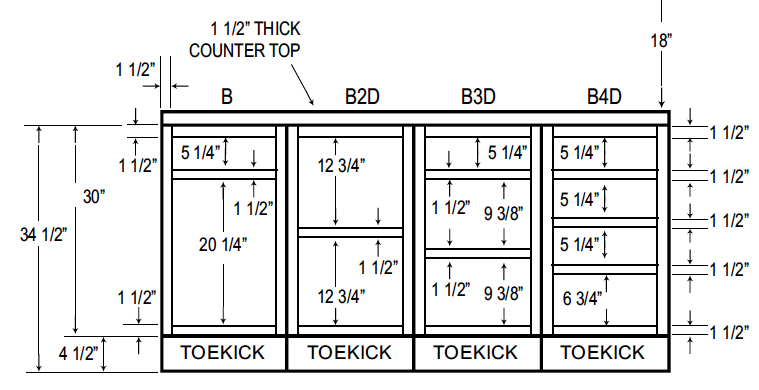
Lower cabinets form the foundation of your kitchen storage, and measuring them requires the same precision you applied to upper cabinets. Measure along the front edge where cabinet doors will open, starting at one end of each wall segment and extending to the next corner or obstruction. Standard base cabinets stand 34 to 36 inches tall and 24 inches deep, but again, these dimensions don’t affect linear footage—only the horizontal run matters.
When encountering specialized base cabinets like sink bases or appliance panels, measure their full width including cutout spaces. A standard 36-inch sink base cabinet contributes exactly 3 linear feet to your total, the same as a 36-inch pantry base cabinet. The reduced interior storage from the sink cutout doesn’t reduce the linear footage because you’re still occupying the same horizontal space.
Handle Sink and Appliance Bases Properly
Sink base cabinets typically range from 24 to 36 inches wide, with the sink cutout occupying significant interior space. Despite this reduced storage capacity, the linear footage remains based on the cabinet’s external width. A 33-inch sink base cabinet contributes 2.75 linear feet (33 ÷ 12 = 2.75) to your total, identical to a standard base cabinet of the same width.
For stove or refrigerator bases, measure the full cabinet width that will house the appliance. A standard 30-inch refrigerator base cabinet contributes 2.5 linear feet to your total calculation. Specialty cabinets like appliance garages or pull-out trash bases follow the same principle—measure the complete cabinet width regardless of internal configuration.
Measure Corner Cabinets Twice
Corner cabinets represent the most common measurement mistake that inflates renovation budgets. These units occupy the intersection of two walls, requiring you to measure each leg separately and add both measurements to your total. A standard 36-inch corner base cabinet contributes 6 linear feet to your calculation—not 3—because it occupies 36 inches along each wall (36 + 36 = 72 inches or 6 feet).
When measuring corner cabinets, extend your tape from the corner along the first wall to the end of the cabinet run, then repeat along the adjacent wall. Add these measurements together before converting to feet. For an upper corner cabinet measuring 33 inches on each leg, that’s 66 inches or 5.5 linear feet. This double-counting explains why corner cabinets often represent a disproportionate share of your total cabinet cost.
Distinguish Between Corner Cabinet Types
Lazy Susan corner cabinets and diagonal pie-cut configurations require identical measurement approaches despite different internal mechanisms. Measure the horizontal space each occupies along both walls regardless of interior design. A 36-inch diagonal upper corner cabinet still contributes 6 linear feet to your total calculation (36 inches per wall × 2 = 72 inches or 6 feet).
If your kitchen design includes a blind corner cabinet with a swing-out mechanism, measure both wall segments it occupies. The key principle remains consistent: corner cabinets count twice for linear footage because they span two walls. Never measure diagonally across the corner—that measurement reflects the cabinet’s interior space, not the horizontal footprint pricing depends on.
Include Island and Peninsula Measurements Fully

Kitchen islands and peninsulas require special attention because they feature cabinets on multiple sides. For islands with cabinets on two opposite sides, measure each run separately and add both to your total. An 8-foot long island with cabinets on front and back contributes 16 linear feet (8 feet × 2 sides = 16 linear feet).
Peninsulas attached to walls typically have cabinets exposed on three sides. Measure each accessible cabinet run and add all measurements to your total. A 6-foot peninsula with cabinets on the front and both ends contributes 18 linear feet (6 feet × 3 sides = 18 linear feet). Some manufacturers apply premium pricing for island and peninsula cabinets due to increased labor for finishing all exposed sides, so verify pricing structures before finalizing your design.
Calculate Specialty Cabinet Footage
Tall pantry cabinets, oven housings, and appliance columns contribute their full width to linear footage calculations. A 24-inch wide pantry cabinet adds 2 linear feet regardless of its height. These specialty units often command premium pricing per linear foot compared to standard cabinets, so track them separately when comparing quotes.
Built-in accessories like wine racks or pull-out trash systems don’t change the linear footage calculation—they’re priced as upcharges to the base cabinet cost. A 24-inch base cabinet with a built-in spice rack still contributes exactly 2 linear feet to your total measurement, though it may cost 25% more than the same cabinet without the accessory.
Avoid Critical Measurement Mistakes

Measuring along the back wall instead of the front edge creates systematic underestimates that cascade through your entire project. Your tape measure must follow the front edge where cabinet doors will be visible—this represents the true horizontal footprint your cabinets occupy. A measurement taken along the back wall might read 114 inches for a section that actually requires 120 inches of cabinet frontage, creating a costly 6-inch gap in your installation.
Another common error involves forgetting to include end panels that extend beyond adjacent walls. These panels create seamless transitions between cabinets and walls but add to your linear footage. Measure from the outermost point of your planned cabinet configuration, not from wall to wall. A kitchen with 120 inches of wall space might require 126 inches of cabinetry when accounting for standard 3-inch end panels on both sides.
Verify Measurements Before Finalizing
Always double-check measurements by walking through your kitchen with a string or chalk line marking the exact cabinet footprint. Compare this visual representation against your recorded numbers—discrepancies often reveal measurement errors before they become costly problems. Professional contractors take measurements twice: once for initial planning and again after demolition when walls are exposed, accounting for any irregularities in the actual structure.
When obtaining quotes, ensure all contractors use identical measurement methodology. Request that they provide a detailed breakdown showing exactly how they calculated linear footage for your kitchen. Significant variations between quotes often indicate measurement discrepancies rather than genuine price differences, helping you identify which contractor has the most accurate assessment of your project requirements.
Accurate linear footage calculations transform kitchen renovation planning from guesswork into precise budgeting. By measuring upper and lower cabinets along their front edges, accounting for corners twice, and including all exposed sides of islands and peninsulas, you establish a reliable foundation for comparing quotes and ordering materials. Remember that linear footage represents horizontal run only—cabinet height, depth, and interior configuration affect pricing per linear foot but not the fundamental measurement. Double-check your work, verify contractor measurements, and never assume standard sizes will fit your space without precise measurement. These steps ensure your kitchen renovation stays on budget while delivering the functional, beautiful space you envision.