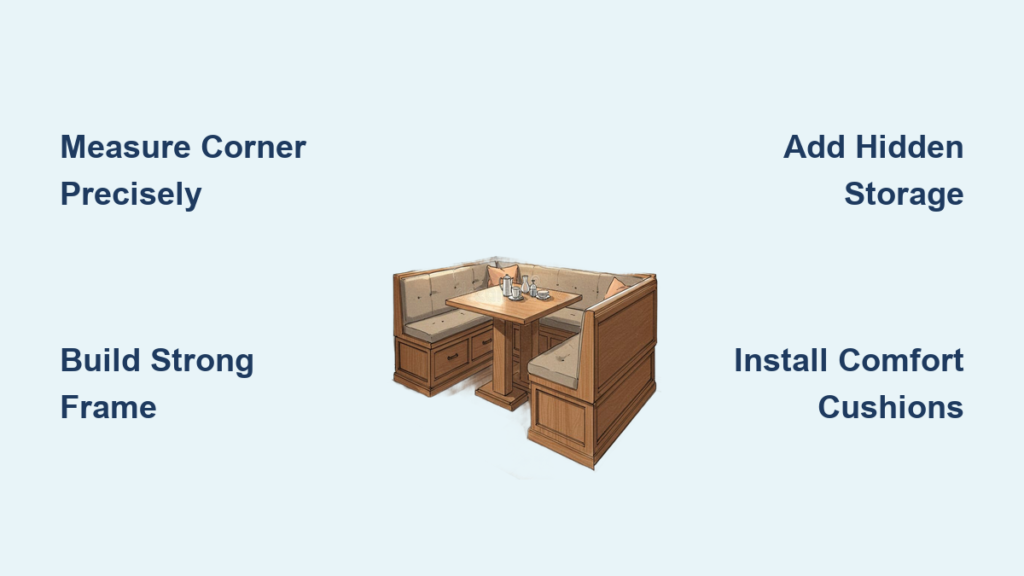
Transforming an unused kitchen corner into a functional dining space solves multiple problems for homeowners with limited square footage. A custom-built corner kitchen booth creates an intimate eating area that maximizes seating capacity while adding valuable storage space beneath the seating. Unlike store-bought furniture, your DIY corner booth perfectly fits your kitchen’s dimensions and reflects your personal style. This guide shows you exactly how to build a corner kitchen booth that becomes the heart of your home’s gathering space.
Most homeowners discover that a properly constructed corner kitchen booth adds both practical seating and significant storage potential to their kitchen layout. The investment in materials and time pays off daily through comfortable family meals and efficient use of space that would otherwise go unused. Before grabbing your tools, consider how your family actually uses the kitchen—will this become your primary dining area or a secondary breakfast nook? These decisions directly impact the dimensions, storage configuration, and overall design of your custom booth.
Precise Measurements and Design Planning
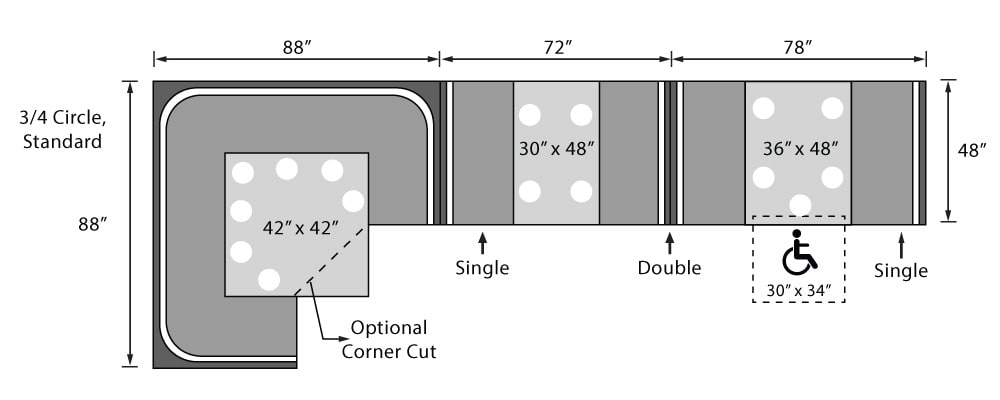
Skipping proper measurements guarantees construction headaches later when your corner kitchen booth doesn’t fit the space. Start by measuring your corner area with a steel tape measure, noting exact dimensions from wall to wall and floor to ceiling. Pay special attention to any obstacles like windows, baseboard heaters, or electrical outlets that will affect your booth’s placement and construction.
The ideal seating depth for your corner kitchen booth ranges from 21 to 24 inches, providing comfortable knee room while maintaining proximity to the table. Seat height should match standard dining chair heights at 18-20 inches from the floor, ensuring visual consistency with any additional chairs you might use. When calculating total space requirements, allow at least 36 inches of clearance in front of the booth for comfortable movement and chair withdrawal.
For the backrest, plan for 36-42 inches of height from the floor—enough to provide comfortable support without blocking windows or creating a cramped feeling. If your kitchen features a non-standard corner angle (not precisely 90 degrees), create a cardboard template to test fit before cutting any permanent materials. This simple step prevents costly mistakes when building your corner kitchen booth frame.
Selecting Appropriate Materials and Tools

Choosing quality materials ensures your corner kitchen booth withstands daily use for years without sagging or deterioration. For the structural frame, use kiln-dried 2×4 lumber for the base framework and 3/4-inch Baltic birch plywood for the seat platform and back panels. These materials offer the perfect balance of strength, stability, and workability for DIY construction.
Your seat cushion requires high-density foam with a density rating between 1.8 and 2.5 pounds per cubic foot—thinner foam (2-3 inches) works for backrest padding while seat cushions need 3-4 inches for proper support. Avoid low-density foam that compresses quickly, leaving uncomfortable hard spots after minimal use. For upholstery, select performance fabrics rated for 15,000+ double rubs on the Wyzenbeek test to withstand daily wear in high-traffic kitchen areas.
Essential tools for building your corner kitchen booth include a circular saw or miter saw for accurate cuts, a drill/driver with assorted bits, a stud finder, level, and tape measure. A pocket hole jig significantly strengthens frame joints while hiding fasteners, though quality wood screws with pre-drilled holes work well for DIY construction. Don’t forget safety gear—safety glasses and hearing protection are mandatory when operating power tools.
Constructing the Structural Frame
Begin building your corner kitchen booth by creating a detailed cut list based on your precise measurements. The frame consists of three main sections: left bench, right bench, and corner transition piece. Cut all lumber to size before assembly, labeling each piece to prevent confusion during construction—this prevents costly mistakes when you’re mid-project.
Assemble the left bench frame first by connecting the bottom rail between two vertical end pieces using 3-inch wood screws and wood glue. Install intermediate joists between the bottom rail and seat height at 16-inch intervals for adequate support. The back of the frame must attach securely to wall studs—use a stud finder to locate them and mark positions before final assembly.
The corner transition requires special attention to ensure seamless connection between sections. Many builders create a small triangular platform piece that bridges the corner gap and supports a continuous seat cushion. Install the seat platform panels on top of the completed frame, securing them with 1.5-inch wood screws driven upward through the platform into supporting joists. Test the platform for levelness and eliminate any flex before proceeding.
Integrating Smart Storage Solutions
:strip_icc()/kitchen-banquette-seating-built-shelves-42HP8hM7quH8MbeM_GKg3G-9010f9b8c0804a79b80b3695fe3ad330.jpg)
One of the biggest advantages of building your own corner kitchen booth is incorporating custom storage beneath the seating. Hinged lid access along the seat front provides complete access to the storage compartment using full-length piano hinges. Cut your seat front panel from 3/4-inch plywood, sizing it to fit flush with frame sides and extend to within 1/8 inch of the floor when closed.
For easier access in smaller spaces, consider drawer-style storage using full-extension drawer slides beneath the seat platform. Each drawer box requires front, side, back, and bottom panels joined with pocket screws for clean construction. Divide the storage space into multiple compartments—a shallow tray for placemats, deeper section for tablecloths, and separate bin for children’s items keeps everything organized.
Install small magnetic catches along the bottom edge of hinged lids to hold them securely closed during normal use. For drawer construction, add soft-close mechanisms to prevent slamming and extend hardware lifespan. Labeling storage compartments helps family members maintain organization over time, ensuring your corner kitchen booth remains functional for years.
Creating Comfortable Custom Cushions
Custom cushions make the difference between a functional seat and an inviting gathering space. Create cardboard templates matching your exact seat and backrest dimensions before cutting any foam—this ensures perfect fit in your corner kitchen booth. Measure carefully around the corner angle where left and right sections meet, as this area often requires special attention.
Cut high-density foam to match your templates using a sharp serrated knife, working slowly to maintain straight cuts. For optimal comfort, use two foam layers: a firmer 3-inch base layer topped with a softer 1-inch comfort layer. Wrap foam cores with 1/2-inch polyester fiber batting to create smooth, rounded edges that look professional and inviting.
Select upholstery fabrics that coordinate with your kitchen decor while offering practical durability. Measure fabric requirements carefully, adding extra for pattern matching, seam allowances, and wrap-around edges. Performance fabrics clean easily with mild soap and water—essential for kitchen seating that will encounter food spills and daily wear.
Professional Upholstery Techniques
Achieving professional-looking upholstery requires proper fabric wrapping techniques that withstand years of use. Position fabric face-down on a clean work surface, then center the wrapped cushion foam on top. Pull fabric taut across the top surface, working from center toward edges to prevent wrinkles and bunching.
Secure fabric along bottom edges using a heavy-duty staple gun with 1/2-inch staples. Staple along the bottom edge first, pulling fabric taut as you work with staples approximately 3 inches apart. Fold fabric neatly at corners using mitered folds similar to gift-wrapping techniques, then continue stapling along all edges.
Attach finished cushions to the frame using hook-and-loop tape for removable cushions that need periodic cleaning. French cleats or Z-clips allow secure mounting while permitting easy removal for access to storage below. For permanent installation, construction adhesive applied to the frame top creates an invisible bond that holds cushions securely without visible fasteners.
Final Installation and Finishing Touches
Complete your corner kitchen booth installation by positioning the frame against the wall and checking for levelness in all directions. Use shims beneath any low points to create a stable, wobble-free installation. Secure the frame to wall studs using 3-inch wood screws driven through the back support, concealing screw heads with wood plugs.
Install baseboards and trim pieces to create clean transitions between the booth and surrounding walls. Measure and cut scribe pieces that match existing trim profiles, ensuring proper fit against walls that may not be perfectly straight. Small gaps can be concealed with color-matched caulk for a professional finish.
Add decorative elements that personalize your corner kitchen booth. Nailhead trim along cushion edges adds classic sophistication, while contrast piping defines cushion shapes. Throw pillows in complementary fabrics soften the appearance and provide additional back support. Under-cabinet lighting above the booth creates warm, functional illumination for morning coffee and late-night snacks.
Maintenance for Long-Lasting Beauty
Protect your investment with proper maintenance that ensures your corner kitchen booth remains attractive for years. Vacuum cushions regularly to remove crumbs before they work into fabric fibers. Rotate and flip cushions monthly to promote even wear and prevent permanent impressions in foam cores.
Address spills immediately by blotting—not rubbing—liquids from upholstery fabric. Most performance fabrics clean successfully with mild soap and warm water applied with a soft cloth. Test any cleaning solution in an inconspicuous area first, and allow cleaned areas to air dry completely before resuming use.
Inspect frame and hardware annually, tightening any screws that may have loosened through normal use. Check cushion attachment hardware and replace components showing signs of wear. Re-caulk any gaps between the booth and walls that develop as your home settles over time.
A well-built corner kitchen booth becomes the heart of family life in many homes, serving as a gathering place for meals, homework, games, and conversations. The investment of time and materials required to construct this permanent fixture pays daily dividends through functional seating, valuable storage, and a distinctive design element that transforms ordinary kitchen space into something truly special. Follow these steps precisely when building your corner kitchen booth and enjoy the results for decades to come.