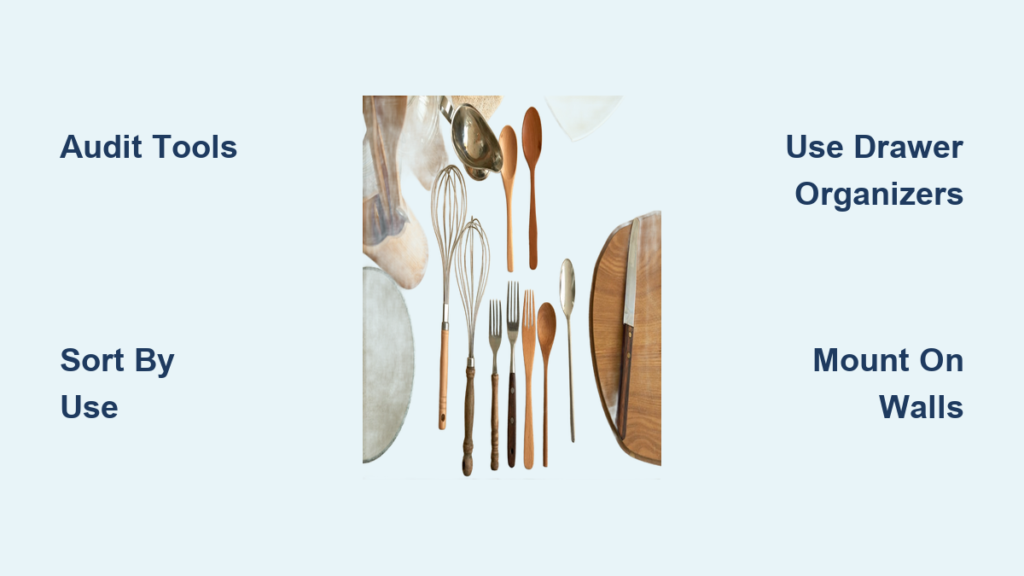
Nothing disrupts a cooking flow like rummaging through a jumbled drawer for the right spatula while dinner burns on the stove. Learning how to arrange kitchen utensils properly transforms your cooking experience from chaotic to seamless. Whether you’re working with a cramped apartment kitchen or a spacious culinary workspace, an organized utensil system saves valuable minutes during meal preparation and reduces daily cooking stress. Discover practical strategies that professional organizers use to create functional, sustainable utensil storage systems that match how you actually cook.
Conduct a Full Utensil Audit Before Organizing
Before purchasing storage solutions or rearranging your kitchen, gather every utensil from drawers, cabinets, countertops, and even the dishwasher. Spread them out on your dining table or kitchen island to see your entire collection at once. This visual assessment reveals exactly what you own and identifies problem areas in your current organization system.
As you examine each item, ask two critical questions: “Is this utensil in good condition?” and “When did I last use this?” Set aside broken handles, worn-out heads, or tools with missing parts for immediate disposal. Similarly, identify duplicates and specialty items you haven’t used in the past year—these are prime candidates for donation. Removing unnecessary items first makes organizing the remaining collection significantly easier and prevents overcrowding in your storage spaces.
Pay attention to usage patterns during your audit. Notice which tools you reach for repeatedly versus those gathering dust in the back of drawers. This awareness helps prioritize accessibility for your most-used items while relegating specialty tools to less prominent storage locations. Your organization system should reflect your actual cooking habits, not an idealized version of how you think you should cook.
Sort Utensils by Function and Frequency of Use
After decluttering, sort your remaining utensils into logical categories based on both function and how often you use them. Group all spatulas together, but further organize them by size and material—silicone for non-stick pans, metal for grilling, wooden for delicate surfaces. Similarly, organize ladles by shape (round versus square) and whether they’re slotted or unslotted.
Consider these common utensil categories and their variations:
– Whisks: Balloon whisks for whipping egg whites, flat whisks for saucepans, French whisks for general use
– Spatulas: Fish spatulas for delicate foods, offset spatulas for baking, straight-edged for general cooking
– Spoons: Slotted spoons for draining, solid spoons for serving, specialty spoons like grapefruit or melon ballers
– Basting brushes: Silicone for easy cleaning, natural bristle for traditional cooking
Position your most frequently used utensils in prime storage locations where you can grab them without breaking stride during cooking. Your everyday spatula belongs front and center, while that specialty basting brush used only for holiday turkeys can live in a less accessible spot. This strategic arrangement saves countless steps during meal preparation and keeps your workhorses in better condition since they’re not buried beneath rarely used items.
Install Adjustable Drawer Organizers for Optimal Storage

Drawer storage keeps utensils concealed yet accessible, but only when properly organized. Fixed compartments often create wasted space or force you to cram mismatched items together. Instead, use adjustable drawer organizers with movable dividers that you can customize to fit your specific utensil collection.
Look for organizers with sound-damping features that reduce noise when opening and closing drawers—a small but meaningful quality-of-life improvement in busy kitchens. Place frequently used items in the front sections of drawers for immediate access, while positioning specialty tools toward the back. Store longer utensils like serving spoons diagonally to maximize space efficiency—they’ll fit better and be easier to grab.
Critical safety note: Always store sharp knives separately from other utensils. Either use a dedicated knife block, magnetic strip, or a compartment with blade guards to prevent accidents and protect both your hands and your blades. Mixing knives with other tools is one of the most dangerous organization mistakes home cooks make.
Position Countertop Storage Near Cooking Zones

Countertop utensil holders (also called crocks) provide instant access to your most-used tools while adding visual appeal to your kitchen. The key to effective countertop storage is strategic placement—position your utensil crock within arm’s reach of your primary cooking zone, whether that’s next to the stove or near your food prep area.
Choose a crock size that matches your actual needs. Oversized crocks often become dumping grounds for every kitchen tool, defeating the purpose of organization. Instead, keep only your top 5-7 most frequently used utensils on the countertop—your go-to spatula, wooden spoon, tongs, and slotted spoon—and store the rest in more appropriate locations.
Vintage stoneware crocks offer both functionality and character, but similar styles are widely available at kitchen stores. If counter space is limited, consider a flatware caddy with handles that you can move between the countertop, drawer, or dining table as needed. This flexible approach keeps essential tools accessible without overwhelming your work surfaces.
Mount Utensils on Walls to Free Up Counter Space
Vertical wall storage transforms unused space into valuable organizational real estate, particularly in kitchens with limited drawer or counter space. Install a magnetic knife strip not just for knives, but for any stainless steel utensils—spoons, ladles, and whisks all stay securely in place while remaining instantly visible and accessible.
Pegboard systems offer even more customization options. Position pegs to accommodate your specific utensil shapes and sizes, creating a storage solution tailored exactly to your collection. For a more streamlined look, install rail systems under upper cabinets with hooks for hanging utensils. This keeps tools within view and reach while maintaining clear countertops.
Pro tip: Store utensils with hanging loops on tension rods installed above your sink or in cabinet spaces. Simply add S-hooks to the tension rod to create instant, adjustable storage that requires no permanent installation—perfect for renters or those who prefer flexible solutions.
Repurpose Cabinet Doors and Undersides for Hidden Storage

Don’t overlook the storage potential of your cabinet doors and undersides. Mount Command hooks or small magnetic strips inside cabinet doors to store lightweight utensils like pie servers, pastry brushes, or small whisks. This hidden storage keeps tools accessible yet out of sight for a clean kitchen aesthetic.
For heavier items, install swivel utensil holders underneath cabinets. These clever organizers rotate outward when you need them and tuck away neatly when not in use. The eye-level positioning makes grabbing tools during cooking effortless while maintaining clear countertops. If you have deep upper cabinets, consider adding pull-out trays specifically for utensil storage—this transforms dead space into functional organization.
Maintain Your System with Regular Check-Ins
An organization system only works if it’s maintained. Set a quarterly reminder to reassess your utensil arrangement as your cooking habits and collection evolve. During these check-ins, remove any damaged items, reposition tools based on updated usage patterns, and clean your storage containers to prevent debris buildup.
Teach everyone in your household your organizational system with clear expectations: “Spoons go in the left compartment, spatulas in the right.” Without consistent behavior from all users, even the most thoughtful organization will deteriorate within weeks. The goal isn’t perfection—it’s creating a system that makes cooking easier and more enjoyable for you.
Avoid These Common Utensil Organization Mistakes
Many cooks undermine their own organization efforts by making these preventable mistakes:
-
Overcrowding storage spaces: When drawers or containers are packed too tightly, you’ll struggle to retrieve items and risk damaging utensils. Leave breathing room between tools for easy access.
-
Mixing sharp and non-sharp items: Storing knives with other utensils creates safety hazards and dulls blades. Always keep cutting tools separate in dedicated storage.
-
Ignoring frequency of use: Placing everyday tools in hard-to-reach locations defeats the purpose of organization. Reserve prime storage spots for items you use daily.
-
Neglecting container hygiene: Dirty crocks and drawers transfer bacteria to clean utensils. Wipe down storage containers weekly and deep clean monthly.
By following these practical strategies for how to arrange kitchen utensils, you’ll create a cooking space that enhances rather than hinders your culinary efforts. Start with a thorough inventory, implement storage solutions that match your actual cooking habits, and commit to regular maintenance. Within a weekend, you can transform chaotic utensil storage into an efficient system that makes every cooking session smoother and more enjoyable. The time invested in proper organization pays dividends in reduced stress and saved minutes every time you step into your kitchen.