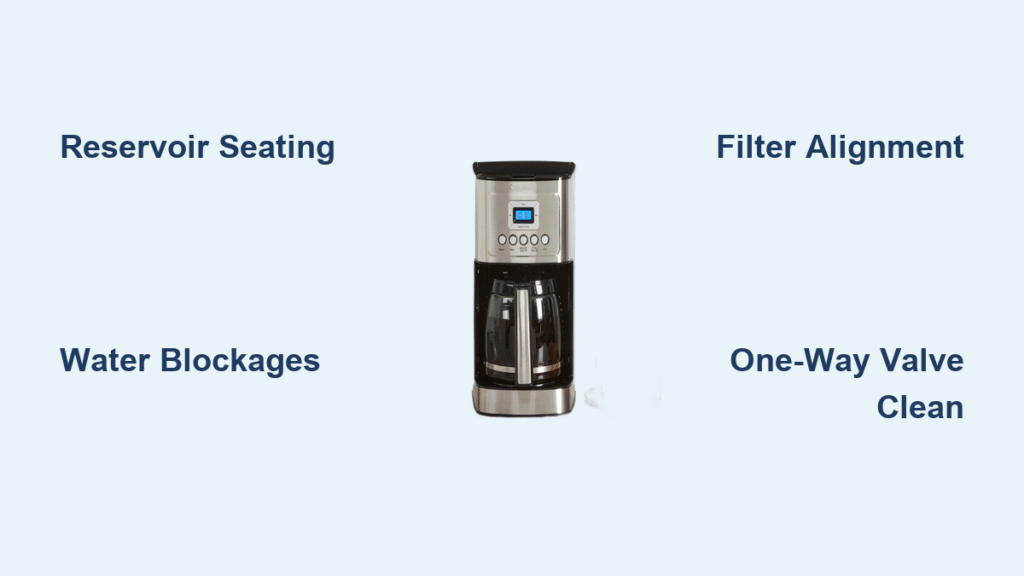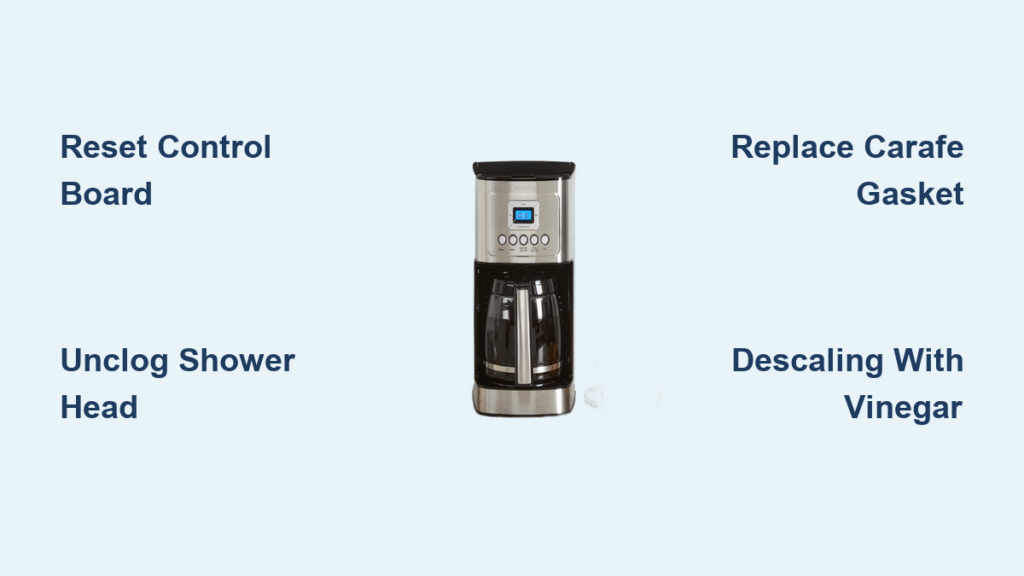

Your Cuisinart coffee maker powers up but won’t brew—leaving you stranded without your morning caffeine fix. This frustrating silence or unexpected leak affects thousands of DCC, DGB, and CHW series owners annually, but Cuisinart coffee pot repair is rarely as complex as it seems. Before replacing your $100-$200 machine, know that 80% of failures stem from three fixable components: blown fuses, clogged valves, or cracked hoses. This guide delivers exact repair protocols for every popular model—from the DCC-1100 to thermal-carafe DCC-3400—using only $2 parts and basic tools. You’ll revive your brewer in under 30 minutes while avoiding costly service calls.
Stop pouring money into disposable coffee makers when simple diagnostics can restore functionality. We’ve distilled repair logs from Conair service centers and thousands of successful DIY fixes into this actionable roadmap. By the end, you’ll confidently troubleshoot power failures, water flow issues, and leaks while extending your machine’s life to its full 5-8 year potential.
No Power? Diagnose Dead Cuisinart Units in 10 Minutes
When your Cuisinart shows zero lights or sounds, skip the panic—start here. First, test the outlet with a phone charger; if it works, move to cord inspection. Flex the power cord near the plug and strain-relief while plugged in—flickering lights indicate internal wire breaks requiring cord replacement. Always check GFCI reset buttons on kitchen outlets first; power surges commonly trip these after storms.
Replace the Blown 8A Glass Fuse (15-Minute Fix)

Difficulty: ★☆☆ | Tools: Phillips driver, multimeter
Most “dead” units actually have a blown 5×20 mm glass fuse near the power entry. Here’s how to verify and replace it:
1. Remove four base screws and lift the housing straight off
2. Locate the fuse (typically taped near the IEC socket)
3. Test continuity with a multimeter: 0-1 Ω = good, open circuit = blown
4. Swap with an identical 8A 250V fuse (50¢ at hardware stores)
Critical warning: If the new fuse blows instantly, unplug immediately—this indicates a shorted heating element or cracked boiler requiring professional attention. Never substitute higher-amperage fuses.
Control Board Failures: When Fuse Tests Good
If voltage reaches the control board (120V AC measured at input) but no LEDs light, the board has failed. For DCC-3200 models, this means replacing part #DCC3200-01B ($55-$65). Pro tip: Before ordering, force a factory reset by unplugging for 60 seconds, then holding “Hour” and “Minute” while reconnecting power. If display characters remain scrambled, board replacement is unavoidable—consider professional service if uncomfortable with desoldering connectors.
Water Won’t Flow? Unclog Reservoir-to-Carafe Pathways
A Cuisinart that leaves 1-2 cups of water in the reservoir signals valve or hose failure. Start with the simplest fix: remove the reservoir and shake it vigorously inverted over the sink. Coffee grounds jamming the magnetic float cause 60% of “Add Water” light issues on CHW-12 models. If shaking doesn’t resolve it, test the reed switch with a fridge magnet—audible clicks confirm functionality. No click? Replace part #CHW12-05 ($12).
Fix Check-Valve Failures in DCC Models

For DCC-1200 units leaving unbrewed water:
1. Remove the reservoir base plate (two screws)
2. Extract the rubber flapper valve and inspect for tears or mineral crust
3. Install a new check-valve (part #DCC1200-10, $4)
4. Lubricate the O-ring with food-safe silicone grease
Visual cue: Perished valves appear stiff or cracked rather than supple. Always replace during descaling since mineral buildup accelerates failure.
Replace Brittle Silicone Hoses Before They Burst
Cracked hoses cause sudden leaks during filling. Inspect these critical failure points:
– White stress marks at hose barbs
– Mushroom-shaped swelling near heating elements
– Loss of flexibility compared to new tubing
Cut out damaged sections and splice in 5 mm ID × 8 mm OD food-grade silicone tubing ($2/foot). Never use metal clamps—they cut soft silicone. Secure connections with zip-ties and heat-resistant adhesive. Replace hoses every 18 months as preventive maintenance.
Stop Brewing Leaks with Precision Fixes
Water pooling under your machine means immediate action is needed. First, unplug and empty the reservoir. Tip the unit sideways to inspect internal components—loose boiler clamps cause 70% of under-unit leaks in 3+ year-old models. Tighten aluminum clamps with a Phillips driver, but stop when resistance increases to avoid cracking the boiler.
Carafe-Specific Leak Solutions
For drips around the carafe area:
– Lid leaks: Replace the brew-basket lid (part #DCC1200-04B) if the locking tab is cracked
– Showerhead drips: Swap the silicone gasket (part #DCC1200-09) every 2 years—it dries out and tears
– Overflow issues: Reduce coffee dose by 1 tablespoon or use coarser grind
Critical reminder: Never exceed the MAX fill line—overfilling causes pressure leaks at the boiler inlet that mimic internal failures.
Restore Heating Function Without Costly Replacements
Cold coffee indicates heating system failure. If there’s no pump sound during brewing, test the thermal fuse taped to the boiler: it should read 0-1 Ω when cold. An open circuit means replacement is required—but never solder connections. Thermal fuses use crimp connectors; soldering melts their heat-sensitive coating. Replacement takes 10 minutes with needle-nose pliers.
Thermostat Calibration for Perfect Brew Temperature
Brewing that stops mid-cycle? Your thermostat opens too early. Verify with this test:
1. Run an empty brew cycle with a thermometer in the showerhead stream
2. Target temperature: 195-205°F
3. If it opens below 190°F, replace the thermostat (generic 95°C part, $8)
Pro shortcut: Models with persistent overheating often have failed NTC thermistors—check resistance at 77°F (should be ~100kΩ).
Grind-and-Brew Model Fixes (DGB-650/850)
Grind failures usually stem from safety interlocks—not motor issues. Ensure the burr lid clicks fully into place; these microswitches are notoriously finicky. Similarly, verify the filter basket is fully seated—any misalignment disables grinding. If both are secure but the motor hums without spinning, worn carbon brushes are the culprit.
Motor Replacement: When Grinding Stops
Difficulty: ★★☆ | Time: 25 minutes
1. Unplug and remove the bean hopper by twisting counter-clockwise
2. Manually spin the burr—if it moves freely with magnetic resistance, the motor is shot
3. Replace the entire motor assembly (part #DGB650-28, $35) since brushes aren’t serviceable
Warning: Never operate without the burr assembly—this damages internal gears.
Descaling Done Right: Prevent Damage While Removing Scale
Vinegar descaling done incorrectly ruins coffee taste and damages components. Always follow this sequence:
1. Mix equal vinegar and cold water to MAX line
2. Run full “Clean” cycle (or normal brew)
3. Let solution sit 30 minutes—critical for dissolving scale
4. Flush twice with plain water
5. Replace charcoal filter immediately after
Critical mistake to avoid: Using CLR or harsh acids—they pit aluminum boilers. Only use commercial descalers labeled “safe for coffee equipment.” For hard-water areas, descale monthly; soft-water regions need it quarterly.
Final Tip: Keep a spare thermal carafe (part #DCC-3400PRC, $45) on hand—it’s the most breakable component and doubles as a backup when your machine eventually fails. Remember that opening your Cuisinart doesn’t void the 3-year warranty unless you cause physical damage. When repairs exceed 50% of a new unit’s cost (typically $50+), consider upgrading—but with proper maintenance, your current machine should deliver 5-8 years of reliable service. Implement the quarterly descaling and hose inspections outlined here, and you’ll never face another silent, leaking coffee maker on a critical Monday morning.