Nothing ruins a beautiful stir-fry faster than uneven vegetable cuts. While traditional julienne knife work can take 20 minutes for a single carrot, your Cuisinart julienne blade delivers perfect matchstick cuts in under 30 seconds. This guide shows you exactly how to master this attachment for restaurant-quality results every time. You’ll learn the critical assembly steps that prevent wobbling, the foolproof food prep technique that eliminates jamming, and the simple tricks professionals use for consistent 1/8-inch sticks. Let’s transform your food processor into a julienne powerhouse.
Essential Cuisinart Julienne Blade Components Checklist
Your julienne setup requires four specific parts working together. Missing any piece compromises both safety and results. Unlike the standard S-blade that sits inside the bowl, the julienne disc operates at the top of the food processor’s bowl where it meets the feed tube.
Required Parts List
- Cuisinart processor bowl with locking mechanism (must click securely into base)
- Julienne disc attachment (distinctive circular pattern with raised cutting teeth)
- Processor lid with large feed tube opening (never operate without this)
- Food pusher (plunger) – absolutely never substitute with fingers
Quick Compatibility Verification
Check your julienne disc for the distinctive circular arrangement of raised cutting teeth. These precision-engineered teeth create the matchstick effect as food passes through the spinning disc. If your disc has straight blades instead of raised teeth, you have the wrong attachment for julienne cutting.
Step-by-Step Julienne Disc Installation Process

Proper installation prevents dangerous wobbling and ensures clean cuts. Follow these steps exactly for safe operation—this is the most common mistake beginners make when trying to use a Cuisinart julienne blade.
Mounting the Processor Bowl
Place the processor bowl on the base unit and rotate it clockwise until you hear the distinct “click” of the locking mechanism. Give the bowl a gentle tug to confirm it won’t rotate—this safety feature prevents operation if improperly seated.
Installing the Julienne Disc Correctly
Push the disc straight down onto the center shaft until it seats fully. The disc should sit flush with the bowl rim—any gap indicates improper installation. Critical tip: The julienne blade sits on top of the bowl rather than inside it, unlike your standard chopping blade.
Securing the Lid Properly
Align the feed tube with the bowl handle and press down firmly until you hear the safety interlock click. The processor won’t operate if the lid isn’t properly locked—a crucial safety feature that prevents accidental blade contact.
Optimal Food Preparation for Flawless Julienne Results

Size and positioning determine your success. Improper prep causes jamming and uneven results—this is where 90% of home cooks fail when learning how to use Cuisinart julienne blade.
Cutting to Exact Length Requirements
Trim vegetables to just under the feed tube width. For most Cuisinart models, this means 4-5 inches maximum. Longer pieces jam the mechanism and create uneven cuts. Measure your feed tube first to determine the perfect size.
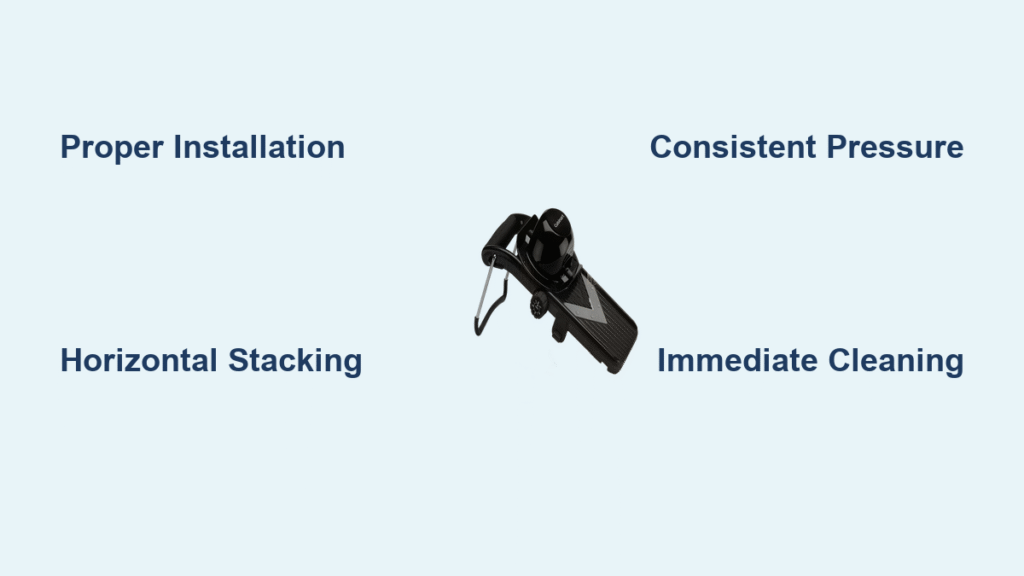
Horizontal Stacking Technique
Arrange food pieces horizontally across the feed tube like building a log cabin. This positioning ensures even pressure against the spinning disc and produces consistent cuts. Vertical stacking creates uneven pressure and results in mashed rather than cut food.
Pre-Cutting Hard Vegetables
Carrots and jicama require pre-cutting into quarters lengthwise. This prevents the disc from binding and produces cleaner sticks. For very hard vegetables, chilling them in the refrigerator for 15 minutes before processing makes them easier to cut cleanly.
Mastering the Julienne Cutting Process
These steps guarantee uniform 1/8-inch matchsticks every time. This technique transforms how to use Cuisinart julienne blade from frustrating to foolproof.
Correct Operating Sequence
- Lock everything – Double-check bowl, disc, and lid security
- Power on – Start processor at medium speed before adding food
- Load carefully – Place prepped food into feed tube using horizontal stacking
- Apply steady pressure – Use the pusher with consistent downward force
Pressure Control for Different Foods
Push harder foods like carrots with firm, steady pressure. Softer items like zucchini require lighter pressure to prevent mushy results. Pro tip: For mixed vegetables, process harder items first, then switch to lower speed for delicate produce.
Batch Processing Best Practices
Process in small batches (no more than 2 cups) for best results. Overloading the feed tube creates uneven cuts and strains the motor. Wait until the processor is empty before adding the next batch—this prevents jamming and maintains consistent cut quality.
Troubleshooting Common Julienne Blade Problems
Food Stuck in Feed Tube
Immediate action: Turn off processor, unplug, and wait for disc to stop completely. Remove any wedged pieces before continuing. Prevention: Cut pieces shorter and ensure horizontal stacking—never force oversized items.
Uneven Cut Sizes
Diagnosis: Check disc installation first—most uneven cuts result from improper seating. Also verify food isn’t packed too tightly in the feed tube, which creates inconsistent pressure against the spinning disc.
Disc Won’t Spin During Operation
Quick fix: Confirm the bowl and lid are properly locked. The safety mechanism prevents operation when misaligned. If it still won’t spin, unplug the processor and check for food debris blocking the center shaft.
Critical Safety Procedures After Julienne Processing
Proper Shutdown Sequence
- Wait for stop – Let the disc spin down completely (3-5 seconds)
- Remove lid first – This prevents accidental blade contact
- Lift disc carefully – Use the center hub, avoiding the sharp cutting teeth
- Empty bowl – Transfer julienned food to your recipe immediately
Cleaning Guidelines for Longevity
Rinse the disc immediately after use to prevent food from drying in the cutting teeth. Hand wash with warm soapy water using a soft brush, or place on the top rack of your dishwasher. Never soak the disc—this can damage the precision edges.
Professional Tips for Perfect Julienne Every Time
Ideal Vegetable Selection
Choose firm, fresh vegetables for cleanest cuts. Avoid soft or overripe produce that mashes rather than cuts. Best performers: carrots, apples, jicama, and celery—these maintain crisp edges after processing.
Speed Control Secrets
Use medium speed (about 50% power) for most vegetables. High speed works well for carrots and other hard items but will turn zucchini to mush. For delicate foods like tomatoes, use pulse function with minimal pressure.
Quantity and Timing Guidelines
Process no more than 2 cups of vegetables at once to maintain motor efficiency. Total processing time should be 15-30 seconds per batch—any longer indicates improper food prep or disc installation.
Creative Recipe Applications for Your Julienne Cuts
Your perfectly julienned vegetables excel in:
– Stir-fries – Uniform cuts cook evenly in 2-3 minutes without burning
– Fresh salads – Carrot and apple matchsticks add professional texture
– Spring rolls – Consistent size ensures tight rolling without breakage
– Pickled vegetables – Even cuts absorb brine uniformly for perfect flavor
– Garnishes – Create impressive restaurant-style presentations instantly
Long-Term Maintenance and Storage
Daily Care Routine
Rinse immediately after use, then wash with warm soapy water using a soft brush. Dry thoroughly with a towel to prevent moisture from sitting on the cutting teeth, which could lead to rust over time.
Proper Storage Methods
Store the julienne disc in its original protective sleeve or wrap in a kitchen towel to protect the sharp teeth. Keep it in a dedicated spot in your kitchen—never toss it in a drawer with other utensils where the cutting edges could be damaged.
Mastering how to use Cuisinart julienne blade transforms tedious prep work into a 30-second operation. The key lies in proper food sizing, horizontal stacking, and consistent pressure. Start with firm carrots to practice your technique, then expand to zucchini, apples, and other favorites. Your stir-fries and salads will never look—or taste—the same. Remember the golden rule: perfect julienne cuts begin with perfect preparation. When you follow these specific steps every time, you’ll achieve restaurant-quality results that elevate every dish you create. Ready to transform your next meal? Grab your Cuisinart processor and start julienning today!