That prized Cuisinart stainless steel pan that once gleamed like a mirror now sits dull and spotted in your sink. You’ve scrubbed, soaked, and even considered replacing it—but don’t give up yet. Learning how to clean Cuisinart stainless cookware properly isn’t just about aesthetics—it’s about protecting your investment and ensuring optimal cooking performance. This guide reveals the exact methods professional chefs use to maintain their stainless steel, from daily maintenance to tackling those seemingly impossible burnt-on disasters.
Mastering how to clean Cuisinart stainless cookware properly transforms frustrating cleaning sessions into quick, satisfying routines. Unlike non-stick surfaces that degrade over time, quality stainless steel becomes more functional with proper care. Whether you’re dealing with the white residue on your new Cuisinart Heritage Stainless Steel pan or battling years of buildup on older pieces, this guide delivers solutions that work.
Remove Brown Oil Residue from Cuisinart Heritage Stainless Cookware
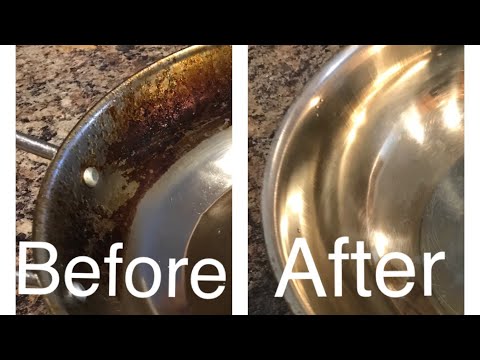
That stubborn brown film climbing the sides of your Cuisinart stainless steel pan isn’t dirt—it’s polymerized oil that bonds to the surface at high temperatures. Standard cleaners often fail because this residue has essentially become part of the metal’s surface layer. When olive oil spray leaves behind this unsightly residue, don’t reach for Bar Keepers Friend first—it’s surprisingly ineffective for this specific problem.
Baking Soda Paste Method for Oil Residue
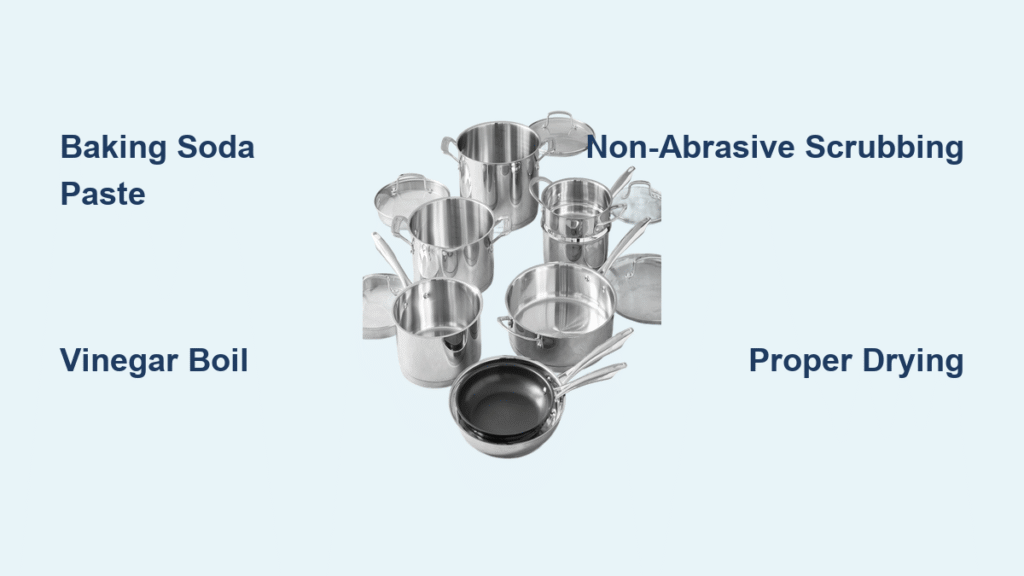
Create a thick paste using equal parts baking soda and water. Apply this paste directly to the brown areas, ensuring complete coverage. Let it sit for 15-30 minutes (extend to 60 minutes for severe cases), allowing the baking soda to break down the oil’s molecular bonds.
Gently scrub using a non-abrasive pad in circular motions, following the grain of the metal. Rinse thoroughly with clean water and dry immediately with a lint-free towel. For particularly stubborn residue, repeat the process rather than scrubbing harder—aggressive scrubbing can create micro-scratches that trap future residue.
Pro tip: For new Cuisinart stainless cookware showing this issue, check if you’re using oil spray. The propellants in many sprays accelerate polymerization. Switch to applying oil with a paper towel for better control and less residue.
Eliminate White Mineral Deposits on New Cuisinart Stainless Pots
White, chalky residue appearing on new Cuisinart stainless steel cookware typically indicates mineral deposits from hard water or manufacturing residue. This film affects cooking performance and creates an unsightly appearance that makes your expensive cookware look cheap.
Boiling Solution Method for White Residue
Fill your affected pan with enough water to cover the problem areas. Add 2 tablespoons of baking soda and ¼ cup of white vinegar (apple cider vinegar can leave additional residue, so avoid it). Bring this mixture to a boil and maintain the boil for 5-7 minutes.
Turn off the heat and allow the solution to cool completely in the pan—this cooling period is crucial as it lets the solution continue working. Pour out the liquid and wipe clean with a soft cloth. Rinse thoroughly with clean water and dry immediately. For severe cases, repeat the process rather than increasing ingredient quantities.
Warning: Never use steel wool or abrasive pads on Cuisinart stainless cookware—these create permanent scratches that trap future residue and compromise the non-reactive surface.
Fix Scorched or Burnt Food in Cuisinart Stainless Steel Frying Pans
Burnt food disasters happen to everyone, but Cuisinart stainless steel’s durability means even severely scorched pans can often be saved. The approach depends on severity and how long the food has been burnt on.
Three-Tiered Approach for Burnt Food Removal
Light-to-Moderate Scorching Method:
– Cover the bottom with ¼ inch of water
– Add 3-4 tablespoons baking soda
– Bring to simmer for 10-15 minutes
– Cool slightly, then scrub with non-scratch pad
– Rinse and repeat if needed
Heavy Scorching Method:
– Mix equal parts water and white vinegar
– Fill pan to cover scorched areas
– Bring to boil, then simmer 15-20 minutes
– Use wooden spoon to gently loosen debris
– Scrub remaining spots with baking soda paste
Severe Case Protocol:
– Apply baking soda paste overnight
– Follow with vinegar boil next day
– Finish with targeted scrubbing of remaining spots
– Always cool completely between steps
Time estimate: Light scorching takes 20 minutes total; severe cases may require 24-48 hours with multiple treatments.
Prevent Sticking and Staining in Cuisinart Stainless Cookware
Prevention saves hours of scrubbing later. Understanding how stainless steel behaves during cooking helps prevent most common issues that make you search for how to clean Cuisinart stainless cookware.
Cooking Best Practices for Stain Prevention
Preheat your empty Cuisinart stainless pan for 2-3 minutes on medium before adding oil. This creates the perfect surface tension to prevent sticking. Add salt only after water reaches boiling point to avoid pitting the surface. Never subject hot cookware to sudden temperature changes—allow it to cool before washing. Use medium heat for most cooking tasks; stainless steel distributes heat evenly, so high heat is rarely necessary.
Pro tip: Test if your pan is properly preheated by flicking a few drops of water into it. If they dance and evaporate quickly (the Leidenfrost effect), it’s ready for oil.
Storage Solutions to Maintain Shine
Place paper towels or felt protectors between stacked Cuisinart stainless pieces. Store lids separately to prevent scratching. Avoid nesting when possible—hang pans if space allows. Always handwash and dry thoroughly before storage to prevent moisture-related spots.
Monthly Deep Clean Restoration for Cuisinart Stainless Steel Sets
Even well-maintained Cuisinart stainless steel benefits from periodic deep cleaning to restore original shine and performance. This monthly ritual takes just 30 minutes but keeps your cookware looking like new for decades.
Professional-Level Deep Clean Protocol
- Wash pan with regular soap and water to remove surface debris
- Apply baking soda paste to entire interior surface
- Let sit 30 minutes while you attend to other tasks
- Scrub gently with non-abrasive pad in circular motions
- Rinse thoroughly with warm water
- Boil vinegar solution (¼ cup vinegar in 2 cups water) for 5 minutes
- Final rinse with club soda for enhanced shine
- Dry immediately with lint-free towel
Frequency indicator: If water beads rather than sheets across the surface, it’s time for a deep clean. Monthly maintenance prevents the need for intensive restoration.
Essential Tools and Products for Cleaning Cuisinart Stainless Cookware
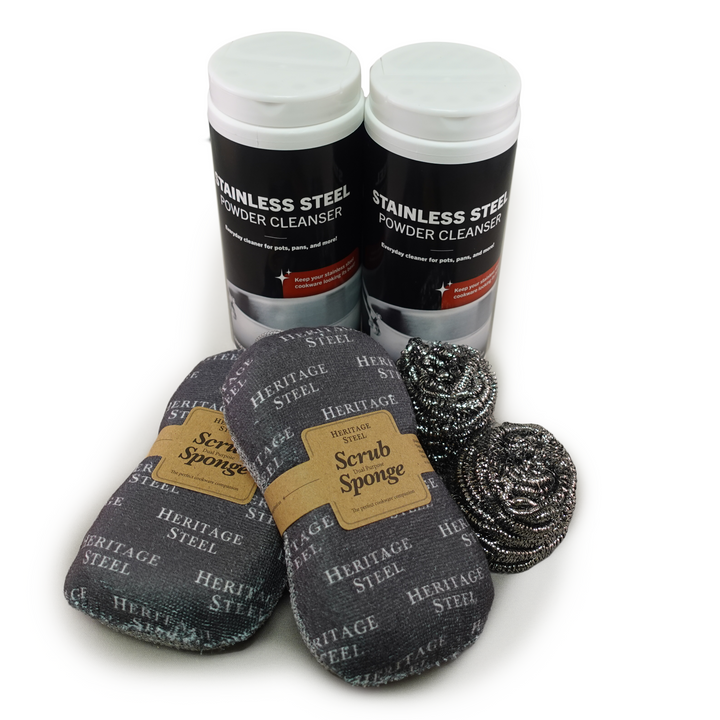
Having the right supplies makes learning how to clean Cuisinart stainless cookware effortless. Invest in these specific items for optimal results without damaging your valuable cookware.
Must-Have Cleaning Arsenal
- Baking soda: Your primary cleaning agent for all residue types
- White vinegar: Breaks down mineral deposits and burnt food
- Non-abrasive scrubbing pads: Specifically designed for stainless steel
- Soft microfiber cloths: For drying without lint or scratches
- Wooden spoons: For loosening debris without scratching
Products to Avoid at All Costs
- Steel wool or metal scouring pads (cause permanent scratches)
- Chlorine bleach cleaners (can discolor stainless steel)
- Abrasive powdered cleaners (damage the polished finish)
- Metal utensils during cooking (create surface imperfections)
Quick Reference Troubleshooting for Cuisinart Stainless Steel Issues
Immediate Solutions for Common Problems
Problem: Pan looks dull despite regular cleaning
Solution: Use club soda final rinse after washing for instant shine restoration
Problem: Water spots after drying
Solution: Wipe with vinegar-dampened cloth, then dry immediately with lint-free towel
Problem: Food sticking frequently
Solution: Ensure proper preheating before adding oil—this is the #1 cause of sticking
Problem: Rainbow discoloration or blue heat tint
Solution: Cool completely, then wipe with vinegar-soaked cloth following the metal grain
Problem: White residue on new Cuisinart Heritage Stainless Steel
Solution: Indicates manufacturing oils—use baking soda/vinegar boil method first
Long-Term Care for Cuisinart Stainless Cookware: 10+ Year Strategy
Your Cuisinart stainless steel cookware represents a significant investment that, with proper care, becomes better with age. Unlike non-stick pans that degrade, quality stainless steel develops character while maintaining performance. The slight patina that develops over years of use tells the story of countless meals created with love.
Gentle, consistent care beats aggressive cleaning every time. Your future self will thank you when you’re still using these same pans twenty years from now, their surfaces bearing witness to thousands of family dinners. Remember that those minor scratches and subtle discolorations become badges of honor rather than defects when you maintain the fundamental cleaning discipline outlined in this guide for how to clean Cuisinart stainless cookware.
When properly maintained, your Cuisinart stainless cookware will deliver professional results while looking beautiful on your stove. The methods described here form a complete system for how to clean Cuisinart stainless cookware effectively—no more guessing, no more frustration, just consistently sparkling results that make your kitchen work more enjoyable.