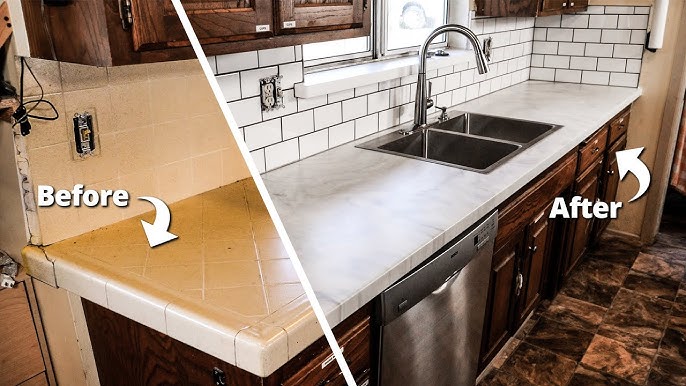
Installing marble countertops brings timeless elegance to your kitchen while significantly increasing home value. This natural stone’s unique veining and cool surface create a luxurious focal point that transforms ordinary cooking spaces into showpieces. However, marble demands careful handling due to its weight (18-20 pounds per square foot), susceptibility to etching, and precise installation requirements. Whether you’re renovating your entire kitchen or simply updating surfaces, understanding the installation process ensures professional results that last decades. This guide provides actionable steps to successfully install marble countertops yourself, potentially saving thousands compared to professional installation costs that range from $100-$200 per square foot.
While marble slab prices vary from $40-$100 per square foot depending on quality and origin, the real savings come from avoiding labor costs. A typical kitchen installation covers 30-40 square feet, meaning DIY installation could save $3,000-$6,000. Before beginning, assess your skill level—marble installation requires precision measuring, heavy lifting capability, and patience during the curing process. With proper preparation and this step-by-step guide, many homeowners achieve stunning results that rival professional installations.
Gather Essential Tools and Materials Before Starting

Acquire Professional-Grade Equipment for Stone Handling
Marble installation demands specialized tools that most homeowners don’t regularly own. Rent or purchase a circular saw with diamond blade ($40-$60 daily rental) for straight cuts and a jigsaw with carbide-tipped blades ($25-$40) for sink cutouts. Suction cup handles ($50-$100 for a set) are non-negotiable for safely lifting heavy slabs—each square foot of 3cm marble weighs approximately 18 pounds.
Don’t overlook the random orbital sander with progressively finer grits (80-3000), essential for polishing cut edges. Include a 4-foot level (critical for detecting subtle cabinet imperfections), notched trowel for adhesive application, and a high-quality stone adhesive specifically formulated for natural stone ($30-$50 per tube). Safety gear including heavy-duty gloves, safety glasses, and knee pads completes your essential toolkit.
Calculate Precise Material Quantities to Avoid Waste
Purchase marble slabs with 10-15% overage for cutting errors and pattern matching—this prevents costly delays if you discover a flaw after cutting. For substrate reinforcement, acquire 3/4-inch exterior-grade plywood at $60-$80 per sheet, cut to match your countertop dimensions with 1/8-inch gaps for expansion. Measure sink and cooktop dimensions precisely to ensure proper cutout sizing, adding 1/8 inch around each fixture for clearance.
When selecting stone sealer ($20-$40 per bottle), choose an impregnating formula specifically designed for marble—standard sealers may discolor the stone. For seams, purchase color-matched polyester filler or epoxy ($25-$35) and consider adding marble dust from your cutting scraps to perfectly match your slab’s unique veining.
Create Perfect Templates for Flawless Fit
Measure Cabinets with Professional Precision
Begin by measuring cabinet dimensions to the nearest 1/16 inch, noting any inconsistencies between the front and back edges. Cabinets must be perfectly level before template creation—use a 4-foot level to check both front-to-back and side-to-side levelness, shimming as needed. Record measurements at 12-inch intervals along each cabinet run to capture subtle variations that could affect fit.
For sink positioning, measure from the front cabinet edge to the sink’s center point, then add half the sink width to determine front-to-back placement. Cooktop measurements require similar precision—measure from cabinet front to cooktop center, then add half the cooktop width. Document all measurements on a scaled sketch showing exact cabinet configurations and fixture locations.
Build Accurate Templates Using Professional Methods
Create templates from 1/4-inch hardboard or foam board, taping pieces together to form your complete countertop layout. For curved areas like sink cutouts, use flexible plastic strips held in place with hot glue to trace exact contours. Mark all critical reference points on templates: wall locations, sink centers, cooktop positions, and seam lines between sections.
Double-check templates against cabinet measurements before cutting marble—this verification step prevents costly mistakes. Label each template section clearly and note orientation (front/back, left/right) to avoid confusion during installation. Professional fabricators often use digital scanners, but precise hand templates yield excellent results when carefully executed.
Prepare Cabinet Base for Maximum Support
Reinforce Cabinets to Handle Marble’s Weight
Cabinets must support 18-20 pounds per square foot without flexing—test for stability by applying downward pressure on existing countertops. Reinforce weak cabinets with additional blocking between frames and consider installing 3/4-inch plywood substrate across all cabinet tops to distribute weight evenly. Secure plywood with construction adhesive and 2-inch screws at 8-inch intervals, ensuring no screws protrude above the surface.
For overhangs exceeding 6 inches (common over dishwashers or breakfast bars), install decorative corbels or hidden steel brackets anchored into wall studs. These supports prevent stress fractures at critical points—marble’s brittleness makes proper support non-negotiable. Remove all existing countertop material completely, scraping adhesive residue and cleaning surfaces with isopropyl alcohol for optimal bonding.
Verify Perfect Levelness Before Proceeding
Place your level across cabinet runs in multiple directions, checking both front-to-back and side-to-side levelness. Shims under cabinet legs or between wall brackets and cabinets correct minor imperfections—remember that 1/16-inch discrepancy over 10 feet creates significant problems. Recheck levelness after installing plywood substrate, as this layer can magnify existing inconsistencies.
Test cabinet strength by standing on them (with plywood installed)—they should feel solid with minimal flex. Weak cabinets will transfer stress to your marble, causing cracks over time. Address any structural concerns now, as fixing them after marble installation requires removing and resetting the entire countertop.
Execute Precision Cuts for Professional Results
Cut Marble Slabs with Dust Control Techniques
Set up your cutting station outdoors or in a well-ventilated garage with dust collection—marble dust contains silica that’s hazardous when inhaled. Apply painter’s tape along cut lines and score with a utility knife before cutting to minimize chipping. Use a circular saw with diamond blade at slow speed with steady, even pressure—forcing the cut generates heat that can crack the stone.
For sink cutouts, drill 3/4-inch holes at each corner first, then connect with a jigsaw. Move slowly through corners where stress concentrates, maintaining consistent blade depth. Immediately seal cut edges with stone sealer to prevent moisture absorption that leads to staining—this critical step many DIYers overlook.
Shape Edges with Progressive Refinement
Marble edges require multiple passes with increasingly fine abrasives. Start with 80-grit for major shaping, progressing through 220, 400, 800, 1500, and finally 3000-grit for a polished finish. Use water during sanding to reduce dust and prevent overheating. For eased edges, a 1/8-inch roundover provides subtle protection against chipping while maintaining clean lines.
Practice edge techniques on scrap pieces first—marble’s unique composition means each slab responds slightly differently to shaping. Maintain consistent pressure and speed to avoid uneven edges that compromise the finished appearance. Allow cut edges to dry completely before proceeding to installation.
Install Countertops with Proper Adhesion Techniques
Apply Stone-Specific Adhesive for Secure Bonding
Use only adhesives specifically formulated for natural stone—standard construction adhesives contain chemicals that can discolor marble. Apply adhesive with a notched trowel at 45-degree angle to create consistent ridges, working in sections small enough to set marble within 15 minutes. For large installations, apply adhesive to one section while a helper positions the slab.
Press marble firmly into place, checking levelness immediately after placement. Adjust positioning within the adhesive’s working time (typically 10-20 minutes), making final adjustments with shims as needed. Drive 2-inch screws through plywood substrate into cabinet frames at 8-inch intervals along edges—these mechanical fasteners supplement the adhesive bond during curing.
Support Countertops During Critical Curing Period
Install temporary bracing using 2x4s wedged between countertop and floor to prevent shifting during the 24-48 hour curing period. Never place weight on countertops before full cure—this common mistake creates weak spots that lead to cracks later. Check levelness periodically during curing, as adhesive shrinkage can cause slight movement.
For multi-piece installations, work from corners toward center, setting pieces with only one adjacent joint first. This approach allows you to adjust the final piece to close minor gaps rather than creating alignment problems in multiple directions. Verify seam alignment before adhesive sets—corrections become extremely difficult after curing.
Seal and Maintain for Long-Lasting Beauty
Apply Proper Sealing to Prevent Staining
Clean all surfaces thoroughly before sealing, removing dust and adhesive residue. Apply impregnating sealer with a soft cloth, working in sections and maintaining wet application for 3-5 minutes as specified. Wipe excess completely after dwell time and apply second coat for maximum protection. Allow 24 hours cure time before using countertops.
Test seal effectiveness by placing water droplets on the surface—they should bead up rather than absorb. Reapply sealer annually or when water no longer beads, focusing on high-traffic areas near sinks and cooking zones. Proper sealing prevents the etching and staining that commonly plague unsealed marble.
Establish Daily Care Routines That Preserve Shine
Wipe spills immediately—marble stains quickly from common kitchen substances like wine, citrus, and tomato products. Clean daily with pH-neutral stone cleaner or mild dish soap diluted in warm water, avoiding acidic or abrasive cleaners. Use cutting boards and trivets religiously to prevent direct contact with staining agents.
For stubborn stains, create a poultice using baking soda and water, applying it to the stain and covering with plastic wrap for 24-48 hours. Avoid commercial stain removers unless specifically formulated for marble—they often cause more damage than the stain itself. With proper care, marble develops a beautiful patina while maintaining its structural integrity for decades.
Installing marble countertops yourself requires careful planning and precise execution, but delivers exceptional value and satisfaction. By following these professional techniques for measurement, preparation, installation, and maintenance, you’ll create a kitchen centerpiece that combines natural beauty with lasting functionality. The initial investment of time and effort pays dividends in daily enjoyment and increased home value for years to come.