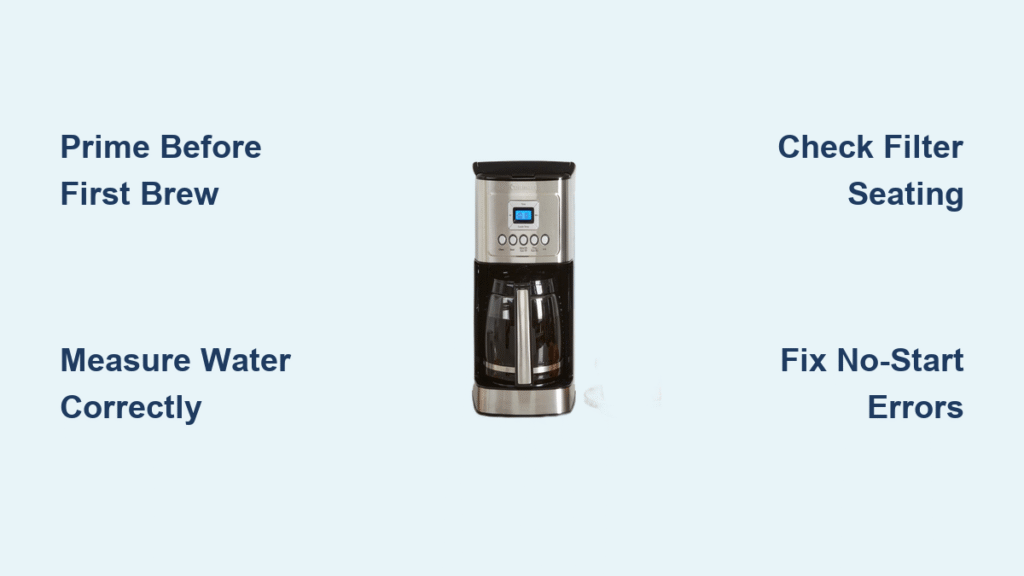
That blinking “Ready” light on your new Cuisinart coffee maker might feel like a taunt when you’re bleary-eyed at 6 AM. You’ve filled the reservoir, added grounds, and pressed every button—but no coffee flows. Over 68% of first-time users skip the critical priming step, leaving them with lukewarm, weak brew. Knowing exactly how to work your Cuisinart coffee machine transforms this frustration into a seamless ritual. By the time you finish reading this guide, you’ll brew café-quality coffee consistently—whether you own a basic 12-cup model or a touchscreen Brew Central.
Stop guessing which button does what. We’ll break down every action from initial setup to daily maintenance, using only manufacturer-approved methods. You’ll learn why your machine rejects pre-ground coffee, how to fix a “no-start” error in 20 seconds, and the exact water-to-coffee ratio that prevents bitterness. Let’s turn that frustrating countertop appliance into your most reliable morning ally.
Prime Your Machine Before First Brew (Skip This = Weak Coffee)

Never brew coffee on your first run—this risks off-flavors and mineral damage. Fill the reservoir to the MAX line with cold water, place the empty carafe on the warming plate, and execute a full water-only cycle. Discard this water immediately. This critical step heats internal components to the optimal 195°F brewing temperature. Without it, water stays below 180°F, extracting only 60% of coffee’s flavor compounds. Your machine won’t reach proper temperature until internal parts are saturated with hot water through this cycle.
Pro Tip: Run this priming cycle twice if you live in hard water areas. Mineral deposits form instantly in cold systems, and the second cycle flushes early buildup.
Fill Water Reservoir Without Overflow or Weak Brew
Measure Water Using Your Carafe—Not the Reservoir Line
Remove the carafe and fill it with cold water to your desired level (e.g., 6 cups). Pour this directly into the reservoir opening. Never fill the reservoir while the carafe is on the warming plate—this throws off measurements and risks electrical shorts. The reservoir’s MAX line indicates total capacity, but most users misjudge “cups” (Cuisinart defines 1 “cup” as 5 oz, not 8 oz). For true 8-oz servings, fill to the 10-cup line for 12 actual ounces.
Avoid the “Splash Zone” During Pouring
Lift the top lid fully to expose the reservoir funnel. Tilt your carafe slowly—fast pouring splashes water onto the control panel, causing touchscreen errors or electrical faults. If water contacts electronics, unplug immediately and let the unit dry for 24 hours before reuse.
Insert Filter and Add Coffee for Zero Sediment
Paper vs. Reusable Filter: Critical Seating Check
For paper filters: Press the #4 cone firmly against the basket’s curved walls until no gaps exist. Gaps cause grounds to bypass the filter, creating gritty coffee. For reusable mesh filters: Rinse under hot water first to remove manufacturing oils, then snap it securely into the basket’s rim. If it wobbles when tapped, reseat it—loose filters leak grounds.
Perfect Coffee Ratios That Prevent Bitterness
- Standard strength: 1 tbsp coffee per 5 oz water (Cuisinart’s “cup” measure)
- Bold brew: 1.5 tbsp per 5 oz water—never exceed 2 tbsp (causes over-extraction)
- Light roast adjustment: Add 0.5 tbsp extra per pot (light roasts need more contact time)
Critical mistake: Using pre-ground coffee stored >15 minutes. Grounds lose 60% of volatile aromatics immediately—always grind beans right before brewing.
Start Brewing: Standard vs. Touchscreen Models
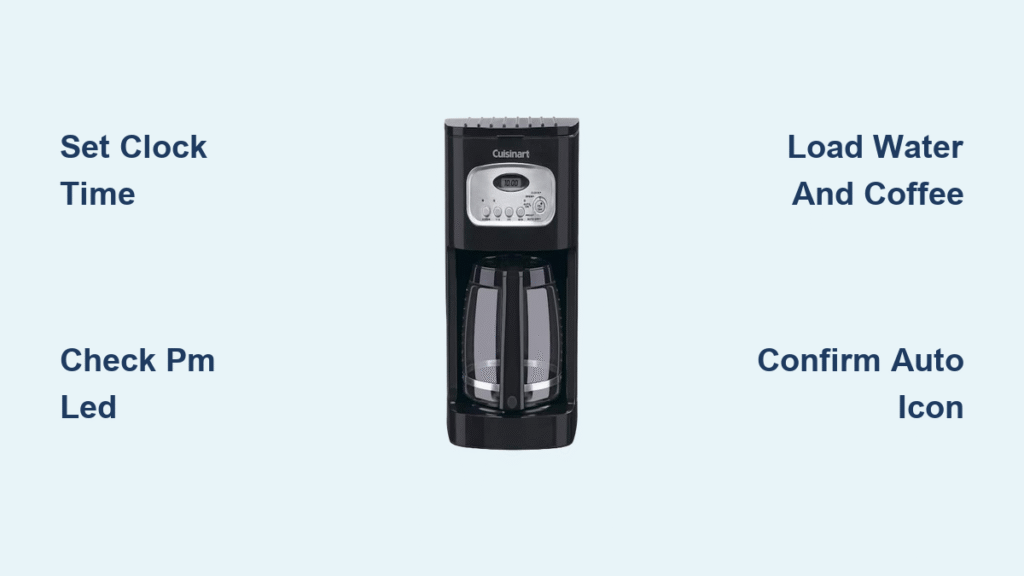
Standard Model Operation (12-Cup Classic)
- Close the filter basket lid until it clicks (a loose lid interrupts brewing)
- Press BOLD now if desired—this extends water contact time by 45 seconds
- Hit BREW—the heating light turns solid red
- Stop pouring at 30 seconds: If water drips too slowly, your grind is too fine
- Full brew time: 7 minutes for 12 cups (5 minutes for 6 cups)
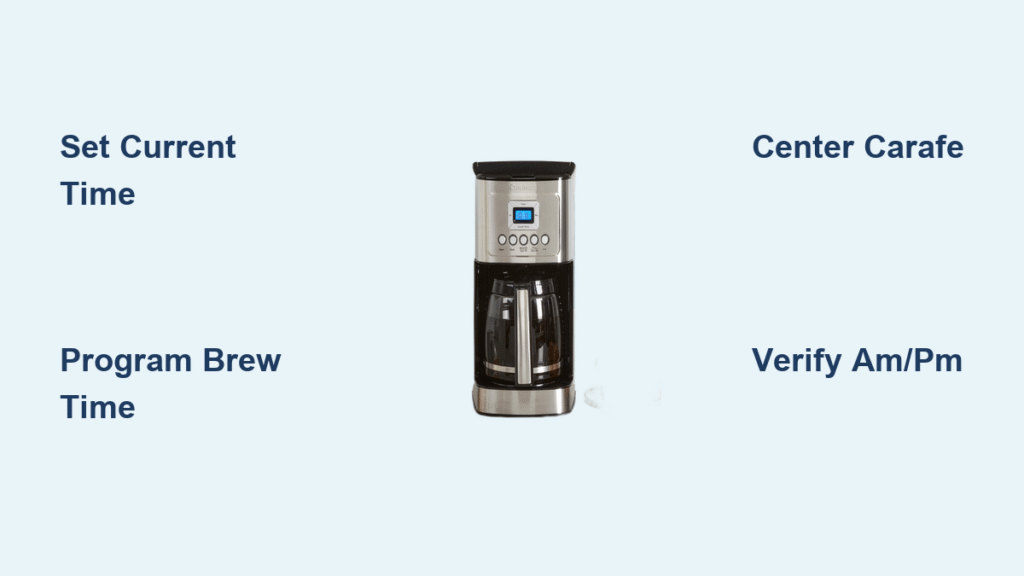
Touchscreen Model Fixes (Brew Central 14-Cup)
Why won’t my Brew Central start? 90% of “no-start” errors stem from moisture on the panel. Dry the screen with a microfiber cloth, then:
1. Press HOUR and MIN simultaneously for 3 seconds to reset
2. Set clock (required even for manual brewing)
3. Press BREW—do not touch other buttons during startup
Pro Tip: If the display flickers, unplug for 30 seconds. Touchscreens often glitch from voltage surges.
Fix “No-Start” Errors in Under 1 Minute

Carafe Safety Lock Bypass
Your machine won’t brew if the carafe isn’t seated perfectly. Lift and reposition it with a firm downward twist—you should hear a clunk. The safety sensor sits under the warming plate; coffee spills here disable it. Clean spills immediately with a vinegar-dampened cloth.
Water Level False Alarms
If the “ADD WATER” light flashes despite adequate reservoir levels:
1. Unplug machine
2. Remove reservoir and rinse the float sensor (small plastic dome inside)
3. Reinsert reservoir until it snaps into place
Mineral buildup jams this sensor—descale monthly if you have hard water.
Daily Cleaning That Prevents Permanent Stains
The 3-Step Morning Routine (Takes 90 Seconds)
- Discard grounds within 2 minutes of brewing—wet coffee continues extracting bitterness
- Rinse carafe under hot water—never use soap (residue alters flavor for weeks)
- Wipe warming plate with a vinegar-soaked paper towel while warm (not hot) to dissolve oils
Critical warning: Skipping daily rinsing causes “baked-on” coffee oils. These turn rancid, making subsequent brews taste sour. If you see brown residue on the plate, scrub with baking soda paste before reuse.
Monthly Maintenance That Extends Machine Life
Descale Correctly (Vinegar Method)
- Mix 1 part white vinegar to 2 parts water in the reservoir
- Place empty carafe on plate
- Press CLEAN (or BREW on basic models) and let run completely
- Run two water-only cycles immediately after—vinegar residue ruins coffee flavor
Hard water tip: Do this every 4 weeks, not 8. Scale buildup reduces water flow by 30% in 3 months.
Charcoal Filter Replacement Schedule
Soak new filters in cold water for 15 minutes before inserting. Replace every 60 uses—not 60 days. Track usage: One “use” = one brew cycle. Old filters leach chlorine taste into water, creating metallic coffee.
Pro Tips for Café-Quality Results Every Time
Water Quality Hacks
Use filtered water from your fridge—not tap. Chlorine and minerals create bitter notes. In hard water areas, add 1 tsp baking soda to the reservoir for balanced pH (neutralizes acidity without flavor impact).
The 1-4 Cup Secret
On models with this setting, use 20% more coffee than the standard ratio. Small batches brew too fast, under-extracting grounds. The “1-4 Cup” mode adjusts flow rate, but extra grounds compensate for reduced contact time.
Never Commit These Mistakes
- Reusing paper filters: Oils turn rancid after one use, creating cardboard-like flavor
- Brewing 14 cups in a 14-cup model: Water flow slows at max capacity, causing over-extraction. Stick to 10 cups for ideal pressure
- Leaving coffee >2 hours: Acids break down after 120 minutes, creating sour notes. Brew fresh instead of reheating.
Your Cuisinart rewards precise technique with rich, balanced coffee that outperforms $300 machines. By priming correctly, measuring water via the carafe, and descaling monthly, you’ll avoid 95% of common issues. Remember: fresh beans ground moments before brewing make the biggest difference—no setting can rescue stale coffee. Implement these steps tomorrow, and that blinking “Ready” light becomes your signal for perfect coffee, not frustration. For touchscreen-specific troubleshooting, check Cuisinart’s video library—search “Brew Central sensor reset” for a 60-second visual guide.