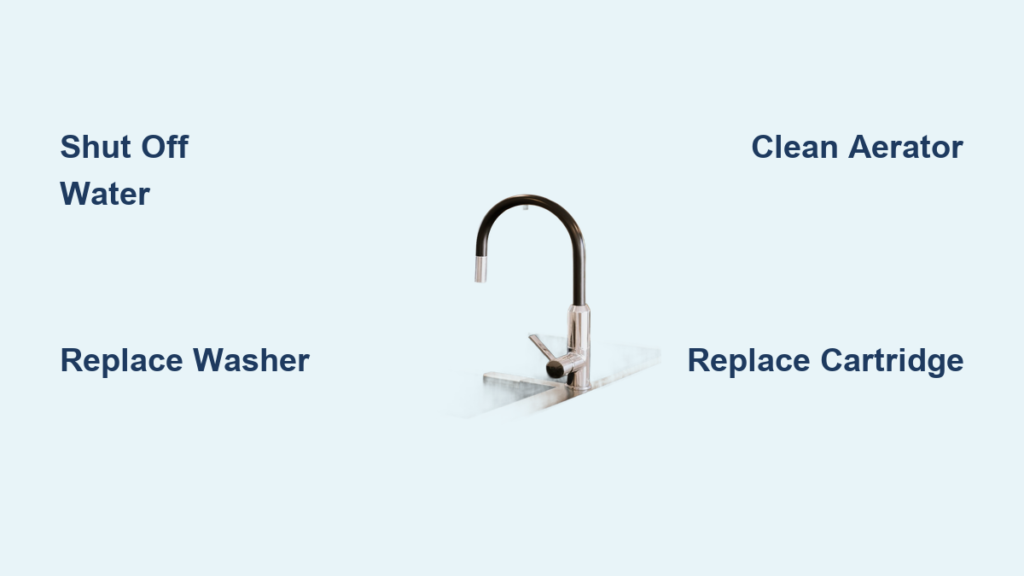
That persistent drip-drip-drip from your kitchen sink faucet isn’t just annoying—it’s costing you money. A single dripping faucet can waste over 3,000 gallons of water annually, significantly increasing your utility bills while contributing to unnecessary water waste. The good news? Most kitchen faucet problems can be fixed in under an hour with basic tools you likely already own. Whether you’re dealing with a leaky spout, a handle that won’t turn, or low water pressure, this guide will walk you through diagnosing and fixing common faucet issues without calling a plumber.
Identify Your Kitchen Faucet Type Before Starting Repairs

Before you grab any tools, determining your faucet’s internal mechanism is crucial—each type requires different repair approaches. The three primary kitchen faucet designs require distinct repair techniques, and using the wrong method could damage your fixture.
Compression faucets feature separate hot and cold handles and represent the oldest design still common in many homes. Inside each handle, a rubber washer compresses against a valve seat to stop water flow. When these washers wear out (typically after 2-5 years), your faucet drips steadily even when fully closed. You’ll notice these require more turning force than modern designs and often develop drips first from the hot water side due to higher temperatures degrading rubber components faster.
Cartridge faucets dominate modern kitchen installations with their single-handle design that rotates to control both temperature and flow. These contain a replaceable cartridge (usually brass or plastic) that slides up and down while rotating to mix hot and cold water. When failing, these typically leak around the handle rather than the spout, or develop inconsistent water temperature. Two-handle cartridge models also exist but are less common in contemporary kitchens.
Ceramic disk faucets represent the most advanced and durable design, featuring two ceramic disks with precisely engineered holes that align to control water flow. These premium faucets rarely develop leaks but can experience reduced flow if sediment clogs the inlet screens. Their distinctive wide cylindrical body beneath the spout makes them easy to identify, and they typically command higher price points due to their longevity.
Essential Tools for Kitchen Faucet Repair Success
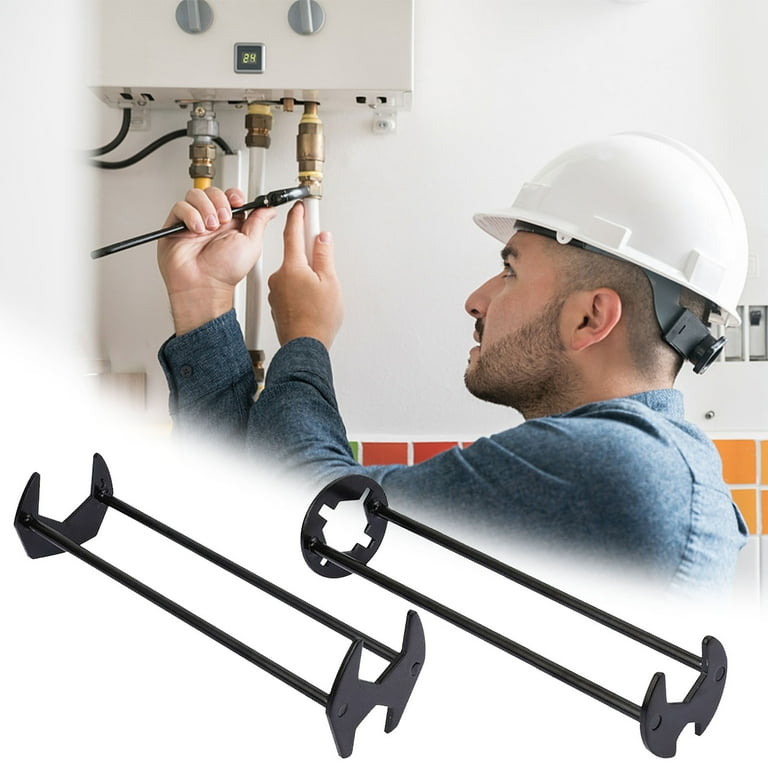
Gathering these specific tools before starting prevents frustrating mid-repair trips to the hardware store and ensures you complete the job properly. Most kitchen faucet repairs require only basic tools, but having the right ones makes the difference between a smooth repair and damaged fixtures.
You’ll need adjustable pliers (8-10 inch size works best), a basin wrench (a must-have for reaching mounting nuts in tight spaces under sinks), and both Phillips and flathead screwdrivers in multiple sizes. Penetrating oil like PB Blaster helps loosen corroded parts without damaging chrome finishes, while plumber’s grease ensures smooth reassembly. Don’t forget a small bucket, several towels, and a flashlight to see into dark cabinet spaces.
For cartridge faucet repairs, invest in a $10 cartridge puller tool—it saves hours of frustration when removing stuck cartridges. Keep replacement parts organized in a magnetic tray or egg carton to prevent losing small components. Before starting, test all tools to ensure they’re in good condition; stripped screw heads or broken pliers mid-repair complicate what should be a simple fix.
Diagnose Your Specific Faucet Problem Correctly
Accurately identifying your faucet’s symptoms directs you to the precise repair needed, avoiding unnecessary disassembly and part replacements. Each common problem has distinct causes that experienced DIYers learn to recognize immediately.
“Why does my kitchen faucet drip constantly after turning it off?” This classic symptom almost always indicates worn internal seals. In compression faucets, the rubber washer has deteriorated. Cartridge models suffer from failing internal seals, while ceramic disk faucets typically need inlet screen cleaning rather than component replacement. The drip rate increases as seals wear further—addressing this early prevents water damage to cabinets.
“Water leaks around my faucet handle when I turn it on” points directly to O-ring failure or loose mounting hardware. As faucets age, the rubber O-rings that create watertight seals shrink and crack from constant exposure to water and temperature changes. Tightening the handle mounting nut often provides only temporary relief as the damaged seal continues to leak.
“My kitchen faucet has low water pressure but other fixtures work fine” usually means a clogged aerator rather than internal faucet damage. Hard water deposits accumulate in the aerator’s fine mesh screen, restricting flow. Remove and inspect the aerator first before disassembling the entire faucet—this simple fix resolves 80% of low-pressure issues.
Fix a Leaking Compression Faucet in 6 Steps
Compression faucet repairs focus on replacing the worn rubber washer, a straightforward process that takes 20-30 minutes once you’ve identified the correct replacement parts.
Begin by shutting off both hot and cold water supply valves completely—turn clockwise until snug, but don’t force them. Open the faucet fully to relieve pressure and drain remaining water. Place a towel in the sink basin to protect fixtures and catch small parts.
Remove the decorative cap from the handle using a flathead screwdriver wrapped in cloth to avoid scratching. Locate and unscrew the handle mounting screw, then pull the handle straight up. If stuck, tap gently with a rubber mallet—never force it. Use your basin wrench to remove the packing nut, then pull out the stem assembly.
Examine the washer at the stem’s base, secured by a brass screw. Take this assembly to your hardware store for exact replacement parts—faucet washers come in multiple sizes and materials (rubber, neoprene, silicone). Install the new washer, securing it with the brass screw, then reassemble in reverse order.
Hand-tighten all components first, then give a quarter-turn with tools—over-tightening cracks porcelain or strips threads. Restore water slowly while watching for leaks, then test operation. A properly repaired compression faucet should operate smoothly with no dripping for 3-5 years.
Replace a Worn Cartridge Faucet in Under 45 Minutes
Cartridge replacement fixes handle leaks and inconsistent water temperature in single-handle faucets. The key to success lies in proper cartridge alignment during installation—misalignment causes mixing problems or persistent leaks.
After shutting off water and relieving pressure, remove the handle by loosening the hidden Allen screw beneath the temperature indicator cap. Use a 1/8-inch Allen wrench to avoid stripping the small screw. Once the handle lifts off, you’ll see a decorative collar—unscrew it by hand or use channel locks wrapped in cloth.
With the collar removed, locate the retaining clip holding the cartridge. This U-shaped metal piece must be removed with needle-nose pliers while noting its exact orientation. Apply penetrating oil around the cartridge base if it resists removal, waiting 5 minutes before attempting again.
Use a cartridge puller tool to extract the old cartridge straight out—never twist it. Take the old cartridge to a hardware store for an exact replacement match. When installing the new cartridge, align the tabs with valve body slots precisely (refer to manufacturer diagrams if available).
Reassemble components in reverse order, hand-tightening before final adjustment. Test thoroughly for proper hot/cold mixing and check for leaks around the handle. A successful cartridge replacement should restore smooth operation and eliminate leaks for 5-7 years.
Clean Your Faucet Aerator to Restore Full Water Pressure
Aerator cleaning resolves most low-pressure issues in under 10 minutes—a task that prevents unnecessary faucet disassembly. The aerator’s fine screens trap sediment that would otherwise damage internal components.
Unscrew the aerator from the faucet tip by hand—most require counterclockwise turning. If stuck, wrap pliers in a cloth to protect the finish. Disassemble the aerator components into a container, noting their order for reassembly.
Soak all parts in white vinegar for 30 minutes to dissolve mineral deposits, then scrub with an old toothbrush. Pay special attention to the fine mesh screens that become clogged with sediment. Rinse thoroughly under running water before reassembly.
Replace any cracked rubber washers with new ones of identical size—these inexpensive parts create watertight seals. Reassemble the aerator in proper order, then hand-tighten onto the faucet. Test water flow—you should immediately notice restored pressure and a smooth, even stream without spraying.
Prevent Future Faucet Problems with Simple Maintenance
Implement these three maintenance habits to double your faucet’s lifespan and avoid emergency repairs. Regular care prevents 90% of common faucet problems while maintaining optimal performance.
Remove and clean your aerator monthly—this simple 5-minute task prevents sediment buildup that damages internal seals. In hard water areas, weekly cleaning may be necessary. Keep replacement aerators on hand as they typically cost under $5 and wear out every 1-2 years.
Tighten loose handle mounting nuts quarterly before they cause O-ring damage. Use a basin wrench to snug the nut beneath the sink, but stop immediately if resistance increases—over-tightening cracks plastic components.
Install a water softener if your area has hard water (test kits cost under $10). The mineral deposits that clog aerators and degrade seals originate from dissolved calcium and magnesium. Softened water dramatically extends all faucet component life while improving appliance efficiency throughout your home.
When to Call a Professional Plumber Instead
Recognize these four scenarios where professional help prevents costly water damage and ensures proper repairs. Knowing your limits saves money in the long run by avoiding mistakes that require expensive remediation.
Call a plumber immediately if you discover corrosion inside valve bodies or mounting surfaces—this indicates prolonged water leakage that may have damaged cabinetry or subflooring. Surface rust can be addressed DIY, but deep corrosion requires professional assessment.
Seek professional help when supply lines show signs of deterioration—cracked, bulging, or leaking lines beneath the sink pose immediate flood risks. Replacing these requires proper shutoff procedures and connections that amateurs often mishandle.
Contact a plumber if your faucet requires soldering or involves copper pipe modifications. Improper soldering creates weak joints that fail under pressure, causing sudden flooding when you least expect it.
Finally, call a professional if you’ve attempted repairs correctly but leaks persist—this indicates hidden damage or complex issues beyond typical DIY scope. The average plumber charges $50-$150 for faucet repairs, a small price compared to water damage restoration costs exceeding $5,000.