Spotting a cockroach darting across your kitchen floor at 2 a.m. isn’t just unsettling—it’s a serious health threat to your family. These resilient pests contaminate food, spread disease-causing pathogens, and trigger severe allergic reactions and asthma attacks, particularly in children. If you’re searching for how to get rid of cockroaches in kitchen permanently, you need more than a quick fix—you need a comprehensive strategy targeting their food sources, water access, and hiding spots. Unlike temporary solutions that only address visible pests, permanent elimination requires systematically removing what attracts cockroaches while creating barriers they can’t bypass. This guide delivers actionable steps you can implement immediately to reclaim your kitchen and prevent these unwelcome guests from ever returning.
Remove Food Sources Completely
Cockroaches will eat almost anything organic, but they’re drawn to kitchens because of readily available food particles. Cutting off their food supply is your first line of defense against permanent infestation.
Store All Food in Airtight Containers Immediately
Transfer every dry good from flimsy packaging into sealed containers today. Cardboard boxes and plastic bags offer no protection—cockroaches easily chew through these materials to reach cereal, flour, sugar, and pet food. Glass or thick plastic containers with rubber gaskets create impenetrable barriers that starve cockroaches of their primary food source. Never leave pet food out overnight—empty bowls after feeding and store unused portions in sealed containers. Even coffee grounds, spices, and dried fruit left accessible become cockroach magnets that sustain hidden colonies.
Clean Countertops and Floors After Every Meal
Wipe down all surfaces immediately after cooking and eating. Crumbs and grease residues invisible to the naked eye create invisible feeding zones that attract cockroaches. Pay special attention to stove burners where grease congeals in hard-to-reach spaces and under appliances like toasters where crumbs accumulate unseen. Sweep or vacuum daily along baseboards and in corners where food particles collect. Never leave dirty dishes overnight—the combination of food residue and moisture creates the perfect feeding station that draws cockroaches from their hiding spots.
Manage Recycling and Trash to Eliminate Food Residues
Rinse all recyclables thoroughly before placing them in indoor bins. Food residue on soda cans, yogurt containers, and other recyclables provides an irresistible attractant for cockroaches. Take recycling to outdoor bins every few days rather than allowing it to accumulate inside your home. Keep trash in containers with tight-fitting lids and empty them regularly, especially during warm weather when decomposition accelerates. Place trash bins away from food preparation zones on easily cleanable surfaces to prevent cross-contamination.
Eliminate Cockroach Hiding Spots
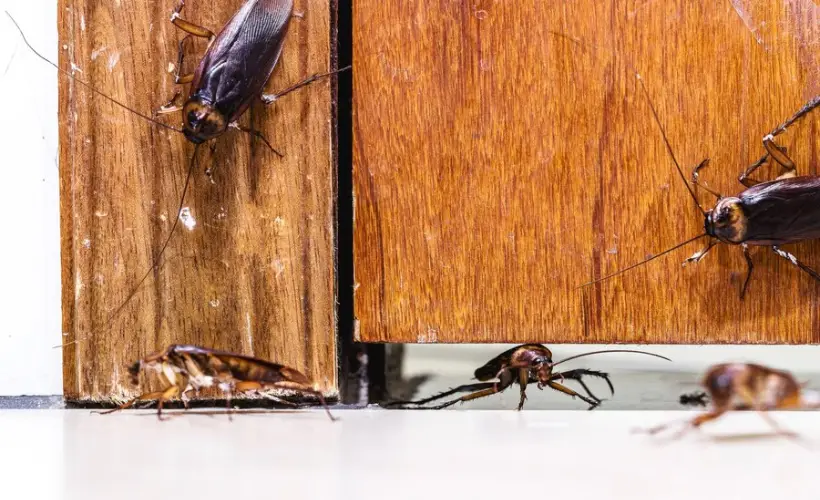
Cockroaches need dark, tight spaces to feel protected—removing these harborage areas forces existing populations into the open where they become vulnerable to elimination methods.
Declutter Kitchen Storage Areas Immediately
Remove unnecessary items from cabinets, shelves, and closets. Old boxes, unused containers, and stored items create the dark voids cockroaches require for daytime shelter. Eliminate shelf paper immediately—it creates a gap between itself and the shelf where cockroaches hide and breed undetected. Dispose of broken appliances and items taking up space in kitchen storage areas. The less clutter present, the fewer places cockroaches can establish hidden populations that grow undetected for months.
Seal All Entry Points with Precision
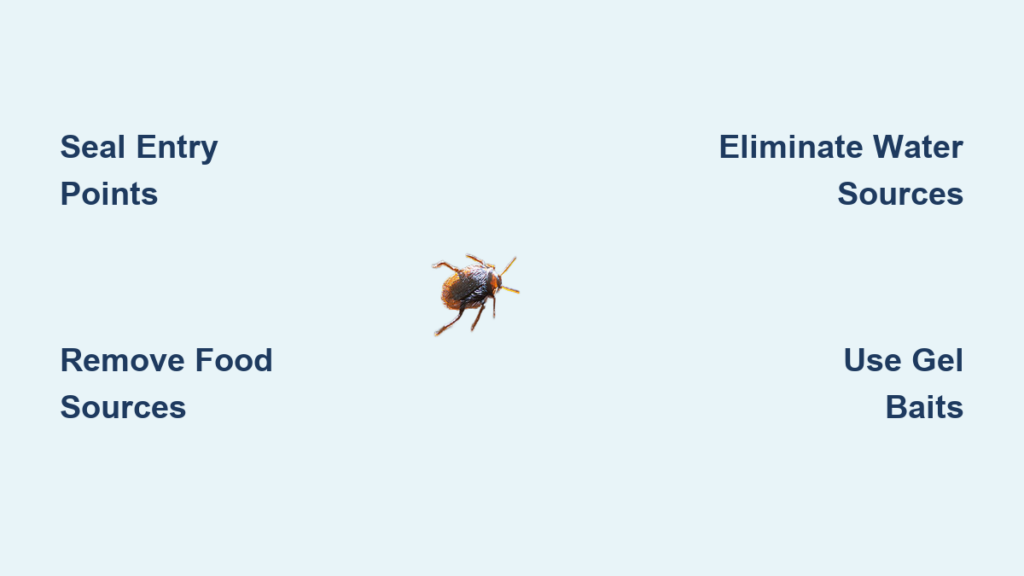
Inspect every surface in your kitchen and seal openings as narrow as 1/16 of an inch. Apply caulk along baseboards, where walls meet ceilings, around window moldings, and at the splash board behind sinks. Seal gaps around pipes, electrical conduits, and other wall penetrations using appropriate sealants or expanding foam. Pay special attention to cabinet interiors—seal gaps where shelves meet walls and around shelf standards. These tiny voids serve as cockroach highways connecting different areas of your kitchen.
Repair Damaged Surfaces That Create Hiding Spaces
Address deteriorating conditions that provide ideal cockroach habitat. Remove loose or peeling paint carefully, taking precautions against lead dust if your home was built before 1978. Repair or remove damaged wallpaper and crumbling plaster that create numerous hiding spots. Replace missing or damaged tiles, repair cracked grout, and fix gaps in flooring that allow cockroaches access to voids beneath. Smooth, intact surfaces deny cockroaches the protection they seek and make cleaning more effective.
Eliminate Water Sources Systematically
Cockroaches survive only days without water, making moisture control essential for permanent elimination. Kitchens provide multiple water sources that must be systematically addressed.
Fix All Plumbing Leaks Within 24 Hours
Repair dripping faucets, leaking pipes under sinks, and any other plumbing issues immediately. Even slow drips create moist environments that cockroaches require for survival. Check connections on dishwashers and refrigerators with ice makers for moisture accumulation. Inspect water heater bases and surrounding areas for signs of leakage. Dry any wet surfaces completely after use, including inside cabinets under sinks where condensation and leaks often go unnoticed.
Reduce Kitchen Humidity to Uncomfortable Levels
Improve kitchen ventilation to reduce humidity levels below 50%—the threshold where cockroach survival becomes difficult. Use exhaust fans during and after cooking to remove steam and moisture from the air. Wipe up spills immediately rather than allowing them to air-dry. Consider a dehumidifier in particularly damp kitchens to maintain lower humidity levels that discourage cockroach activity. Ensure proper drainage around your home’s foundation to prevent moisture buildup near entry points.
Keep Drains Clean and Dry Overnight
Clean drains weekly with hot water and appropriate cleaning solutions to prevent organic buildup that provides both food and moisture. Cover drains when not in use, particularly overnight, to prevent cockroaches from accessing the moisture within. Check areas around garbage disposals for moisture problems that may require additional sealing. Cockroaches often enter through drains, so maintaining dry conditions prevents this common entry route.
Apply Effective Treatment Methods

When cockroaches have already established themselves in your kitchen, targeted interventions eliminate existing populations while minimizing risks to your family.
Use Boric Acid in Strategic Hidden Areas
Apply thin layers of boric acid powder in cracks, crevices, and voids behind appliances. The powder adheres to cockroach exoskeletons as they crawl through treated areas, and when they groom themselves, they ingest the poison. Apply sparingly—heavy deposits cause cockroaches to avoid treated areas. After application, seal the cracks to prevent cockroaches from accessing voids without exposure to the boric acid. This method is among the most effective and least toxic available.
Deploy Gel Baits Near Cockroach Pathways
Place gel baits near known hiding places, along baseboards, and under sinks in areas inaccessible to children and pets. Modern gel baits combine attractive food bases with slow-acting insecticides that allow cockroaches to consume the poison and return to their harborage before dying. Replace baits as they’re consumed and reposition based on trap monitoring results. Avoid placing baits near cleaning products that might reduce their attractiveness.
Vacuum Thoroughly to Remove All Life Stages
Vacuum all floors, cabinets, moldings, and baseboards to physically remove cockroaches at every life stage. Use a vacuum with a HEPA filter for heavy infestations to control dust and allergens. Change vacuum bags frequently and dispose of them in sealed double bags to prevent captured cockroaches from escaping. This mechanical removal provides immediate results while complementing chemical treatments.
Prevent Reinfestation Long-Term
Eliminating an existing infestation requires ongoing vigilance to ensure cockroaches cannot return through the same entry points.
Seal All Exterior Entry Points Permanently
Cockroaches can squeeze through openings as narrow as 1/16 of an inch. Apply caulk to all interior cracks and install insect mesh screens in windows. Add draft sweeps to exterior doors to eliminate threshold gaps. Seal gaps around utility lines through exterior walls. Ensure door and window seals are intact and replace damaged weatherstripping immediately.
Establish Weekly Cleaning Routines That Target Cockroach Needs
Vacuum or sweep floors weekly followed by thorough mopping. Clean behind and under appliances to prevent crumb and grease accumulation. Wipe down cabinet interiors periodically, especially in food storage areas. Keep sinks clean and dry when not in use. Consistent cleaning removes both food sources and the pheromone traces that guide cockroaches to established routes.
Conduct Monthly Inspection Checks for Early Warning Signs
Check under sinks, behind appliances, and along baseboards for droppings, egg cases, or live insects. Monitor sticky traps to detect any resurgence early. Address moisture problems immediately before they support new populations. Regular inspections catch problems while they’re still manageable.
Protect Your Family’s Health from Cockroach Hazards
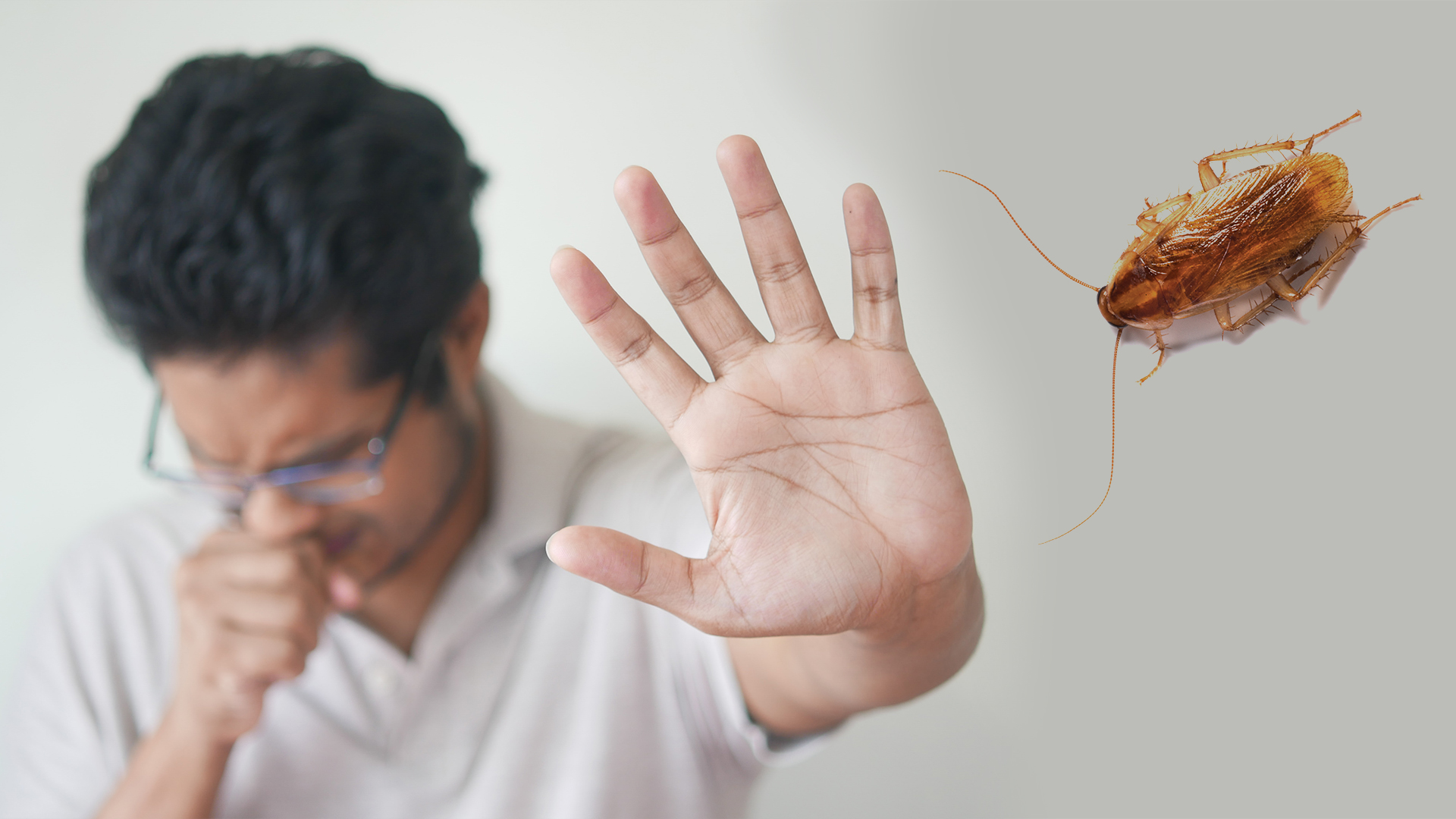
Cockroach infestations pose serious health risks that make permanent elimination essential for family wellbeing.
Reduce Asthma and Allergy Triggers Through Complete Elimination
Cockroach allergens in saliva, droppings, and decomposing body parts worsen asthma symptoms, particularly in children. These allergens circulate through HVAC systems and settle into household dust. Complete elimination is essential for affected families, as studies show cockroach allergen exposure significantly contributes to asthma morbidity in urban environments.
Prevent Disease Transmission from Kitchen Contamination
Cockroaches carry pathogens including Salmonella, Staphylococcus, and Streptococcus picked up from garbage and sewage. These pathogens get deposited on food preparation surfaces, utensils, and food itself. Thorough kitchen sanitation prevents the gastrointestinal illness and other health problems these contaminants cause.
Summary: Your Permanent Cockroach Elimination Plan
Achieving lasting freedom from kitchen cockroaches requires addressing their three survival essentials: food, water, and shelter. Begin by eliminating food sources through airtight storage, meticulous cleaning, and proper waste management. Remove hiding spots by decluttering, sealing cracks, and repairing damaged surfaces. Systematically eliminate water sources by fixing leaks, reducing humidity, and keeping drains dry. For active infestations, combine vacuuming with strategic boric acid and gel bait applications, using sticky traps to monitor progress. Prevent return through ongoing cleaning routines, regular inspections, and sealing all entry points. By systematically removing the conditions that attract cockroaches while creating physical barriers against their return, you can achieve permanent relief from kitchen infestations and protect your family’s health from these dangerous pests.