
When your kitchen cabinet door starts sagging or you’re planning a cabinet refacing project, knowing exactly how to measure kitchen door hinges becomes essential. Many homeowners waste time and money ordering incorrect replacement hardware because they skip proper measurement steps or don’t understand which dimensions matter most. Taking precise measurements ensures your new hinges will position doors correctly, maintain consistent gaps between cabinet fronts, and prevent frustrating alignment issues after installation. Whether you’re replacing a single broken hinge or updating all your kitchen cabinet hardware, this guide gives you the exact measurement techniques professionals use—no guesswork required.
Most hinge measurement errors happen because people focus only on the hinge itself without considering how it interacts with your specific cabinet construction. The right replacement hinges depend on multiple factors including door thickness, cabinet frame style, and how much the door should cover the opening (called “overlay”). This comprehensive guide walks you through each critical measurement point so you can confidently select replacements that fit perfectly the first time.
Identify Your Hinge Type Before Taking Measurements

Before pulling out your tape measure, determine which hinge style your cabinets use—this dictates which measurements matter most. Kitchen cabinets typically employ one of four standard hinge designs, each requiring different measurement approaches for proper replacement.
European concealed hinges (also called cup hinges) are the most common type in modern kitchens, featuring a round cup that mounts into the door edge. These hinges remain hidden when closed and offer three-way adjustability. To confirm you have European hinges, look for a 35mm diameter circle drilled into the back of your cabinet door.
Full-overlay hinges position doors to completely cover the cabinet frame, creating seamless lines between cabinet fronts. These work with frameless cabinet construction where doors overlap each other in the center. Measure the gap between doors—if it’s minimal or non-existent when closed, you likely have full-overlay hinges.
Partial-overlay hinges leave a visible portion of the cabinet face frame around the door perimeter. When closed, measure from the cabinet frame edge to the door edge—if you see 1/4 to 1/2 inch of frame showing, you’re working with partial-overlay hinges.
Inset hinges position doors flush with the cabinet frame, requiring doors to be precisely sized to fit within the opening. These create a built-in appearance common in traditional kitchen designs. To verify inset hinges, check if the door sits entirely within the cabinet opening with no overlap when closed.
Why Hinge Type Determines Your Measurement Strategy
European hinges require measuring cup diameter, boring distance, and mounting plate type, while traditional butt hinges need leaf dimensions and pin positioning. Measuring the wrong specifications for your hinge type leads to incompatible replacements. For European hinges, focus on the 35mm cup size and 45mm standard boring distance. For butt hinges, prioritize leaf width and screw hole spacing.
Measure Hinge Width and Leaf Dimensions for Proper Fit

Hinge width determines how far your door stands from the cabinet when open and affects the swing radius—critical for avoiding countertop or appliance interference. To measure correctly, close the cabinet door completely and locate the hinge pin (on butt hinges) or pivot point (on European hinges).
European Concealed Hinge Width Measurement Technique
For concealed hinges, measure from the door edge to the center of the hinge cup—this “boring distance” typically ranges from 45mm to 52mm with 45mm being standard. Use digital calipers for precision since European hinges often require exact millimeter measurements. Record this distance to the nearest 0.5mm as even 1mm differences affect door positioning.
Traditional Butt Hinge Width Measurement
For surface-mounted butt hinges, measure from the pin center to the outer edge of the leaf that mounts to the cabinet frame. Standard kitchen butt hinges typically measure 1.5 to 2 inches in width. Multiply this single-leaf measurement by two to determine total hinge width, as most butt hinges have symmetrical leaves.
Pro Tip: Always measure both hinges on a door—even if they look identical. Older cabinets often have mismatched hinges from previous repairs, which causes alignment issues when replacing only one.
Determine Door Thickness for Hinge Compatibility

Door thickness directly impacts hinge selection as hinges are engineered for specific material thicknesses. Standard cabinet doors measure 3/4 inch (19mm), but variations exist, especially in older homes or custom cabinetry.
Accurate Door Thickness Measurement Process
Measure at the hinge mounting edge using digital calipers for best results. Take readings at three points along the edge—top, middle, and bottom—as doors can warp or have inconsistent thickness. Record measurements to the nearest 1/16 inch or 0.5mm. If using a ruler, position it perpendicular to the door edge and read the measurement where the edge meets the ruler.
Most European hinges accommodate doors between 5/8 inch and 7/8 inch thick, with 3/4 inch being the sweet spot. Hinges designed for 1/2 inch doors won’t secure properly on thicker material, while hinges for thick doors may not close completely on thinner material.
Measure Hinge Overlay to Position Doors Correctly
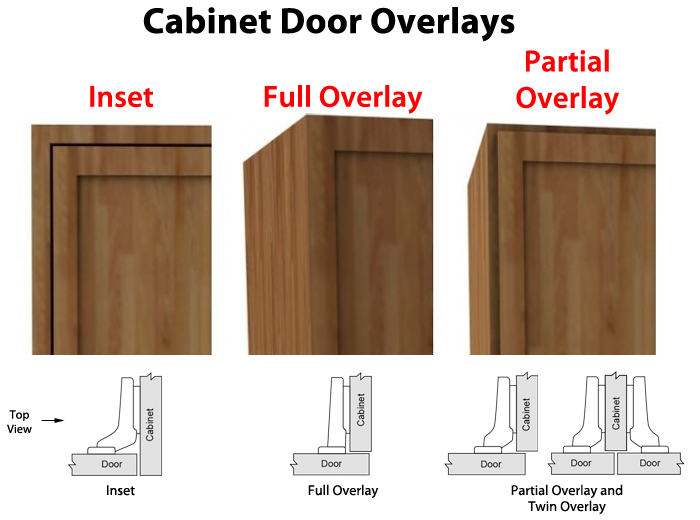
Overlay measurement indicates how much your door covers the cabinet opening when closed—this specification determines whether doors meet in the center or leave visible frame edges. Incorrect overlay measurements cause gaps between doors or prevent proper closing.
Full-Overlay Door Measurement Technique
For cabinets without face frames (common in modern kitchens), measure from the cabinet side to the outer edge of the closed door. Full-overlay doors typically cover the entire cabinet opening with minimal gaps (about 1/16 inch) between adjacent doors. Standard full-overlay measurements range from 12mm to 16mm.
Partial-Overlay Door Measurement
For cabinets with visible face frames, measure the visible frame width around the closed door. Partial-overlay doors typically leave 1/4 to 1/2 inch of frame exposed. Convert this measurement to millimeters (6mm to 12mm) when ordering European hinges, as manufacturers primarily use metric specifications.
Critical Check: Measure overlay at top, middle, and bottom of the door. Inconsistent measurements indicate warped doors or settling cabinets that need attention before hinge replacement.
Record Boring Distance and Mounting Hole Pattern
Boring distance measures from the door edge to the center of the hinge mounting holes—this dimension ensures replacement hinges align with your existing mounting pattern. Standard European hinges use 45mm boring distance, but variations exist.
Precise Boring Distance Measurement Steps
- Close the cabinet door completely
- Position a ruler perpendicular to the door edge
- Measure from the door edge to the center of the existing hinge cup hole
- Record measurement in millimeters to the nearest 0.5mm
For mounting hole pattern, measure the distance between screw hole centers on the hinge plate. Most European hinges follow the 32mm industry standard hole spacing, but verify your specific hardware as some premium brands use different patterns.
Avoid These 5 Common Hinge Measurement Mistakes
Even experienced DIYers make critical errors when measuring cabinet hinges—errors that lead to ordering wrong parts and wasted time. These five mistakes cause the most problems:
Measuring only one hinge per door when cabinets often have slightly different hinges on the top and bottom. Always measure both hinges as older cabinets develop inconsistencies from previous repairs.
Confusing metric and imperial measurements when European hinge specifications primarily use millimeters. A 45mm hinge (1.77 inches) won’t work if you order a 1.75-inch equivalent.
Forgetting to measure door thickness assuming all kitchen doors are standard 3/4 inch. Older homes frequently have 1/2 inch doors that require specialty hinges.
Overlooking mounting plate type on European hinges—snap-on, screw-on, and interleaf plates aren’t interchangeable even with matching cup sizes.
Measuring overlay from the wrong reference point—always measure from the cabinet side or frame edge to the door edge with the door fully closed.
Document Measurements Before Purchasing Replacement Hinges
Create a simple measurement log for each cabinet door using this template:
- Hinge type: (European concealed/full-overlay/partial-overlay/inset)
- Hinge width: ______ mm/inches
- Boring distance: ______ mm
- Door thickness: ______ inches/mm
- Overlay measurement: ______ mm
- Mounting hole pattern: ______ mm spacing
- Special notes: ______
Take clear photos of each hinge type before removal, capturing both door-side and cabinet-side mounting. Label photos with cabinet location to avoid confusion during installation. When shopping for replacements, compare your documented measurements against product specifications sheet—not just the product name—as similar-looking hinges often have critical dimensional differences.
Final Verification Steps Before Ordering
Before finalizing your hinge order, complete these verification steps:
- Double-check all measurements against manufacturer specifications
- Confirm metric vs. imperial units match your recorded data
- Verify door thickness compatibility with hinge specifications
- Check mounting plate type if using European hinges
- Review customer photos of installed hinges to confirm visual match
Bring your measurement log to a hardware store for expert verification if possible—many retailers offer this service. Most importantly, remember that accurate hinge measurement prevents the frustration of ordering wrong parts and ensures your cabinet doors function perfectly after replacement. With precise measurements in hand, you’ll select the right hinges for perfect door alignment every time.