Nothing ruins a beautifully designed kitchen faster than poorly positioned island lighting. When your pendant lights hang too high, your food preparation area becomes a shadowy nightmare. Too low, and you’re constantly ducking to avoid bumping your head on fixtures that obstruct cabinet access and conversation flow. Getting the height precisely right transforms your kitchen island from a functional workspace into a stunning focal point with optimal illumination. This guide delivers the exact measurements, adjustment techniques, and professional installation secrets that ensure your kitchen island lighting performs perfectly while enhancing your home’s aesthetic appeal.
Determine Your Exact Hanging Height Based on Countertop Measurement
Measure precisely 28 to 34 inches from your kitchen island countertop surface to the bottom of your pendant light fixture for ideal illumination. This specific range delivers sufficient brightness for food preparation tasks while maintaining comfortable headroom clearance. Start with the 30-inch midpoint as your baseline measurement, then adjust based on your unique kitchen dimensions and physical stature.
Your personal height significantly impacts the optimal placement—taller individuals often prefer lights at the 32-34 inch mark to prevent obstruction, while shorter homeowners find 28-30 inches more practical. Stand at your island in your typical working position and visualize where the light should fall: the bottom of your fixture should sit approximately at eye level when you’re standing upright at the counter. This positioning creates an intimate lighting pool across the entire work surface without glare in your eyes or shadows where you need visibility.
Why Countertop Measurement Trumps Floor Measurement
Measuring from the countertop rather than the floor delivers consistent results regardless of your kitchen’s unique configuration. Floor-to-light measurements become unreliable when island heights vary or when working with non-standard counter elevations. The 28-34 inch standard exists specifically because it targets the functional relationship between your work surface and light source—where illumination matters most.
Adjusting for Multiple Family Members’ Heights
Households with significant height differences require strategic compromise. Position lights at a height that accommodates your tallest regular user while maintaining adequate task lighting for shorter family members. Install dimmer switches to adjust brightness levels for different users—brighter settings compensate for slightly higher placement when shorter individuals are cooking. Consider pendant lights with adjustable cords that allow quick height changes when needed, though this requires more frequent maintenance than a fixed installation.
Customize Height Based on Your Specific Kitchen Dimensions
Accommodating Different Ceiling Heights
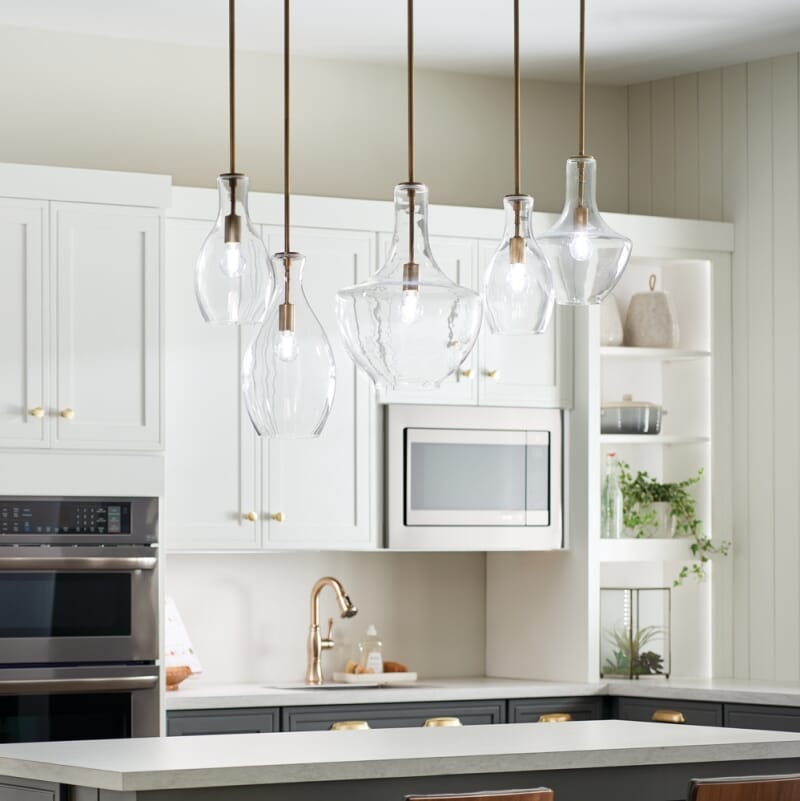
Standard 8-foot ceilings pair perfectly with the 28-34 inch countertop measurement, creating balanced proportions that feel neither cramped nor disconnected. For 9-foot ceilings, extend your measurement to 36-40 inches above the countertop to maintain visual harmony and prevent your lighting from appearing lost in the increased vertical space. Homes with cathedral ceilings exceeding 10 feet require custom solutions—consider tiered lighting arrangements with multiple hanging heights to create visual interest while ensuring functional illumination at the work surface.
Scaling for Island Size and Configuration
A 4-foot island works best with a single pendant centered precisely over the work surface, hung at 30 inches for proportional balance. Islands between 5-7 feet accommodate two pendants spaced 24-30 inches apart, each positioned 30 inches above the countertop with equal overhang at both ends. For expansive islands exceeding 8 feet, implement three pendants using the “rule of thirds”—place fixtures at one-third and two-thirds points along the island’s length, maintaining 30-inch height and equal spacing between units.
Matching Fixture Dimensions to Hanging Height
Large statement pendants with shades exceeding 12 inches in diameter require placement at the upper end of the range (32-34 inches) to prevent visual heaviness and maintain sightlines across your kitchen. Compact fixtures under 8 inches work beautifully at 28-30 inches, creating intimate task lighting without overwhelming smaller islands. Open-bottom fixtures like drum shades or exposed bulb designs can hang slightly lower (26-28 inches) to maximize downward light distribution, while fully enclosed globes perform better at 32-34 inches to prevent glare.
Professional Installation Techniques for Perfect Results
Begin your installation by measuring from the countertop surface upward with a metal tape measure—pencil your target height directly on the ceiling at the exact center point above your island. Account for your fixture’s hanging mechanism by subtracting the length of cords, chains, or downrods from your target measurement to determine the precise mounting point. For example, if your target height is 30 inches and your pendant hangs on a 6-inch cord, mark your mounting location at 24 inches above the countertop.
Achieving Perfect Alignment with Multiple Fixtures
Create a cardboard template matching your island’s dimensions and the planned fixture placement—tape this to your ceiling before drilling any holes. For multiple pendants, measure and mark each mounting point using the island’s centerline as your reference, not the ceiling grid. Install a temporary leveling rod across your mounting points before final installation to ensure all fixtures will hang at identical heights. This professional technique prevents the common mistake of pendants appearing crooked due to subtle ceiling irregularities.
Testing Height Before Final Installation
Temporarily hang your fixture from adjustable string or picture-hanging wire at your target height before committing to permanent installation. Spend 15-20 minutes working at your island with the temporary setup to evaluate both functionality and aesthetics. Have multiple family members test the height during this trial period to identify potential clearance issues. This simple step prevents the frustration of reinstalling lights after discovering they’re positioned incorrectly.
Avoid These Costly Installation Mistakes
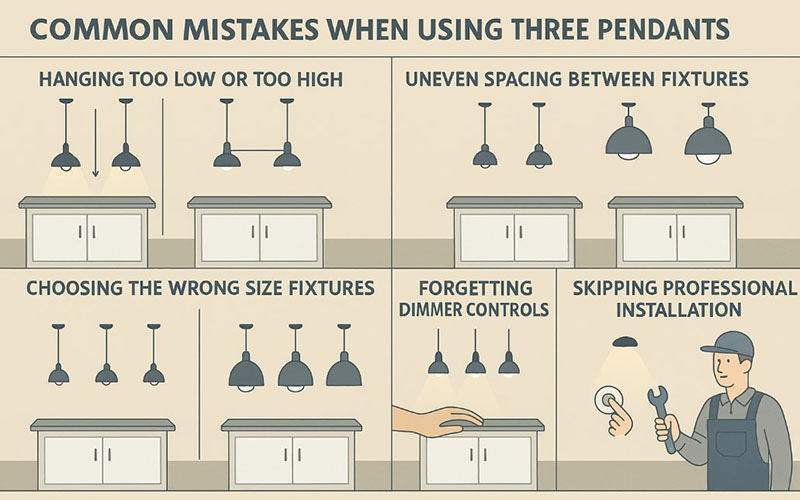
Mounting lights too high remains the most frequent error homeowners make—often exceeding 36 inches above the countertop in standard kitchens. This creates inadequate task lighting that forces you to use additional under-cabinet fixtures, wasting both money and energy. Fixtures hung too low (below 26 inches) cause constant head bumps, interfere with upper cabinet access, and create visual barriers that disrupt kitchen flow. The most functional height always prioritizes task lighting over purely decorative considerations.
Ignoring Bulb Type and Light Distribution
LED bulbs require different height considerations than traditional incandescents due to their directional light output. Position LED fixtures 1-2 inches lower than you would equivalent incandescent models to compensate for their focused beam pattern. Ensure your chosen height creates a light pool that extends to within 2 inches of your island’s outer edges—dark perimeter areas indicate your lights are positioned too high regardless of measured distance.
Neglecting Future Layout Changes
Install lights with future kitchen modifications in mind. If you plan to replace upper cabinets with open shelving, position fixtures slightly higher to accommodate the visual change. Consider how new appliances might affect sightlines—taller refrigerators or range hoods may necessitate higher hanging heights to maintain unobstructed views across the kitchen.
Optimize Your Lighting Design for Maximum Impact
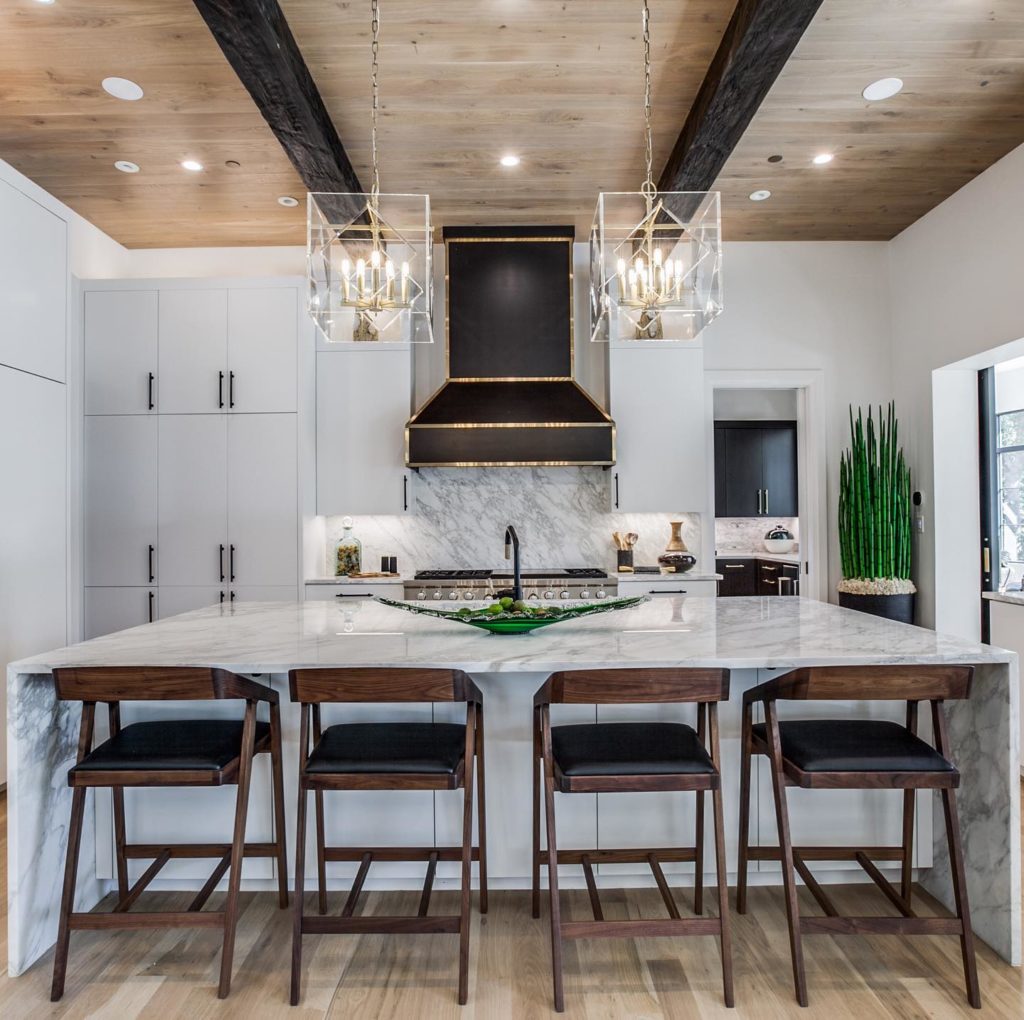
Combine your properly hung island pendants with layered lighting for complete kitchen illumination. Install dimmable recessed lights at 75-80% brightness to provide ambient background lighting that complements your task-focused island fixtures. Add under-cabinet LED strips set at 3000K color temperature to eliminate shadows cast by your body while working at the counter. This three-tiered approach creates adaptable lighting for everything from midnight snacks to holiday meal preparation.
Selecting the Right Bulb Temperature for Your Height
Warmer color temperatures (2700-3000K) appear brighter at lower hanging heights, making them ideal for fixtures positioned at 28-30 inches. Cool white bulbs (4000K+) maintain visibility at higher placements (32-34 inches) but can create an institutional feel if used too close to the work surface. Match your bulb temperature to both your hanging height and overall kitchen aesthetic—warmer tones enhance traditional spaces while cooler temperatures complement modern designs.
Maintain and Adjust Your Lighting for Long-Term Performance
Check your fixture heights quarterly, especially after kitchen renovations or appliance changes. Most modern pendant lights feature adjustable hanging mechanisms that allow height modifications without rewiring—simply loosen the canopy, reposition the cord or rod, and retighten. When adjusting, work with a partner: one person operates the fixture while the other tests lighting quality from the island workspace.
Seasonal Height Adjustments for Variable Lighting Needs
Consider raising fixtures 2-3 inches during summer months when natural light extends later into the evening, then lowering them for the darker winter months. This subtle adjustment maximizes the effectiveness of both natural and artificial lighting throughout the year. Install smart dimmers that automatically adjust brightness based on time of day and ambient light levels, creating consistently optimal illumination regardless of seasonal changes.
Properly hung kitchen island lights transform your workspace from merely functional to truly exceptional. By implementing these precise height guidelines and professional techniques, you’ll create a kitchen that performs beautifully for daily tasks while making a stunning design statement. The perfect lighting height balances practicality with aesthetics—delivering ample illumination without compromising comfort or visual flow. When your pendants hang at exactly the right height, your kitchen island becomes the inviting heart of your home where both culinary magic and meaningful connections happen.