That morning brew shouldn’t taste flat or bitter—it should explode with fresh flavor. The secret? Mastering your Cuisinart coffee grinder to unlock the oils and aromas pre-ground coffee loses within hours. When beans meet blade at the right speed and duration, you transform ordinary coffee into café-quality magic right at your counter. This complete guide reveals exactly how to use Cuisinart coffee grinder for consistent, barista-level results—whether you’re brewing French press at dawn or espresso after dinner. You’ll discover precise timing for every brew method, troubleshooting tricks for inconsistent grinds, and maintenance secrets that keep your grinder performing like new for years.
Perfect First-Time Setup in 3 Steps
Unbox and Verify Critical Components
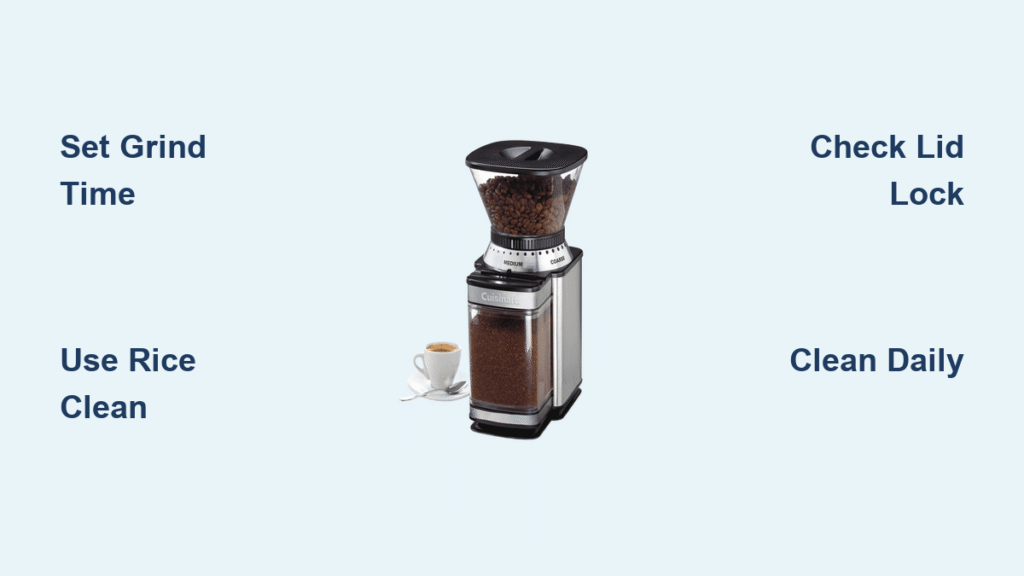
Skip the frustration of missing parts by checking your Cuisinart package immediately. Lift the main grinder unit first—it should feel substantial despite its compact size. Confirm you have the stainless steel grinding chamber, transparent lid with safety lock, specialized cleaning brush, and instruction manual. Inspect the blade assembly through the chamber opening for shipping damage; bent prongs cause uneven grinding. If components are missing, contact Cuisinart within 30 days using your proof of purchase—don’t attempt repairs with incorrect parts.
Optimize Counter Placement for Safety and Performance
Your grinder needs breathing room to prevent overheating and vibration issues. Place it on a dry, non-slip surface at least 4 inches from walls, stovetops, and dishwashers. Critical safety note: Steam and moisture warp plastic components and create electrical hazards—never position near boiling kettles or sink splashes. The 36-inch power cord should reach an outlet without stretching; avoid extension cords that reduce power and increase fire risk. Test stability by pressing the lid during operation—if it shifts, reposition on a textured mat.
Execute Flawless First Power Test
Before wasting precious beans, verify electrical function. Plug into any standard 120V outlet (Cuisinart auto-detects voltage). Firmly press the lid until you hear the safety lock click. Without beans inside, pulse for 2 seconds. You should hear a smooth, high-pitched whir—not grinding noises or clicks. If silent, double-check lid alignment. If overheating occurs immediately, unplug for 30 minutes to reset the thermal protector. This simple test catches 90% of “won’t start” issues before they ruin your morning routine.
Master Grind Sizes for Every Brewing Method

French Press: Achieve Coarse Consistency in 8 Seconds
Over-extraction turns French press coffee bitter and muddy. For perfect coarse grinds (1-1.5mm particles), use 2 tablespoons beans per 8oz water. Pulse in 2-second bursts while watching through the transparent lid—stop immediately when grounds resemble sea salt. Pro tip: Grind time should never exceed 8 seconds. Overdoing it clogs the press filter and creates sludge in your cup. If particles look powdery, your beans are too fresh; wait 24 hours after roasting for optimal French press texture.
Drip Coffee: Hit the Medium Grind Sweet Spot
Drip machines demand uniform medium grinds (0.5-0.8mm) for balanced extraction. Use 1 tablespoon beans per cup, grinding continuously for 12-18 seconds. Watch for the “salt test”: when most particles match table salt with minimal powder, stop immediately. Critical mistake to avoid: Overfilling the chamber. Never exceed the 12-cup max line—even an extra tablespoon causes uneven grinding. If your coffee tastes weak, reduce grind time by 2 seconds; if bitter, add 2 seconds. Record your perfect timing for repeatable results.
Espresso: Prevent Bitter Shots with Precision Timing
Espresso requires powder-fine grinds (0.3-0.5mm) that clump slightly when pinched. Grind 18-25 seconds while monitoring through the lid—stop the instant particles resemble powdered sugar. Warning: Over-grinding by 3 seconds creates burnt, over-extracted shots. Use the “pinch test” mid-grind: rub a small sample between fingers. If it feels gritty, continue grinding; if smooth like flour, stop. Dark roasts need 15% less time than light roasts due to brittle bean structure—adjust accordingly.
Digital Timer Programming for Repeatable Results
Set Exact Grind Durations by Bean Type
Advanced Cuisinart models eliminate guesswork with digital timers. After pressing the timer button, dial in precise seconds using the +/- controls:
- Light roasts (harder beans): Add 5-10% time (e.g., 22 seconds for espresso)
- Dark roasts: Subtract 10-15% time (e.g., 19 seconds for espresso)
- Flavored beans: Reduce time by 10% to prevent oily clogs
The unit auto-stops at your set time, ensuring identical grinds whether you’re brewing solo or for guests. Pro tip: Label your settings in the manual—”Colombian Light Roast: 14s Medium” lets you replicate winners instantly.
Fix Inconsistent Grinds During Batch Grinding
Grinding multiple batches for brunch? Allow 2-minute cooling intervals between 8-tablespoon max batches. Humidity changes throw off timing—on rainy days, add 3 seconds to maintain consistency. Critical fix for uneven particles: Shake the chamber gently between pulses to redistribute beans. If grinds remain inconsistent, your blade may be dull; run a 30-second rice cycle to remove oil buildup before calling service.
Daily Cleaning That Prevents Bitter Coffee
90-Second Post-Grind Maintenance Routine
Old grounds turn rancid overnight, ruining tomorrow’s brew. After every use:
1. Unplug immediately (safety first!)
2. Tap chamber over trash until 90% of grounds fall out
3. Use the cleaning brush in circular motions along chamber walls
4. Wipe base exterior with barely damp cloth—never spray water
5. Air-dry all parts for 10 minutes before storage
Warning: Skipping this creates oil buildup that causes bitter flavors and motor strain. This routine takes less time than brewing and doubles your grinder’s lifespan.
Monthly Deep Clean with Rice (No Disassembly Needed)

Every 30 days, eliminate stubborn oils with this pro method:
1. Fill chamber ¼ full with uncooked white rice
2. Grind 30-45 seconds until rice turns to fine powder
3. Discard powder and brush out residue
4. Wipe with dry cloth—no soap or water required
Rice absorbs oils chemically without scratching surfaces. Do not remove the blade—this voids your warranty and risks injury. For dishwasher-safe models (check manual), run the chamber and lid on the top rack monthly.
Instant Fixes for Common Grinder Failures
Revive a “Dead” Grinder in 4 Minutes
When your Cuisinart won’t power on:
1. Check GFCI outlets—kitchen circuits often trip (reset nearby bathroom outlets)
2. Re-seat the lid with firm downward pressure until you hear the click
3. Cool for 15 minutes if you’ve ground 3+ batches recently
4. Test with different outlet—cord damage is rare but critical
Still unresponsive? Unplug for 30 minutes to reset the thermal fuse. If it works after, you’re overheating it—reduce batch sizes immediately.
Stop Inconsistent Grinds Mid-Process
Seeing pebbles mixed with powder? Do this now:
– Reduce beans to 6 tablespoons max
– Switch to 3-second pulses instead of continuous grind
– Tap chamber sides between pulses to redistribute beans
– Clean with rice cycle if beans look oily
This corrects 80% of uneven grind issues. If blades feel dull after 2 years, contact Cuisinart for replacement—don’t attempt DIY sharpening.
Your Cuisinart grinder isn’t just an appliance—it’s the key to unlocking coffee’s full potential. By nailing exact grind times for your brew method, performing the 90-second daily cleanup, and using the rice deep clean monthly, you’ll avoid the bitter, flat coffee that plagues most home brewers. Remember: fresh beans ground within 15 minutes of brewing, matched to precise grind sizes, creates extraordinary coffee every time. Start with these fundamentals, then experiment with roast types and timing adjustments to discover your perfect cup. Within days, you’ll wonder how you ever settled for pre-ground coffee.