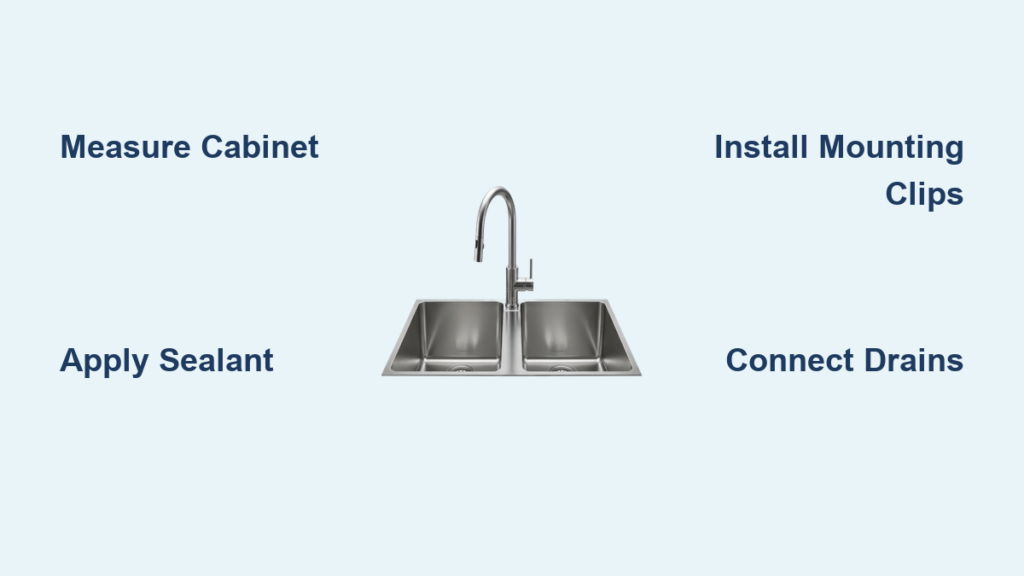
Installing a double bowl kitchen sink properly requires careful planning and execution. Whether you’re replacing an old sink or installing one in a new kitchen, understanding the precise steps prevents costly leaks and ensures years of reliable use. This comprehensive guide walks you through every critical phase of double bowl sink installation, from verifying your cabinet dimensions to making those final plumbing connections. You’ll learn exactly what tools you need, how to position both bowls correctly, and avoid the most common installation mistakes that cause leaks down the line.
Pre-Installation Requirements for Double Bowl Sinks
Before removing your old sink or unpacking your new double bowl model, verify these critical measurements and requirements to ensure a smooth installation process.
Verifying Cabinet Dimensions and Cutout Specifications
Double bowl sinks require precise cabinet measurements since they span the entire width of standard kitchen base cabinets. Measure your cabinet interior width and depth before purchasing your sink – standard double bowl sinks typically require a 33-36 inch wide cabinet. Check the manufacturer’s template for exact cutout dimensions, as these vary significantly between drop-in and undermount models. For drop-in sinks, the countertop cutout must be ½ inch smaller than the sink’s outer dimensions to create proper lip support. Undermount installations require reinforced cabinetry to handle the additional weight of two bowls filled with water.
Essential Tools and Materials Checklist
Gather these specific tools before starting your installation to avoid frustrating mid-project store runs:
- Adjustable wrenches (10-inch and 14-inch)
- Pipe wrench for stubborn connections
- Silicone sealant rated for kitchen use
- Plumber’s putty for drain assemblies
- Channel-lock pliers
- Screwdrivers (Phillips and flathead)
- Tape measure with metric/imperial markings
- Utility knife
- Level
- Safety glasses and work gloves
- Bucket for draining pipes
Pro Tip: Double bowl sinks require longer mounting clips than single bowl models – verify your sink comes with appropriate hardware for both bowls’ mounting rails.
Step-by-Step Double Bowl Sink Installation Process

Follow this systematic approach to install your double bowl sink correctly the first time, avoiding the most common installation pitfalls that cause leaks.
Preparing the Countertop and Cabinet
Begin by completely clearing the cabinet beneath your workspace and laying down protective drop cloths. Remove the old sink if present, disconnecting all plumbing connections and carefully cutting through any sealant with a utility knife. For new installations, use the manufacturer’s template to mark your countertop cutout, ensuring both bowls will sit properly with adequate clearance from the cabinet sides. When cutting the countertop opening, start from the edge and work inward to prevent chipping. Apply a continuous ¼-inch bead of silicone sealant along the underside of the countertop edge where the sink lip will rest – this creates a waterproof barrier that prevents moisture damage to your cabinets.
Positioning and Securing the Double Bowl Sink
Carefully lower your double bowl sink into position, ensuring both bowls sit evenly with no rocking. For drop-in models, press firmly to create a solid seal with the silicone. Install mounting clips underneath the countertop at 6-inch intervals along both sides of each bowl – double bowl sinks typically require 8-10 clips total. Tighten each clip gradually in a crisscross pattern to distribute pressure evenly and prevent sink warping. Use a level across both bowls in multiple directions to verify proper positioning before final tightening. If your sink rocks slightly, insert thin cardboard shims between the countertop and sink lip at problem areas.
Connecting Drain Assemblies for Dual Bowls
Double bowl sinks require special attention to drain configuration. Install strainer assemblies in both bowls using plumber’s putty beneath the flange. Position the crossbar assembly that connects both drains before securing either strainer. For garbage disposal installations, mount it to the left bowl’s drain outlet if you’re right-handed (reverse for left-handed users) for optimal workflow. Connect the tailpiece from the right bowl to the crossbar assembly using slip nuts and washers, ensuring the connection slopes downward at least ¼ inch per foot for proper drainage. Attach the main drain tailpiece to the crossbar’s center outlet.
Making Final Plumbing Connections
Connect hot and cold supply lines to the faucet first, using flexible braided stainless steel lines for easiest installation. Hand-tighten connections, then give a quarter-turn with a wrench – overtightening cracks fittings. Position the P-trap assembly beneath the sink drain, connecting it to both the sink’s tailpiece and wall drainpipe. Double bowl sinks often require a special dual-bowl P-trap configuration or a modified horizontal trap arm. Test all connections by slowly filling both bowls with water, checking for leaks at every joint. Tighten any dripping connections slightly, but avoid excessive force that could damage pipes.
Double Bowl Specific Considerations
Installing a double bowl sink presents unique challenges compared to single bowl models that require special attention.
Garbage Disposal Integration with Double Bowls

When installing a garbage disposal on a double bowl sink, mount it to the bowl you’ll use least for hand-washing dishes. Position the disposal so its discharge elbow points toward the center of the sink for optimal drainage into the crossbar assembly. You’ll need a special flange that replaces the standard strainer in the disposal bowl. Ensure the disposal’s mounting assembly creates a watertight seal – leaks here can cause significant cabinet damage before detection.
Dishwasher Drain Connection Best Practices
Connect your dishwasher drain hose to the air gap or high-loop configuration on the garbage disposal’s side port. Never connect directly to the sink drain as this creates a backflow risk. Secure the hose with a stainless steel clamp, leaving a 12-18 inch high loop before it descends to the disposal. This loop prevents sink water from siphoning back into your dishwasher during operation.
Troubleshooting Common Double Bowl Installation Issues

Even careful installations can encounter problems. Recognize and fix these frequent double bowl sink issues.
Fixing Uneven Bowl Heights After Installation
If one bowl sits higher than the other after installation, loosen the mounting clips on the high side and add thin plastic or rubber shims between the sink lip and countertop. Retighten clips gradually while checking level across both bowls. Never force the sink into position as this can crack porcelain or damage the seal.
Eliminating Persistent Drain Leaks Between Bowls
Leaks at the crossbar connection usually indicate improper slope or loose slip nuts. Disconnect the drain assembly and verify the crossbar slopes downward toward the main drain at least ¼ inch per foot. Replace worn washers and hand-tighten connections before giving a quarter-turn with pliers. Test with colored water to identify exact leak locations before resealing.
Post-Installation Maintenance Tips
Ensure your double bowl sink provides years of trouble-free service with these simple maintenance practices.
Preventing Clogs in Dual Drain Systems
Use sink strainers in both bowls and clean them after each use. Avoid pouring grease down either drain – dispose of cooking fats in sealed containers. Once monthly, flush drains with boiling water followed by a mixture of baking soda and vinegar to maintain clear pipes. For stubborn buildup, use a manual drain snake rather than chemical cleaners that can damage pipes.
Sealing and Waterproofing Long-Term Protection
Reapply silicone sealant around the sink perimeter annually to maintain a watertight barrier. Check for gaps where water could seep beneath the countertop, especially at corners. Wipe up standing water around the sink edges daily to prevent gradual moisture damage to your cabinets.
Final Note: Proper double bowl sink installation typically takes 3-5 hours for DIYers with basic plumbing skills. By following these precise steps and paying special attention to the dual-bowl specific requirements, you’ll create a functional, leak-free installation that serves your kitchen needs for years. Remember that patience with measurements and connections prevents most common problems – rushing the plumbing connections is the leading cause of post-installation leaks. When in doubt about any step, consult a professional plumber rather than risking water damage to your kitchen cabinetry.