Your kitchen vent works tirelessly every time you cook, pulling smoke, grease, and odors out of your home to keep your indoor air clean and your kitchen safe. But like any hard-working appliance, it needs regular attention to function properly. Over time, grease accumulates on filters, inside ductwork, and on exterior surfaces—not only reducing efficiency but creating a serious fire hazard. Learning how to clean a kitchen vent properly is one of the most important maintenance tasks any homeowner can perform, protecting both your family’s safety and your investment in your kitchen.
This comprehensive guide walks you through the entire cleaning process, from recognizing warning signs that your vent needs attention to professional-level techniques that restore full functionality. Whether your vent shows visible grease buildup, has developed persistent cooking odors, or simply hasn’t been cleaned in far too long, you’ll find everything you need to complete the job safely and effectively. Let’s transform your greasy, inefficient vent into a sparkling, fully functional system that keeps your kitchen air fresh for years to come.
Spot Grease Buildup Before It Becomes Dangerous
Ignoring early warning signs of a dirty kitchen vent leads to reduced air quality, higher energy costs, and potentially dangerous grease accumulation that can ignite from a single stray spark. Visible grease on surfaces throughout your kitchen signals that your vent is failing to capture airborne particles effectively. You might notice greasy film on your cabinets, countertops, or even walls surrounding the cooking area. This accumulation indicates that filters have become saturated and are redistributing rather than removing contaminants.
Reduced airflow from your range hood suggests that grease has infiltrated the internal mechanisms or that filters have become so clogged that air cannot pass through efficiently. If you hear the fan straining harder while producing weaker exhaust output, grease is almost certainly obstructing the system. Persistent cooking odors that linger long after meal preparation, even with the vent running at full speed, indicate that your filtration system has lost its effectiveness and requires thorough cleaning.
Assemble Your Vent Cleaning Toolkit Properly

Rushing to gather supplies mid-process interrupts your workflow and leaves grease-covered components sitting longer than necessary, making subsequent cleaning more difficult. For disassembly and protection, you’ll need Phillips head screwdrivers to remove vent covers and access filters, along with rubber gloves to shield your hands from grease and cleaning chemicals. Prepare a large container or bathtub for soaking filters, plus trash bags for disposing of grease-soaked materials.
For the actual degreasing, select commercial kitchen degreasers specifically formulated for heavy grease removal, or create a natural alternative using hot water mixed with dish soap and baking soda. You’ll want scrub brushes with varying stiffness levels—a soft-bristled brush for delicate surfaces and a stiffer brush for removing caked-on grease from filters and baffles. Critical tip: Microfiber cloths work excellently for wiping down exterior surfaces without causing scratches, while a flashlight helps you inspect hard-to-see areas for accumulated grease.
Cut Power Before Touching Any Components
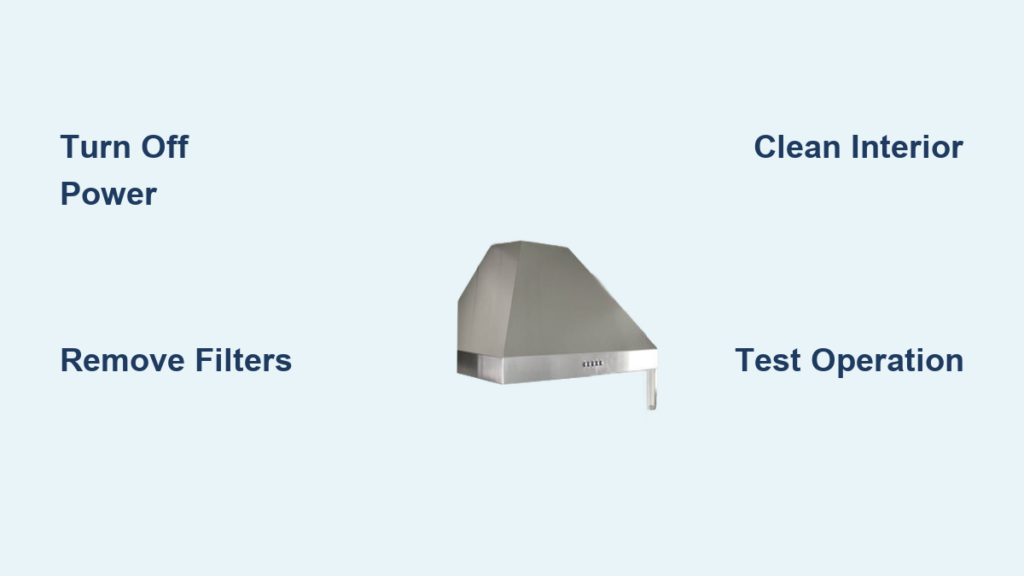
Never begin cleaning without properly disconnecting your vent from its power source. This critical step prevents electrical shock and protects the sensitive electronic components within your range hood system. Locate the circuit breaker controlling your range hood in your home’s electrical panel and flip it to the off position. Verify that the fan and light controls no longer respond when pressed, confirming that power has been disconnected.
Allow adequate cooling time if you’ve recently used the stove, as some internal components may retain significant heat. Keep open flames away from your work area, since degreasing agents are flammable and grease-saturated materials pose fire risks. Ensure your workspace has good ventilation to disperse fumes from cleaning products. Warning: Wear old clothing or an apron, because grease and cleaning chemicals will inevitably find their way onto whatever you’re wearing.
Remove and Deep Clean Grease Filters
Filters are typically the most grease-laden components in your vent system and require the most intensive cleaning. Locate the filter retention mechanism—most range hoods use clips, latches, or sliding systems to secure filters in place. Carefully remove each filter, supporting its weight as grease-saturated filters become significantly heavier than when clean.
Prepare a hot water solution with generous dish soap or a dedicated degreaser, submerging filters completely. Allow them to soak for fifteen to thirty minutes, giving the hot solution time to break down accumulated grease. After soaking, scrub filters thoroughly with your stiff-bristled brush, concentrating on areas with the heaviest grease accumulation. Crucial step: Rinse with hot water and inspect for remaining buildup, repeating the soaking and scrubbing process if necessary. Allow filters to dry completely before reinstalling them—trapped moisture can cause problems with your vent system and promote mold growth.
Clean Interior Fan Blades and Duct Connections

Accessing the interior of your range hood requires removing the filter panel or lower cover using your screwdriver. Keep track of all screws in a secure location, as losing them complicates reassembly significantly. The interior surfaces of your vent collect grease just as readily as the filters, though this buildup is less visible and often more extensive.
Apply degreaser solution to these surfaces and wipe thoroughly, using your scrub brush for areas with heavy caked-on grease. Pay particular attention to the fan blades, as grease accumulation here creates imbalance that reduces efficiency and can cause annoying vibrations or noise during operation. For ductwork, focus on the connection point inside the hood and wipe down these accessible surfaces. If you notice significant grease accumulation in areas you can access, consider scheduling professional duct cleaning.
How to Identify Severe Duct Contamination
Look for thick, dark grease deposits inside accessible duct sections—more than 1/8 inch thick indicates professional cleaning is needed. If you see grease dripping from duct connections or notice a strong rancid grease smell when operating the vent, these are clear signs of excessive buildup requiring professional attention.
Restore Shine to Stainless Steel Hood Surfaces

The exterior hood and control surfaces require gentler cleaning techniques to maintain their appearance while still removing accumulated grease effectively. Apply degreaser to your microfiber cloth rather than spraying directly onto surfaces, which prevents overspray onto cooking areas and electrical controls.
Wipe down the entire hood canopy, paying special attention to corners, edges, and any decorative elements where grease tends to accumulate and hide. Clean control panels and switches carefully, avoiding excessive moisture near electrical components. For stainless steel surfaces, always wipe in the direction of the grain to avoid creating visible scratches that mar the finish.
Test Vent Performance After Reassembly
With all components clean and thoroughly dried, begin reassembly in the reverse order of your disassembly process. Replace filters carefully, ensuring they seat fully and engage their retention mechanisms correctly. Filters that aren’t properly secured can rattle during operation or fail to capture grease effectively.
Restore electrical power and immediately test your vent’s operation. Run the fan at each speed setting, listening for unusual noises that might indicate improper reassembly or residual grease on fan blades. Check that all light functions operate correctly. Monitor the system during its first use after cleaning, watching for any unusual odors that might indicate residual cleaning product or grease that wasn’t fully removed.
Create a Maintenance Schedule That Prevents Buildup
Regular maintenance prevents the excessive buildup that makes cleaning more difficult and hazardous. Establish a consistent schedule that includes:
- Monthly: Wipe down external surfaces and visually inspect filters
- Quarterly: Remove and thoroughly clean filters with degreaser
- Semi-annually: Inspect interior components and accessible ductwork
- Every 3-5 years: Schedule professional duct cleaning for ducted systems
Your cooking habits significantly influence how often cleaning is necessary. Households that fry foods regularly or cook at high temperatures may require monthly filter cleaning rather than quarterly. Mark these dates on your calendar to establish the habit and protect your investment.
Recognize When Professional Cleaning Is Necessary
While routine maintenance works well for most homeowners, certain situations warrant professional attention. Professional services possess specialized equipment that accesses and cleans ductwork far more thoroughly than consumer approaches can match. Call professionals when you notice:
- Persistent odors despite thorough cleaning
- Visible grease dripping from duct connections
- Reduced airflow that doesn’t improve after filter cleaning
- Older systems with years of accumulated grease
- Complex duct runs that you cannot access
The investment typically ranges from $200 to $500 depending on system complexity—significant, but cost-effective compared to potential fire damage or the reduced efficiency driving up your energy bills.
Extend Your Vent System Lifespan with Smart Habits
Beyond regular cleaning, several practices maintain optimal performance and help your vent serve you reliably for many years. Always operate your vent at appropriate speed for your cooking intensity—high settings for heavy smoke or frying, low settings for light cooking. Run the vent for several minutes after cooking allows residual smoke and odors to clear completely rather than settling back into your kitchen.
Address malfunctions promptly rather than continuing to use a compromised system, as this approach leads to more extensive damage or safety hazards. Keep the area around your cooktop clear of items that could be drawn into the vent system, and regularly inspect the exterior vent cap for obstructions from debris, nests, or pest infestation.
Regularly cleaning your kitchen vent protects your family’s safety, maintains indoor air quality, and preserves the efficiency of an essential kitchen appliance. By following this guide and establishing consistent maintenance habits, you ensure that your vent continues protecting your home for years to come—all while avoiding the dangerous buildup that causes countless kitchen fires annually. Your vent works hard for you every time you cook; now you have the knowledge to return the favor.