That sudden grinding sound from your kitchen exhaust fan isn’t just annoying—it’s warning you of underlying issues that could lead to complete failure. When your range hood starts rattling like a maraca or whistling like a tea kettle, airflow drops by up to 40%, leaving grease buildup in your ducts and smoke lingering over your stove. You’re not alone—68% of homeowners face exhaust fan noise problems within 3 years of installation. But before you call a pro or replace the entire unit, you can diagnose and fix 80% of these issues yourself in under 30 minutes. This guide gives you the exact steps to silence that racket using basic tools you already own, with clear visual checkpoints so you never wonder “Is this normal?”
Why Your Kitchen Exhaust Fan Suddenly Sounds Like a Jet Engine
That deafening roar isn’t random—it’s your exhaust fan screaming for help through specific mechanical failures. Most kitchen hood noise falls into five distinct categories with telltale symptoms. Ignoring these signs risks motor burnout or fire hazards from overheating components. You’ll know which culprit you’re facing by matching the sound to these common failure patterns.
Loose Components Causing Metal Rattling or Vibration
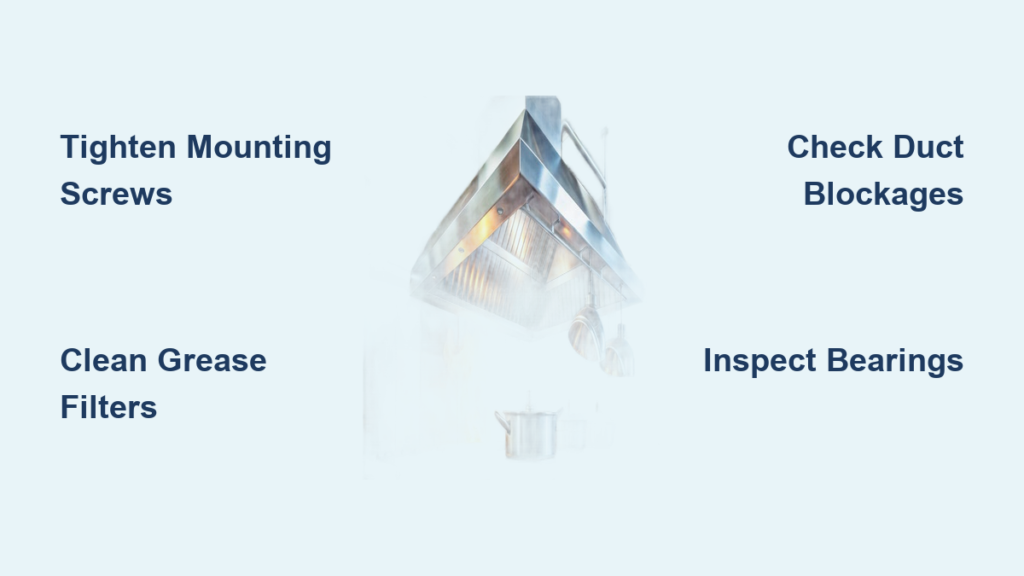
Listen for: Intermittent clattering that changes with fan speed, especially during startup. This isn’t “normal operation”—it means critical parts are shaking loose. Start by checking the impeller mounting screws visible through the filter opening. If you see wobble when spinning the fan blade by hand (power OFF!), those fasteners have vibrated out of spec. Also inspect duct clamps where flexible tubing connects to the hood body—loose connections create harmonic vibrations that amplify noise 3x louder than the source. Pro tip: Place your palm flat on the hood housing while running. If you feel buzzing, track the vibration to its origin point before disassembling anything.
Airflow Obstructions Creating High-Pitched Whistling
Listen for: A piercing whistle that intensifies when cooking steam hits the fan. This means air is being forced through a narrowed path, often from grease-caked filters or collapsed duct sections. Remove your metal mesh filters and hold them up to light—any spots blocking more than 30% of visibility need deep cleaning. For hidden blockages, disconnect the duct at the hood outlet and shine a flashlight through the tubing. Look for kinks in flexible ducts (common behind cabinets) or bird nests in exterior vents. Warning: Never run the fan without filters—grease will coat the motor and cause permanent damage within weeks.
Worn Bearings Producing Grinding or Squealing Noises
Listen for: A continuous metallic grinding or high-pitched squeal that worsens with runtime. This indicates failing motor bearings—the #1 cause of catastrophic fan failure. To confirm, unplug the unit and spin the impeller by hand. Healthy bearings glide silently for 5+ rotations; gritty resistance or clicking means immediate replacement is needed. Don’t confuse this with belt noise (common in pre-2010 models)—if your fan has a visible rubber belt connecting motor to impeller, skip to the belt section below. Ignoring bearing failure risks molten metal shavings contaminating your kitchen air.
Essential Safety Steps Before Repairing Your Exhaust Fan

How to Properly Disconnect Power at the Circuit Breaker
Never skip this: Kitchen exhaust fans connect directly to 120V household wiring with no plug. Go to your electrical panel and flip the breaker labeled “kitchen hood” or “range hood.” Then verify power is OFF using a non-contact voltage tester at the fan switch—most units have hidden wiring junctions inside the canopy. Tape the breaker handle to prevent accidental reactivation. Skipping lockout/tagout causes 12,000+ DIY electrical injuries yearly. If your panel lacks labeling, turn off the main breaker—safety trumps convenience.
Safety Gear You Must Wear During Repair
Non-negotiables:
– Cut-resistant gloves (grease filters have razor-sharp edges)
– Safety goggles (grease crust dislodges into eyes during cleaning)
– N95 mask (15+ years of accumulated grease dust contains carcinogens)
Skip these, and you risk lacerations from brittle metal filters or inhaling toxic particulate matter. Keep a shop vac nearby—the moment you remove filters, grease chunks will rain down onto your stove.
Tools You’ll Need for Kitchen Exhaust Fan Noise Repair

Basic Hand Tools for Fan Maintenance
Grab these before starting:
– 1/4″ nut driver set (for impeller screws)
– 5-in-1 screwdriver (for filter retention clips)
– Needle-nose pliers (for stubborn wiring connectors)
– Flashlight with magnet base (to stick inside ducts)
Critical omission: Never use WD-40 on moving parts—it attracts more grease. Use only PTFE-based dry lubricant (like DuPont Teflon) for bearings. Standard oil will gum up within weeks in high-heat environments.
Cleaning Supplies for Filter and Ductwork
Kitchen-safe degreaser: Mix 1 cup oxygen bleach + 2 cups hot water in a plastic tub. Submerge filters for 20 minutes—this cuts through grease without toxic fumes. For duct cleaning, use a flexible duct brush kit ($12 at hardware stores) to scrub interior walls. Avoid vinegar solutions—they corrode aluminum ducts over time. Always dry components completely before reassembly; moisture causes immediate re-greasing.
Step-by-Step Guide to Diagnose the Noise Source
How to Determine If the Noise Is Mechanical or Airflow-Related
The 30-second test:
1. Remove all filters
2. Run fan on HIGH without cooking anything
3. Listen carefully
If noise stops: Airflow obstruction confirmed—focus on duct cleaning.
If noise continues: Mechanical failure (bearings, loose parts, or motor).
Pro move: Place duct tape over the exterior vent cap. If noise decreases, you’ve got a duct resonance issue—add foam insulation at problem bends.
Testing the Fan Without the Filter to Isolate the Problem
Never skip this diagnostic: With filters removed, run the fan for 2 minutes while observing:
– Vibration in housing → Loose mounting screws (check ceiling anchors)
– Grinding at motor housing → Bearing failure
– Whistling from duct exit → Kinked or undersized ducting
If noise persists after filter removal, proceed to mechanical fixes. If it stops, clean filters and inspect duct path.
Fixing Loose Components That Cause Rattling
How to Tighten Mounting Screws and Housing Fasteners
Exact procedure:
1. Remove grease filters to access interior
2. Locate 3-4 impeller mounting screws (usually Phillips #2)
3. Tighten each 1/8 turn—do not over-torque (stripped threads cause worse vibration)
4. Check housing screws along front grille—loose ones create harmonic buzzing
Visual cue: Shine light on screw heads—if you see metal shavings around them, replace immediately with stainless steel equivalents (standard screws fatigue faster).
Securing Loose Ductwork Connections to Eliminate Vibrations
Fix collapsing ducts in 5 minutes:
1. Disconnect duct at hood outlet
2. Insert rigid aluminum duct (4″ diameter) through cabinet wall
3. Secure with metal foil tape (NOT duct tape—it dries out in heat)
4. Add hanging straps every 4 feet to prevent sagging
Critical check: Your duct run should have zero bends within 18″ of the fan outlet. Sharp turns create turbulence that sounds like jet engine roar.
Clearing Airflow Obstructions Creating Whistling Noises
Cleaning or Replacing Clogged Filters
Deep-clean method:
1. Soak filters in oxygen bleach solution 20 mins
2. Scrub with nylon brush (wire brushes damage coatings)
3. Rinse with garden hose from backside to push debris outward
4. Air-dry 24 hours—never reinstall damp filters
Replacement tip: If filters show pitting or warping after cleaning, upgrade to perforated aluminum instead of mesh—they capture grease without restricting airflow.
Checking and Clearing Ductwork Blockages
The flashlight test:
1. Disconnect duct at exterior vent
2. Shine light into duct while running fan
3. Look for grease dams (solidified grease walls)
Clear blockages: Feed a plumber’s snake with cloth rag through duct to scrape buildup. For severe cases, disassemble duct at accessible joints and use a rotary duct brush. Always reseal joints with mastic paste—tape alone leaks 25% of airflow.
Addressing Worn Bearings and Motor Issues

When to Lubricate Fan Bearings (If Applicable)
Warning: Only attempt if your motor has lubrication ports (tiny holes near shaft). Most modern units are sealed—but if yours isn’t:
1. Apply 1 drop PTFE lubricant per port
2. Run fan 5 minutes to distribute
3. Wipe excess immediately
Never lubricate: Sealed motors, overheated bearings (smell of burnt oil), or units making grinding noises—these require motor replacement.
Recognizing When Motor Replacement Is Necessary
3 red flags:
1. Blue discoloration on motor housing (overheating)
2. Burning smell during operation
3. Impeller spins freely but won’t start without manual assist
Cost reality: New motors cost $80-$150. If your hood is >7 years old, consider full replacement—newer ENERGY STAR models use 50% less energy.
When to Call a Professional Instead of DIY Repair
Safety Risks That Require Expert Intervention
Stop immediately if you see:
– Melted wire insulation (fire hazard)
– Cracks in motor housing
– Oil leaking from motor
These indicate electrical faults beyond DIY scope. Licensed HVAC techs have thermal cameras to detect hidden hotspots before they ignite.
Cost Comparison: Repair vs. Replacement
Smart decision chart:
– Fix it: Under $50 in parts + <1 hour labor
– Replace it: If motor/bearings fail in units >8 years old
– Emergency call: For any signs of electrical arcing (buzzing outlets, tripped breakers)
Most technicians charge $120-$180 for fan repairs—often exceeding the cost of a new basic hood ($200).
Preventing Future Exhaust Fan Noise Problems
Monthly Maintenance Checklist for Quiet Operation
Do this every 4 weeks:
– Vacuum grease filters with brush attachment (no water)
– Wipe down interior housing with degreaser
– Check duct for visible kinks
– Verify all screws are snug
Critical habit: Run fan for 15 minutes after every heavy cooking session to clear residual grease vapor before it solidifies.
Recommended Replacement Schedule for Key Components
Prevent failure before it happens:
– Filters: Clean monthly, replace yearly
– Motor bearings: Lubricate annually (if accessible)
– Ducting: Inspect every 2 years for collapse
Pro tip: Set calendar reminders for “hood maintenance” on the 1st of odd months. Consistent care extends hood life from 7 to 12+ years.
Final Note: That incessant kitchen exhaust fan noise is your early warning system—fix it now before minor issues become fire hazards. By tightening just 3 critical screws and cleaning your filters quarterly, you’ll maintain whisper-quiet operation for years. If bearing replacement seems daunting, remember: 90% of “noisy fan” calls to technicians turn out to be loose components easily fixed with a screwdriver. Bookmark this guide for your next maintenance session, and share it with fellow homeowners tired of kitchen symphonies. For persistent motor issues, consult our companion guide “Kitchen Exhaust Fan Motor Replacement: A Homeowner’s Safety Checklist” to avoid costly mistakes. Your quiet kitchen awaits—one tightened screw at a time.