Your Cuisinart DBM-8 sits on the counter promising barista-level coffee, but those 18 cryptic settings leave you with bitter French press one day and sour pour-over the next. You’re not alone—most users never unlock their grinder’s potential because they miss the sweet spot between settings 1-12 where real brewing magic happens. This guide cuts through the confusion with precise micron-based settings that transform your morning cup from mediocre to magnificent. Stop guessing and start grinding like a pro with these scientifically backed techniques.
The secret isn’t expensive beans—it’s mastering your Cuisinart burr grinder’s 420-1400 micron range. Within minutes, you’ll dial in perfect textures for every brew method, eliminate frustrating taste flaws, and make your grinder work smarter. Let’s turn that confusing knob into your most valuable coffee tool.
Decode Your Grind Settings Like a Scientist
Forget vague terms like “fine” or “coarse”—your Cuisinart DBM-8 operates on measurable micron ranges. Settings 1-12 deliver usable grinds between 420-1400μm, while positions 13-18 create coffee gravel useless for proper extraction. Focus exclusively on this prime zone where particle consistency makes or breaks your cup.
Match Settings to Your Brew Method Instantly
Your coffee maker dictates your starting point with zero guesswork. Automatic drip machines thrive at settings 4-5 (700-900μm), while French press demands 6-7 (900-1100μm). For pour-over methods like V60, begin at setting 2 for light roasts or 3 for medium roasts. The key? Adjust in 0.5-dot increments based on taste—never jump two full settings at once.
Pro Tip: Mark your most-used setting with colored tape. The Cuisinart retains positions between uses, making your perfect grind just one knob twist away every morning.
Fix Bitter Espresso-Style Coffee in 30 Seconds

True espresso requires commercial pressure, but your Cuisinart nails espresso-style shots for Aeropress or Moka pot at setting 1 (420-500μm). Many users ruin extraction by grinding too long—follow this precise protocol:
Aeropress Espresso Grinding Sequence
- Load 15-18g of fresh beans into the hopper
- Set dial to 1 and grind for exactly 8-10 seconds
- Check texture—it should feel like table salt with no powdery fines
- If water flows too fast, adjust to 0.5 (if your model allows half-steps)
Critical Warning: Setting 1 strains the motor. Never grind continuously beyond 20 seconds—pause 30 seconds for cooling between batches to prevent overheating.
Rescue Sour Pour-Over Coffee With Setting 3

V60 brewers often default to setting 4, creating under-extracted sour coffee. The sweet spot for cone methods sits at setting 2-3 (500-700μm), where water meets resistance for optimal 2:30-3:00 minute brews. Light roasts need extra fines to counteract fast flow:
Light Roast Pour-Over Fix
- Start at setting 2 for bright Kenyan or Ethiopian beans
- If coffee tastes sharp or tea-like, move to setting 3
- For dark roasts, jump straight to setting 4 (700-800μm)
- Pinch-test grounds—they should clump slightly then crumble freely
Visual Cue: Proper pour-over grinds resemble beach sand, not powdered sugar. If they feel dusty between your fingers, you’re grinding too fine.
Eliminate French Press Sludge With Setting 7
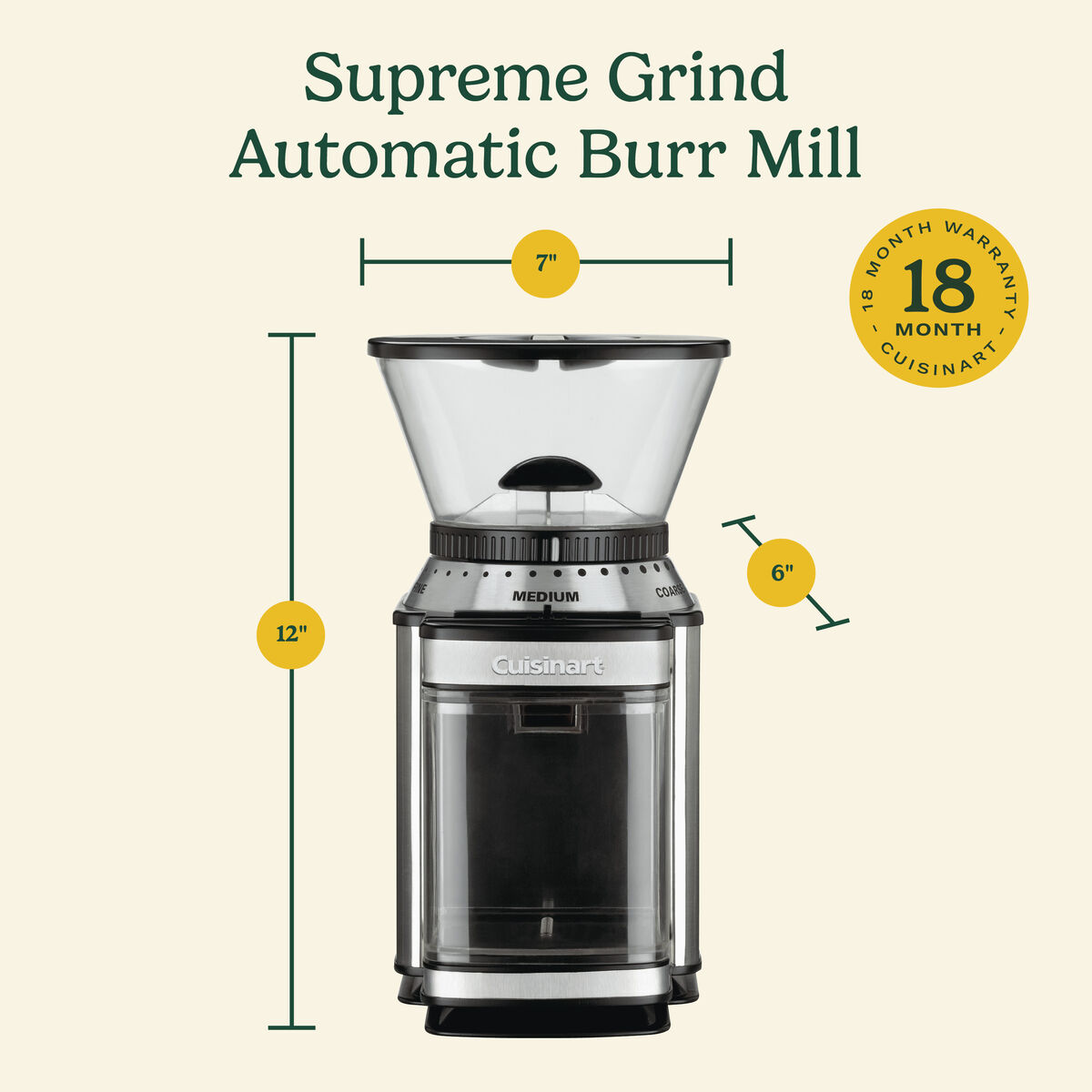
Most users default to setting 8, drowning their French press in muddy sediment. For clean, balanced cups, use setting 6-7 (900-1100μm) where coarse particles trap bitterness while releasing flavor:
French Press Grinding Protocol
- Measure 1g beans per 15ml water (e.g., 30g for 450ml)
- Set Cuisinart to 6 for standard 4-minute steeps
- Grind 12-15 seconds—stop when texture matches coarse sea salt
- If coffee tastes harsh, move to setting 7 immediately
Pro Move: For cold brew concentrate, jump to setting 10 (1250-1300μm). The 24-hour steep time compensates for coarseness, yielding smooth, sediment-free results.
Stop Cold Brew From Tasting Weak in One Step
Weak cold brew means your grind is too coarse—settings 8-12 (1200-1400μm) are your sweet spot. But timing matters as much as texture:
Cold Brew Setting Cheat Sheet
- 12-hour quick brews: Setting 8-9 (1100-1250μm)
- 18-hour standard batches: Setting 10-11 (1250-1350μm)
- 24-hour concentrate: Setting 12 (1350-1400μm)
Batch Formula: Use 60g beans (1 Cuisinart batch) per 240ml water. Never exceed 70g per grind—overfilling creates uneven particles that ruin extraction.
Diagnose Bad Tastes in 10 Seconds Flat
Bitter coffee means over-extraction from too-fine grinds; sourness signals under-extraction from coarse settings. Your Cuisinart fixes both instantly:
Taste-Based Adjustment Guide
- Bitter/over-extracted: Move dial 1 number coarser (e.g., from 4 to 5)
- Sour/under-extracted: Move dial 1 number finer (e.g., from 5 to 4)
- Weak/watery: Drop 0.5 settings finer immediately
- Muddy texture: Jump 2 numbers coarser for next batch
Expert Insight: Make micro-adjustments first. A half-dot change often solves problems without creating new flaws—your palate can detect 50-micron differences.
Prevent Grind Clogs With 30-Second Cleaning
Residual oils from dark roasts sabotage delicate light roasts. Daily maintenance takes less time than brewing:
Essential Daily Routine
- Run grinder empty for 2-3 seconds before first use
- Tap the grind chamber to dislodge clinging particles
- Wipe exterior with dry microfiber cloth
- Never store beans in the hopper—moisture causes clumping
Weekly Deep Clean: Remove the hopper and brush burrs with a dry toothbrush. Water causes rust—use rice grains for stubborn oil buildup (grind 2 tbsp rice, then discard).
Avoid Motor Burnout During Batch Grinding
Your Cuisinart handles 60g beans per batch perfectly—but exceeding this risks overheating. For cold brew or dinner parties, follow this protocol:
Safe Batch Grinding Rules
- Max 60g beans per grind (about ½ cup)
- Pause 30 seconds between batches
- After 3 consecutive batches, cool motor 2 minutes
- Store extra grounds immediately in airtight container
Time-Saver: Pre-portion beans into 25g containers. Morning grinding becomes grab-and-go instead of measure-and-guess.
Never Make These 4 Costly Mistakes
The #1 Cuisinart failure isn’t mechanical—it’s user error. Avoid these pitfalls that ruin coffee faster than stale beans:
Critical Errors to Eliminate
- Grinding oily beans on setting 1: Causes instant burr clogs (use setting 3+ for dark roasts)
- Ignoring cooling periods: Shortens motor life by 60%
- Cleaning with water: Rusts internal components within weeks
- Storing beans in hopper: Creates moisture-induced clumping by day 3
Red Flag: Unusual grinding sounds mean stop immediately. Check for foreign objects before resuming—forcing operation damages burrs.
Create Café-Quality Coffee in 5 Morning Minutes
Transform rushed mornings into ritual moments with this repeatable sequence:
5-Minute Perfect Cup Routine
- Fill kettle and set to 200°F while grinder warms
- Load pre-measured beans into hopper
- Set to your marked dial position (e.g., 3 for V60)
- Grind 12 seconds while water heats
- Pre-wet filter, add grounds, bloom 30 seconds
- Complete pour by 2:30 for balanced extraction
Pro Habit: Keep a small brush beside your grinder. One 5-second chamber sweep prevents yesterday’s stale grounds from ruining today’s cup.
Your Cuisinart DBM-8 isn’t just another appliance—it’s a precision instrument waiting to unleash your coffee’s potential. By mastering these micron-specific settings and avoiding critical mistakes, you’ll consistently brew café-caliber cups that highlight your beans’ true character. Remember: great coffee hinges on grind consistency, not expensive gear. Start with the recommended settings, adjust in half-dot increments based on taste, and within days you’ll dial in preferences that rival your favorite coffee shop. The perfect cup isn’t magic—it’s method, and now you hold the key.