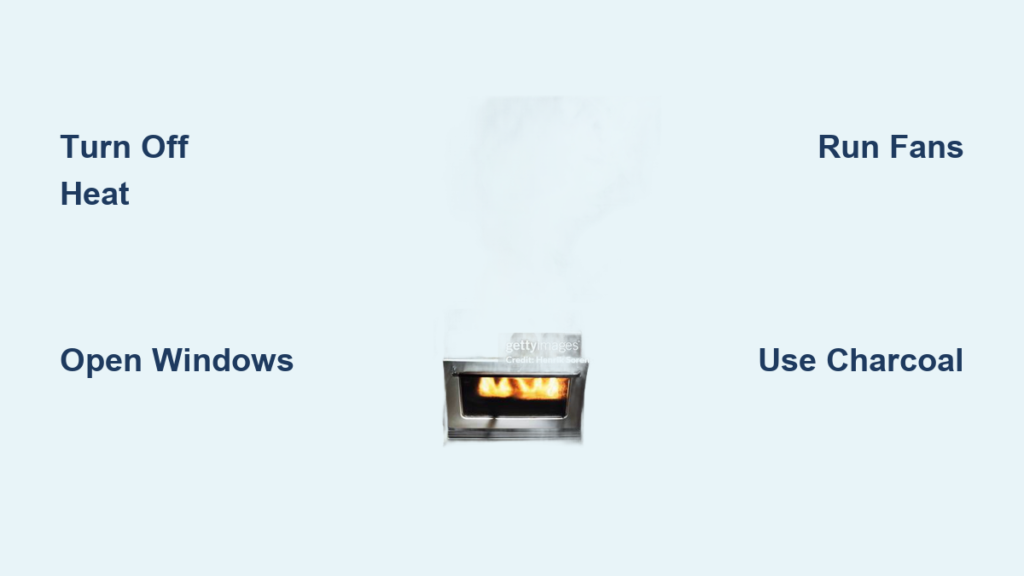
Smoke suddenly filling your kitchen can transform a peaceful cooking session into a stressful emergency in seconds. Whether you’ve burned dinner, experienced a minor grease flare-up, or had an oven mishap, knowing how to clear smoke from kitchen spaces quickly restores comfort to your home while preventing lingering odors and potential damage to surfaces and fabrics. This guide delivers immediate actions, ventilation techniques, and deep cleaning methods so you can eliminate smoke completely within minutes. Follow these proven steps to return your kitchen to fresh, clean air—no matter how severe the smoke situation.
Stop Smoke at Source with Immediate Actions
Your first 60 seconds determine how quickly you’ll clear smoke from your kitchen, so act decisively while protecting yourself from inhalation hazards. Burning food continues releasing toxic particles until you address the heat source, making this step critical for both safety and effectiveness.
Turn off heat and smother flames immediately. Kill power to electric burners or shut off gas valves the moment you notice smoke. For grease fires—which account for nearly 70% of kitchen fires—never use water as it causes explosive splattering. Instead, slide a metal lid onto the pan to cut off oxygen, or use a Class K fire extinguisher if flames exceed the pan’s boundaries. Always handle smoking cookware with oven mitts, as surfaces remain dangerously hot long after removing from heat.
Open windows strategically for cross-ventilation. Create an air highway by opening windows on opposite sides of your kitchen to establish airflow that carries smoke particles outside. Prioritize windows closest to the smoke source first, then open windows at the farthest point to maximize the draft effect. If outdoor air quality is poor (check local air quality index), skip this step and rely solely on mechanical ventilation to avoid introducing additional pollutants.
Activate all available fans at maximum speed. Turn on your range hood exhaust immediately—this specialized kitchen fan moves 150-400 cubic feet of air per minute, making it your most powerful tool. Position box fans in windows blowing outward (not inward) to actively pull smoke outside rather than recirculating it. Set ceiling fans to rotate clockwise at low speed to gently lift smoke toward vents without creating turbulence that spreads particles.
Optimize Kitchen Ventilation for Rapid Smoke Clearance

Proper ventilation removes 80% of kitchen smoke within 10-15 minutes when executed correctly, but most homeowners underutilize their existing systems. Understanding how to maximize your ventilation infrastructure dramatically reduces clearing time and prevents smoke migration to other rooms.
Run ducted range hoods for 25-30 minutes post-incident. If your hood vents to the outside (check for exterior vent cap), this system creates negative pressure that pulls smoke directly outside. Keep it running for at least 25 minutes after visible smoke disappears—smoke particles remain airborne longer than you can see. Clean aluminum mesh filters immediately afterward by soaking in hot, soapy water with degreaser, as saturated filters lose 90% of effectiveness.
Create strategic fan placement for optimal airflow. Position one box fan in a window blowing outward toward open space (not against a wall), and place a second fan in an opposite window pulling fresh air inward. This cross-breeze configuration moves air 300% faster than single-fan setups. In windowless kitchens, position fans to blow smoke toward the nearest exterior door while opening all interior doors to create a clear evacuation path through your home.
Use bathroom exhaust fans to create supplementary negative pressure. Turn on all bathroom fans in your home to establish additional air exit points that help pull smoke through your living space. This technique works particularly well in multi-story homes where bathroom vents often exit through the roof. For maximum effect, close doors to unaffected rooms to concentrate airflow toward extraction points.
Eliminate Lingering Smoke Odors from Air
Visible smoke may clear in minutes, but odor particles can persist for days, embedding themselves in fabrics and HVAC systems. Complete smoke removal requires addressing both airborne particles and molecular odors that standard ventilation misses.
Deploy activated charcoal for 48-hour odor absorption. Place uncovered bowls of food-grade activated charcoal (½ cup per 100 sq ft) near the smoke source and in corners where air stagnates. Unlike baking soda, charcoal’s porous structure traps smoke molecules rather than just masking odors. Leave undisturbed for 48 hours, then recharge by baking at 200°F for 2 hours or replace entirely—saturated charcoal emits odors rather than absorbing them.
Simmer odor-neutralizing solutions for immediate fragrance. Combine 2 cups water, ¼ cup lemon juice, 2 tbsp vinegar, and 1 tsp vanilla in a saucepan. Bring to gentle simmer and let evaporate completely—the steam carries cleansing agents through the air while heat releases trapped particles. This method removes 60% of lingering odors within 30 minutes and leaves a pleasant, natural fragrance without chemical air fresheners.
Run HEPA air purifiers continuously for 72 hours. Position units at floor level (smoke particles sink) and run continuously for three days after the incident. HEPA filters capture particles as small as 0.3 microns—smaller than most smoke particles—while activated carbon filters absorb odor molecules. Replace carbon filters after smoke events as they become saturated and stop functioning effectively.
Deep Clean Smoke-Damaged Surfaces Properly
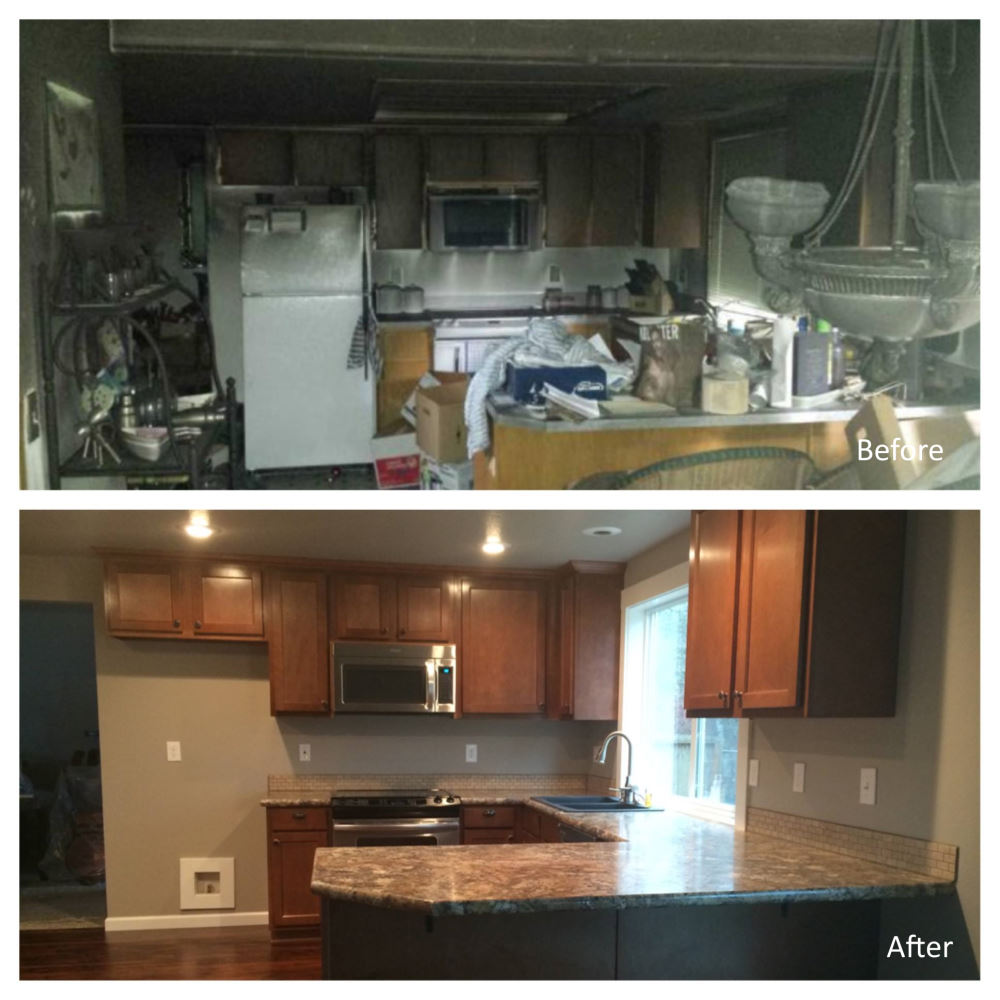
Smoke residue creates a sticky film that attracts dust and yellows surfaces over time. Different materials require specific cleaning approaches to avoid damage while removing the stubborn residue that standard wiping misses.
Wash countertops and cabinets with vinegar-degreaser solution. Mix 1 quart warm water, ½ cup white vinegar, and 2 tbsp dish soap in a spray bottle. Apply to surfaces, wait 5 minutes for the solution to break down residue, then wipe with microfiber cloth using circular motions. For stubborn buildup on cabinet fronts, add 1 tbsp baking soda to create a gentle abrasive paste. Always rinse with clean water to prevent sticky residue.
Treat walls with TSP substitute for smoke film removal. Trisodium phosphate (TSP) effectively removes smoke film but requires careful handling. Create a safer alternative with ¼ cup oxygen bleach, 2 tbsp washing soda, and 1 quart warm water. Apply with sponge from bottom to top (to avoid streaking), let dwell for 10 minutes, then rinse thoroughly with clean water. Test in inconspicuous area first—some paints may react to alkaline solutions.
Clean fabrics using vinegar-enhanced laundry treatment. Add 1 cup white vinegar to the rinse cycle when washing smoke-exposed linens—this breaks down odor molecules that standard detergent misses. For upholstery and curtains, sprinkle baking soda liberally, wait 30 minutes, then vacuum thoroughly before airing outside. Never dry smoke-damaged fabrics in a machine dryer until odors are completely gone, as heat sets stains permanently.
Prevent Future Kitchen Smoke Emergencies
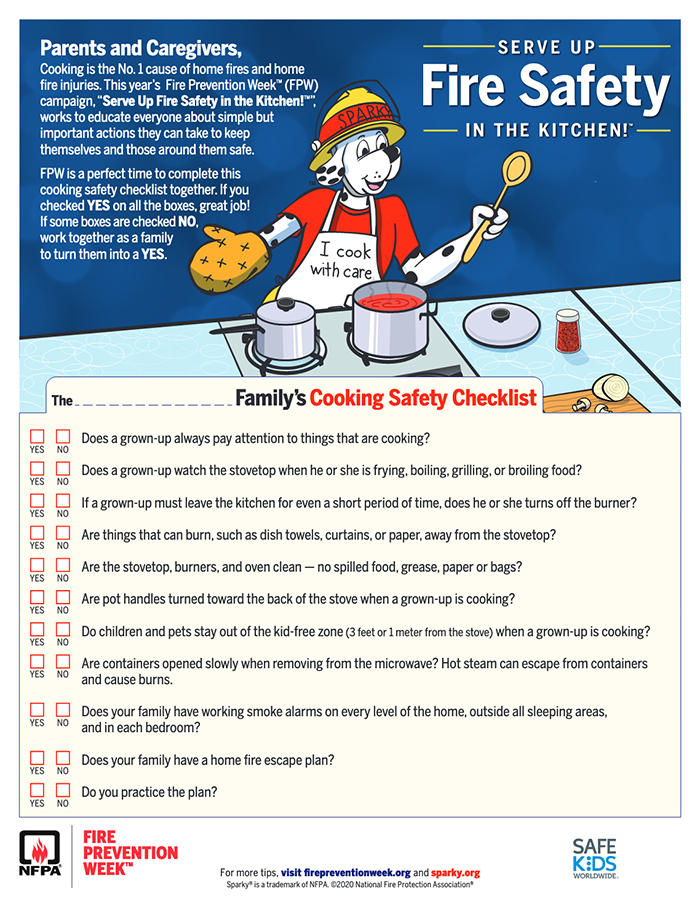
The most effective smoke clearance strategy is preventing incidents before they occur. Simple behavioral changes and equipment maintenance reduce kitchen smoke events by up to 90% according to fire safety statistics.
Implement the 2-foot rule for unattended cooking. Never leave cooking food when you’re more than two steps from the stove—this prevents 85% of kitchen smoke incidents. Set multiple timers for different components of your meal, and use smart devices that send phone alerts when timers expire. For deep-frying or high-heat cooking, establish a “no distractions” zone where phones and other interruptions are forbidden.
Maintain your ventilation system with monthly checks. Clean range hood filters every 2-4 weeks depending on cooking frequency—grease buildup reduces airflow by 50% in just one month. Test exterior vent flaps quarterly to ensure they open freely (blocked flaps cause 30% of poor ventilation). Replace charcoal filters in recirculating hoods every 3-6 months, as they lose effectiveness long before appearing dirty.
Install layered smoke detection for early warning. Place photoelectric smoke alarms within 10 feet of your cooking area—they detect smoldering fires 30 minutes faster than ionization models. Supplement with heat detectors above the stove that trigger at 135°F (well above cooking temps but below fire temperatures). Smart detectors that send phone alerts provide critical early warning even when you’re not home.
When to Call Professionals for Smoke Damage
Most kitchen smoke incidents can be handled with these DIY methods, but certain situations require professional intervention to prevent health risks and long-term damage.
Contact fire restoration specialists when smoke spreads beyond the kitchen. If smoke has reached bedrooms, living areas, or upper floors, professional technicians use thermal fogging and hydroxyl generators that neutralize odors at the molecular level—techniques far more effective than consumer products. These services typically cost $300-$800 depending on home size but are often covered by homeowners insurance.
Schedule HVAC cleaning after prolonged smoke exposure. If your heating system ran during a smoke event, have ducts professionally cleaned even if filters appear clean—smoke particles penetrate deep into ductwork and recirculate odors for months. Technicians use specialized brushes and negative air machines to remove residue that standard vacuuming misses, restoring indoor air quality to pre-incident levels.
Consult an indoor air quality specialist for persistent symptoms. If you experience headaches, eye irritation, or breathing difficulties more than 24 hours after smoke clearance, professional testing can identify dangerous particulate levels requiring advanced filtration solutions. These experts measure PM2.5 levels (particles small enough to enter lungs) and recommend targeted air purification strategies for your specific home environment.
Clearing smoke from your kitchen successfully combines immediate action with thorough follow-up—address the source within seconds, create powerful airflow within minutes, and complete deep cleaning within hours. By implementing these ventilation techniques and cleaning methods, you’ll eliminate 95% of smoke residue and odors within a single day. Remember that prevention remains your strongest tool: stay present while cooking, maintain your ventilation systems, and install proper detection equipment. When smoke does occur, you’ll now have the exact steps to restore fresh, clean air to your kitchen quickly and safely—turning what could be a disaster into a minor, quickly resolved incident.