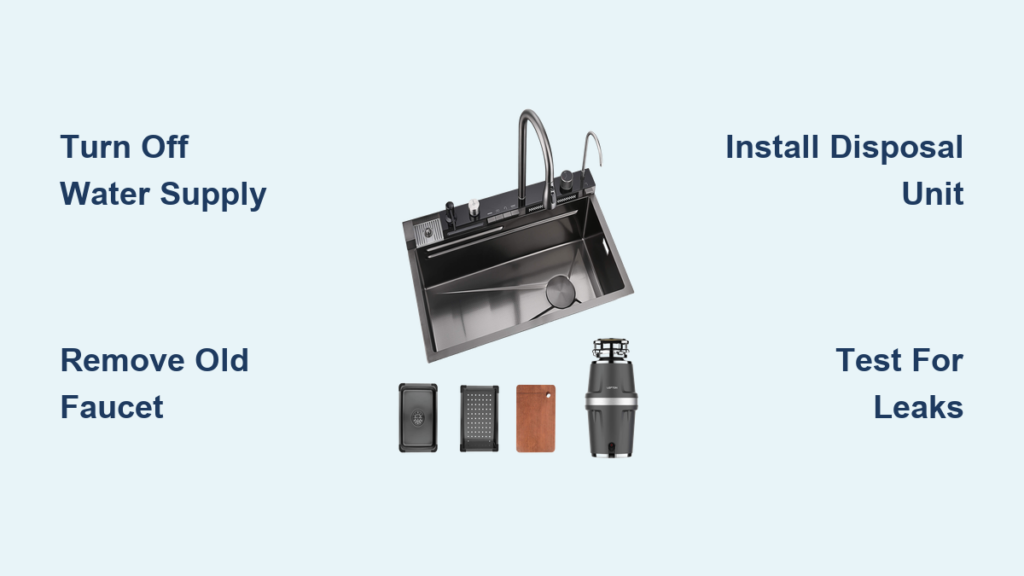
Replacing your kitchen faucet while installing a new garbage disposal isn’t just two separate projects—it’s a strategic kitchen upgrade that maximizes efficiency and saves significant time. When you tackle how to replace kitchen faucet with garbage disposal simultaneously, you avoid the frustration of working under your sink twice, streamline your plumbing connections, and create a cohesive system that works seamlessly together. These fixtures share critical connections beneath your sink, meaning coordinating their installation prevents redundant work and ensures optimal performance of both units. Whether you’re refreshing an outdated kitchen or adding convenience to daily food preparation, this comprehensive guide provides the step-by-step instructions you need to complete this valuable upgrade with confidence.
Many homeowners mistakenly believe faucet replacement and garbage disposal installation must be separate projects, but the reality is they naturally complement each other. Both require access to the same confined under-sink space, involve disconnecting water supply lines, and may require electrical modifications. By doing them together, you clear out cabinet items once instead of twice, minimize disruption to your kitchen routine, and ensure all components work harmoniously. This guide walks you through every critical phase—from planning and tool selection to final testing—so you can complete this upgrade successfully whether you’re a seasoned DIYer or tackling it for the first time.
Plan Your Faucet and Disposal Installation Strategy
Before purchasing any equipment, evaluate your sink configuration to ensure compatibility. Most kitchen sinks feature either one or three mounting holes with standard 4-inch spacing. Garbage disposals typically require an additional hole for the air gap fitting to prevent wastewater backup. If your sink lacks sufficient holes, you’ll need to either drill additional holes (only possible with certain sink materials) or select a faucet with integrated air gap protection that eliminates the separate fixture.
Measure your drain pipe configuration carefully before selecting a disposal unit. Standard setups include a P-trap connecting to the wall drain, while disposal installations require modified plumbing with a dishwasher inlet connection. Note the distance from your sink drain to the wall drain—longer runs demand more powerful units (3/4 HP or higher) to prevent clogs. Verify your existing pipe diameter (typically 1-1/2 inches) to ensure compatibility with your new disposal’s discharge elbow.
Select the Right Faucet and Disposal Combination

Choose a disposal unit based on your household’s specific needs. For average families processing typical food waste, a 1/2 to 3/4 HP model provides sufficient grinding power while maintaining energy efficiency. Larger households or those frequently processing tough items like chicken bones should consider 1 HP units. Prioritize models with stainless steel grinding components, induction motors for quieter operation, and multi-layer sound insulation—features that significantly enhance long-term satisfaction.
When selecting your faucet, look for models designed specifically for disposal compatibility. Pull-down spray faucets work exceptionally well because their extended reach allows direct spraying into the disposal opening. Opt for faucets with compact bases that maximize under-sink space for disposal access, magnetic docking systems for secure spray head placement, and finishes like brushed nickel or matte black that resist water spots. If local codes require an air gap, choose either a faucet with integrated air gap protection or plan to install a separate fixture.
Gather Essential Tools Before Starting

Having all necessary tools assembled prevents frustrating mid-project delays. A basin wrench is indispensable for reaching mounting nuts in tight under-sink spaces where standard wrenches can’t operate. You’ll also need adjustable pliers in multiple sizes, screwdrivers (both Phillips and flathead), a hacksaw or tubing cutter for modifying pipes, and a flashlight to illuminate dark areas. For electrical work, include wire strippers, a voltage tester, and appropriate electrical boxes.
Additional materials beyond your fixtures include plumber’s putty or silicone sealant (depending on sink material), PTFE tape for threaded connections, new supply lines if yours are corroded, and appropriate drain fittings. For electrical connections, you’ll need GFCI-protected outlets, proper gauge wiring, wire connectors, and your chosen activation switch. Having everything ready before starting ensures a smooth workflow and prevents compromising your installation by working with inadequate tools.
Remove Existing Faucet and Prepare for Installation
Begin by turning off hot and cold water supply valves under the sink. Open the faucet to relieve pressure and verify water flow has stopped completely. Place a bucket beneath connections to catch residual water, then disconnect supply lines using adjustable pliers. If supply lines show corrosion, plan to replace them with new flexible lines during reassembly.
Remove the drain trap by loosening slip nuts at both ends and allow trapped water to drain into your container. If replacing an existing disposal, disconnect it from power and remove the mounting assembly securing it to the sink drain flange. To remove the old faucet, locate mounting nuts beneath the sink deck—these are notoriously difficult to access, making your basin wrench essential. Rotate nuts counterclockwise, then carefully lift the faucet assembly from above. Clean the mounting surface thoroughly to ensure a proper seal with your new installation.
Install Your New Faucet Properly
Apply plumber’s putty or silicone sealant around the new faucet base according to manufacturer recommendations for your sink material. Composite sinks typically require silicone rather than putty to prevent staining. Position the faucet carefully over mounting holes, ensuring proper alignment before pressing down firmly to create the seal.
From beneath the sink, thread mounting nuts onto faucet shanks and hand-tighten initially. Use your basin wrench to tighten securely while alternating sides to ensure even pressure—overtightening can crack the faucet base. Connect water supply lines to appropriate inlet fittings (left for cold, right for hot when facing the faucet), hand-tightening first before securing with pliers for an additional quarter-turn. Turn on water supply valves slowly and check for leaks before proceeding.
Mount and Connect Your Garbage Disposal
Prepare the sink drain flange by cleaning the opening thoroughly and applying plumber’s putty around the underside. Insert the flange into the sink opening, pressing firmly to create a seal. From below, install the mounting gasket, backup ring, and mounting ring, tightening screws evenly in a cross-pattern.
If your disposal requires assembly, install the discharge elbow according to instructions. Apply PTFE tape to threaded connections before lifting the disposal unit. Align mounting tabs with the sink drain flange and rotate clockwise until locked in place. Ensure the unit is level and securely mounted before proceeding.
Connect drain lines carefully, ensuring proper slope (1/4 inch per foot minimum) toward the wall drain. If you have a dishwasher, remove the knockout plug on the disposal and connect the dishwasher hose with a clamp. Install the air gap fixture if required, connecting dishwasher hose to the air gap inlet and outlet to the disposal unit.
Wire the Electrical System Safely

Electrical safety is critical—always turn off the circuit breaker before working. Verify power is off using a voltage tester. Mount an electrical box in a dry location under the sink, feed cable through the knockout, and secure it with a clamp.
Connect black (hot) wire to brass terminal, white (neutral) to silver terminal, and ground wire to green terminal on the GFCI outlet. Install the receptacle in the box and attach the cover plate. Connect the disposal power cord to the electrical system by either plugging into the outlet or making direct wire connections with appropriately sized wire nuts.
Test for Leaks and Proper Operation
Conduct a comprehensive leak test before finalizing your project. Turn on water supply valves fully and run water through the faucet for several minutes, checking all connection points. Operate the faucet through all functions including spray mode, and check the base for seepage.
Test the disposal by running water while activating the unit. It should operate smoothly without excessive vibration. Check all drain connections for leaks while water flows through the system. If you have a dishwasher connection, run a cycle while observing connections for leaks. Verify the air gap functions properly without backup.
Maintain Your New Installation for Longevity
Extend the life of your disposal with monthly cleaning using ice cubes and citrus peels. Run ice through the disposal followed by lemon or orange peels with cold water—the ice sharpens impellers while citrus oils neutralize odors. Avoid fibrous materials like celery, hard items like bones, and never pour grease down the disposal.
Maintain your faucet by cleaning the finish with mild soap and water, followed by thorough drying. Periodically remove and clean the aerator if water flow becomes restricted. Check under-sink connections monthly for signs of leaks or corrosion, tightening connections immediately to prevent water damage.
Troubleshoot Common Post-Installation Issues
A disposal that hums but doesn’t grind usually indicates a jam. Turn off power, remove visible debris with a wooden spoon, then insert a hex wrench into the motor shaft hole (bottom of unit) and rotate to free the impeller. Press the reset button and test operation.
Leaks typically originate from the sink flange connection or discharge elbow fitting. Tighten mounting ring screws slightly or reapply plumber’s putty if the seal has failed. For faucet leaks at the base, the mounting seal may need replacement—remove the faucet and reapply appropriate sealant.
Low water pressure often results from debris in the aerator. Remove and rinse it thoroughly to clear mineral deposits. Ensure water supply valves are fully open, as partially closed valves significantly restrict flow.
Final Considerations for Long-Term Success
Successfully replacing a kitchen faucet with garbage disposal requires careful planning, the right tools, and attention to detail throughout installation. By understanding how these fixtures interact and coordinating their installation, you achieve a cohesive system that enhances kitchen functionality for years. The investment in quality components and proper installation pays dividends through reliable service and reduced maintenance needs.
Whether you complete this project yourself or hire a professional, a properly installed faucet and garbage disposal significantly improve daily kitchen tasks while adding value to your home. Regular maintenance extends the life of both fixtures and prevents costly repairs. Remember that electrical safety and plumbing integrity should never be compromised—when in doubt, consult manufacturer instructions or a licensed professional to ensure correct implementation.