Installing a kitchen sink drain properly prevents leaks, stops sewer gases from entering your home, and ensures efficient drainage. Whether you’re replacing an old corroded assembly or installing a new sink, knowing how to put in a kitchen sink drain correctly saves you money and prevents water damage under your cabinet. A well-installed drain system creates reliable seals at every connection point and maintains proper slope for effective water flow. This guide walks you through each critical step so you can complete your kitchen sink drain installation with confidence and achieve professional results.
The complexity of putting in a kitchen sink drain varies based on your configuration. A simple single-basin setup without a garbage disposal represents the most straightforward installation, while double-basin sinks with disposals require additional planning and components. Regardless of your specific situation, the fundamental principles remain consistent: create watertight seals at all connections, maintain proper alignment, and test thoroughly before considering the job complete. With basic tools, quality materials, and attention to detail, you can successfully put in a kitchen sink drain that performs reliably for years.
Gather Essential Tools Before Starting Your Drain Installation
Before you begin putting in a kitchen sink drain, assemble all necessary tools to avoid frustrating interruptions mid-project. Having everything ready ensures you can work efficiently and achieve better results without scrambling for equipment.
The basin wrench stands out as the most specialized tool for this job, designed specifically for tightening locknuts in the tight space beneath your sink. This tool features a long handle with a pivoting jaw that reaches areas where standard wrenches can’t fit. While channel-type pliers can serve as an alternative, a basin wrench makes strainer installation significantly easier and helps you achieve proper tightness without damaging components.
You’ll also need:
– Adjustable wrench or pipe wrench for larger fittings
– Channel-type pliers for gripping locknut tabs
– Both flathead and Phillips screwdrivers
– Measuring tape and level for accurate measurements
– Bucket and rags to protect your workspace
For materials, your drain assembly kit should contain the basket strainer, locking nut, rubber washer, and friction ring. Plumber’s putty creates watertight seals around drain fixtures, while Teflon tape wraps around threaded connections to prevent leaks. Verify that all components match your sink’s drain hole size before purchasing.
Prepare Your Sink for Drain Installation
Thorough preparation before putting in a kitchen sink drain significantly impacts the success and longevity of your installation. Taking time to prepare properly prevents problems during the installation process and ensures your new drain functions reliably.
Begin by turning off the water supply beneath the sink—even though you’re working with drain pipes rather than supply lines. Place a bucket beneath the work area to catch any residual water that may drain from old pipes, and lay protective covering on your cabinet floor to prevent damage.
If replacing an existing drain, disconnect the drainpipe from the tailpiece using pliers to turn the metal fittings. Remove the old P-trap and any other fittings connected to the drain system. Use a putty knife to remove all old plumber’s putty and debris from around the drain hole—the sink surface must be clean and smooth for the new seal to be effective.
Inspect the condition of your wall drain pipe before proceeding. Ensure the fitting is in good condition and compatible with new components—replace any damaged or corroded fittings now to prevent problems later. Perform a dry-fit of all components to ensure proper fit and alignment before applying any sealants.
Install the Basket Strainer Without Leaks

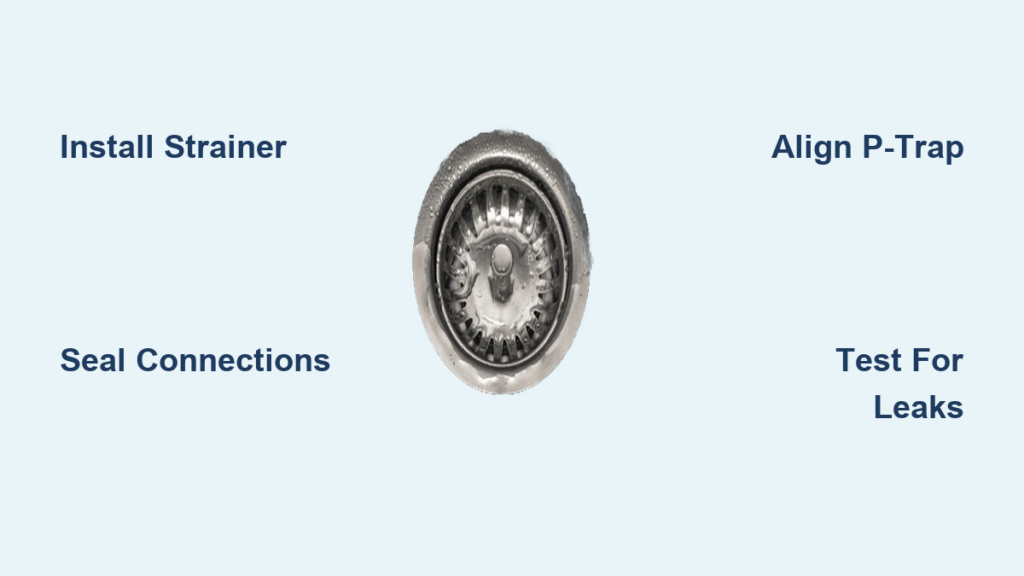
The basket strainer installation creates the primary seal between your sink and the drain system, making this the most critical step when putting in a kitchen sink drain. A properly installed strainer prevents water from leaking beneath your sink and stops food particles from entering the drain to cause clogs.
Start by preparing your plumber’s putty. Take a small amount and knead it in your hands for approximately one minute to warm it and increase pliability. Roll the putty into a cylindrical rope shape about four to five inches long—the putty should be soft enough to mold easily but firm enough to maintain its shape. Flip the basket strainer upside down and press the plumber’s putty onto the underside of the lip, wrapping it completely around the entire circumference.
Flip the strainer right-side up and press it firmly into the drain hole at the bottom of the sink. Press evenly around the entire circumference to ensure complete contact, checking that the strainer sits flush and level. From beneath the sink, slide the rubber washer over the bottom of the strainer body, followed by the friction ring.
Thread the locknut onto the strainer body by turning it clockwise. Hand-tighten first, then use your basin wrench to achieve final tightness—aim for hand-tight plus a quarter turn with tools. Over-tightening can crack the strainer body or strip the threads. Remove any excess plumber’s putty that has been pressed out around the drain hole for a professional appearance.
Connect the Tailpiece Properly for Smooth Drainage
The tailpiece extends downward from the basket strainer and connects to the P-trap or garbage disposal. Proper alignment and connection ensure effective drainage without standing water or stress on connections when putting in a kitchen sink drain.
Thread the brass or plastic tailpiece onto the bottom of the basket strainer by turning it clockwise. Hand-tighten the tailpiece, then verify that it is perfectly vertical for proper drainage. Use a level to check the alignment—if the tailpiece isn’t straight, adjust it until it is plumb.
Place a rubber compression gasket inside the top of the drainpipe, then slide the connector ring up the drainpipe and thread it onto the tailpiece. Tighten the connector with an adjustable wrench, being careful not to over-tighten. The compression gasket creates a watertight seal at the slip joint, but excessive force can crack plastic components or damage the seal.
Assemble the P-Trap System Correctly
The P-trap serves two critical functions: it retains water to create a seal against sewer gases entering your home, and it captures small objects that might fall down the drain. Proper P-trap installation ensures effective drainage and compliance with plumbing codes when putting in a kitchen sink drain.
Attach the inlet of the P-trap to the tailpiece using a slip nut and washer. Hand-tighten the slip nut, ensuring the P-trap is level and properly aligned. The P-trap should receive drainage from the tailpiece without stress or misalignment—any angles or twists in the connection can cause leaks or drainage problems.
The drain pipe leaving the P-trap must maintain a slope of 1/4 inch per foot of horizontal run for proper drainage. This slope ensures wastewater flows freely toward the wall drain without standing in the pipes. Use a level to verify slope during installation, adjusting the P-trap position or pipe lengths as needed.
Connect the outlet of the P-trap to the wall stub-out. The horizontal distance between the P-trap and the wall should not exceed 24 inches for optimal drainage—measure carefully and adjust your configuration if necessary.
Seal Threaded Connections to Prevent Leaks
:max_bytes(150000):strip_icc()/how-to-use-teflon-tape-2718712-05-6b58230b5487496394ea91ea83040119.jpg)
Proper sealing of threaded connections prevents leaks at critical joints throughout your kitchen sink drain installation. Both Teflon tape and pipe joint compound provide effective sealing when applied correctly.
To apply Teflon tape, hold the fitting in your left hand with the threads facing you. Wrap three or four turns of Teflon tape tightly over the threads in a clockwise direction. The tape fills microscopic gaps in the threads and creates a watertight seal when the fitting is tightened.
After applying tape, thread the fitting together and tighten to a firm hand-tight position. Over-tightening can crack plastic fittings or strip threads. An additional quarter turn with pliers beyond hand-tight usually provides sufficient compression for most connections.
Test for Leaks Before Finishing Your Installation
Thorough testing after putting in a kitchen sink drain confirms that all connections are properly sealed and the system functions correctly. This step catches problems when they’re easy to fix and prevents water damage to your cabinet.
Fill the sink to the rim with water. This creates maximum pressure on the drain system and reveals leaks that might not appear with normal use. Remove the drain stopper and observe the water flow—water should drain completely without backup or slow drainage.
Visually inspect every connection beneath the sink for moisture. Use a dry cloth to wipe connections, then check for wetness after water has flowed for several minutes. Pay particular attention to the basket strainer seal and slip joint connections.
If leaks appear, identify the source and apply appropriate corrections. Most minor leaks at slip joints resolve by tightening the slip nut—hand-tighten first, then add a quarter turn with pliers if needed. If tightening doesn’t resolve the leak, disassemble the connection, clean old sealant from both surfaces, and reapply fresh plumber’s putty before reassembling.
Avoid These Common Drain Installation Mistakes
Learning from common errors helps ensure a successful kitchen sink drain installation. The following mistakes frequently cause problems and should be carefully avoided when putting in a kitchen sink drain.
Misaligning the P-trap creates drainage problems and standing water that leads to odors and clogs. Always verify slope and alignment during installation using a level, and adjust components until they fit naturally without stress. Overtightening connections cracks plastic fittings, strips threads, and damages seals—tighten to firm hand-tight plus a quarter turn with tools.
Forgetting to test before completing the installation allows leaks to cause damage to cabinets and flooring. Always run water to check for leaks before considering the job complete. Ignoring local plumbing codes can result in installations that must be redone—research requirements before beginning.
Maintain Your Drain System for Long-Term Performance
Proper maintenance extends the life of your kitchen sink drain installation and prevents problems before they develop. A simple maintenance schedule keeps your drain functioning optimally for years to come.
Monthly, flush the drain with hot water to dissolve grease buildup. Run the garbage disposal with cold water to help flush particles through the system, and use a sink strainer to catch food particles before they enter the drain. Quarterly, disassemble and clean the P-trap to remove accumulated debris.
Annually, inspect all connections for signs of leaks or corrosion. Check the basket strainer seal and reapply plumber’s putty if needed. Verify that all connections remain tight and that the drain system functions properly. Addressing minor issues before they become major problems saves time and money in the long run.
By following these installation guidelines and maintenance practices, you can successfully put in a kitchen sink drain that provides reliable, leak-free service for years. Taking time to understand each component, following proper installation techniques, and testing thoroughly before completion creates professional-quality results that rival work performed by licensed plumbers.