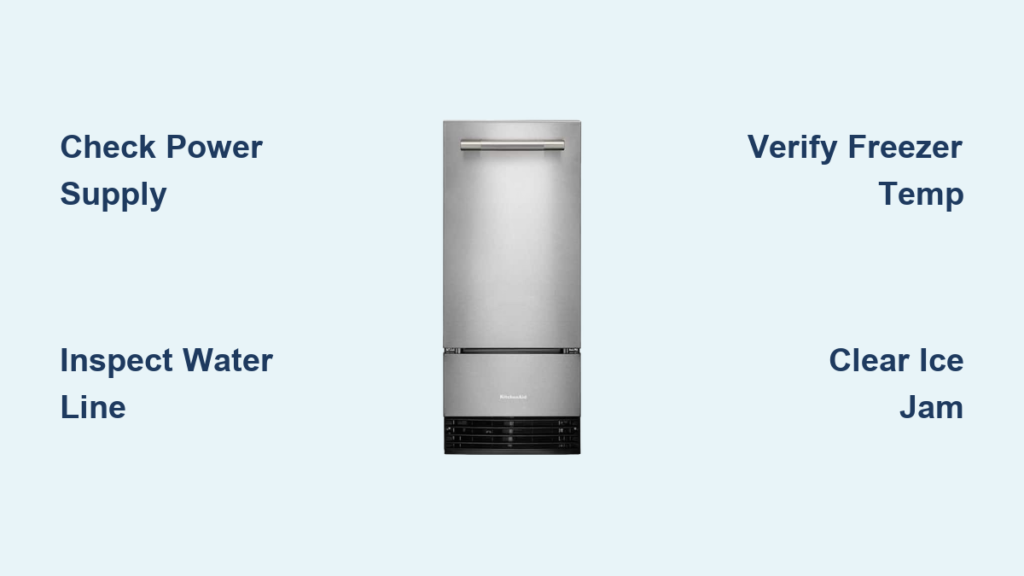
Your KitchenAid ice maker should be a reliable source of fresh ice for your beverages, but when it suddenly stops working, the inconvenience can be immediate and frustrating. Whether you’re hosting guests or simply enjoying a cold drink on a warm day, running out of ice disrupts your routine. Many KitchenAid ice maker issues can be resolved with basic troubleshooting before you need to call for professional service. Understanding what might be causing the problem—and knowing the right steps to diagnose it—can save you time and prevent unnecessary service calls.
This guide provides practical steps to identify why your KitchenAid ice maker isn’t producing ice and what you can do to potentially fix it yourself. While specific procedures vary by model, the fundamental troubleshooting principles remain consistent across most KitchenAid ice makers. By systematically checking the most common causes of failure, you can often restore your ice production without professional assistance.
Verify Power Supply and Electrical Connections
Before assuming complex mechanical failures, begin with the simplest possible explanations for your KitchenAid ice maker not working. Electrical issues are among the most common—and easiest to fix—reasons for ice maker failure.
Check Outlet and Power Source
Start by confirming your ice maker is receiving proper electrical power. Unplug the unit and inspect the power cord for any visible damage, fraying, or wear that might interrupt the connection. Plug the cord into a different, known-working outlet to eliminate the possibility of a faulty circuit. Some KitchenAid models have indicator lights that should illuminate when power is connected—if no lights appear after plugging in, the issue likely involves the power supply rather than the ice maker mechanism itself.
If your ice maker remains unresponsive after verifying the outlet, check your home’s circuit breaker panel. A tripped breaker could have cut power without your knowledge. Reset any tripped breakers and monitor whether the ice maker responds. Remember that some KitchenAid models may share a circuit with other appliances, so check multiple breakers if necessary.
Examine Control Panel and Settings
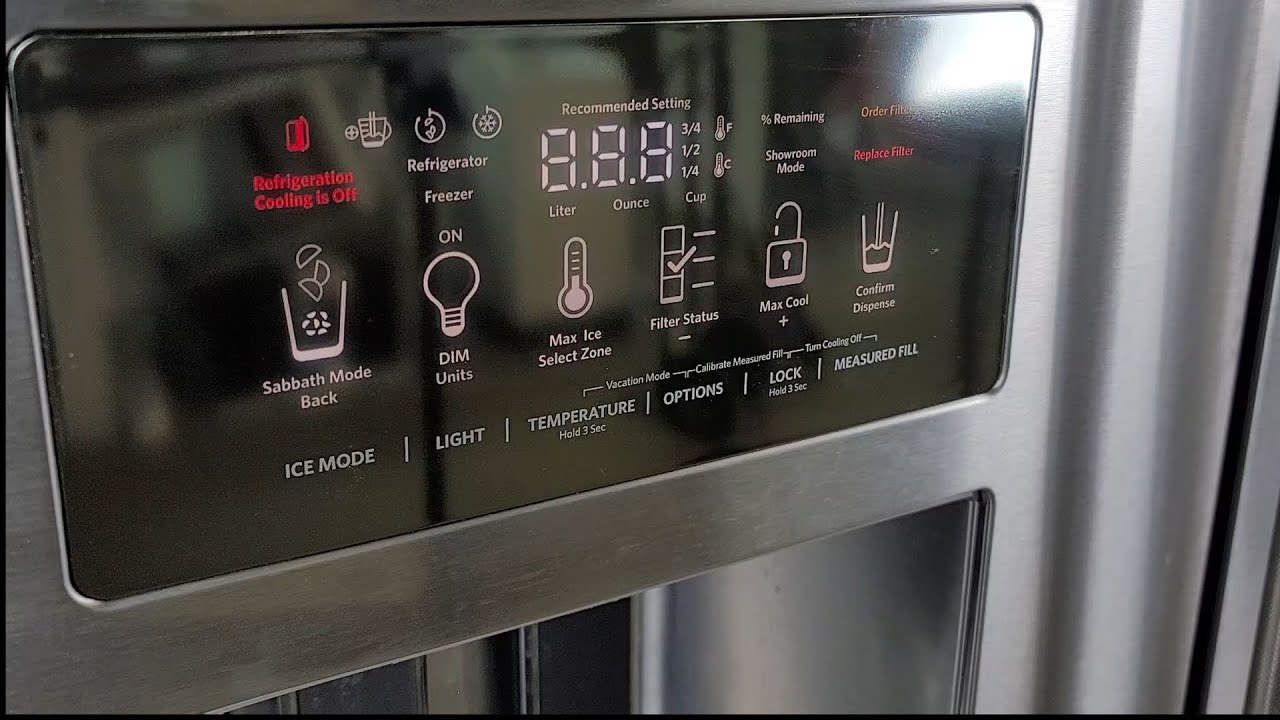
Modern KitchenAid ice makers feature digital control panels where settings can be accidentally changed. Locate your ice maker’s control panel—typically on the front of the unit or inside the freezer compartment—and verify that the ice maker function is activated. Some models have a dedicated “On/Off” switch that may have been inadvertently flipped to the “Off” position during routine cleaning.
Many units also include a child lock or control lock function that prevents unintended changes to settings. When activated, this typically displays a padlock icon on the control panel. Consult your owner’s manual for specific instructions on unlocking your model, as procedures vary between KitchenAid configurations. If the display shows no lights or appears completely dark, the lock function or a control board issue may be responsible for your ice maker not working.
Confirm Water Supply and Flow
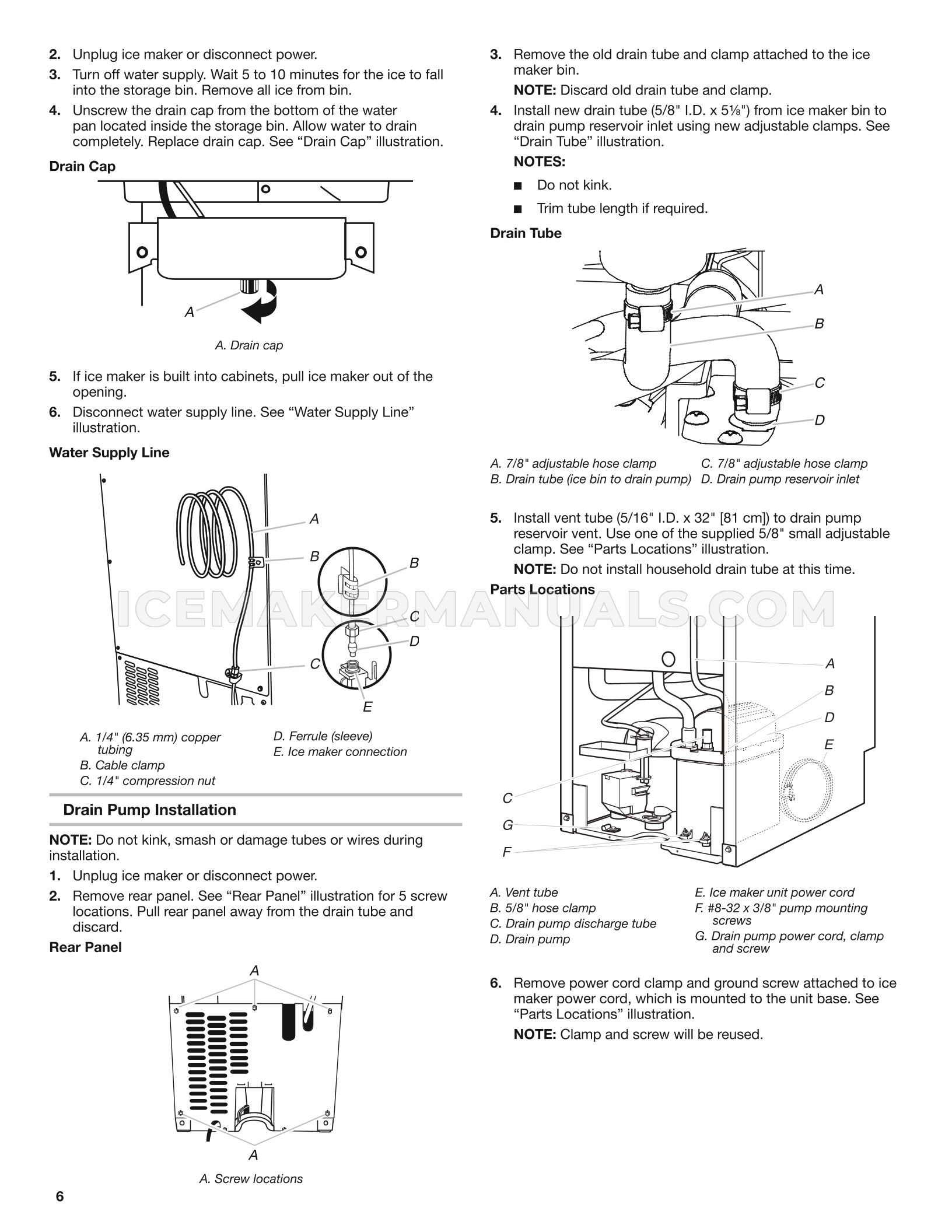
Insufficient water supply represents the most frequent cause of ice maker failure across all brands, including KitchenAid. Without adequate water flow, your ice maker cannot produce ice regardless of other functioning components.
Inspect Water Line Connections
Locate the water supply line connected to your KitchenAid ice maker, typically found at the back of the unit where it connects to your home’s plumbing. Check that the valve controlling water flow to the ice maker is fully open—these valves are usually located under the sink or behind the appliance and may have been accidentally bumped or partially closed.
Examine the entire length of the water line for any kinks, bends, or damage that might restrict water flow. Even a sharp bend in the tubing can significantly reduce water pressure, preventing your ice maker from functioning properly. Verify that the water line fitting is securely fastened to both the ice maker and the water supply valve, as loose connections can cause slow leaks or inadequate pressure.
Test Water Pressure and Filter
Adequate water pressure is essential for proper ice maker operation. Most KitchenAid models require minimum water pressure to function correctly. If your home’s water pressure is too low—common in homes with well systems or older plumbing—the ice maker may cycle but fail to fill properly.
Your water filter also plays a crucial role in ice production. A clogged or exhausted filter restricts water flow to the ice maker, even if the main water supply is adequate. Check your filter’s replacement indicator or examine the filter for visible discoloration. Most manufacturers recommend replacing water filters every six months for optimal performance. If your filter hasn’t been changed recently, installing a new one designed for your specific KitchenAid model may resolve the issue.
Assess Temperature Conditions
Ice makers operate within specific temperature ranges, and conditions outside these parameters can prevent ice production entirely or cause malformed ice cubes. Your freezer temperature directly impacts ice maker performance.
Verify Proper Freezer Temperature
The optimal temperature range for ice production is between 0°F and 5°F (-18°C to -15°C). If your freezer setting is too warm, the ice maker may not initiate the harvest cycle or may produce soft, mushy ice. Conversely, extremely cold temperatures can cause ice to stick together and jam the mechanism.
Check your freezer temperature using an appliance thermometer placed in the center of the freezer compartment. Leave it for several hours to get an accurate reading, as freezer temperatures fluctuate during normal operation. If the temperature reads above 5°F, adjust your freezer control to a colder setting and wait 24 hours before reassessing ice production.
Address Frost Buildup Issues
Excessive frost buildup inside the ice maker compartment signals a potential defrost system problem. When frost accumulates on the evaporator coils or inside the ice maker housing, it can interfere with the mechanism’s moving parts and insulate components needed for proper operation.
Inspect the ice maker compartment for visible frost or ice deposits. While some frost is normal after door openings, excessive buildup exceeding 1/4 inch suggests a defrost system malfunction that may require professional service. Heavy frost can prevent the ice maker from cycling properly, resulting in no ice production.
Clear Ice Jams and Blockages
Ice jams occur when ice builds up in areas where it shouldn’t, preventing the mechanism from functioning properly. These jams are common causes of KitchenAid ice makers suddenly stopping ice production.
Identify and Clear Common Jam Locations
Ice most commonly jams in three locations within a KitchenAid ice maker: the ice mold area where cubes form, the harvesting mechanism that releases cubes, and the delivery chute where ice exits. Each jam location has distinct symptoms requiring different clearing approaches.
To clear a jam, first turn off the ice maker using the control panel. Use warm water—not hot—to gently melt ice in the affected area. Never use sharp metal tools to pry ice loose, as you can easily damage delicate components. Once the jam clears, dry the area thoroughly and restart the ice maker. Monitor the next few cycles to ensure the jam was completely resolved.
Prevent Future Ice Jams
Preventing ice jams is far easier than clearing them. Maintain stable freezer temperature, as fluctuations cause moisture to freeze in unintended areas. Avoid opening the freezer door unnecessarily, as each opening introduces warm, humid air that condenses and freezes inside the unit.
Keep the ice bin clean and dry. Old ice absorbs freezer odors and can become sticky, creating perfect conditions for jams. Periodically empty and clean the ice bin with mild soap and warm water. If your ice maker produces ice infrequently, the ice may sit in the bin long enough to fuse together—regular production cycles prevent this problem.
When to Contact KitchenAid Support
Some ice maker issues require the expertise of a qualified technician. Recognizing when professional help is necessary prevents further damage and ensures proper repairs.
Signs that indicate professional service is needed include continuous running without ice production, visible electrical damage or burning smells, and persistent issues after attempting basic troubleshooting. If you’ve worked through these steps without success, a trained technician can diagnose problems beyond basic user capabilities.
KitchenAid offers dedicated support through their customer service line at 1-800-422-1230, where representatives can help determine whether your issue is covered under warranty and connect you with authorized service providers. Before calling, have your model number and serial number ready, along with a description of the symptoms you’ve observed.
Maintain Your Ice Maker for Reliable Performance
Regular maintenance prevents most ice maker problems and extends the life of your appliance. By establishing a simple maintenance routine, you can enjoy consistent ice production for years to come.
Replace your water filter according to the manufacturer’s recommendations—typically every six months. Clean the ice bin monthly with mild soap and warm water, checking for any unusual odors or discoloration in the ice. Keep the area around your ice maker clean and well-ventilated, as dust and debris on condenser coils can reduce efficiency.
Monitor your ice production and quality over time. A sudden change in ice cube size, clarity, or production rate often signals a developing problem that can be addressed before complete failure occurs. Keeping a log of any unusual sounds or production changes helps technicians diagnose issues more quickly if problems develop.
Final Note: This guide provides general troubleshooting information for KitchenAid ice makers. The specific diagnostic steps and repair procedures vary by model. Always consult your owner’s manual before attempting any repairs, and consider contacting a certified technician for complex issues or those involving electrical components. For immediate assistance, KitchenAid’s customer service is available at 1-800-422-1230, and service scheduling information can be found on their official website.